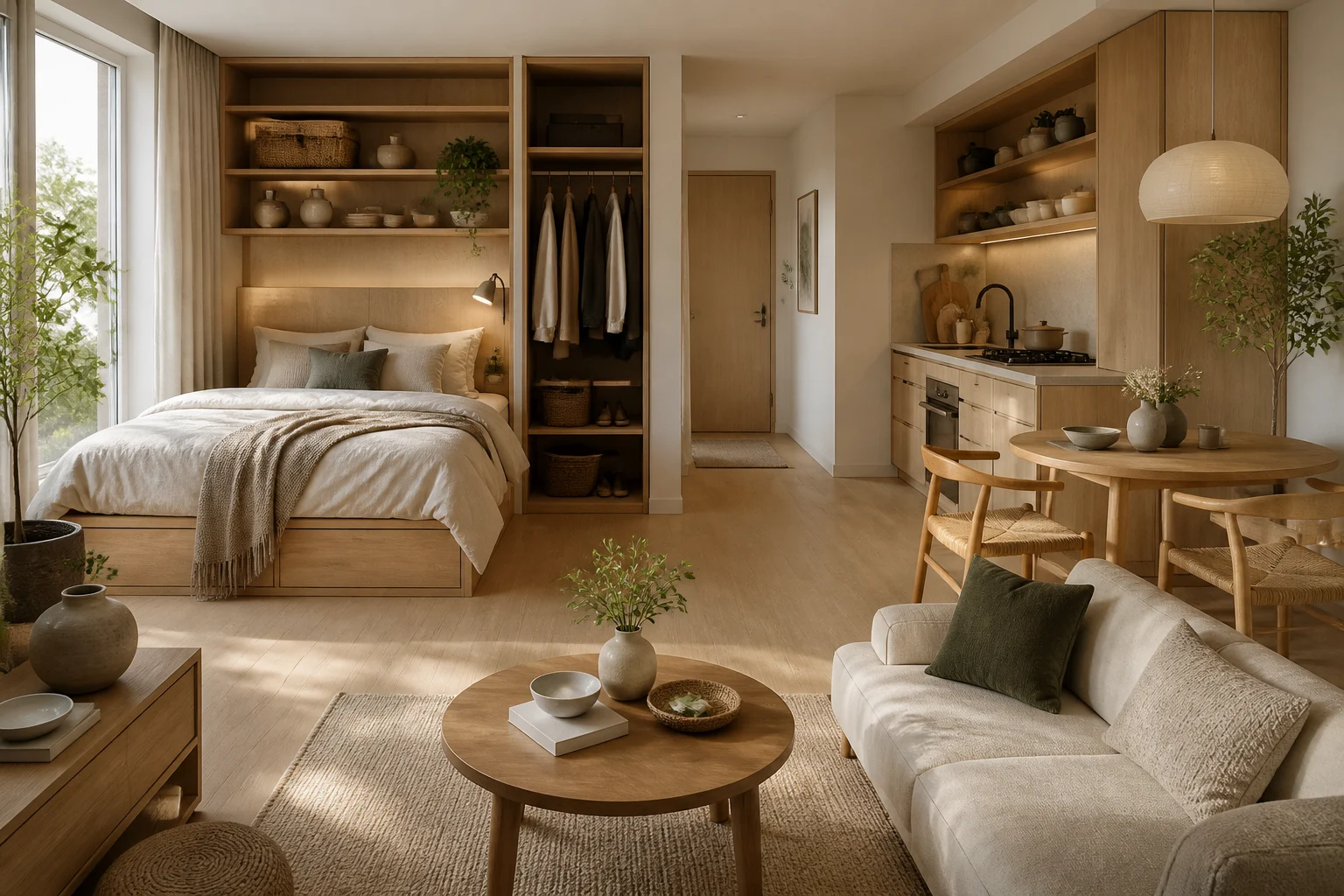
Small apartments have a funny way of making every choice feel important. A bed, sofa, dining table, closet, and kitchen all need to fit in one compact footprint without making the room feel like a storage unit. The good news? A studio can feel calm, open, and genuinely livable when each zone has a job and the furniture works harder than usual. These studio apartment design ideas focus on warm neutrals, light wood, smart storage, and soft minimalist styling so a small home feels organized, cozy, and easy to live in.
1. Use a Bed With Built-In Storage Drawers
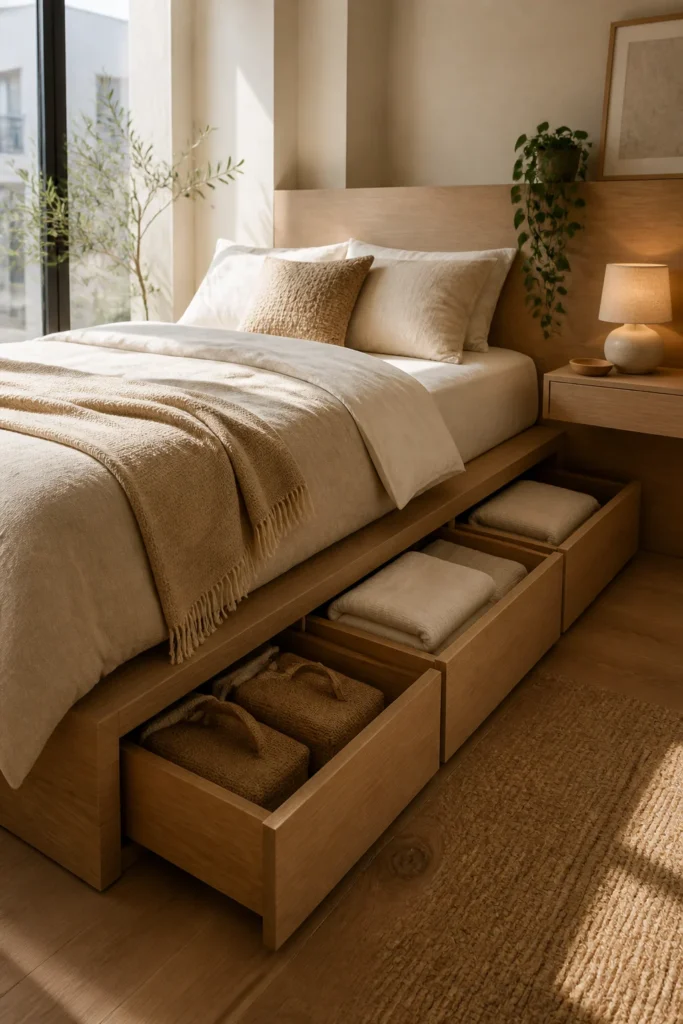
A regular bed takes up a large chunk of floor space, so the area underneath should never go to waste. Choose a bed frame with deep built-in drawers for folded clothes, bedding, shoes, or seasonal items. This works especially well in a studio because it reduces the need for extra dressers.
Keep the drawer fronts simple and close in color to the floor or bed frame. Light oak, birch, white, or beige finishes help the storage blend into the room instead of looking bulky.
Avoid tall under-bed bins that are hard to access or don’t slide smoothly. Built-in drawers look cleaner and make daily use easier, especially when the bed sits near a wall.
2. Create a Sleeping Zone With Soft Boundaries
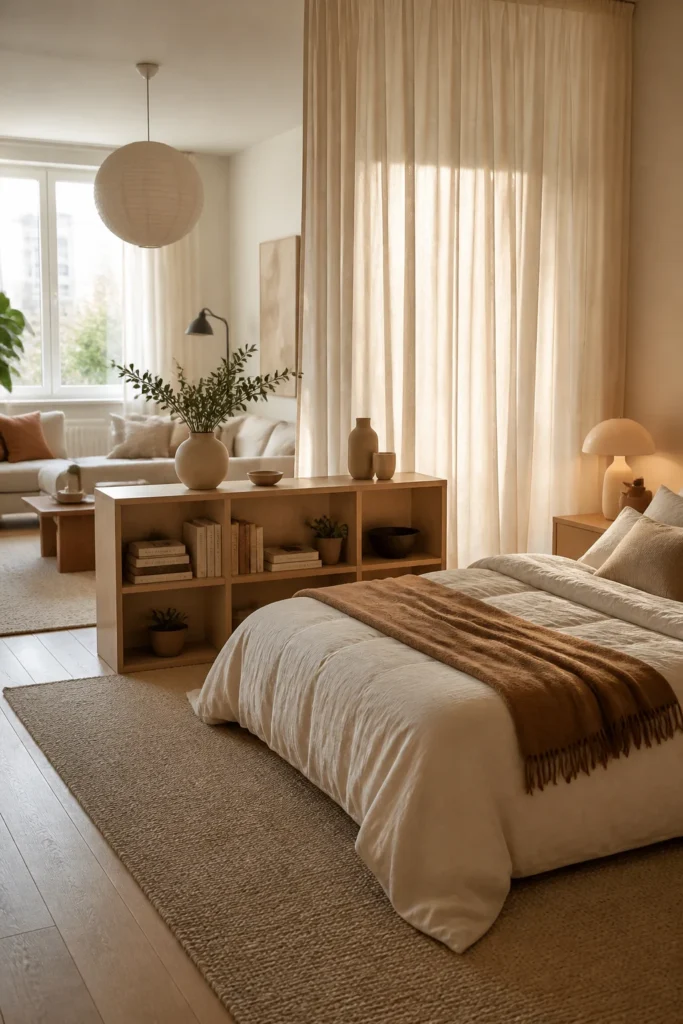
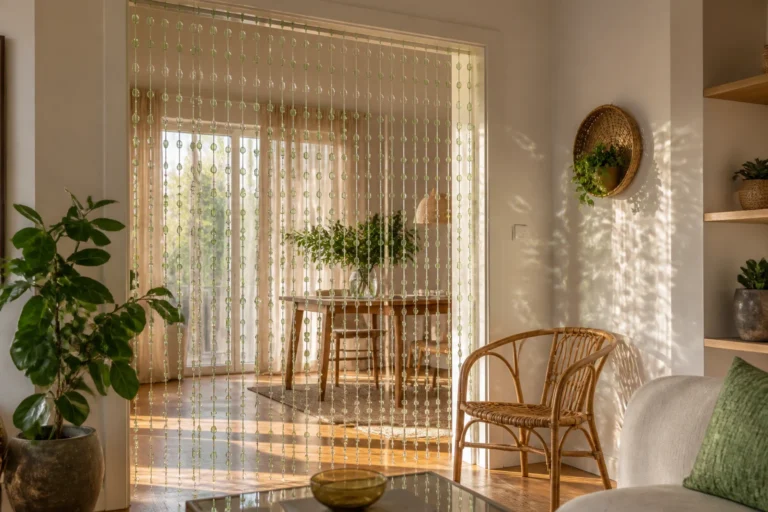
A studio does not always need a full wall or heavy room divider. Soft boundaries often work better because they separate the bed without blocking light. Place the bed along one side of the room and use a rug, low shelf, curtain, or open wardrobe to define the area.
A neutral rug under the bed can make the sleeping zone feel intentional. Let the rug extend beyond the sides of the bed so the area looks grounded rather than squeezed in.
Keep the bedding calm and layered. White sheets, beige blankets, linen pillows, and one textured throw create a cozy look without visual clutter. Too many bold colors on the bed can make the whole studio feel busier.
3. Choose an Open Closet Instead of a Bulky Wardrobe
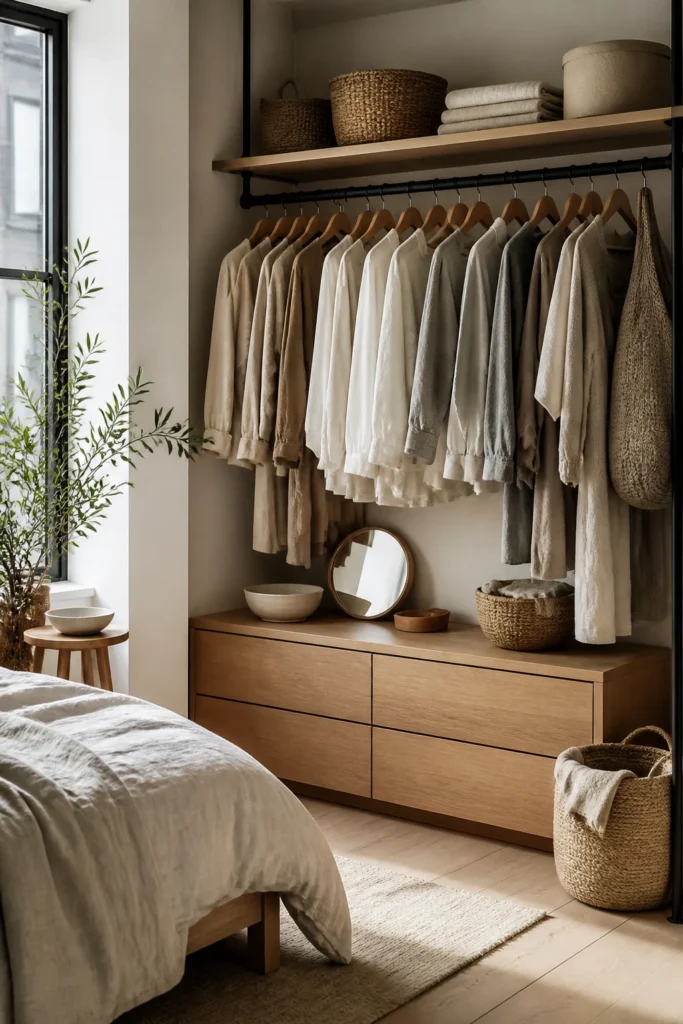
A full wardrobe can overwhelm a tiny apartment, especially when it reaches from wall to wall. An open closet with a hanging rail, lower drawers, and a few shelves can feel lighter while still offering useful storage.
The trick is editing what stays visible. Hang clothes in a tight color range, use matching hangers, and store smaller items in woven baskets or fabric bins. This keeps the closet looking like part of the decor instead of a laundry zone.
Place the open closet near the bed if possible. It naturally belongs in the sleeping area and helps keep clothes away from the kitchen and living space.
4. Keep the Kitchen Compact and Linear
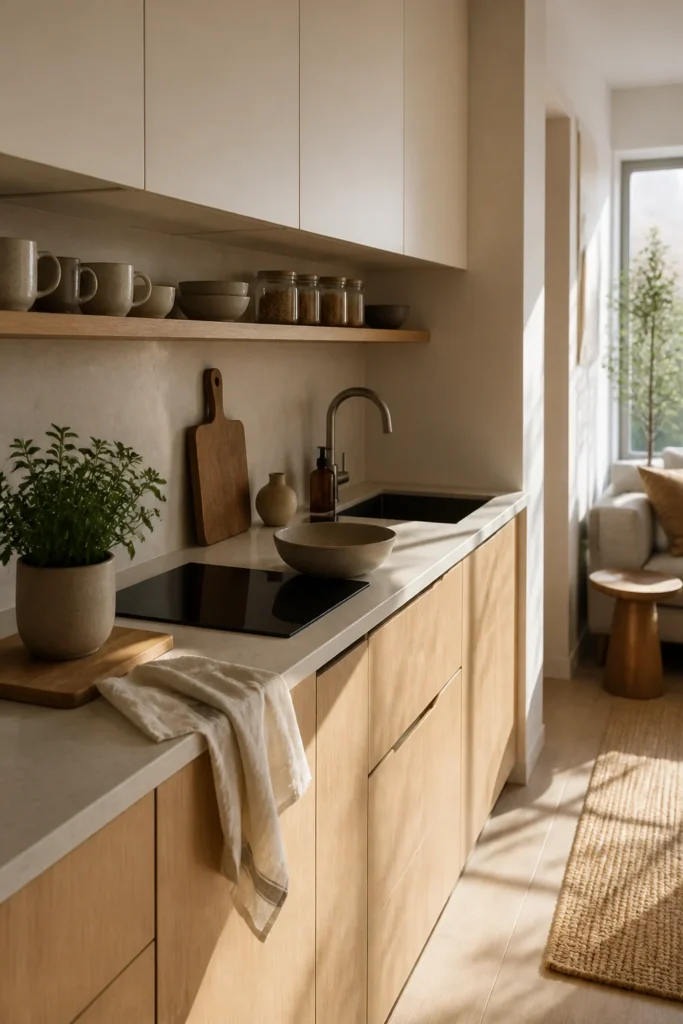
A small studio kitchen works best when everything sits along one wall or in a short galley-style run. This keeps the center of the apartment open and makes movement easier. Choose flat-front cabinets, a small cooktop, and a simple backsplash to avoid visual clutter.
Light wood lower cabinets paired with a pale countertop are a smart choice for small spaces. They add warmth without making the kitchen feel heavy. If upper cabinets are needed, mix them with open shelving so the wall does not feel closed in.
Leave enough counter space beside the sink or cooktop for basic prep. Even a narrow stretch of clear surface makes the kitchen feel more usable.
5. Add a Small Dining Table That Doubles as a Work Zone
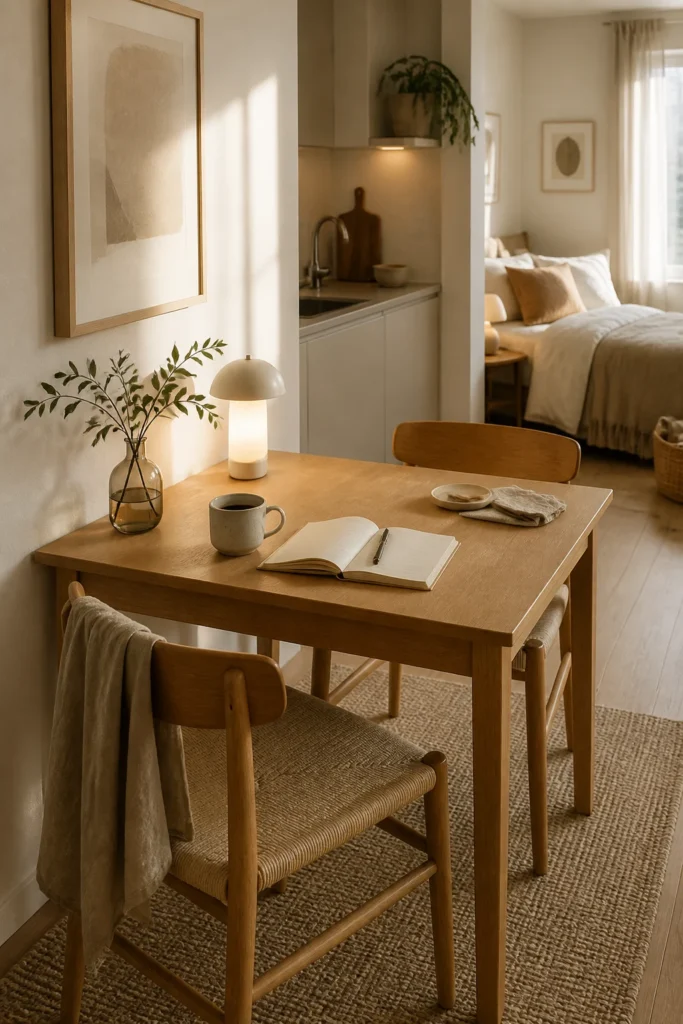
A compact dining table can do more than hold meals. In a studio, it can become a desk, coffee spot, folding station, or extra prep surface. A rectangular table for two often fits better than a round one when placed against a wall.
Choose chairs that tuck fully under the table. Slim wood chairs, stools, or armless upholstered seats keep the footprint small. Avoid oversized dining chairs with wide backs because they eat up walking space fast.
For balance, style the tabletop simply. Two place settings, a small plant, or one low bowl is enough. A crowded table makes the studio feel smaller even when the furniture size is right.
6. Use a Low Sofa to Keep the Room Open
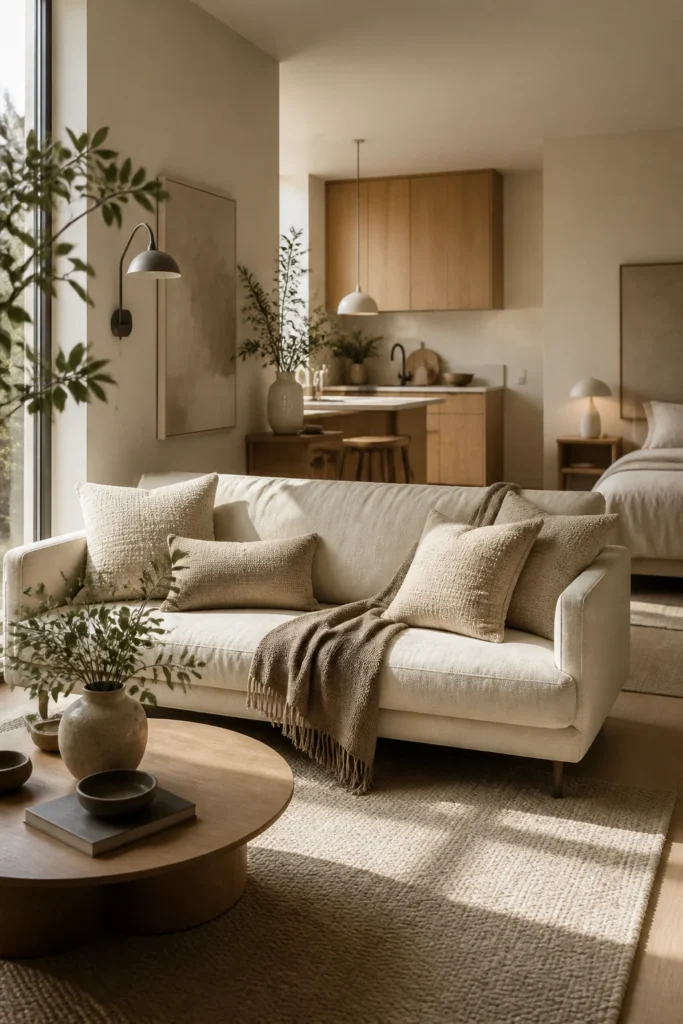
A sofa can divide a studio beautifully, but it needs the right scale. A low-profile sofa with slim arms keeps sight lines open and helps the living area feel relaxed. In a narrow apartment, place it with the back facing the kitchen or bed zone to create a natural boundary.
Stick to pale upholstery if the room already has light wood floors and neutral walls. Cream, oatmeal, soft gray, and warm beige all work well. Add texture with cushions or a throw instead of relying on strong patterns.
Avoid pushing every piece of furniture against the walls. A sofa floating slightly into the room can create a clearer living zone and make the layout feel more designed.
7. Pick a Round Coffee Table for Easier Movement
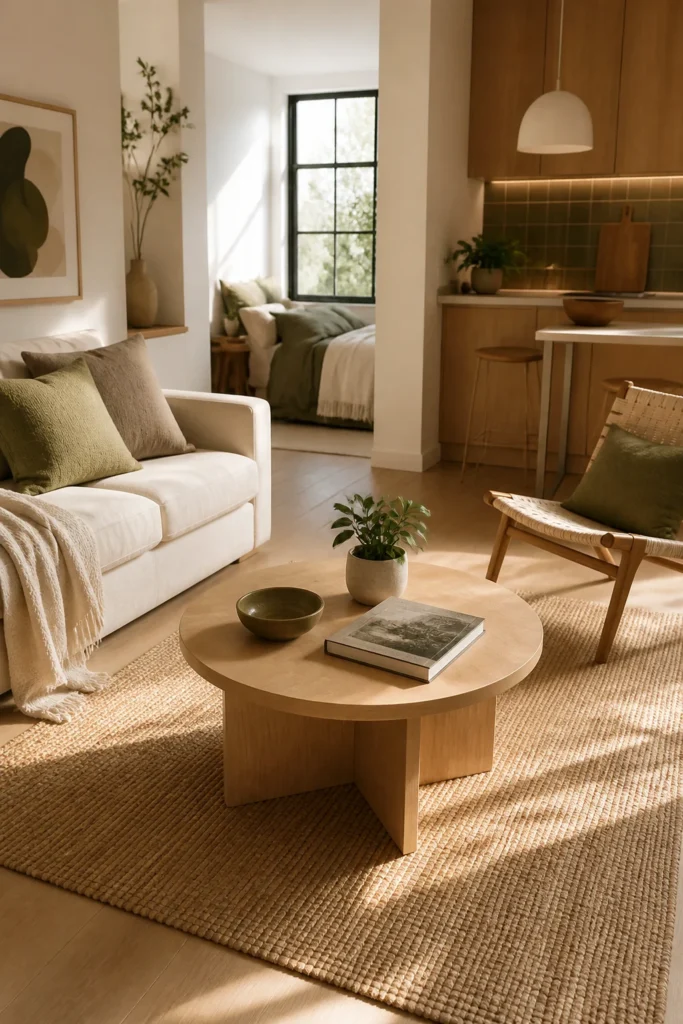
Sharp corners can make a compact living area feel awkward, especially when walking space is tight. A small round coffee table softens the layout and makes it easier to move between the sofa, TV, and kitchen.
Wood works well here because it connects with other warm finishes in the apartment. Look for a table with a slim base or open legs so it doesn’t feel like a block in the middle of the room.
Keep the styling low and practical. A small plant, one book, or a tray is enough. The coffee table should support daily life, not become an obstacle course.
8. Mount or Slim Down the Media Area
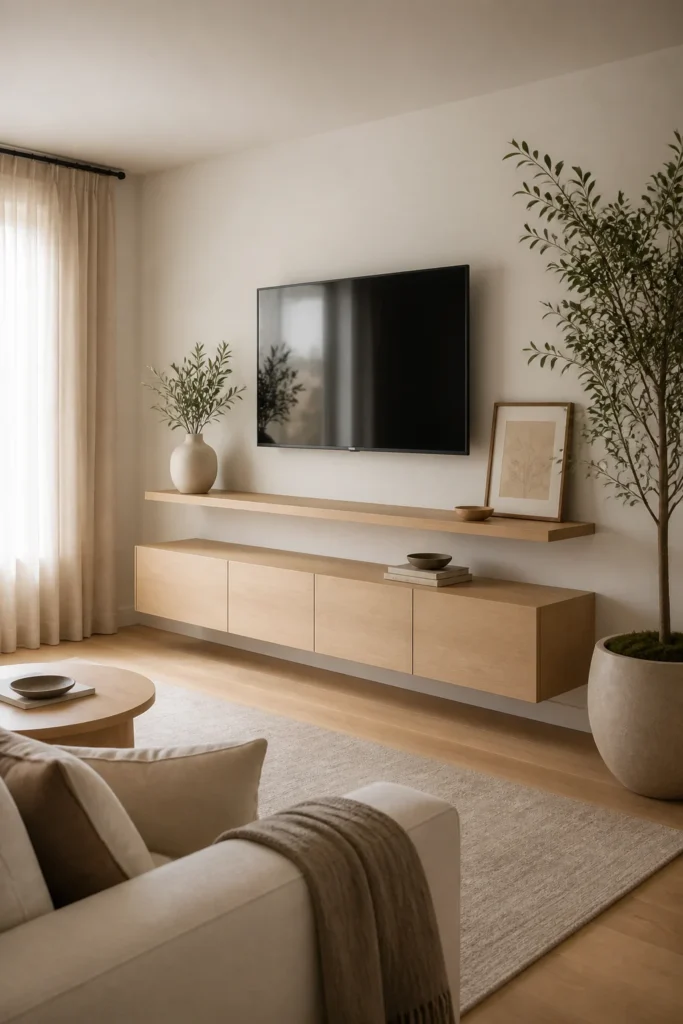
A bulky TV stand can steal valuable floor space in a studio. A wall-mounted TV with a narrow floating shelf below keeps the living area cleaner. If mounting is not possible, choose a slim media console with closed storage.
Keep the media wall simple. One low cabinet, a plant, and one framed print can look polished without crowding the wall. Closed drawers are helpful for cords, remotes, chargers, and small electronics.
Avoid surrounding the TV with too many shelves or decorative objects. In a small apartment, the media area looks better when it feels quiet and streamlined.
9. Use Vertical Wall Storage Without Overfilling It
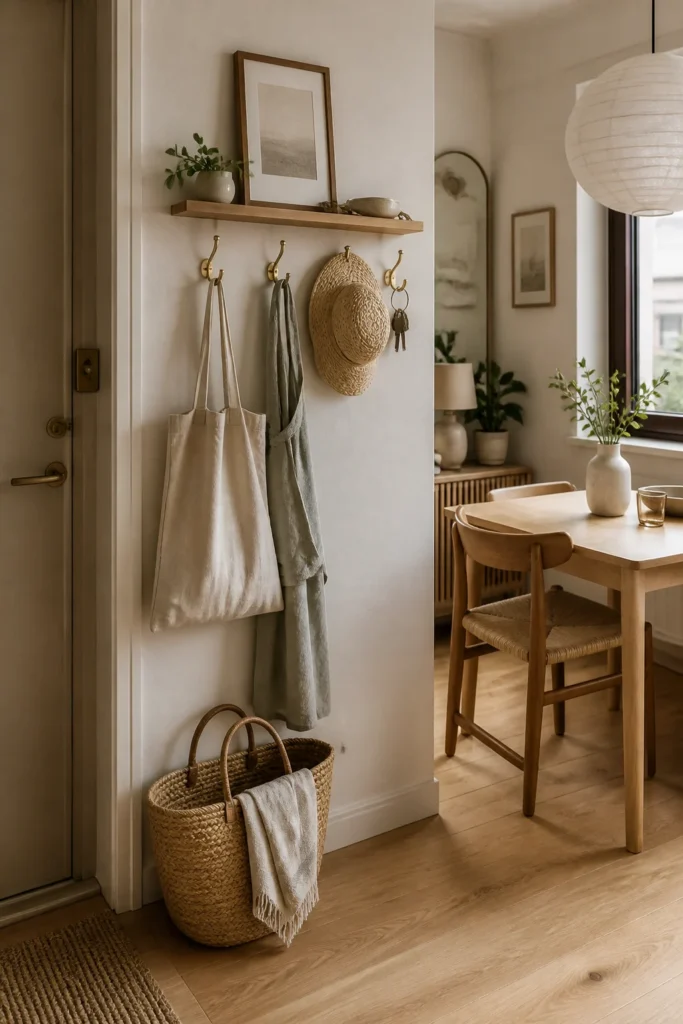
Small homes need vertical storage, but the goal is not to cover every wall with shelves. Use small wall-mounted shelves near entryways, dining corners, bathrooms, or beside the bed for items that actually need a home.
Try these small-space wall storage ideas:
- A narrow shelf near the door for keys and sunglasses
- Peg hooks for bags, hats, or light jackets
- Floating shelves in the kitchen for mugs or spice jars
- A tiny bedside shelf instead of a full nightstand
- Slim bathroom shelves for towels and skincare
Leave breathing room around shelves. Negative space makes the apartment feel calmer and keeps storage from turning into visual noise.
10. Stick to a Warm Neutral Color Palette
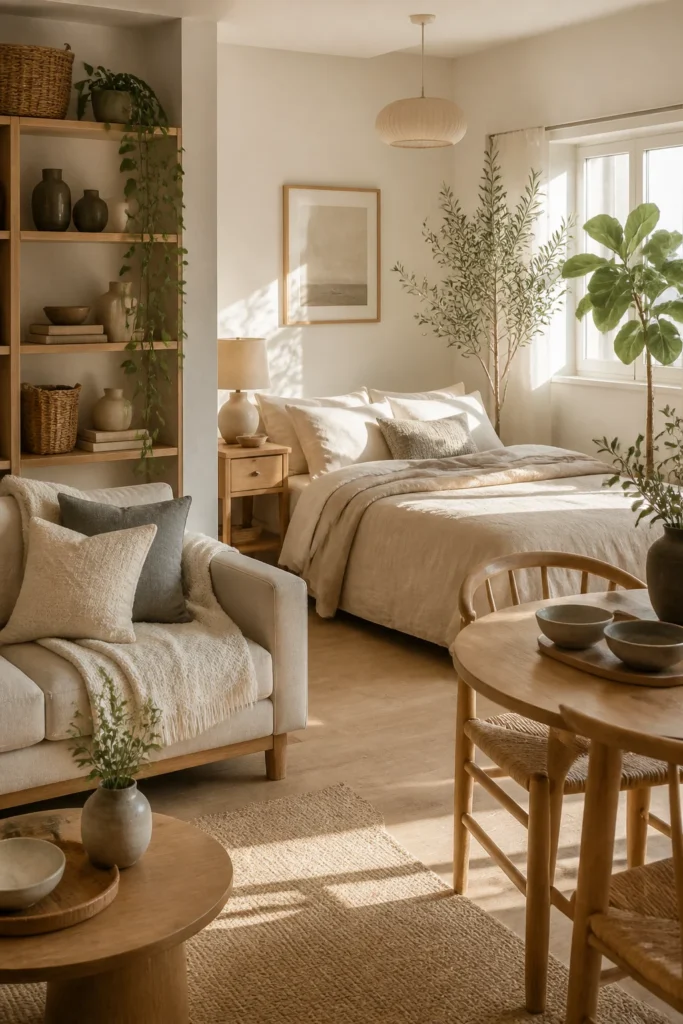
A studio feels larger when the colors connect from one zone to the next. Warm white walls, pale wood flooring, beige textiles, soft gray accents, and a few green plants create a calm base that works across the bed, kitchen, dining, and living areas.
Use contrast carefully. Black fixtures, a dark cooktop, or a slim black wall lamp can add definition, but too many dark pieces may make the space feel chopped up. Small accents work better than large dark furniture in a tiny studio.
Repeat materials to create flow. Light wood in the bed frame, kitchen cabinets, dining table, and coffee table makes the apartment feel cohesive. Linen, cotton, woven baskets, ceramic pieces, and greenery add softness without changing the whole color story.
How to Make the Layout Feel Bigger
A space-saving studio is not only about smaller furniture. The layout needs clear walking paths, visible floor space, and zones that do not fight each other.
Aim for at least one open route through the apartment. The path from the entry to the bed, bathroom, kitchen, and sofa should feel easy. When furniture blocks that path, the whole space feels cramped even if the room is technically tidy.
Use rugs to define zones, but do not choose rugs that are too small. A tiny rug floating under a coffee table can make the living area look unfinished. A larger rug that fits under the front legs of the sofa gives the space structure.
Lighting also matters. Combine a bedside lamp, wall light, under-cabinet kitchen lighting, and one soft living room lamp. Multiple small light sources make a studio feel layered and warm without relying on one harsh ceiling light.
Common Studio Apartment Mistakes to Avoid
Small apartments become stressful when every piece tries to do too much visually. A storage bed, open closet, wall shelves, compact kitchen, and dining table can all work together, but only if the styling stays edited.
Avoid these common mistakes:
- Buying a sofa that is too deep for the walkway
- Using too many different wood tones in one small room
- Choosing open shelving for everything instead of mixing in closed storage
- Placing the bed where it blocks natural light
- Filling every corner with baskets, carts, or side tables
- Using bold patterns in every zone
- Skipping lighting and relying only on overhead fixtures
A good studio design needs a little restraint. Empty space is not wasted space. It gives the apartment room to breathe.
Best Materials for a Warm Minimal Studio
Light wood is the easiest material to repeat in a small studio because it feels warm without looking heavy. Oak, ash, pine, birch, and pale bamboo all work well for furniture, shelving, and storage fronts.
For textiles, choose washable and breathable materials. Cotton bedding, linen-blend curtains, wool-look rugs, and removable cushion covers make the apartment easier to maintain. Small spaces collect dust faster, so materials that clean easily are worth it.
For decor, mix matte ceramics, woven baskets, glass, and a few black metal details. These materials add texture while staying in the same soft, minimalist design family.
Simple Styling Formula for a Cohesive Studio
When every zone is visible, styling needs to feel connected. Use this simple formula in each area:
One warm wood piece + one soft textile + one practical storage item + one green plant or natural accent.
For the bedroom, that might mean a wood bed frame, linen bedding, under-bed drawers, and a trailing plant. For the living area, try a wood coffee table, a cream rug, a slim media cabinet, and a leafy plant. For the kitchen, use wood cabinets, a small towel, closed drawers, and a potted herb.
Repeating the formula keeps the apartment pulled together without making every corner match perfectly.
Conclusion
A small studio can feel comfortable, organized, and beautiful when the layout works with the space instead of against it. Focus on storage that blends in, furniture with slim proportions, soft zone separation, and a warm neutral palette that ties everything together. Start with one high-impact change, like adding under-bed storage or simplifying the dining area. Once the biggest clutter problem is solved, the rest of the studio becomes much easier to style.