
Every kitchen has that one spot that feels a little unfinished. Maybe it is an open lower shelf full of baking trays, a plain oven area that looks too boxy, or a cabinet opening that needs softening without a full renovation. An oven curtain is a small detail, but it can make the whole kitchen feel warmer, tidier, and more charming. The goal is not to hide the kitchen behind fabric. The goal is to use the right color, pattern, fabric, and length so the oven area feels intentional, cozy, and easy to live with.
1. Classic Linen Oven Curtain for Soft Texture
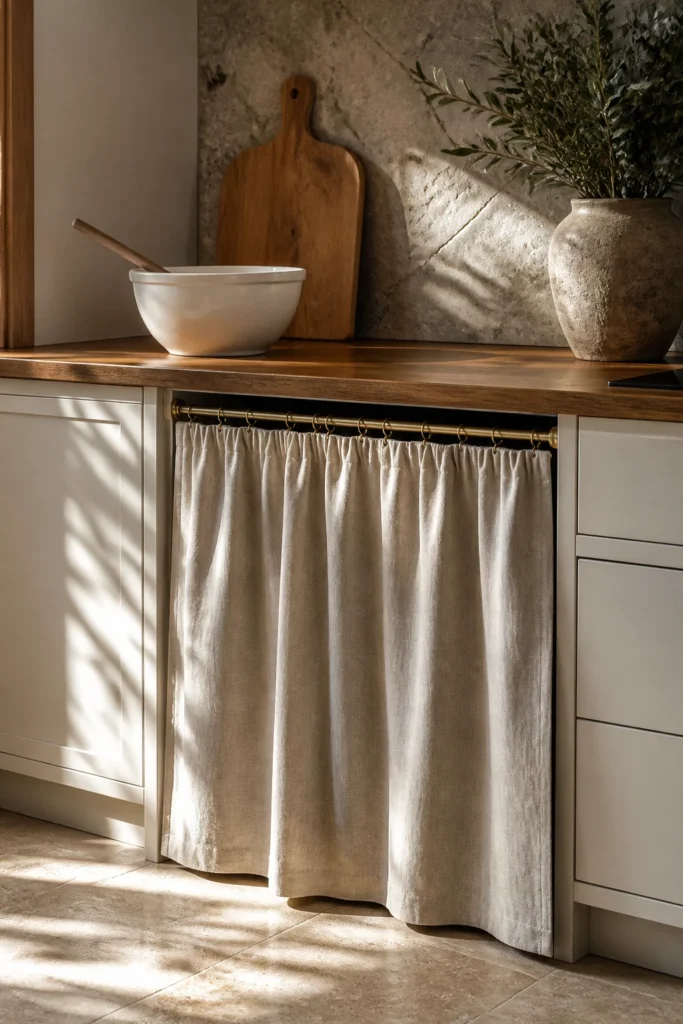
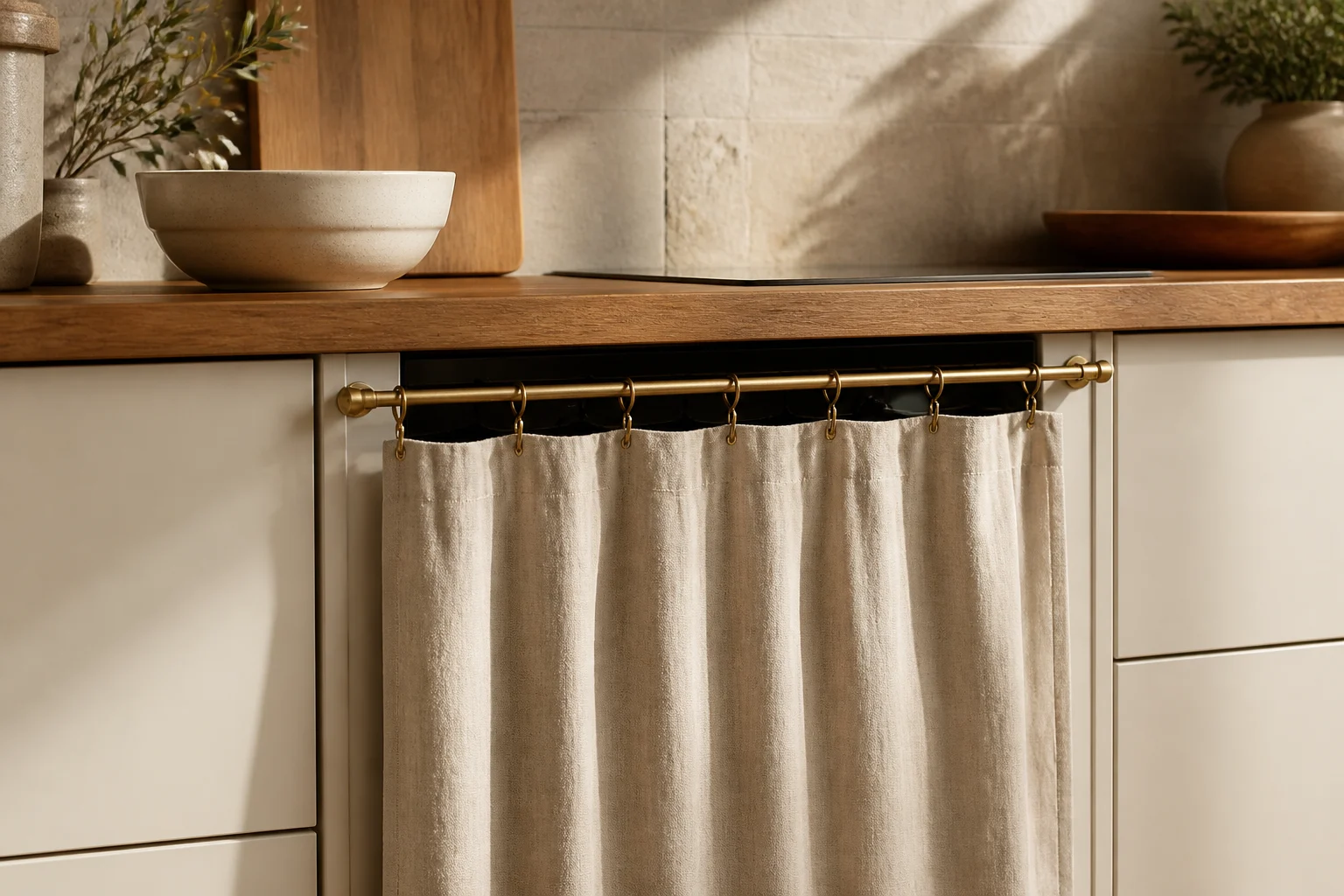
Linen is a lovely choice when the kitchen already has natural materials like wood counters, ceramic bowls, woven baskets, or warm-toned cabinets. It adds softness without looking overly decorated.
Go for a medium-weight linen or linen blend. Very thin linen can look limp, while heavy fabric may bunch awkwardly in a small space. Washed linen, oatmeal linen, or soft beige linen works beautifully in kitchens that lean cottage, farmhouse, Scandinavian, or relaxed traditional.
Keep the bottom edge neat. A linen oven curtain should stop above the floor, toe-kick, or base trim so it does not drag or collect dust. Slightly relaxed wrinkles are part of the charm, but the length still needs to look intentional.
Good colors include:
- Warm white
- Oatmeal
- Soft beige
- Mushroom
- Dusty sage
- Pale gray
Pair linen with simple hardware, such as a slim brass rod, wooden dowel, or small matte black café rod. The curtain should feel like part of the kitchen, not like a random fabric panel that wandered in from another room.
2. Gingham Oven Curtain for Cottage Charm
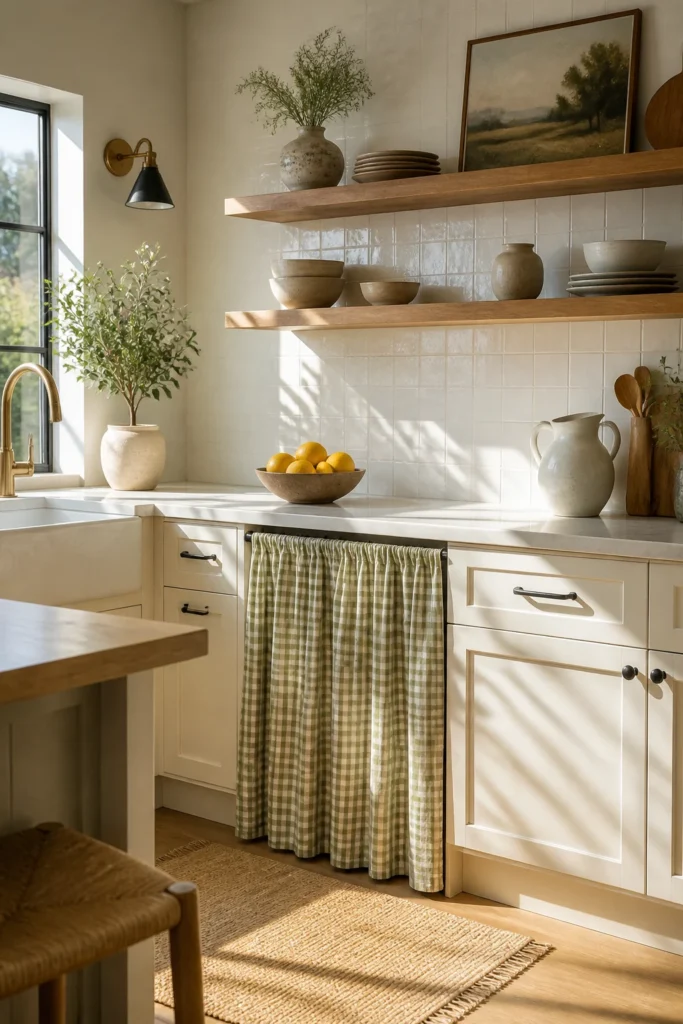
Gingham is one of the easiest ways to make an oven area feel cozy and cheerful. It works especially well in cottage kitchens, farmhouse kitchens, small rental kitchens, and older homes with simple cabinetry.
Small-scale gingham usually looks better than oversized checks. Tiny or medium checks feel classic and balanced, while large checks can overpower a small oven nook.
Try these combinations:
- Red gingham with cream cabinets
- Blue gingham with white tile
- Green gingham with butcher block counters
- Black gingham with farmhouse hardware
- Yellow gingham with vintage-style accessories
Repeat the curtain color once elsewhere in the kitchen. A matching tea towel, small fruit bowl, or framed print is enough. Too much matching can look staged, but one small echo makes the curtain feel planned.
3. Striped Oven Curtain for a Clean, Tailored Look
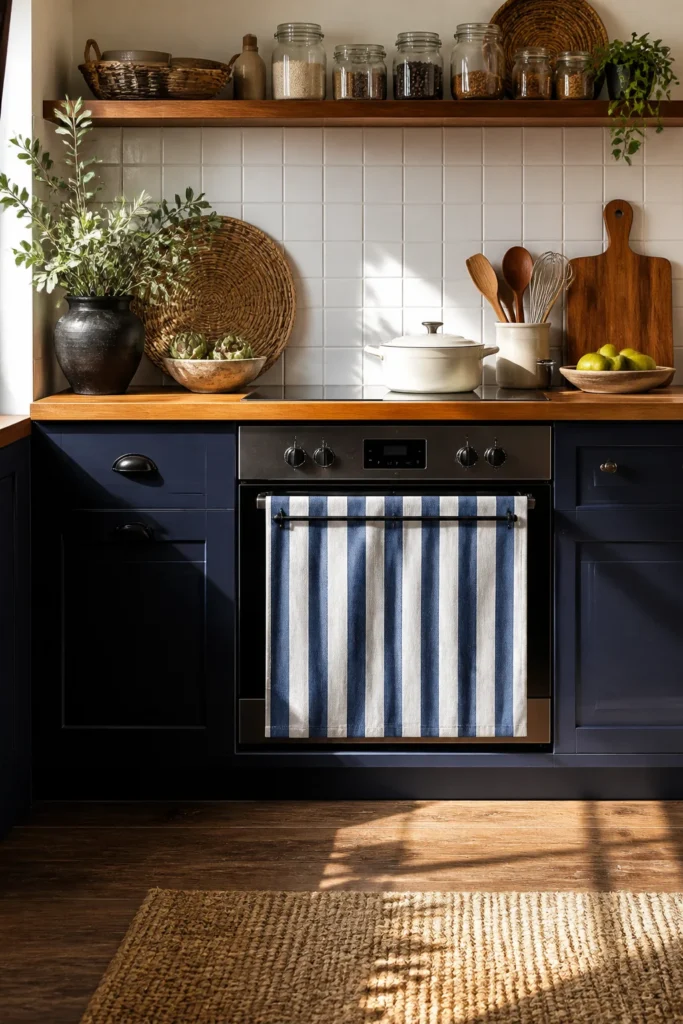
Stripes are great when you want softness without making the kitchen feel too sweet. A striped oven curtain can lean coastal, farmhouse, French country, or modern depending on the fabric and color.
Vertical stripes are especially useful around a lower oven or cabinet opening because they make the area feel taller and tidier. Ticking stripes are a safe choice because they are narrow, classic, and easy to pair with wood, stone, tile, and painted cabinets.
Good stripe options include:
- Blue and white for a coastal kitchen
- Taupe and cream for a neutral kitchen
- Black and white for modern farmhouse style
- Olive and natural linen for an earthy kitchen
- Soft red and cream for vintage charm
Let the stripes be the main pattern nearby. If the oven curtain is striped, keep the rug, dish towels, and countertop accessories calmer so the kitchen does not start to feel visually noisy.
4. Pleated Oven Curtain for a More Polished Finish

Pleats make an oven curtain feel more finished and custom. This is a good choice if your kitchen has shaker cabinets, traditional hardware, stone counters, or a more tailored look.
A flat curtain panel can feel casual, but pinch pleats, box pleats, or soft gathered pleats add structure. The curtain still brings warmth, but it looks less like a quick cover-up and more like a design choice.
Fabric width matters here. Use about 1.5 to 2 times the width of the opening so the pleats have enough fullness when closed. Too little fabric looks stretched and skimpy.
This style works best with solid linen, cotton, ticking stripe, or subtle woven fabric. Avoid very busy prints if you want the pleats to stay crisp and visible.
5. Floral Oven Curtain for a Cozy Vintage Kitchen
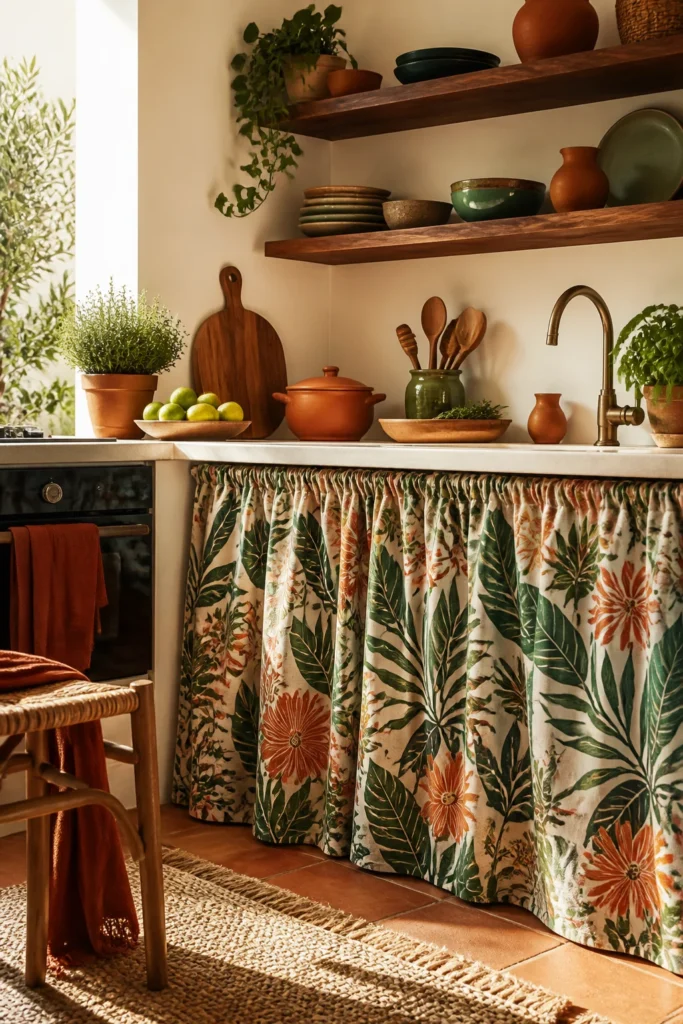
A floral oven curtain can bring instant personality into a kitchen without painting cabinets or replacing tile. It is especially pretty in vintage, cottage, English country, or garden-inspired kitchens.
The trick is scale. Small floral prints feel sweet and easy to live with. Large florals can look beautiful, but they need breathing room. In a compact kitchen, oversized flowers may compete with the backsplash, rug, and open shelves.
Pretty floral options include:
- Tiny blue flowers on cream fabric
- Muted rose prints
- Green botanical cotton
- Brown and ochre vintage florals
- Soft block-print florals
Balance floral fabric with plainer pieces nearby. A wood cutting board, white ceramic pitcher, plain dish towel, or low bowl of fruit can calm the look so the curtain feels charming instead of busy.
6. Neutral Cotton Oven Curtain for Rental Kitchens

Renters need decor that can be removed without drama. A neutral cotton oven curtain is one of the easiest ways to hide open storage, soften a plain oven area, or make a temporary kitchen feel more finished.
Use a tension rod if you cannot drill. It can sit inside a cabinet opening or between two side panels. Choose one with rubber ends so it grips properly, especially if the curtain will be opened often.
Cotton is practical because it is washable, affordable, and easy to replace. Warm white, tan, soft gray, muted green, and light taupe usually work with most rental finishes.
A fitted look is better than lots of extra fabric in a rental kitchen. Too much fabric can make a small space feel cluttered, especially if the cabinets, counters, and appliances are already close together.
7. Ruffled Oven Curtain for Cottagecore Style
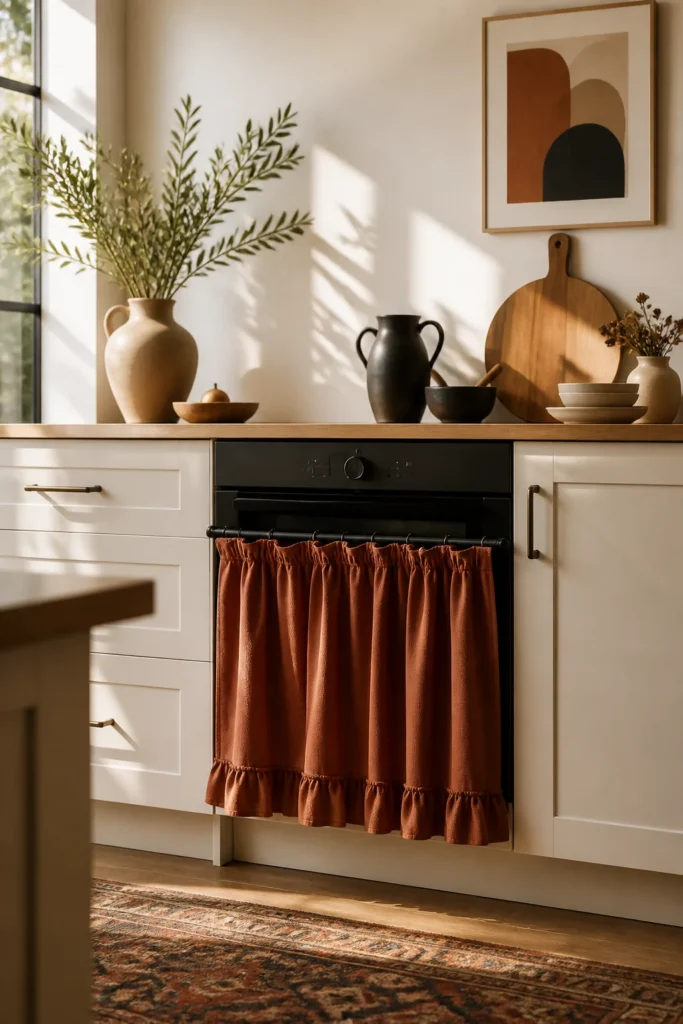
Ruffles can look adorable in the right kitchen, but restraint matters. One ruffled detail is usually enough. Think a soft ruffled hem, a gathered top, or a narrow side trim.
This style works best in kitchens with vintage plates, painted cabinets, butcher block counters, open shelving, or floral accents. Washed cotton, muslin, and linen blends look more natural than shiny synthetic fabric.
Keep the rest of the oven area simple. If the curtain has ruffles, avoid adding too many frilly towels, patterned rugs, and decorative accessories right beside it. The ruffle should feel sweet, not fussy.
For a softer look, choose cream, faded blue, sage, blush, or tiny floral fabric. Bright white ruffles can look crisp and pretty, but warmer tones usually feel cozier.
8. Café-Style Oven Curtain for Small Kitchens
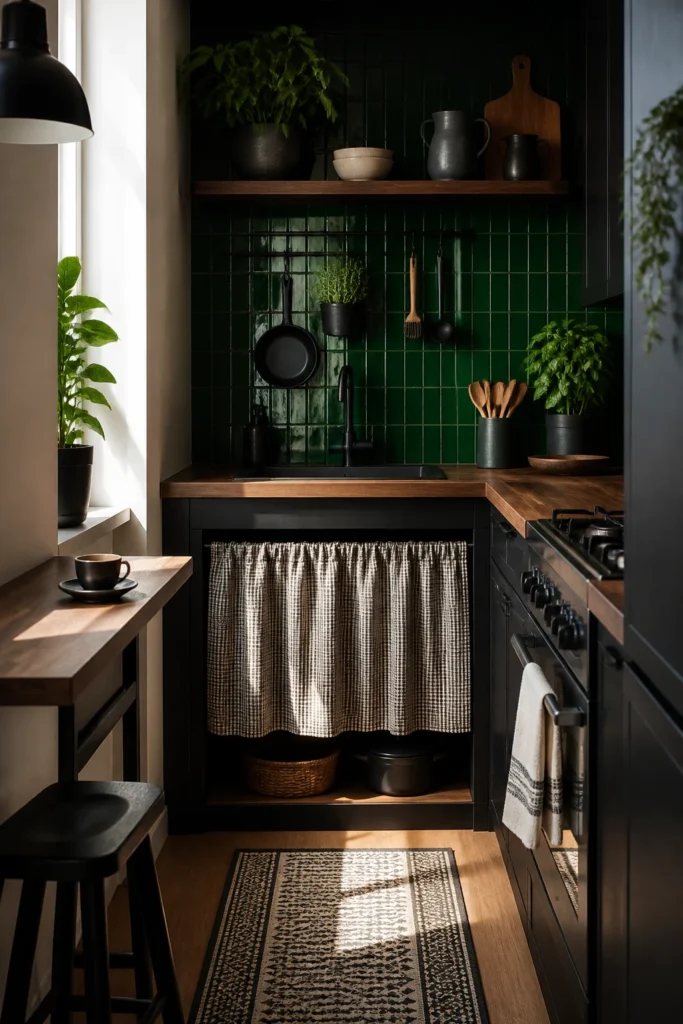
A café-style oven curtain is short, tidy, and practical. It is a smart choice for small kitchens because it covers only what needs hiding without adding a heavy fabric look.
Use this style to cover:
- Open shelves below a counter
- Baking sheets
- Mixing bowls
- Extra dish towels
- Small appliances
- Utility storage in a kitchenette
In a tiny kitchen, choose a fabric close to the cabinet or wall color. Low contrast helps the room feel more open. If you want pattern, keep it small: ticking stripe, tiny check, or subtle texture works better than a bold print.
The curtain should move easily and stay out of the way. If it catches on your feet, blocks a drawer, or makes the oven door annoying to open, shorten it or use a lighter fabric.
9. Patterned Oven Curtain as a Small Color Accent
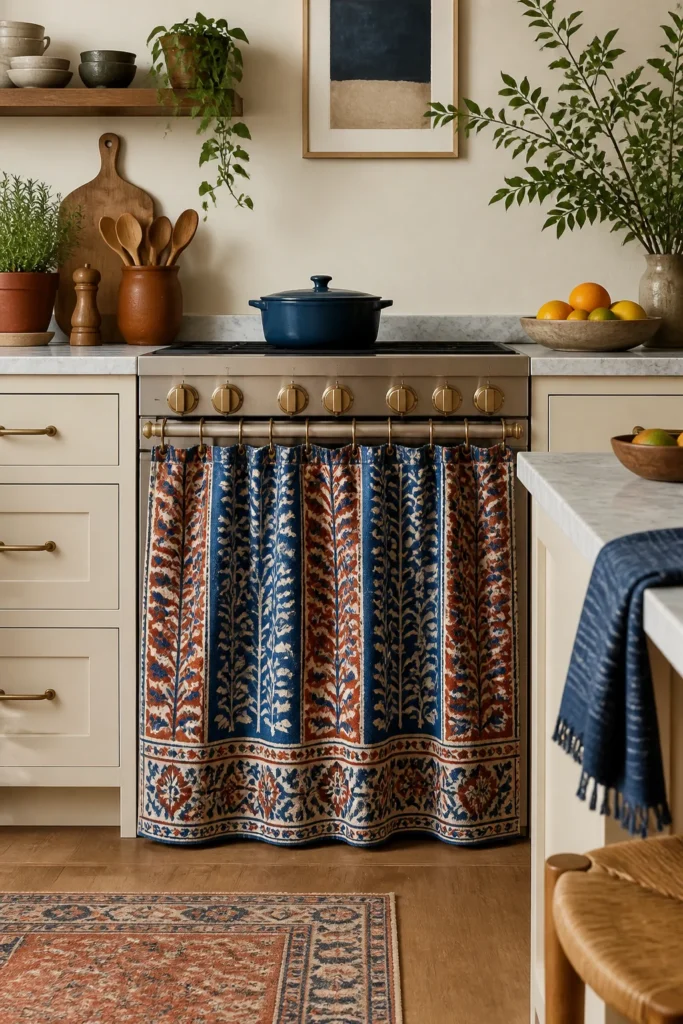
An oven curtain is a low-risk place to use pattern because it covers a small area. Even a bold fabric can work if the rest of the kitchen stays simple.
Good pattern ideas include:
- Block print cotton
- Tiny fruit motifs
- Vintage botanical prints
- Ticking stripe
- Small geometric patterns
- Folk-inspired fabric
Choose one main color from the curtain and repeat it once or twice around the room. A blue patterned oven curtain might connect with a blue utensil crock or small framed print. A green curtain might pair with herbs, a green bowl, or a muted kitchen rug.
Do not let the fabric steal the whole kitchen. If the curtain is colorful, keep nearby counters calmer with wood, white ceramics, glass jars, or plain metal accents.
10. Under-Counter Oven Curtain for Hidden Storage
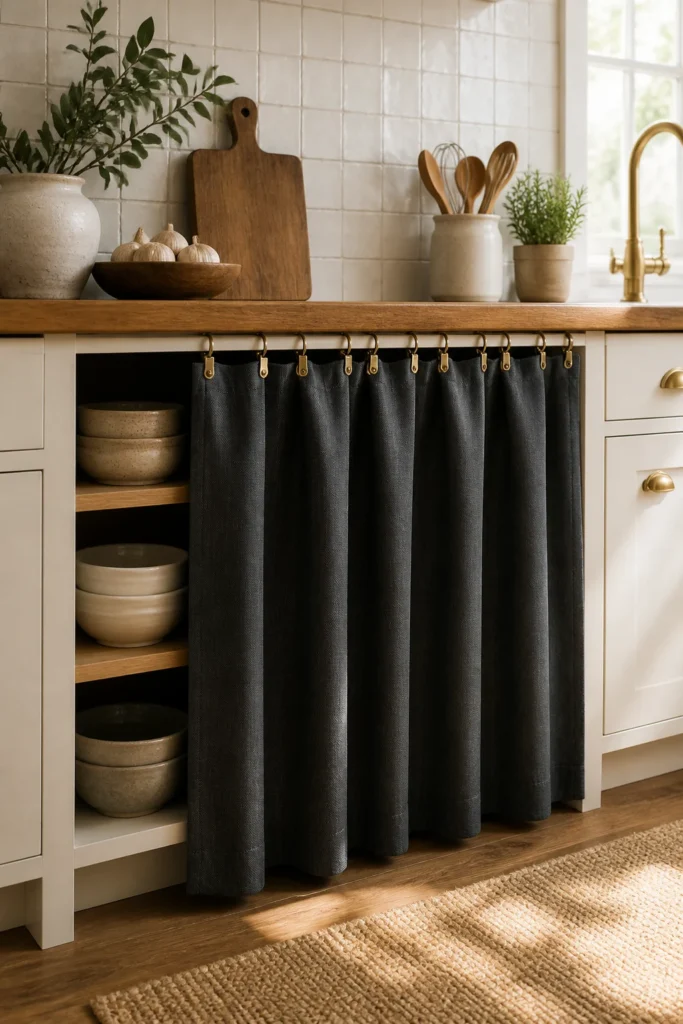
Sometimes an oven curtain is not just decorative. It can hide awkward storage in older kitchens, DIY kitchenettes, pantry corners, or places where a lower cabinet door is missing.
For storage, pick fabric that is opaque and washable. Thin white cotton may look pretty, but it can show shadows from whatever sits behind it. Canvas, ticking, medium cotton, and linen blends usually cover better.
This idea works well for storing:
- Baking trays
- Mixing bowls
- Extra towels
- Small appliances
- Pantry baskets
- Cleaning supplies, if safely away from heat
Measure before buying fabric. The curtain should cover the full opening without puffing out into the walking path. The sweet spot is a curtain that hides the awkward bit, washes easily, and still lets you use the kitchen without a tiny daily battle.
11. Seasonal Oven Curtain Swaps for an Easy Refresh
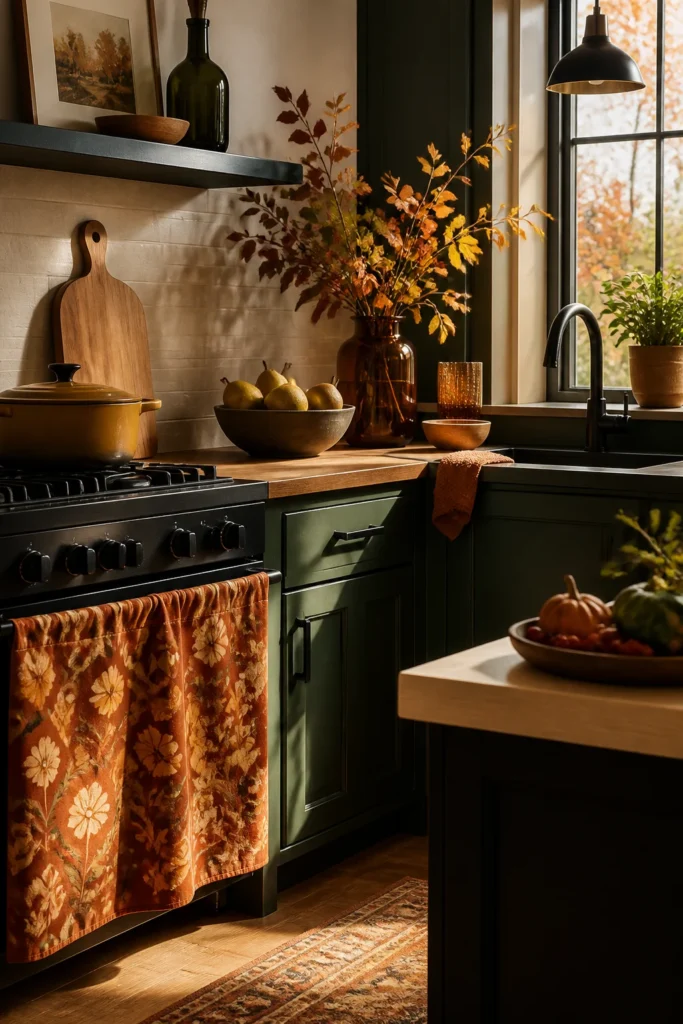
A small oven curtain is easy to change when you want the kitchen to feel fresh. This is a fun option if you like seasonal decorating but do not want bins full of bulky decor.
Try simple seasonal swaps:
- Spring: soft florals or pale green
- Summer: blue stripes or natural linen
- Autumn: rust, ochre, brown, or muted plaid
- Winter: cream, deep green, or subtle red gingham
Keep the base kitchen calm so seasonal fabric does not clash. White cabinets, wood accents, simple tiles, and neutral counters make it easy to rotate patterns.
Fold off-season curtains flat in a drawer or basket. Since the fabric area is small, this kind of update stays budget-friendly and does not require changing anything permanent.
Best Fabrics for an Oven Curtain
Kitchen fabric needs to handle steam, dust, grease, and frequent washing. Pretty matters, but practical matters more.
Good fabric choices include:
- Cotton: Affordable, washable, and easy to find
- Linen blend: Relaxed, textured, and polished
- Canvas: Durable and good for storage areas
- Muslin: Soft, casual, and budget-friendly
- Ticking fabric: Classic, sturdy, and great for farmhouse kitchens
Avoid delicate fabric that cannot be washed easily. Skip anything too sheer if the curtain is hiding storage. Stay away from loose, flowing fabric near active heat sources.
An oven curtain should never block vents, touch burners, hang against hot surfaces, or interfere with appliance doors. Secure fabric properly and keep it away from heat.
Buying vs DIY: Which Is Better?
Buy an oven curtain if you want clean seams, washable fabric, and a ready-made size that fits your space. This is the easier route for standard openings, rental kitchens, or quick weekend updates.
DIY makes more sense when the opening is an odd size or when you want a very specific fabric. A simple panel only needs fabric, measuring tape, scissors, pins, a sewing machine or hem tape, and a rod.
A basic DIY oven curtain usually works best when you keep the design simple:
- Measure the width and height of the opening.
- Add extra width for gathers.
- Hem the sides and bottom.
- Create a rod pocket or use clip rings.
- Hang it and adjust the length if needed.
No-sew hem tape can work for a light curtain, but stitched hems usually hold up better after washing.
Hardware That Looks Good and Works Well
Small curtains need small hardware. A bulky rod can look strange around a compact oven or under-counter opening.
Good hardware choices include:
- Slim tension rods for renters
- Small brass rods for vintage kitchens
- Matte black café rods for modern farmhouse style
- Wooden dowels for rustic or DIY kitchens
- Clip rings for easy removal and washing
Clip rings are especially practical because the curtain slides easily and comes down fast on laundry day. Rod-pocket curtains look cleaner, but they can be less convenient if you wash the curtain often.
Match the rod to nearby hardware when possible. Brass with brass cabinet pulls, black with black lighting, or wood with butcher block counters helps the curtain feel built into the design.
Styling Tips for a Balanced Kitchen Look
An oven curtain should soften the kitchen, not add clutter. Balance comes from repeating color, controlling pattern, and leaving enough breathing room around the fabric.
A few simple rules help:
- Repeat the curtain color in one or two small accents
- Keep counters calmer near a patterned curtain
- Choose washable fabric for busy kitchens
- Use slight gathers instead of a tight, flat panel
- Match the curtain style to the kitchen mood
- Keep fabric away from heat, vents, and foot traffic
Scale matters too. A small kitchen usually needs a simpler curtain. A larger kitchen can handle a bolder print, fuller pleats, or a more decorative rod.
Common Oven Curtain Mistakes to Avoid
The biggest mistake is picking fabric only because it looks cute. Kitchen fabric has to survive real use. If it wrinkles badly, stains easily, blocks a cabinet, or cannot be washed, it will become annoying fast.
Too much fabric is another common issue. Extra fullness may look romantic at first, but in a working kitchen it can collect dust, catch on feet, and make the lower area look bulky.
Avoid these problems:
- Curtains touching the floor
- Fabric blocking oven vents
- Rods that slip when the curtain moves
- Prints that clash with backsplash tile
- Fabric that is too sheer for storage
- Dark, heavy fabric in a tiny kitchen
- Long panels near active cooking zones
The best oven curtain is charming, washable, safe, and easy to live with.
FAQ
Are oven curtains safe?
Oven curtains can be safe when they are placed away from heat, burners, vents, and appliance doors. Keep the fabric short, secure, and positioned where it will not touch hot surfaces.
What size should an oven curtain be?
Measure the width and height of the area you want to cover. For a gathered look, use fabric that is about 1.5 to 2 times the width of the opening. The bottom should stop above the floor, toe-kick, or any area where it could drag.
Can renters use an oven curtain?
Yes. A tension rod and washable curtain panel make this a renter-friendly kitchen update. It can hide open storage or soften a plain oven area without drilling holes or changing cabinets.
What fabric is best for an oven curtain?
Cotton, linen blends, canvas, muslin, and ticking fabric are practical choices. They offer texture, washability, and enough structure for a neat look.
Conclusion
A stylish oven curtain is a small kitchen detail with a lot of decorating power. It can hide awkward storage, soften a hard-looking oven area, add pattern, or bring in cozy texture without a full remodel. Start with one simple goal, then choose fabric and hardware that support how the kitchen actually works. Even a small linen panel, cheerful gingham curtain, or neat striped fabric can make the room feel more finished.