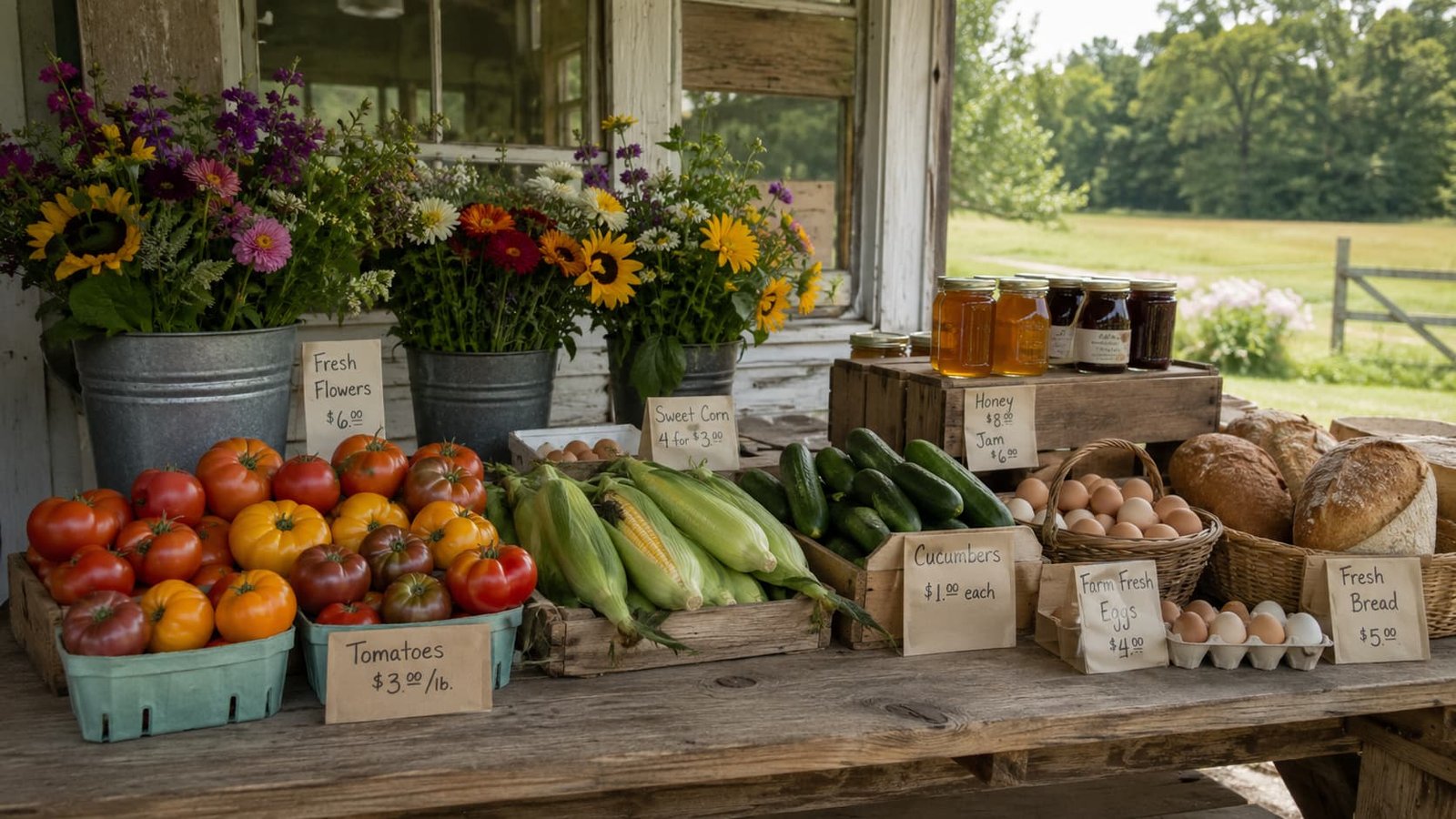
A farm stand sounds simple until you actually try to run one.
You put out a few tomatoes, a dozen eggs, maybe some flowers, and then the questions start.
Will people stop?
Did I price this too high?
Is anyone going to steal the cash box?
Why did the zucchini sit there all day but the ugly little cherry tomatoes sold out by lunch?
That is the real farm stand learning curve.
The best things to sell at a farm stand are not always the fanciest things. They are the things people understand quickly, trust immediately, and feel excited to take home.
Some products bring people in because they are fresh. Some work because they are pretty. Others sell because they solve a tiny problem, like “I need a quick gift” or “I forgot to buy eggs.”
Here are 27 good farm stand ideas, plus practical tips to help you choose what is worth your time.
Quick List: Best Farm Stand Items by Type
Before we get into the full list, here is a quick way to think about your options.
| Product Type | Good Examples | Why It Works |
|---|---|---|
| Fresh produce | Tomatoes, corn, cucumbers, berries | Easy to recognize and buy |
| Everyday staples | Eggs, herbs, potatoes, onions | Brings repeat customers |
| Pretty impulse buys | Flowers, pumpkins, gourds | Makes people stop the car |
| Value-added foods | Jam, bread, pickles, dried herbs | Higher perceived value |
| Giftable items | Honey, soap, candles, baskets | Great for weekends and holidays |
| Garden items | Plant starts, potted herbs | Strong spring demand |
A strong farm stand usually has a mix.
You want a few practical items, a few eye-catching items, and one or two things that feel like a treat.
What Sells Best at a Farm Stand?
The best sellers usually have at least one of these qualities:
- They look fresh from the road.
- They are easy to use the same day.
- They feel local or homemade.
- They are hard to find at the grocery store.
- They make a nice gift.
- They are priced simply.
- They do not need a long explanation.
That last one matters more than people think.
If a customer has to stand there wondering what something is, how much it costs, or whether it needs refrigeration, there is a good chance they will leave empty-handed.
Make the decision easy.
1. Fresh Eggs
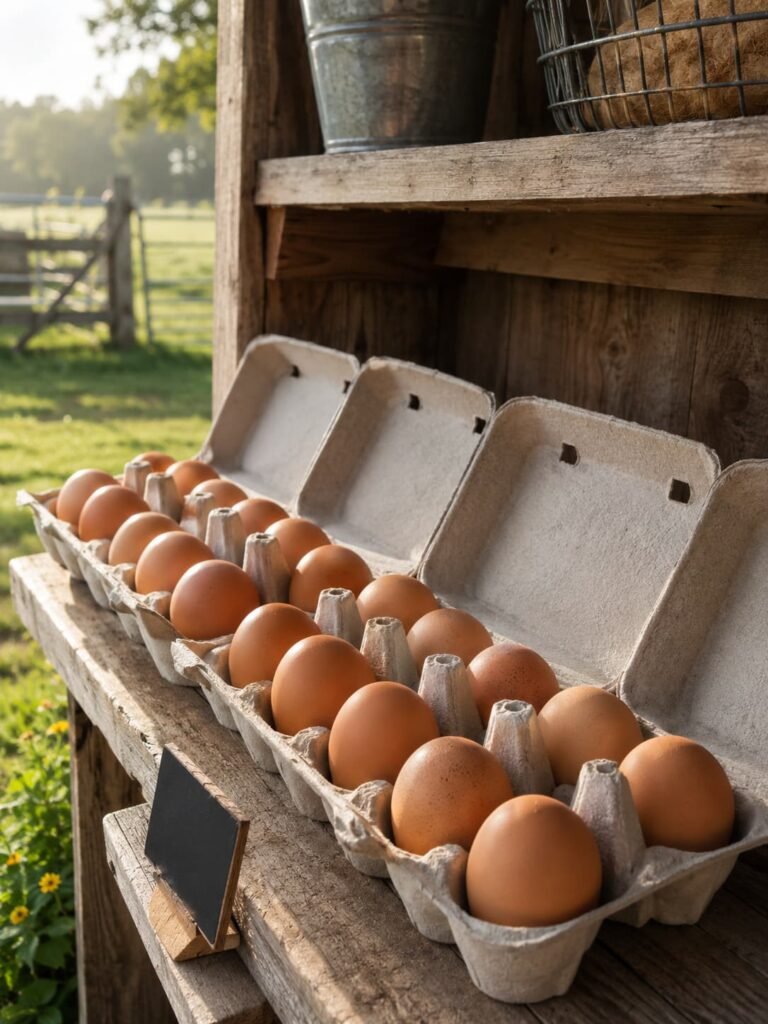
Eggs are one of the most reliable farm stand products.
People who buy local eggs often come back again and again. They get used to your stand being their “egg place,” and that habit can turn into steady side income.
Eggs work especially well because they are practical. A customer may not need a bouquet every week, but they probably need breakfast.
A few tips:
- Keep cartons clean.
- Label the price clearly.
- Mention if they are unwashed, washed, or need refrigeration.
- Offer half-dozens for smaller households.
- Do not let the stand run out too often if eggs are your main draw.
Eggs are not always the highest-profit item once you count feed costs, but they are excellent for repeat traffic.
2. Tomatoes
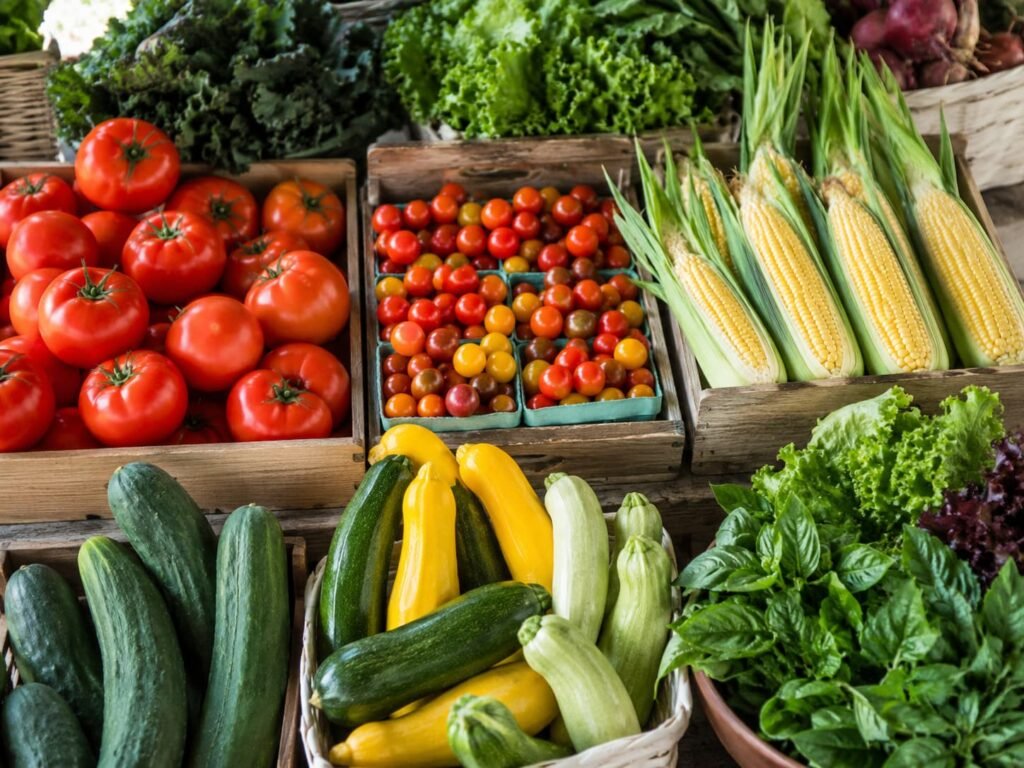
Tomatoes are farm stand royalty.
A ripe tomato is one of the easiest things to sell because people already know why they want it. They know grocery store tomatoes can be bland, and they are hoping yours taste like summer.
Offer a few types if you can:
- Big slicers
- Cherry tomatoes
- Roma or paste tomatoes
- Heirlooms
- Green tomatoes
Cherry tomatoes are especially good for self-serve stands because they look bright, travel well, and feel snackable.
One small detail helps: label the varieties when you know them. Even a handwritten sign that says “Sweet cherry tomatoes” or “Best for sandwiches” can make people more confident.
3. Sweet Corn
Sweet corn can make a roadside stand feel alive.
It is big, familiar, and seasonal. People see it and think about cookouts, butter, salt, and summer dinners.
Sweet corn works best when the price is simple.
Try signs like:
- 6 ears for $4
- 12 ears for $7
- Picked this morning
Freshness is everything with corn. If it has been sitting too long in the heat, customers will notice.
If you cannot keep it fresh-looking, put out smaller amounts and restock often.
4. Cucumbers
Cucumbers are not glamorous, but they sell.
They are cheap enough for impulse buys and useful enough for regular shoppers. People use them for salads, snacks, sandwiches, infused water, and quick pickles.
Pickling cucumbers deserve their own label if you have them.
A lot of home canners and pickle lovers look specifically for smaller cucumbers. Do not make them dig through a mixed box trying to guess.
Good signs include:
- Pickling cucumbers
- Salad cucumbers
- 3 for $2
- Great for refrigerator pickles
Simple signs sell more cucumbers than a crowded bin with no information.
5. Zucchini and Summer Squash
Zucchini is both a blessing and a problem.
It grows like it has somewhere to be. One week you are excited about your first harvest, and the next week you are trying to make eye contact with neighbors while holding a laundry basket full of squash.
Zucchini can sell, but you have to pick it at the right size.
Small and medium zucchini look useful. Huge zucchini look like homework.
To move more of it, give people ideas:
- Great for grilling
- Perfect for zucchini bread
- Slice into pasta sauce
- Add to stir-fry
- Shred and freeze
You can also bundle zucchini with onions, peppers, or tomatoes as a “summer dinner kit.”
6. Salad Greens
Fresh greens can be a lovely farm stand item, but they are a little fussy.
They wilt fast. They need shade. They need clean bags or containers. They also need customers who trust that they have been handled well.
That said, greens can sell beautifully in spring and early summer.
Good options include:
- Lettuce mix
- Spinach
- Arugula
- Baby kale
- Swiss chard
- Microgreens
If your stand gets hot afternoon sun, sell greens early in the day or keep them in a cooler.
Nothing kills confidence like a bag of sad, limp lettuce.
7. Fresh Herbs
Herbs are small but mighty.
A bunch of basil or dill does not take much space, but it can make a simple stand feel abundant. Herbs also pair naturally with other things you already sell.
Place herbs next to matching produce:
- Basil beside tomatoes
- Dill beside cucumbers
- Cilantro beside peppers
- Rosemary beside potatoes
- Mint beside berries or tea blends
Herbs help customers picture dinner.
That is the secret. You are not just selling basil. You are selling tomato sandwiches, pesto, pasta, and Saturday night pizza.
8. Berries
Berries are one of the easiest impulse buys.
They are colorful, sweet, and hard to ignore. Customers will often buy them even when they only planned to stop for eggs.
Good berry options include:
- Strawberries
- Blueberries
- Blackberries
- Raspberries
The hard part is shelf life.
Berries bruise, mold, and fade quickly. Put out only what you can keep fresh. If some are getting soft, sell them clearly as “jam berries” or “baking berries” at a lower price.
People appreciate honesty.
They do not appreciate opening a pretty pint and finding mush underneath.
9. Apples
Apples are excellent for fall farm stands.
They last longer than many fruits, travel well, and appeal to almost everyone. They also work for snacking, pies, applesauce, school lunches, and cider.
If you have different varieties, add short descriptions.
For example:
- Sweet and crisp
- Tart, great for baking
- Best for applesauce
- Good lunchbox apple
Customers do not always know the difference between varieties. Help them choose and they will buy with more confidence.
10. Peaches
Peaches are a summer treat, not just a fruit.
When they are ripe, they smell like sunshine. That smell alone can help sell them.
The challenge is bruising. Peaches need gentle handling and a display that does not crush the bottom layer.
Offer them in:
- Small baskets
- Larger boxes
- Single-fruit pricing
- Discount “seconds” bags
Seconds can be great if you label them honestly.
A sign that says “Soft peaches, great for jam or baking” will sell better than pretending they are perfect.
11. Melons
Melons are great for a visible roadside display.
Watermelons and cantaloupes are big, bold, and easy to spot from a passing car. They work especially well near weekends, holidays, and hot weather.
People like knowing when melons were picked.
A simple sign like “Picked yesterday” or “Field-ripened” gives buyers a reason to choose yours over the grocery store.
Melons are also easy to price by size:
- Small
- Medium
- Large
Do not make customers guess.
12. Pumpkins
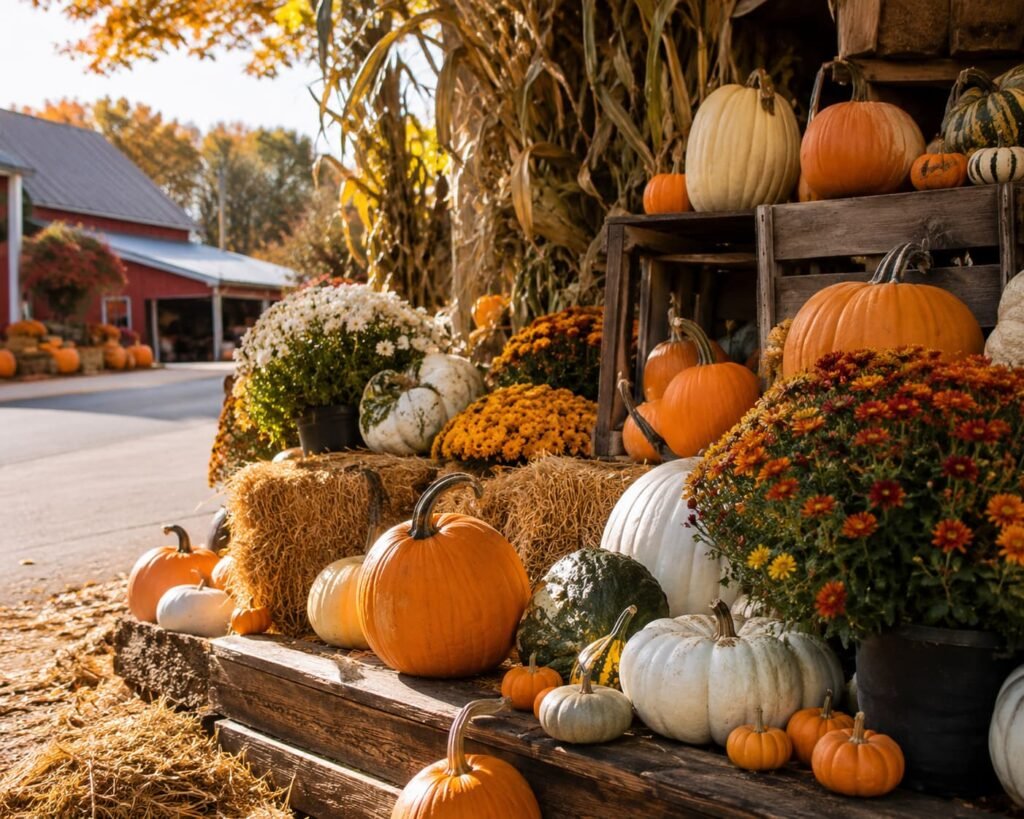
Pumpkins are one of the best fall farm stand items because people buy them for more than food.
They buy pumpkins for porches, photos, kids, carving, decorating, and that cozy fall feeling. That makes them a powerful seasonal product.
Sell a mix if possible:
- Carving pumpkins
- Pie pumpkins
- Mini pumpkins
- White pumpkins
- Gourds
- Decorative squash
A good fall display can stop traffic.
Add cornstalks, mums, hay bales, or a simple “Pumpkins Ahead” sign, and your stand suddenly feels like a destination.
13. Cut Flowers
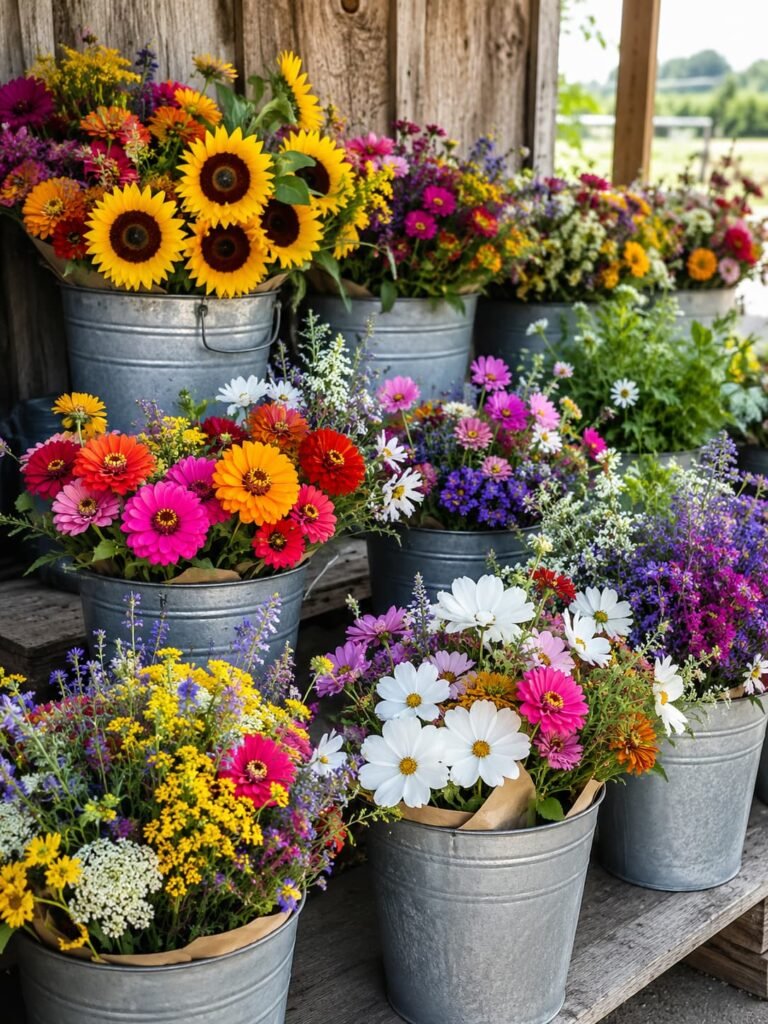
Flowers can change everything about a farm stand.
A table full of vegetables feels practical. A bucket of zinnias or sunflowers makes it feel charming.
Flowers are pure impulse. Someone may stop for tomatoes and leave with a bouquet because it made them happy.
Good farm stand flowers include:
- Sunflowers
- Zinnias
- Dahlias
- Cosmos
- Snapdragons
- Marigolds
- Mixed wildflower-style bouquets
Start simple.
You do not need florist-level arrangements. A bright $8 or $10 bouquet in a jar or paper wrap can sell beautifully.
Flowers also photograph well, which helps if customers share your stand online.
14. Plant Starts
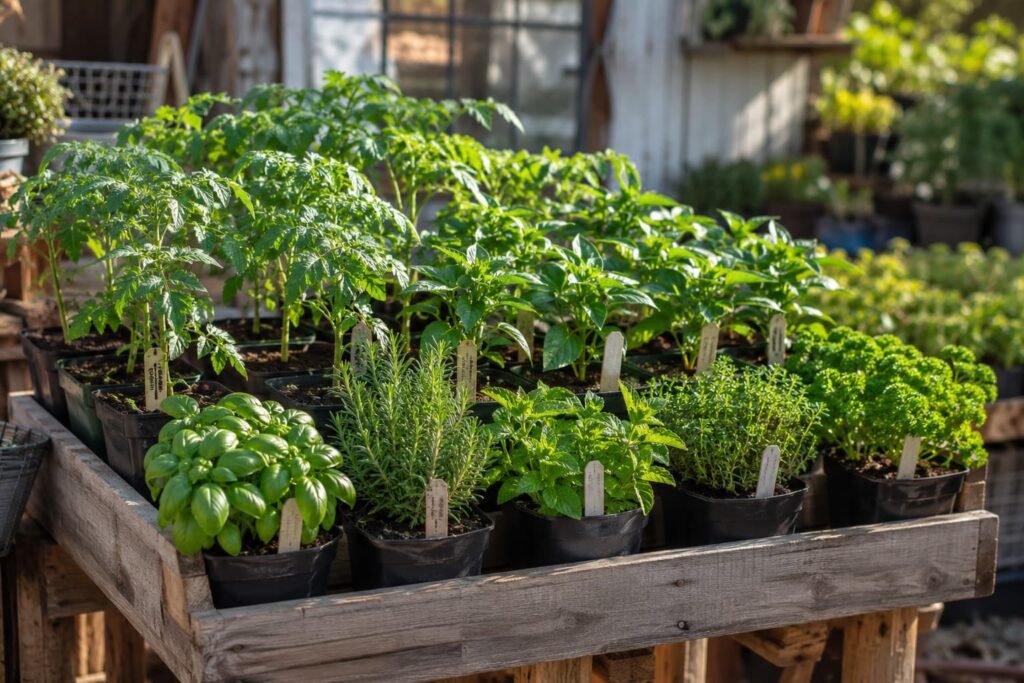
Plant starts are a spring money-maker if you already start seeds.
Tomatoes, peppers, herbs, flowers, and native plants can all sell well. Many gardeners do not want to deal with seed trays, grow lights, hardening off, and failed germination.
They want a healthy little plant they can take home and put in the ground.
Label every plant clearly.
Include:
- Variety name
- Sun needs
- Spacing
- One quick growing tip
A customer is more likely to buy a tomato plant that says “Cherry tomato, full sun, great for containers” than one that just says “Tomato.”
15. Potted Herbs
Potted herbs are useful, pretty, and giftable.
They work for gardeners, cooks, renters, and people with tiny patios. Basil, mint, parsley, thyme, rosemary, oregano, and chives are all good choices.
Mint deserves a warning label.
Seriously. Many gardeners have learned the hard way that mint does not politely stay where you put it.
A small sign like “Best grown in a pot” can save customers from future regret and make you look helpful.
16. Honey
Honey is a strong farm stand product because it lasts.
Unlike berries or lettuce, it does not wilt by 2 p.m. It can sit neatly on a shelf and make the whole stand feel more complete.
Local honey also feels special. People buy it for tea, toast, baking, gifts, and pantry stocking.
Offer a few sizes:
- Small sample jars
- Standard jars
- Large jars
- Comb honey, if available
Good labeling matters here.
A clean jar with a simple label can feel gift-worthy even at a higher price.
17. Jam and Jelly
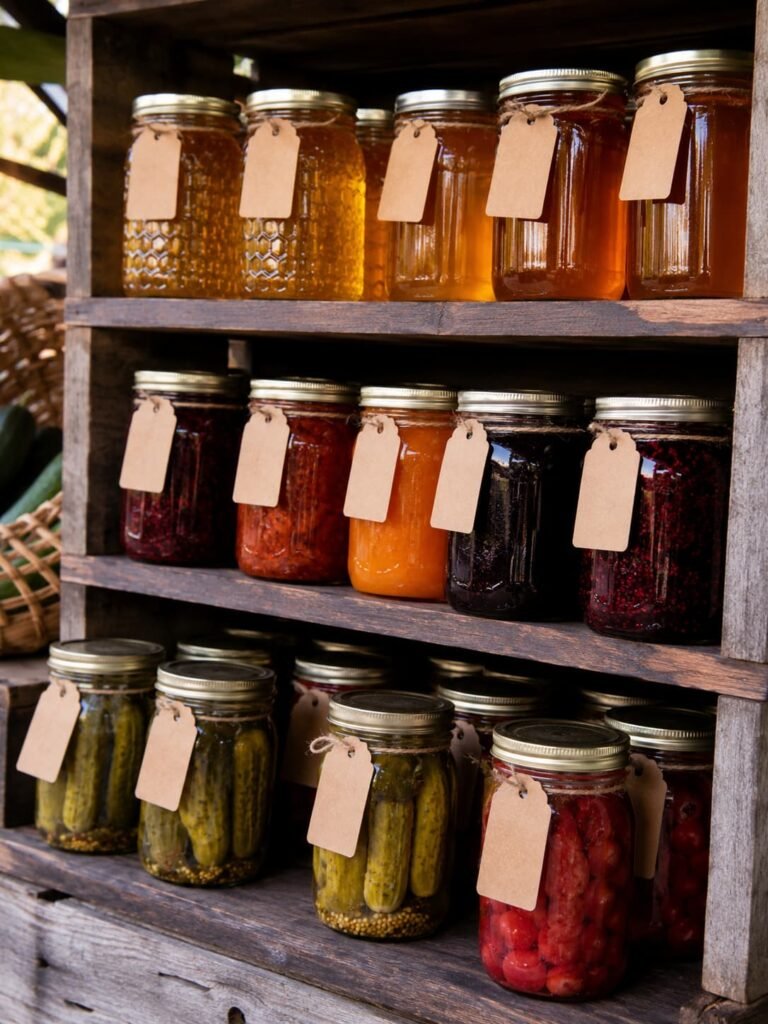
Jam and jelly are classic farm stand products for a reason.
They turn extra fruit into something customers can enjoy later. They also feel homemade in the best way.
Popular options include:
- Strawberry jam
- Peach jam
- Blackberry jelly
- Blueberry jam
- Apple jelly
- Pepper jelly
Small jars are great for impulse buys.
A $5 or $6 jar feels easier than a large jar at twice the price, especially for someone trying your stand for the first time.
Check your local rules before selling canned goods. Some areas allow certain jams under cottage food laws. Others have stricter requirements.
18. Pickles and Relishes
Pickles and relishes are great if you have too many cucumbers, peppers, zucchini, or green tomatoes.
They also give customers a reason to buy from you when fresh produce is limited.
Ideas include:
- Dill pickles
- Bread-and-butter pickles
- Pickled jalapeños
- Green tomato relish
- Zucchini relish
- Pickled onions
- Cowboy candy
This is one of those categories where rules matter.
Canned foods can be more regulated than people expect, especially low-acid foods or anything that needs special processing. Check before you sell.
19. Fresh Bread
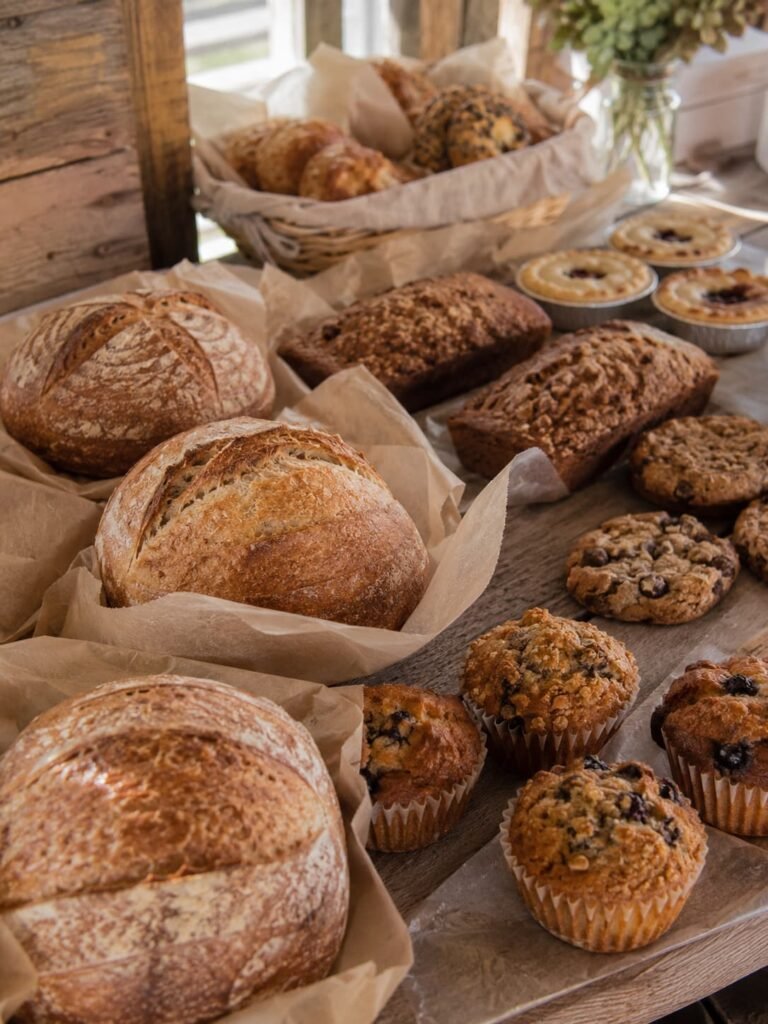
Fresh bread can make people plan their week around your stand.
A good loaf of sourdough or sandwich bread has that “I’ll come back next Saturday” effect. It feels special, but still practical.
Bread works best when you sell it on a schedule.
Try:
- Fresh bread every Saturday
- Sourdough available at 9 a.m.
- Preorder by Thursday
- Limited loaves today
This helps you avoid baking all night for loaves that do not sell.
It also creates a little urgency without being pushy.
20. Muffins, Cookies, and Quick Breads
Baked goods are made for impulse buying.
Someone may not stop for squash, but they might stop for blueberry muffins. Especially if they have kids in the car.
Good options include:
- Banana bread
- Zucchini bread
- Pumpkin bread
- Blueberry muffins
- Chocolate chip cookies
- Oatmeal cookies
- Brownies
- Scones
Use your own produce when you can.
“Zucchini bread made with our zucchini” sounds more interesting than plain zucchini bread. It gives the product a reason to exist at your stand.
Always check cottage food rules before selling baked goods.
21. Pies and Mini Pies
Pies are more work, but they can sell well during the right season.
Apple pies in fall. Peach pies in summer. Pumpkin pies near Thanksgiving. Berry hand pies on a Saturday morning.
Mini pies can be easier to sell than full-size pies because they feel less expensive and more personal.
Full pies work best for:
- Preorders
- Holidays
- Weekends
- Farm events
- Special pickup days
Be careful with cream pies, custard pies, meat pies, or anything that needs refrigeration. Those often come with stricter rules.
22. Dried Herbs and Seasoning Mixes
Dried herbs are a smart way to make your harvest last longer.
They are also a good way to sell something during slower seasons. A small jar of dried oregano or a soup herb blend can sit on the shelf much longer than a bunch of fresh herbs.
Ideas include:
- Dried basil
- Dried mint
- Dried thyme
- Dried oregano
- Pizza seasoning
- Soup blend
- Grilling herbs
- Herbal tea blends
- Ranch-style dip mix
Packaging makes a big difference.
A plain bag of dried herbs may look forgettable. A small labeled jar feels like something worth buying.
23. Salsa Kits and Recipe Bundles
Recipe bundles are one of the easiest ways to increase sales.
Instead of hoping someone buys tomatoes, peppers, onions, and cilantro separately, package them together as a salsa kit.
Now the customer does not have to think.
They see dinner.
Good bundle ideas include:
- Salsa kit
- Soup kit
- Stir-fry kit
- Salad kit
- Pickling kit
- Pasta sauce kit
- Roasted vegetable kit
- Breakfast bundle with eggs, bread, and jam
Add a small recipe card if you can.
It does not need to be fancy. A handwritten “chop, mix, salt, lime” salsa card is enough.
24. Homemade Soap
Soap is a good farm stand product because it does not spoil and it makes a nice gift.
It fits especially well if you use farm-style ingredients like goat milk, honey, herbs, beeswax, lavender, oats, or calendula.
Popular soap ideas include:
- Goat milk soap
- Honey oat soap
- Lavender soap
- Rosemary mint soap
- Lemon basil soap
- Unscented sensitive-skin soap
Soap is also helpful during the awkward weeks when you do not have much produce.
A shelf of soap, candles, honey, and dried herbs can keep the stand from looking empty.
Check labeling and local rules for handmade body products before selling.
25. Beeswax Candles and Wax Melts
If you keep bees, beeswax products can be a nice add-on.
Candles, wax melts, and fire starters are small, giftable, and shelf-stable. They also pair naturally with honey.
Many customers like simple beeswax candles because they feel clean and traditional.
You do not need twenty scents.
A few well-made options can look better than a cluttered table full of random fragrances.
26. Handmade Crafts
Crafts can sell, but they need to make sense.
A farm stand is not usually the place for every craft you have ever tried. The best items feel connected to gardening, cooking, homemaking, or the seasons.
Good examples include:
- Crocheted dishcloths
- Reusable produce bags
- Garden markers
- Small wreaths
- Pressed flower cards
- Wooden signs
- Handmade ornaments
- Simple pottery
- Seed packets
- Dried flower bundles
Be selective.
A few good handmade items can add charm. Too many unrelated crafts can make the stand feel like a garage sale.
27. Seasonal Gift Baskets
Gift baskets are a great way to turn several small items into one larger sale.
They work especially well around Mother’s Day, teacher-gift season, Thanksgiving, Christmas, and local events.
Simple basket ideas include:
- Honey, tea, and biscuits
- Jam, bread, and herbs
- Soap, candle, and dried flowers
- Eggs, bread, and jam
- Apples, caramel sauce, and cinnamon mix
- Mini pumpkins, gourds, and a fall candle
- Salsa kit with chips
- Garden starter basket with herbs and gloves
Keep them affordable at first.
A small $15 basket may sell faster than a huge $60 basket, especially at a casual roadside stand.
Most Profitable Farm Stand Items
Profit depends on your costs, your local market, and how much time you spend.
That said, some items often have better profit potential than basic vegetables because they feel more special or last longer.
Good high-potential items include:
- Cut flowers
- Bouquets
- Honey
- Jams and jellies
- Fresh bread
- Baked goods
- Plant starts
- Potted herbs
- Soap
- Candles
- Gift baskets
- Seasonal bundles
But here is the part people skip: profit is not just price.
A $12 bouquet sounds great until you realize it took 20 minutes to cut, strip, arrange, wrap, and water. A $9 loaf of bread sounds great until you count flour, electricity, packaging, failed loaves, and cleanup.
Track your time for a week.
It can be humbling, but it will help you stop undercharging.
Easiest Things to Sell at a Farm Stand
If you are just starting, choose simple products first.
Good beginner-friendly options include:
- Eggs
- Tomatoes
- Cucumbers
- Zucchini
- Herbs
- Pumpkins
- Plant starts
- Potted herbs
- Cut flowers
- Honey, if you already keep bees
These are easier because customers already understand them.
You do not have to explain what they are, how to use them, or why they belong at a farm stand.
Farm Stand Ideas Besides Vegetables
Vegetables are great, but they are not the only option.
In fact, adding non-vegetable products can make your stand stronger. It gives people a reason to stop even when they do not need another cucumber.
Try adding:
- Eggs
- Flowers
- Bread
- Muffins
- Honey
- Jam
- Soap
- Candles
- Dried herbs
- Wreaths
- Plant starts
- Gift baskets
This also helps smooth out your season.
When the garden slows down, shelf-stable and handmade items can keep the stand interesting.
Best Farm Stand Items by Season
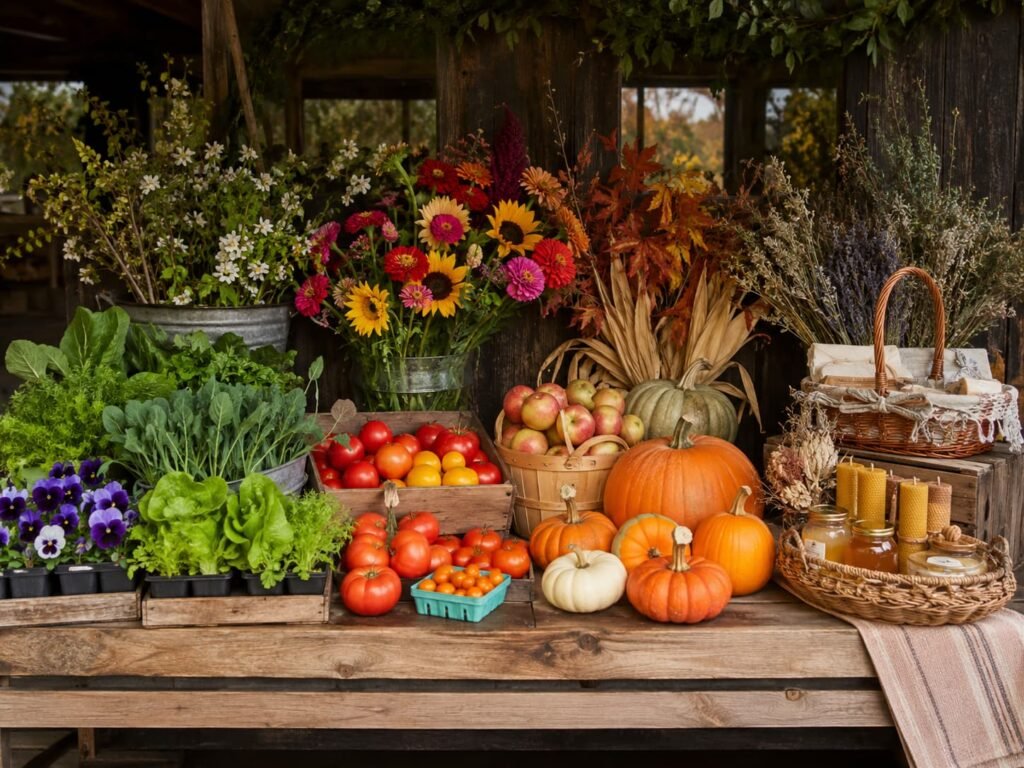
Spring
Spring customers are thinking about gardens, fresh greens, and getting outside again.
Good spring items include:
- Plant starts
- Potted herbs
- Lettuce
- Spinach
- Radishes
- Eggs
- Spring flowers
- Herb bundles
- Rhubarb
- Simple baked goods
Spring is also a good time to build customer habits before the busy summer season.
Summer
Summer is the easiest season for variety.
Good summer items include:
- Tomatoes
- Sweet corn
- Cucumbers
- Zucchini
- Peppers
- Berries
- Peaches
- Melons
- Cut flowers
- Salsa kits
- Fresh bread
This is when your stand can look full and colorful without much effort.
The struggle is heat. Shade, freshness, and frequent restocking matter.
Fall
Fall is a great season because people want cozy, decorative, and homemade things.
Good fall items include:
- Pumpkins
- Gourds
- Apples
- Cornstalks
- Mums
- Winter squash
- Jam
- Pies
- Dried herbs
- Candles
- Gift baskets
Fall displays can be especially powerful from the road.
A pile of pumpkins does half the marketing for you.
Winter
Winter is harder, but not hopeless.
You may not have fresh tomatoes, but you can still sell products that store well or feel giftable.
Good winter items include:
- Honey
- Soap
- Beeswax candles
- Dried herbs
- Seasoning mixes
- Bread
- Cookies
- Wreaths
- Gift baskets
- Stored squash
- Potatoes
- Onions
Winter works best if customers already know you from the warmer months.
Do You Need a Permit to Sell From a Farm Stand?
Maybe.
This depends on where you live and what you sell. Fresh, whole, uncut produce is often the simplest category, but that does not mean every farm stand is automatically free from rules.
You may need to check:
- Local zoning rules
- Roadside signage rules
- Business license requirements
- Sales tax rules
- Health department rules
- Cottage food laws
- Egg regulations
- Food labeling rules
- Canning and processing rules
Products that may need extra attention include:
- Eggs
- Meat
- Dairy
- Baked goods
- Jams
- Pickles
- Salsa
- Cut fruit
- Prepared meals
- Refrigerated foods
Your local extension office, agriculture department, or health department is usually the best place to start.
Do not rely on what someone in another state says online. Farm stand rules can change fast from one place to another.
Farm Stand Items That Are Harder Than They Look
Some products sound profitable until you deal with the details.
Think carefully before starting with:
- Cut fruit
- Cream pies
- Cheesecakes
- Meat
- Dairy
- Prepared refrigerated meals
- Low-acid canned foods
- Anything that melts
- Anything that wilts quickly
- Anything with expensive packaging
- Crafts that do not match your stand
- Produce you cannot keep clean and fresh
This does not mean you can never sell these things.
It just means they may need more permits, equipment, cooling, labeling, or food safety planning.
Start simple, then grow into the harder products.
How to Price Farm Stand Items
Pricing is where a lot of small sellers get uncomfortable.
It feels weird to charge a neighbor $6 for jam or $10 for a bouquet. But if you price everything like a favor, you will burn out fast.
Think about:
- Seeds
- Feed
- Soil
- Compost
- Jars
- Bags
- Labels
- Rubber bands
- Electricity
- Water
- Fuel
- Market research
- Spoilage
- Your time
A simple pricing formula is:
Supplies + packaging + labor + profit = minimum price
You should also check nearby farm stands, farmers markets, grocery stores, and local Facebook groups. You do not have to be the cheapest.
You just have to be fair and clear.
Simple pricing works best:
- $3 each
- 2 for $5
- $5 per bunch
- $10 per basket
- Fill a bag for $8
Customers should not need a calculator at your stand.
Tips for a Self-Serve Farm Stand
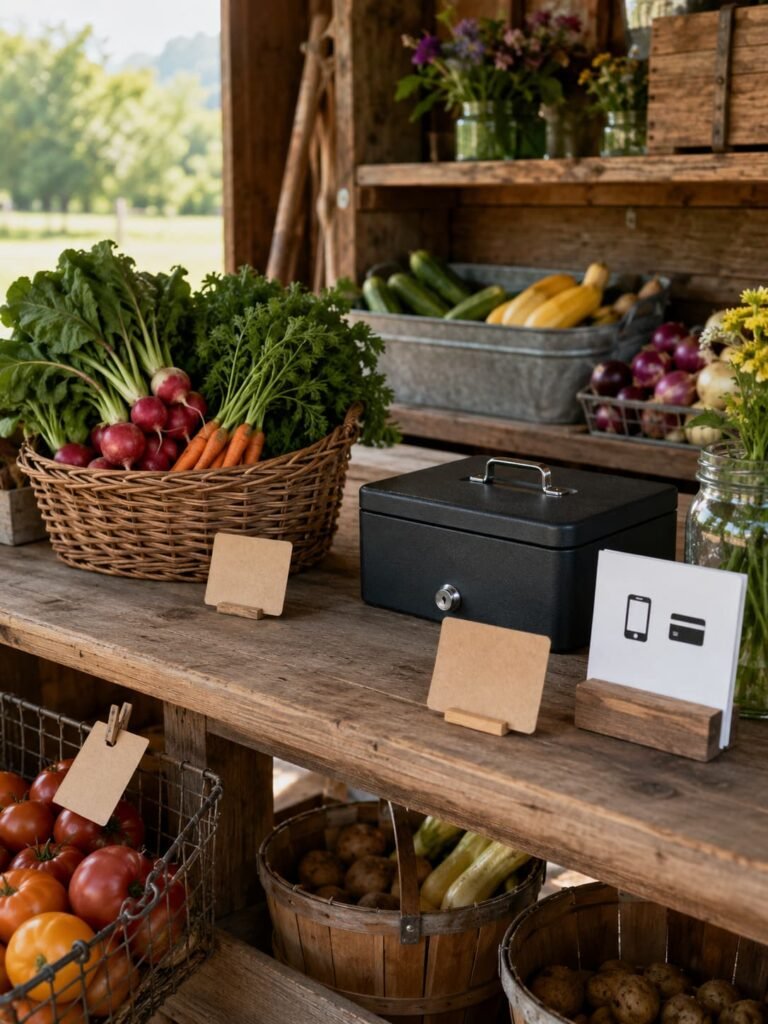
A self-serve stand can work well, but it needs to be simple.
People are usually making fast decisions. They may have kids in the car, groceries in the back seat, or only a few dollars in cash.
Make everything obvious.
Use:
- Clear prices
- Big signs
- Simple product choices
- A secure cash box
- A payment app option
- Small bills for change, if you offer change
- A sign explaining how to pay
- A shaded display
- A clean table
- Regular restocking
Avoid putting out too much at once, especially higher-value items.
If you are worried about theft, start small. Put out limited quantities, keep the stand visible, and restock more often.
Most people are honest, but not everyone is paying attention. Make payment easy and visible.
How to Display Farm Stand Products So They Sell
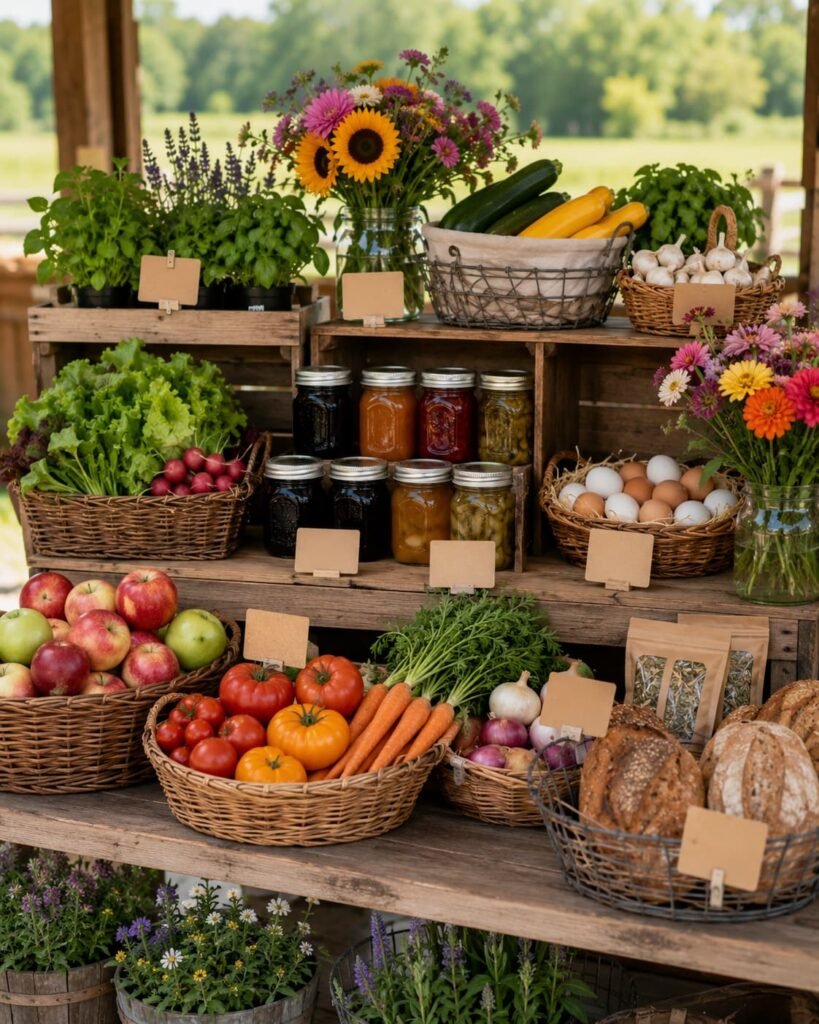
People buy with their eyes first.
Your stand does not need to be fancy, but it should look cared for. A clean, well-stocked table builds trust before anyone reads a sign.
Try these simple display tips:
- Put colorful items near the front.
- Use baskets, crates, or shelves for height.
- Keep damaged produce off the table.
- Group related items together.
- Use readable signs.
- Keep prices visible.
- Do not overcrowd the display.
- Restock small amounts often.
- Put flowers where passing cars can see them.
- Make payment instructions easy to find.
A half-empty stand can look picked over.
A wildly overfilled stand can look messy.
Aim for abundant but tidy.
Bundles That Help You Sell More
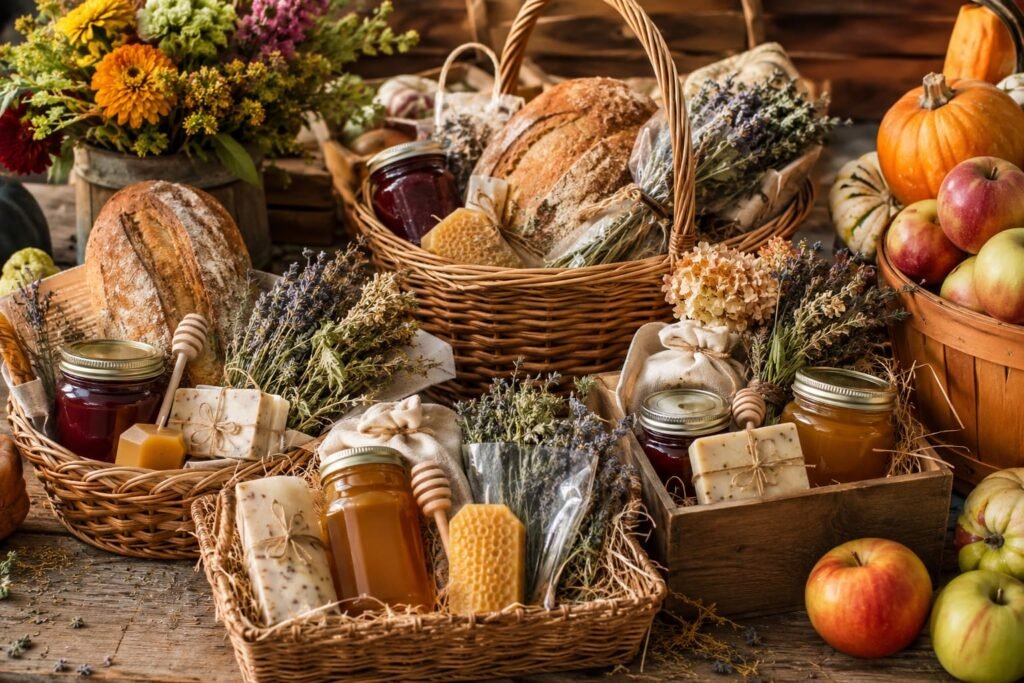
Bundles are a farm stand cheat code.
They help customers make a decision quickly, and they help you sell more than one item at a time.
Good bundle ideas include:
Salsa Kit
- Tomatoes
- Peppers
- Onion
- Cilantro
- Recipe card
Breakfast Bundle
- Eggs
- Bread
- Jam
Soup Kit
- Potatoes
- Carrots
- Onions
- Herbs
Pickle Kit
- Pickling cucumbers
- Dill
- Garlic
- Basic recipe card
Fall Porch Bundle
- Pumpkins
- Gourds
- Cornstalks
- Mini mums
Tea and Honey Bundle
- Honey
- Dried mint
- Lemon balm
- Small tea strainer
Gift Bundle
- Soap
- Candle
- Honey
- Dried flowers
Bundles work because they remove the “What would I do with this?” problem.
Show people the idea, and they are more likely to buy.
A Simple Starter Farm Stand Setup
Do not start with 27 products.
That sounds exciting, but it can turn into chaos quickly. Too many items mean too many prices, signs, containers, storage needs, and things to restock.
Start with a small menu.
For example:
- Eggs
- One seasonal vegetable
- One herb
- One flower or plant item
- One value-added product, if legal
That is enough to test your location and customer base.
Once you know what sells, add more.
Common Farm Stand Mistakes to Avoid
Most mistakes are fixable, but they can cost you sales.
Watch out for these:
No prices
Many people will not ask. They will just leave.
Too much old produce
One wrinkled pepper makes people question the whole table.
Confusing payment instructions
Make it painfully clear how to pay.
Too many products at once
A cluttered stand can overwhelm customers.
Selling things you do not enjoy making
If you hate baking, do not build your stand around bread.
Ignoring your local rules
This can turn a fun side income idea into a stressful problem.
Undercharging
Cheap prices are not helpful if they make the work unsustainable.
FAQ
What sells best at a farm stand?
Fresh seasonal produce, eggs, cut flowers, honey, baked goods, pumpkins, plant starts, and value-added foods like jam often sell well.
The best choice depends on your location, season, traffic, and local rules.
What is the easiest thing to sell at a farm stand?
Fresh whole produce is usually the easiest place to start.
Eggs, tomatoes, cucumbers, herbs, pumpkins, and plant starts are also beginner-friendly because customers already know what to do with them.
What are the most profitable farm stand items?
Cut flowers, plant starts, potted herbs, baked goods, honey, jam, soap, candles, and gift baskets can have good profit potential.
But profitability depends on your costs, labor, packaging, waste, and pricing.
Can I sell homemade food at a farm stand?
Maybe.
Many places have cottage food laws that allow certain homemade foods, but the rules vary. Baked goods, jams, pickles, sauces, refrigerated foods, meat, and dairy may all be treated differently.
Check your local health department or extension office before selling homemade food.
How do I attract more customers to my farm stand?
Start with clear roadside signs, visible prices, fresh-looking products, and consistent hours.
Flowers, pumpkins, and colorful produce can help catch attention from the road. Posting your daily stand updates in local Facebook groups can also help people remember to stop.
How much money can a small farm stand make?
It depends on traffic, product mix, pricing, and how often you sell.
A small stand may bring in a little extra grocery money. A well-placed stand with strong seasonal products, value-added foods, and loyal repeat customers can become a meaningful side income.
The best way to know is to track sales, costs, and waste from the beginning.
A farm stand is part business, part experiment.
Some days the tomatoes disappear before lunch. Other days you stare at the same basket of squash until evening and wonder why you bothered.
That is normal.
Start with a few items people already want. Keep the stand clean. Price things clearly. Pay attention to what sells without needing a sales pitch.
Then build from there.
The best farm stand is not the one with the longest product list. It is the one people trust, remember, and come back to when they need eggs, flowers, bread, pumpkins, or one perfect tomato for dinner.