A well-organized kitchen doesn’t just look better. It makes cooking faster, reduces food waste, and eliminates the frustration of digging through crowded cabinets every time you need something. The best organization systems aren’t the most expensive or the most elaborate—they fit the way you actually use your kitchen.
Organize Around Frequency of Use
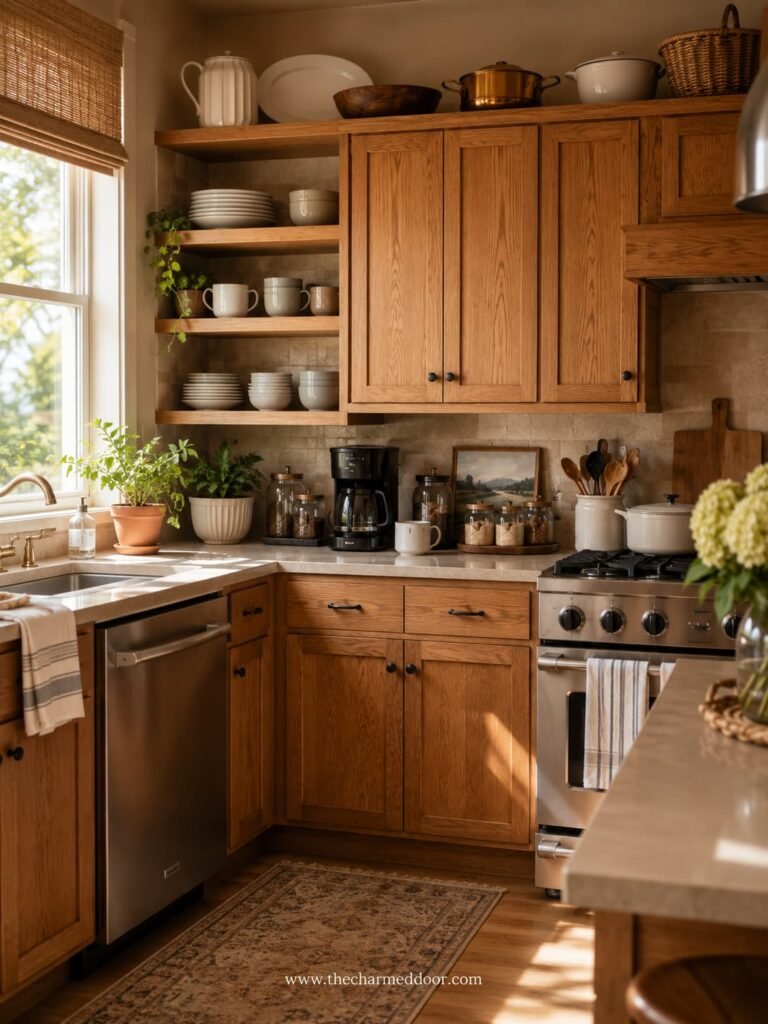
Many kitchens are organized by category alone. A better approach is to organize by how often you reach for things.
Keep daily-use items in the easiest-to-access locations:
- Everyday dishes near the dishwasher or sink
- Cooking utensils close to the stove
- Coffee supplies near the coffee maker
- Frequently used spices within arm’s reach of your main prep area
Reserve higher shelves and harder-to-reach spaces for seasonal serving dishes, specialty appliances, and items used only a few times a year.
People often waste premium cabinet space storing things they rarely touch while daily essentials end up buried in the back of lower cabinets.
Create Dedicated Zones
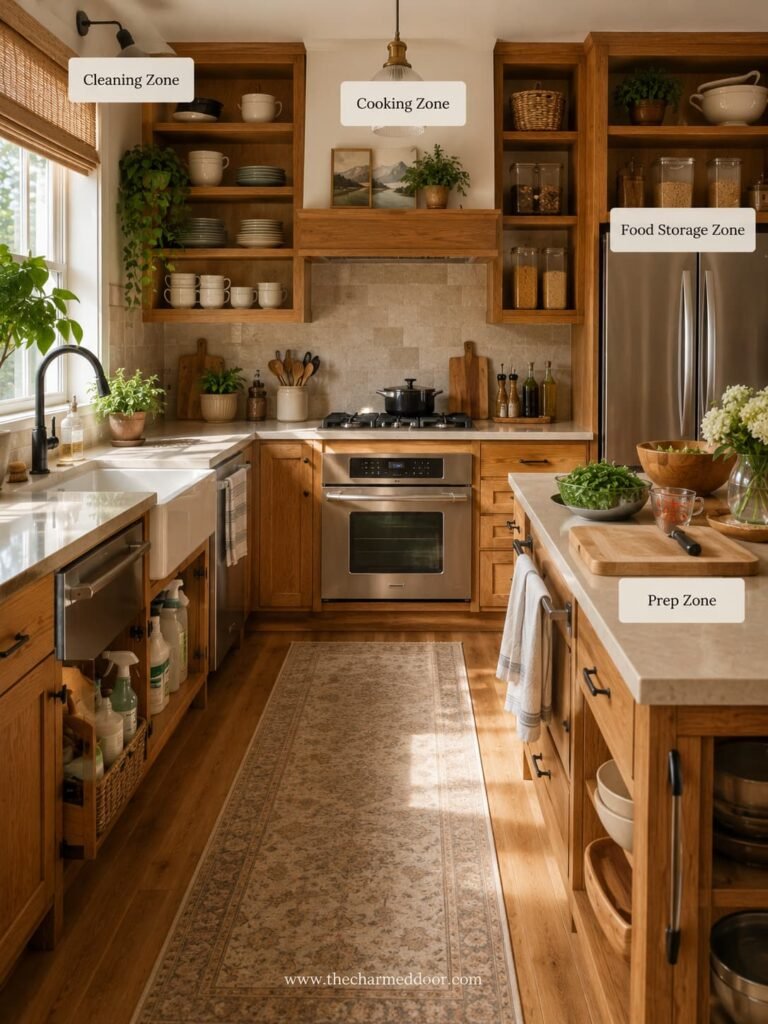
Professional kitchens rely on zones because they reduce unnecessary movement.
A typical home kitchen benefits from four primary zones:
Prep Zone
Store cutting boards, knives, mixing bowls, measuring tools, and frequently used ingredients together.
The less time you spend walking between cabinets during meal preparation, the smoother cooking feels.
Cooking Zone
Keep oils, spices, utensils, pot holders, pots, and pans near the stove.
Many people store spices on the opposite side of the kitchen because that’s where space was available. It works until you’re stirring a sauce with one hand and searching for paprika with the other.
Cleaning Zone
Place dish soap, dishwasher tablets, trash bags, and cleaning cloths near the sink.
When cleaning supplies are scattered throughout the kitchen, simple cleanup tasks take longer than necessary.
Food Storage Zone
Group food containers, lunch boxes, foil, plastic wrap, and storage bags together. Packing leftovers becomes much easier when everything is in one location.
Use Vertical Space Inside Cabinets
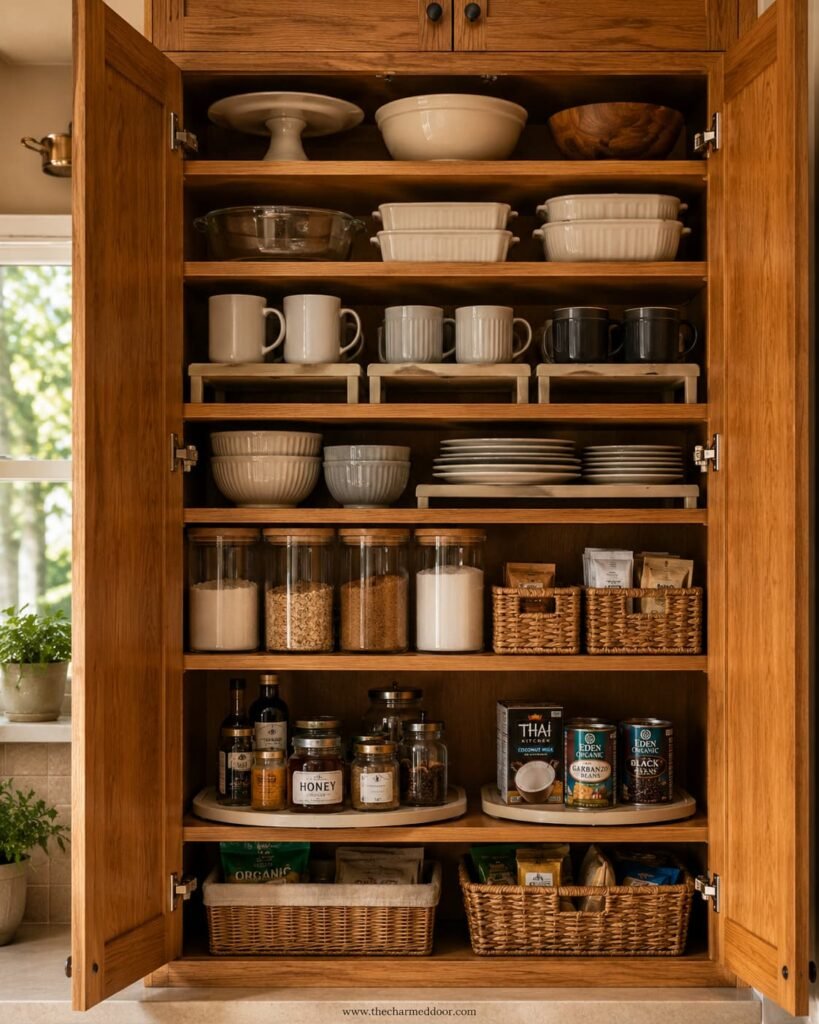
Most cabinets waste a surprising amount of height.
Adding shelf risers instantly creates additional levels for plates, mugs, canned goods, and pantry items.
Without risers, stacks tend to become unstable as they get taller. People often compensate by creating multiple short stacks, which consumes more shelf space than necessary.
Wire shelves, expandable racks, and stackable organizers can nearly double usable storage in many cabinets.
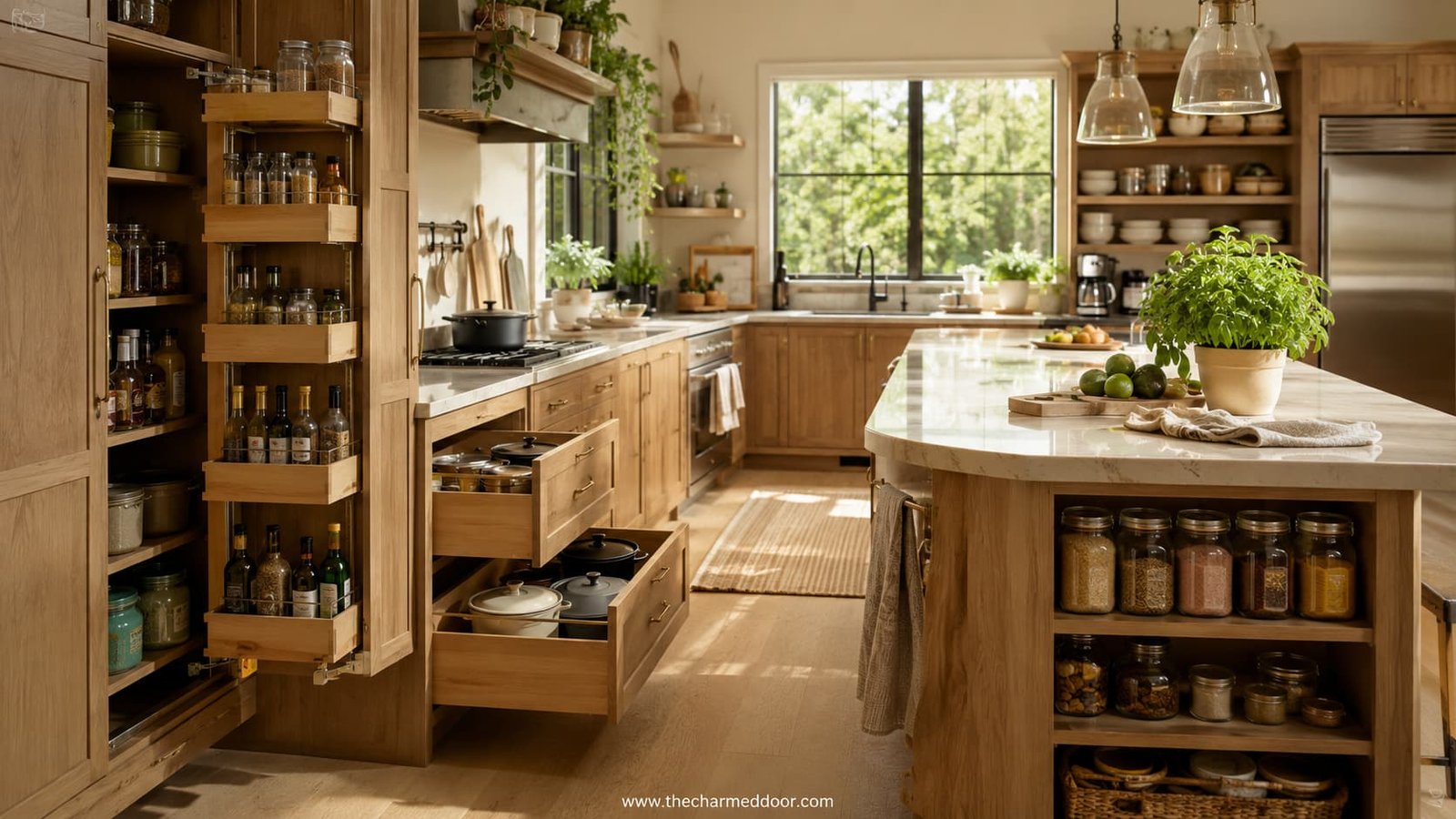
Make Deep Cabinets Accessible
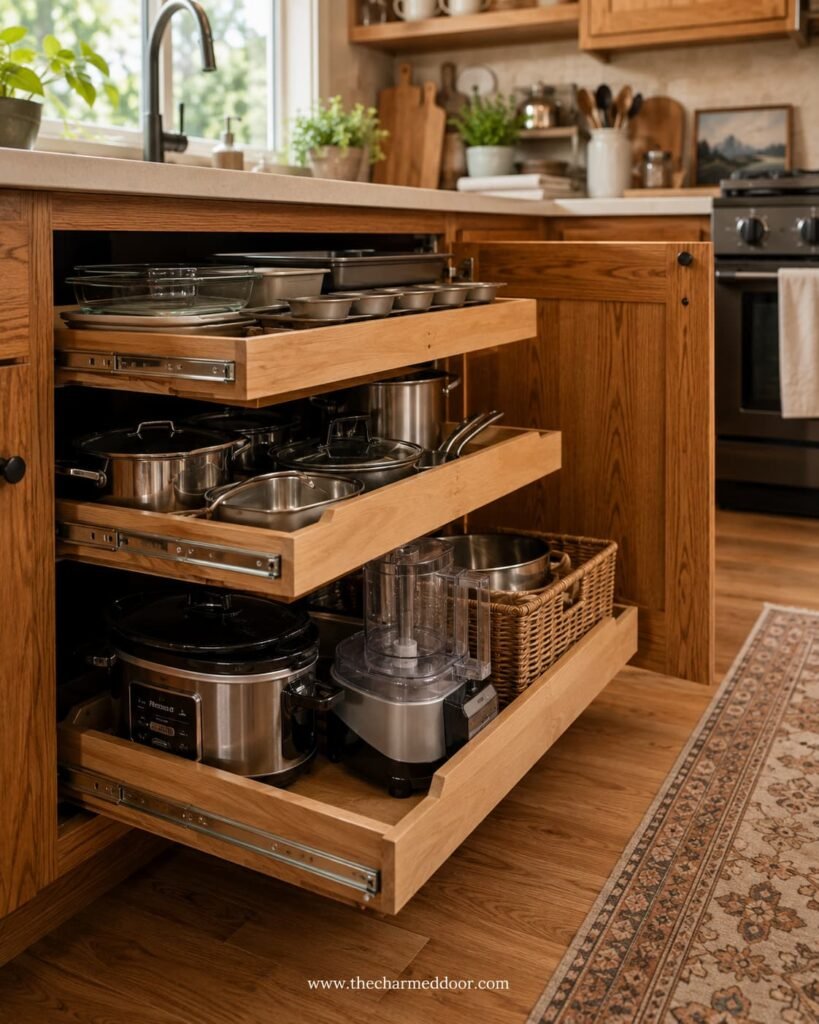
Deep cabinets frequently become black holes where items disappear.
Pull-out drawers, sliding baskets, and bins solve this problem by bringing contents toward you instead of forcing you to reach blindly into the back.
Large pots, slow cookers, and baking equipment benefit especially from pull-out storage.
If custom drawers aren’t an option, use inexpensive bins with handles. Being able to remove an entire container is far more convenient than unloading half a cabinet to reach one item.
Decant Select Pantry Items
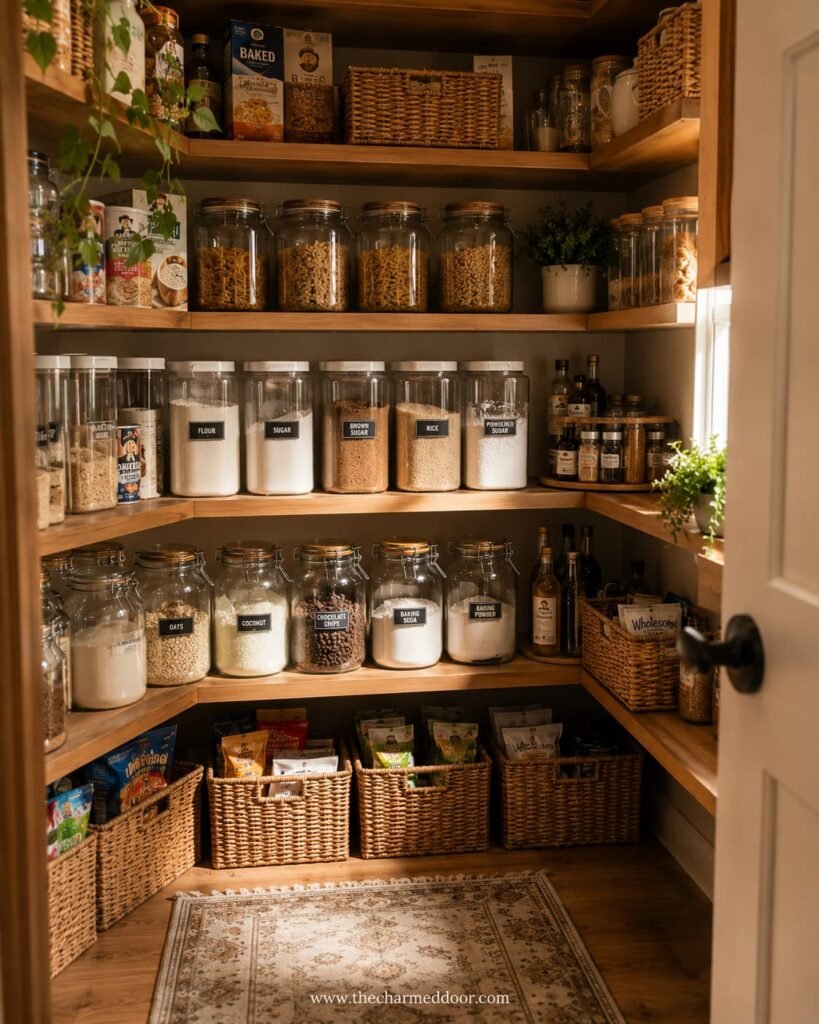
Not everything needs matching containers, but certain foods become easier to manage when transferred from bulky packaging.
Good candidates include:
- Flour
- Sugar
- Rice
- Pasta
- Cereal
- Baking ingredients
Clear containers make inventory visible at a glance.
The goal isn’t aesthetics alone. Large bags often collapse, spill, and consume more space than rigid containers.
However, avoid decanting everything. Keeping dozens of specialty ingredients in separate containers can create more work than it saves.
Store Food Containers With Their Lids
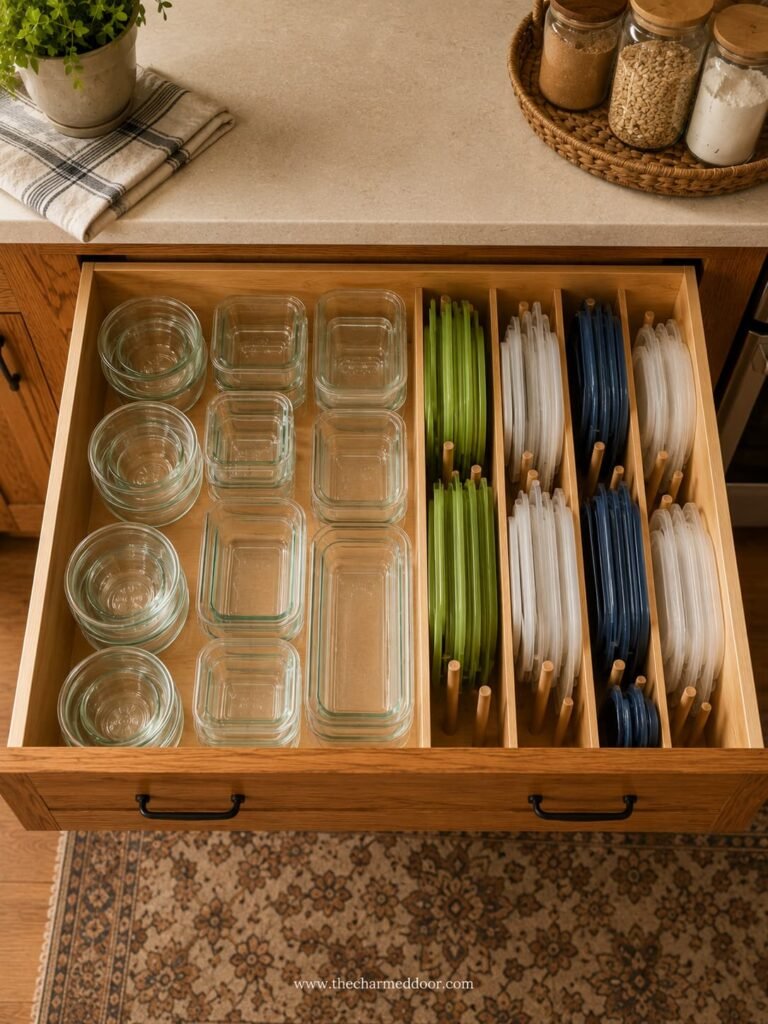
Few kitchen frustrations match searching for a matching container lid.
Instead of nesting containers with lids attached, stack containers separately by size and keep lids upright in a divider.
Vertical lid storage allows you to see every lid at once.
Many people discover they own far fewer usable containers than they thought because mismatched lids have accumulated over time.
Use Drawer Dividers Everywhere
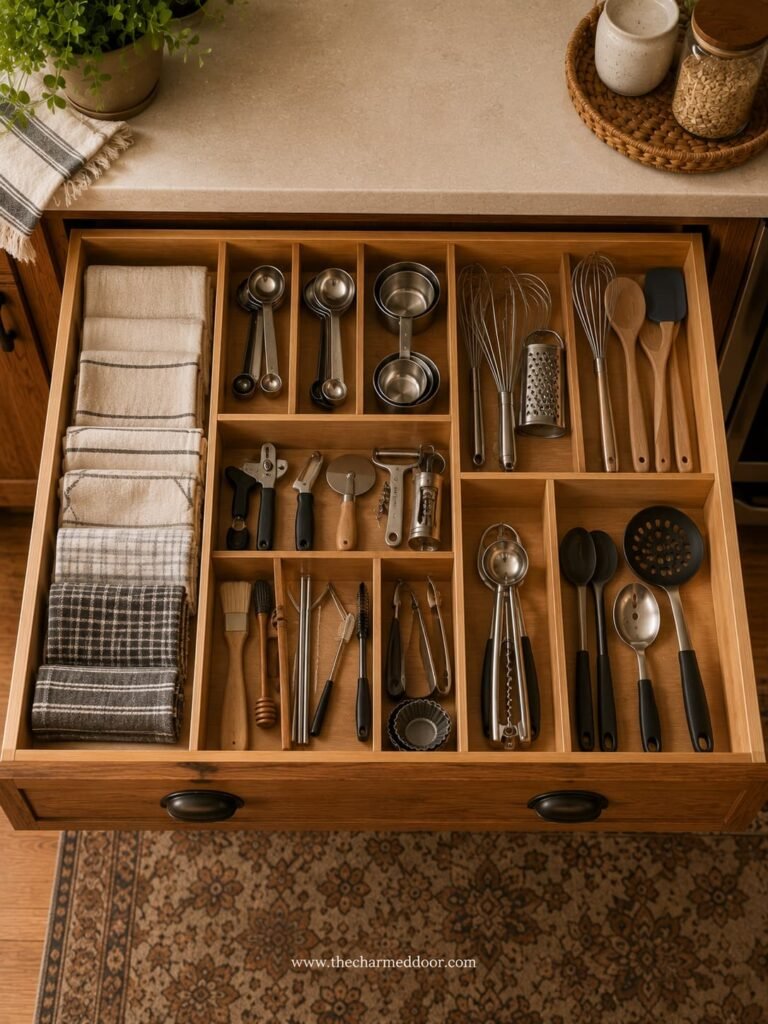
Kitchen drawers tend to drift toward chaos because objects slide around whenever the drawer opens.
Adjustable dividers work for:
- Utensils
- Measuring spoons
- Gadgets
- Food wraps
- Kitchen towels
A drawer doesn’t need dozens of compartments. Even a few dividers create enough structure to prevent everything from merging into one pile.
Take Advantage of Cabinet Doors
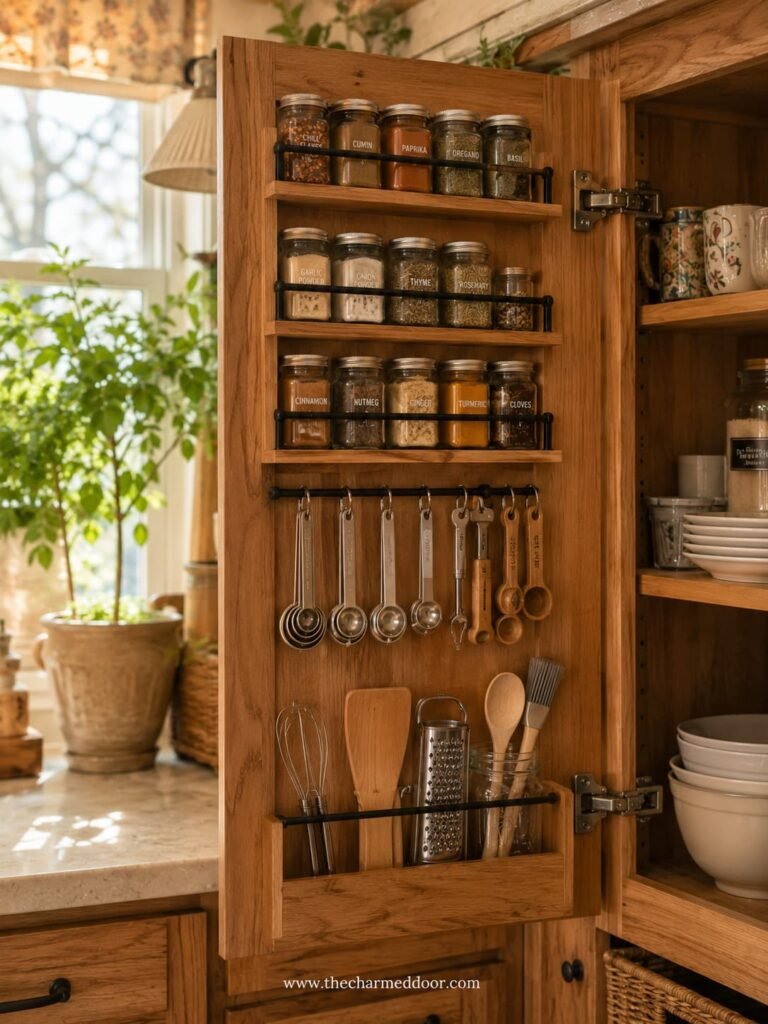
The inside of cabinet doors often goes unused.
Consider mounting:
- Spice racks
- Measuring spoon hooks
- Cleaning supply organizers
- Pot lid holders
- Plastic wrap dispensers
Be careful with depth. Some organizers prevent doors from closing if shelves are already packed tightly.
Organize the Refrigerator by Function
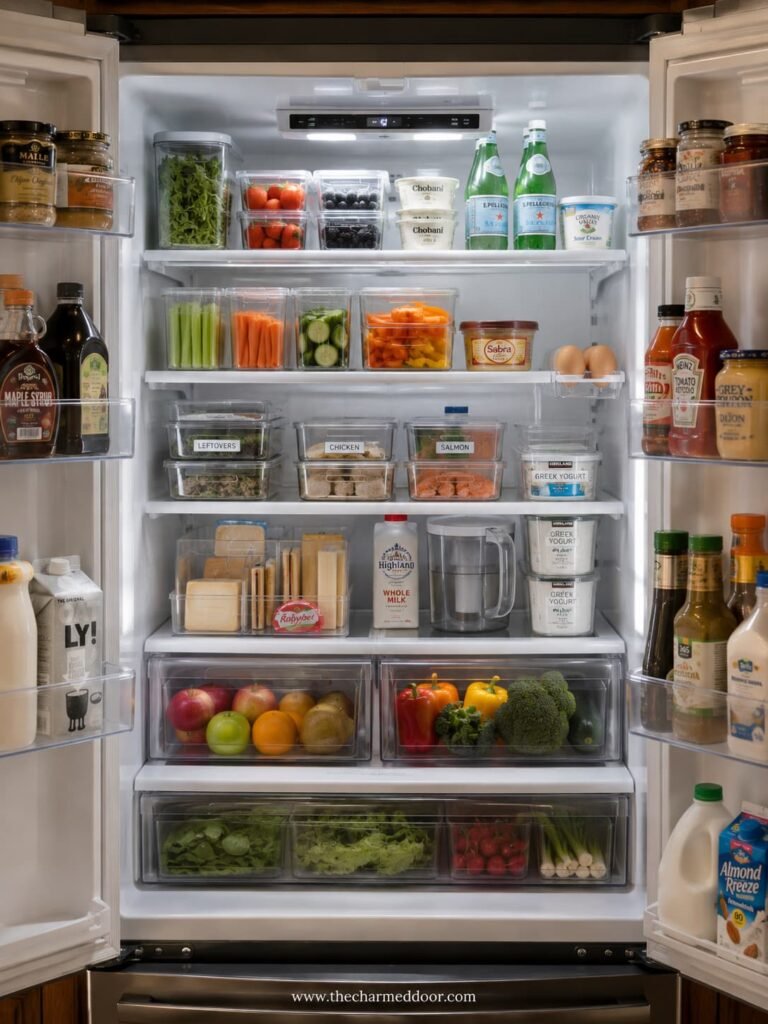
Many refrigerators are organized according to available space rather than usage.
A more effective layout:
- Ready-to-eat foods at eye level
- Leftovers on one designated shelf
- Condiments together
- Produce in drawers
- Raw meat on the lowest shelf
Creating a dedicated leftovers shelf makes forgotten food far easier to spot before it expires.
Transparent bins also help contain small items that otherwise migrate throughout the refrigerator.
Keep Countertops Intentionally Sparse
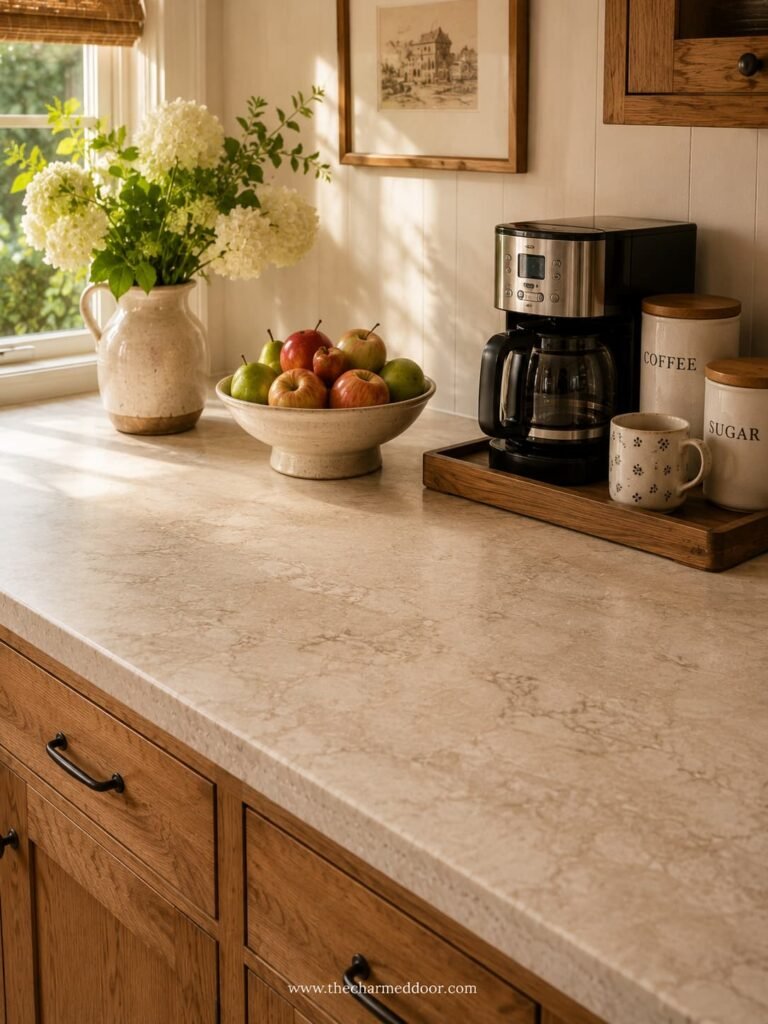
A clear countertop creates the impression of an organized kitchen even before any cabinets are opened.
Leave out only appliances used multiple times per week.
Everything else should earn its place.
People often become accustomed to countertop clutter and stop noticing how much workspace it consumes until they clear it.
The extra preparation space usually feels more valuable than immediate access to an appliance used once a month.
Use Labels Where Confusion Happens
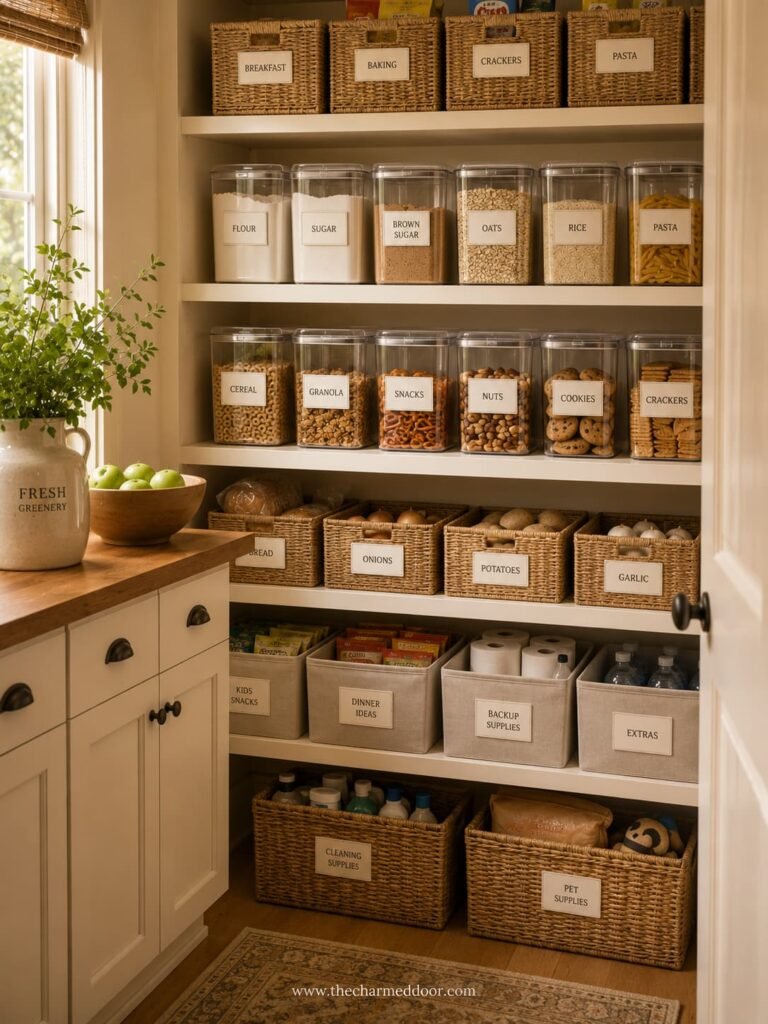
Labels aren’t necessary everywhere.
They are most useful when:
- Multiple people use the kitchen
- Pantry containers look similar
- Storage systems are new
- Children help with cleanup
Labeling every shelf can become visual clutter. Focus on areas where items are frequently misplaced.
Establish a Weekly Reset
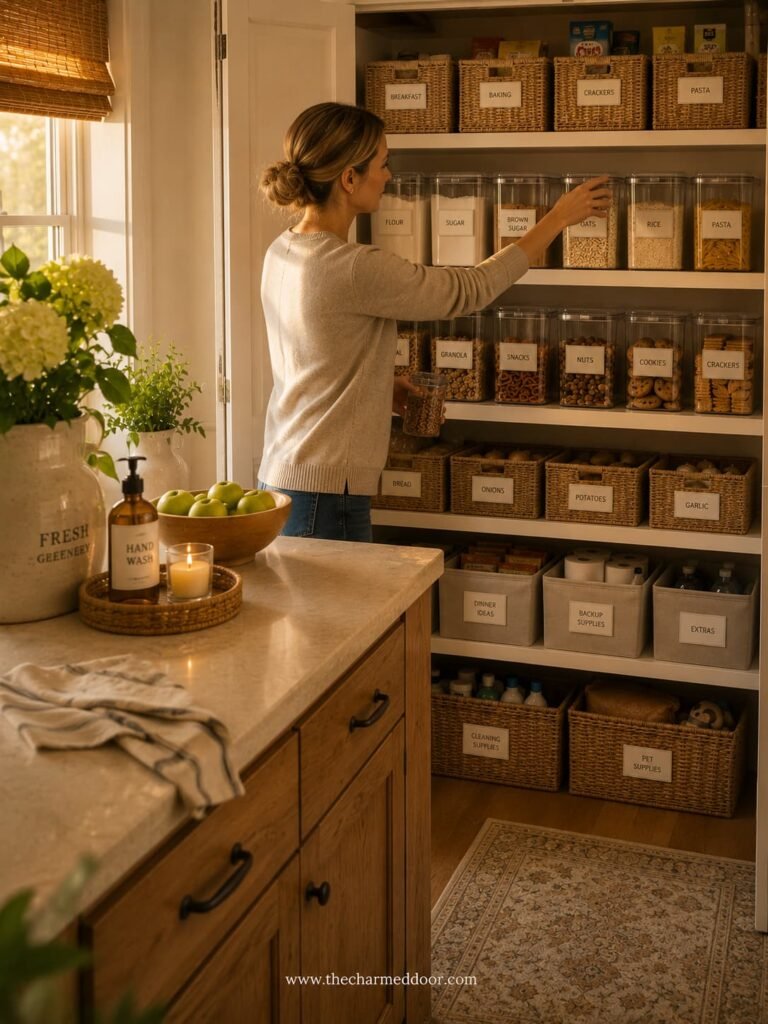
Even the best organization system drifts over time.
A five-minute weekly reset prevents small messes from becoming major projects.
Return items to their assigned zones, discard expired food, and restack anything that has migrated.
The kitchens that stay organized are rarely perfect. They simply get corrected before disorder accumulates.
Remove What You Don’t Use
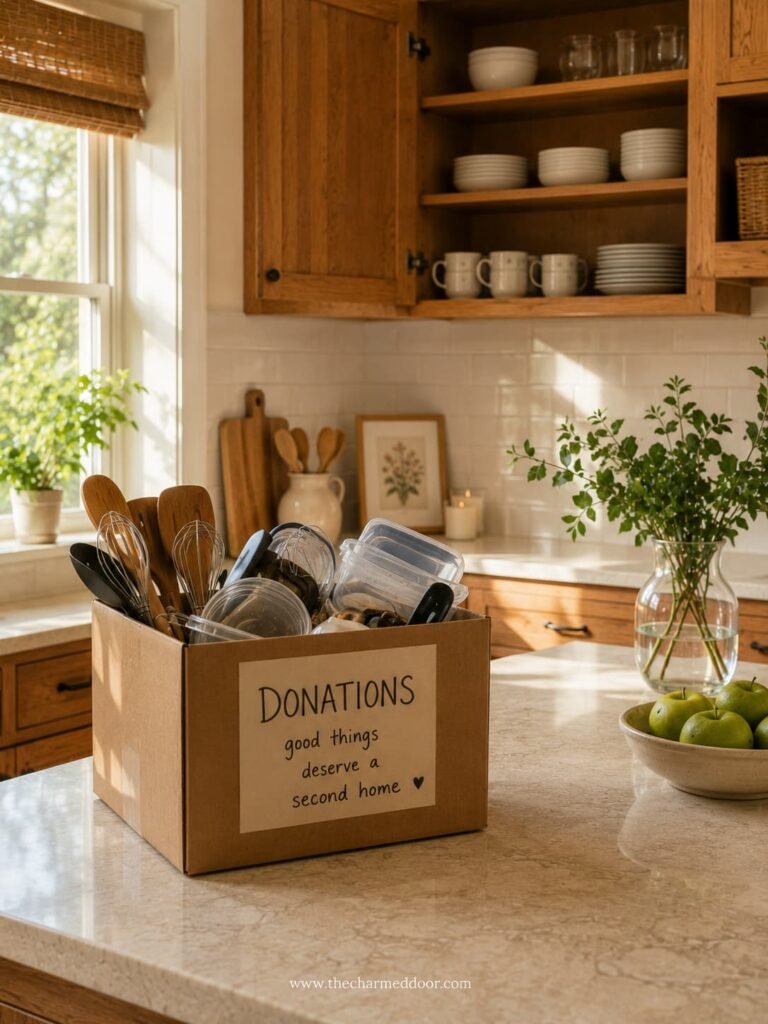
Organization becomes dramatically easier when there is less to organize.
Most kitchens contain duplicate tools, rarely used gadgets, expired pantry items, and storage containers without matching parts.
Before buying organizers, reduce inventory.
Many people spend money creating storage solutions for items they don’t actually need.
The fastest way to gain space is often removing something rather than finding a place to put it.
Make Your Storage Match Your Habits
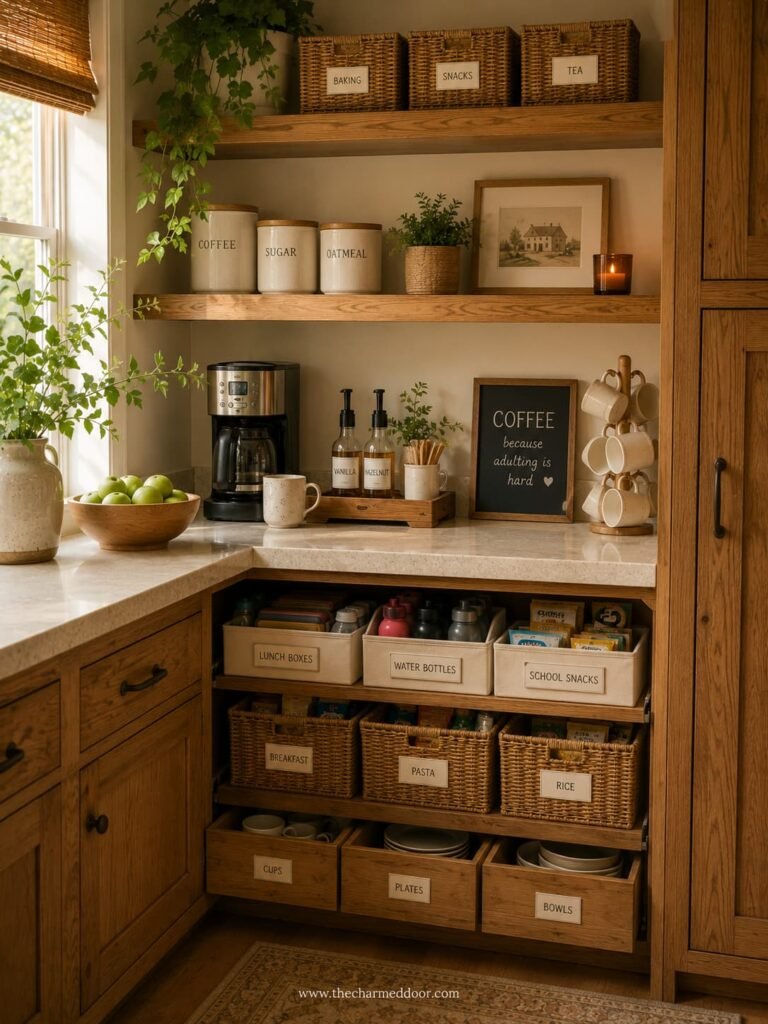
The most effective kitchen organization system is one you’ll maintain without thinking about it.
If everyone drops keys and mail on one corner of the counter, create a tray there. If coffee supplies always migrate around the kitchen, give them a dedicated station. When organization works with existing habits instead of fighting them, it lasts.
A kitchen doesn’t need magazine-worthy perfection. It needs clear zones, easy access to everyday items, and enough structure that putting things away feels effortless.