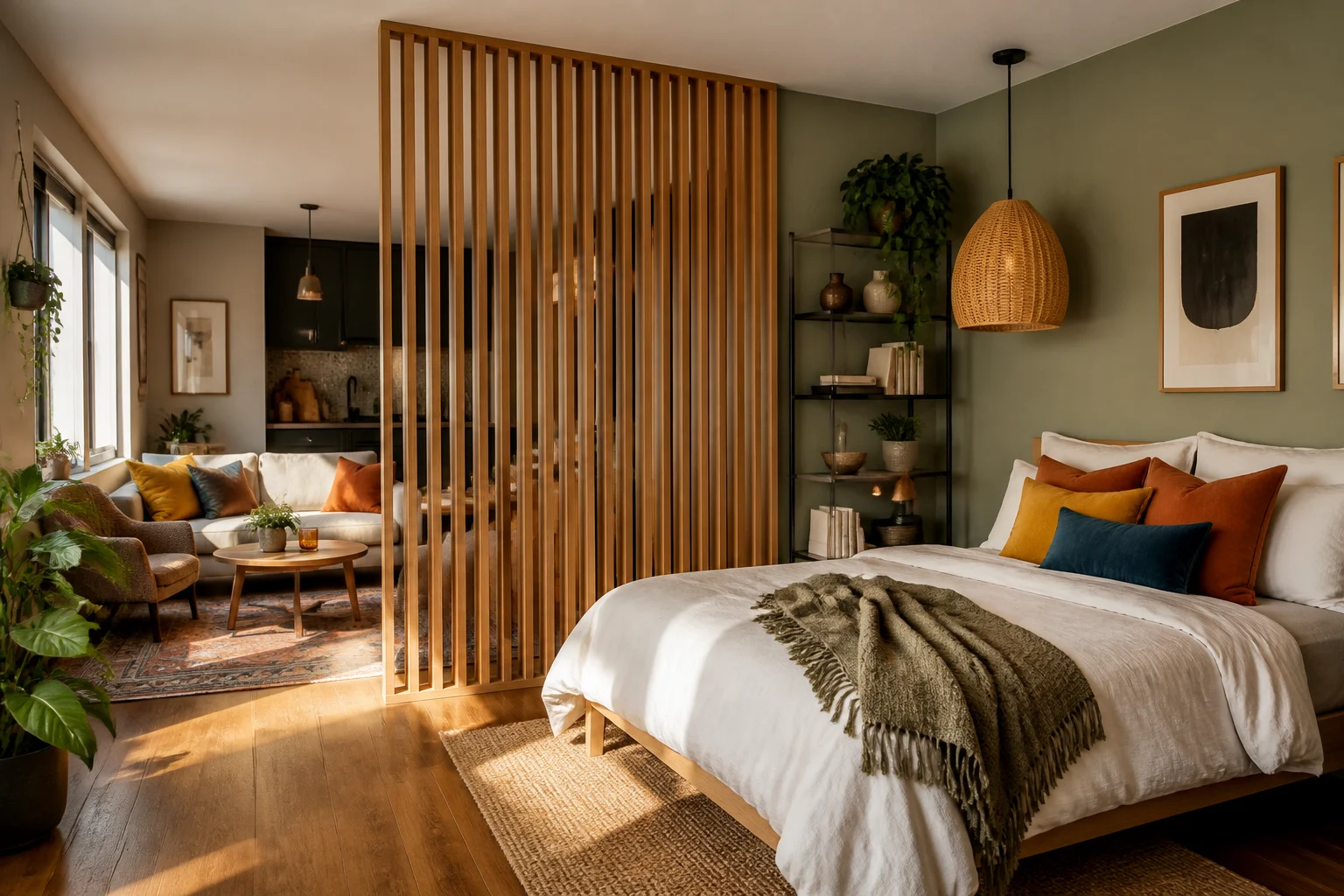
Open-plan rooms sound dreamy until your bed, desk, laundry chair, and bookcase all end up in one visual pile. A wooden slat room divider is a smart fix because it creates separation without making the room feel chopped up. The gaps keep light moving, the wood adds warmth, and the whole room starts to feel more intentional. Whether you live in a studio apartment, rent a small bedroom, or want to divide a multipurpose room, these ideas will help you choose the right placement, spacing, finish, and styling details without overbuilding the space.
1. Frame the Bed Without Closing Off the Room
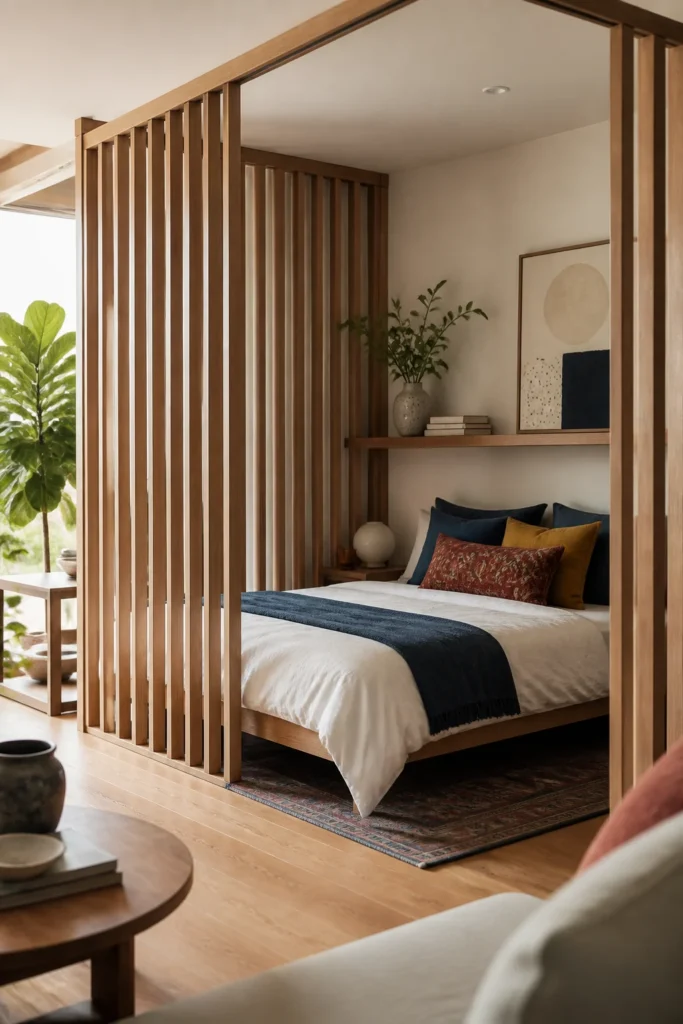
A wooden slat divider works beautifully when the bed needs a little privacy but a full wall would make the room feel smaller. Place the slats between the sleeping area and the main living zone so the bed feels tucked away, not stranded in the middle of everything.
Floor-to-ceiling slats create the most built-in look. For a small room, gaps around 1 to 2 inches usually work well. Narrow gaps give more privacy, while wider gaps keep the divider feeling light and airy.
Leave enough walking room around the bed. Aim for 24 to 30 inches on at least one side if possible. A divider can look amazing, but it should not make daily life feel like an obstacle course.
2. Use a Half Divider When a Full Wall Feels Too Heavy
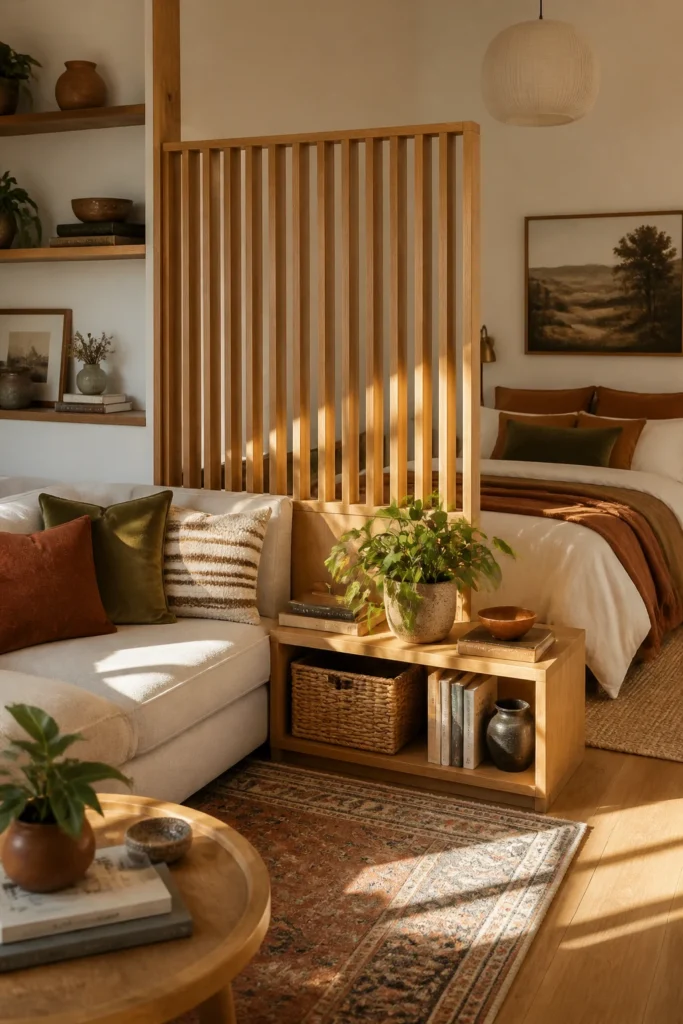
A partial slat divider gives you structure without making the room feel boxed in. It works well beside a bed, behind a sofa, next to a dining nook, or near an entryway where you want a gentle visual boundary.
This is also a great option for renters. A freestanding half divider can move with you, and it usually requires less commitment than a ceiling-mounted design. Look for a sturdy base, especially if the piece is tall or sits in a busy walkway.
A half divider looks better when it has a “buddy.” Pair it with a low cabinet, bench, console table, or plant stand so it feels connected to the room. Otherwise, it can look like a lonely screen trying very hard to be architectural.
3. Combine Slats With Storage
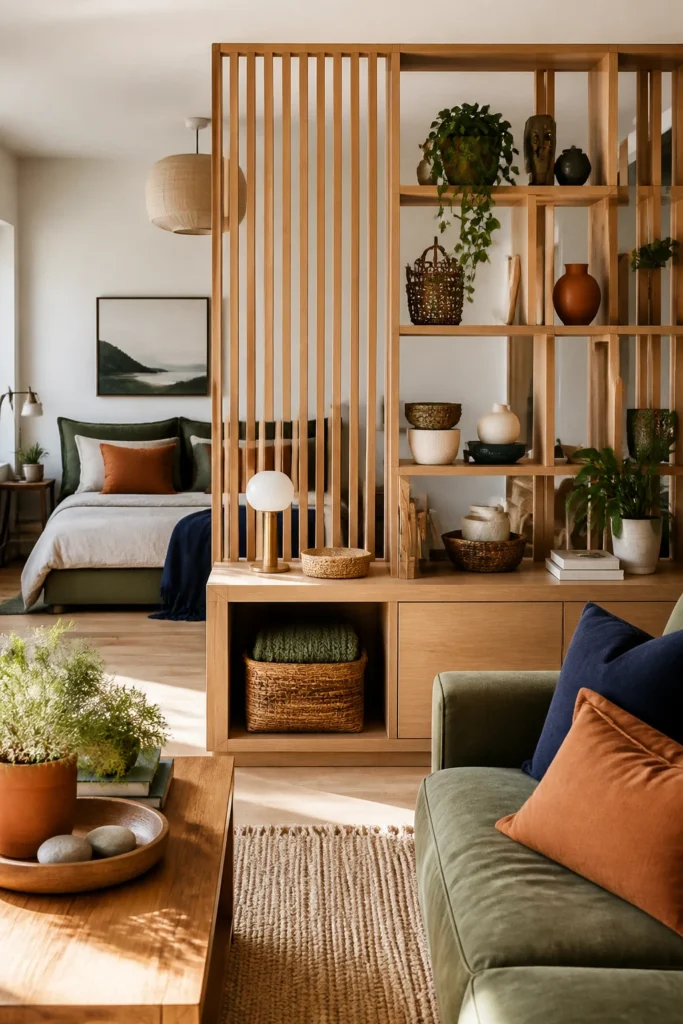
Small spaces love furniture that does more than one job. A slat divider attached to a shelf, cubby unit, or low cabinet gives you privacy and storage in the same footprint.
Use the storage side for practical things: baskets, bedding, books, chargers, craft supplies, or work-from-home gear. Keep the slat side cleaner so the divider stays visually calm. Too many objects next to narrow wood lines can make the whole area feel busy.
Matching every wood tone is not necessary. Similar warmth matters more. Pale oak, pine, bamboo, and beech can sit nicely together, especially in bright rooms with white, cream, sage, or soft neutral walls.
4. Turn the Divider Into a Headboard Moment
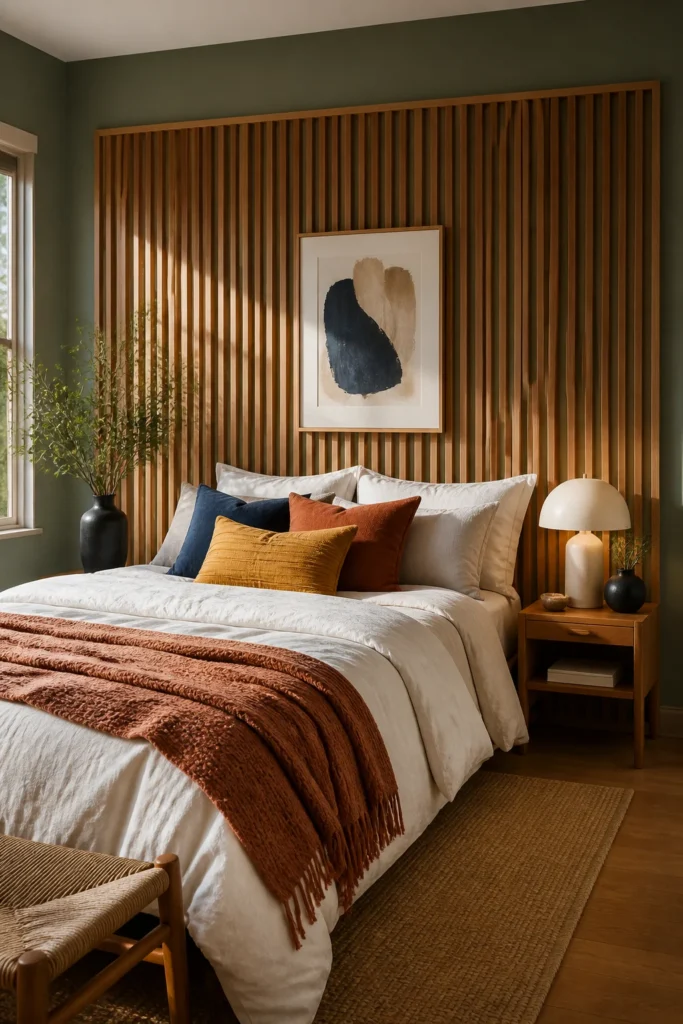
A slatted headboard divider is perfect when the bed needs a stronger anchor. Instead of using a standard headboard against a wall, let the slats create a backdrop that separates the bed from the rest of the room.
For good proportion, choose a divider that is wider than the mattress by at least 6 to 12 inches on each side. That extra width makes the bed feel framed instead of squeezed. If the divider is too narrow, it can look like an afterthought.
Keep the bedding simple around strong vertical slats. Try one textured throw, two or three pillows, and a small bedside light. The wood already brings pattern, so the rest of the bed does not need to shout.
5. Hide a Desk Without Making a Cave
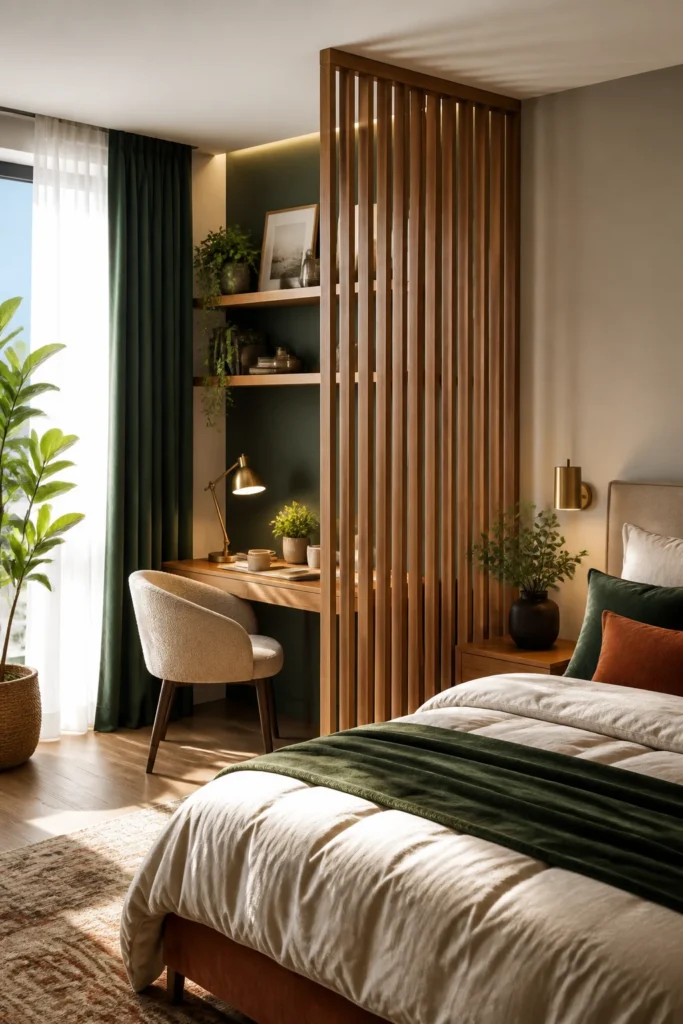
A home office tucked into a bedroom or living room can make the whole space feel unfinished after work hours. A wooden slat divider helps blur the desk zone without blocking every bit of light.
Place the slats beside or behind the desk, not directly in front of the window. The goal is to hide the work zone, not punish yourself with striped shadows across your keyboard all afternoon.
For a cleaner look, keep desk accessories low and useful. A lamp, a small tray, one plant, and a closed storage box are usually enough. The divider gives the work area structure, so clutter becomes more obvious.
6. Pick a Finish That Matches the Mood
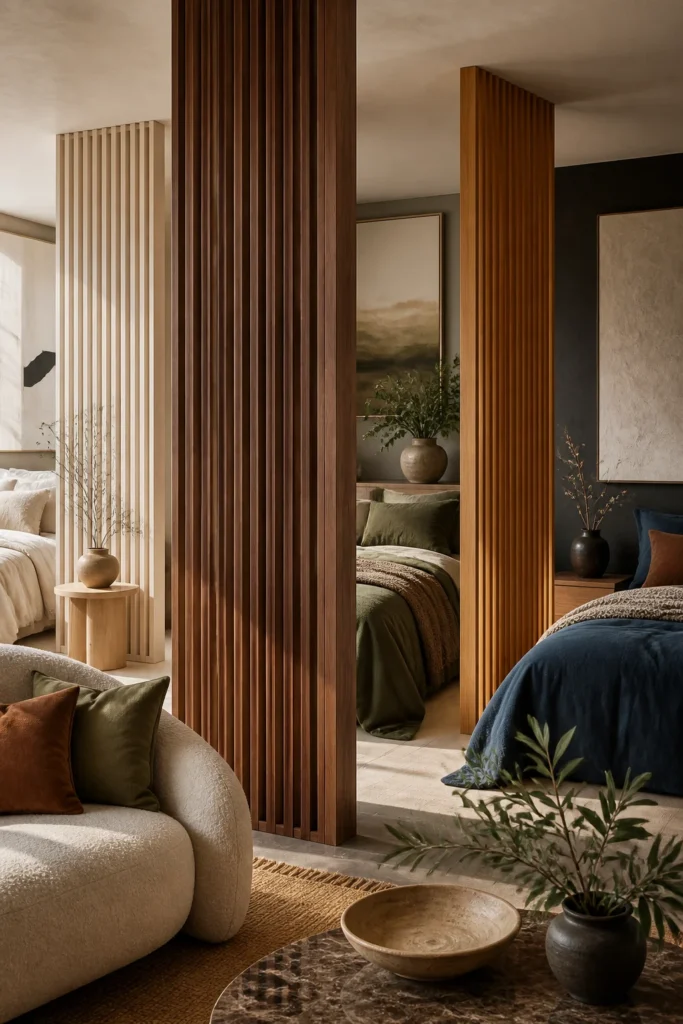
The finish changes the whole personality of a wooden slat room divider. Pale wood feels light, casual, and Scandinavian. Medium oak feels warm and classic. Dark walnut or stained wood feels moodier and more architectural.
In a small space, lighter finishes are usually easier to work with because they reflect more light. Dark slats can still be gorgeous, but they are not shy. Give them pale walls, open floor space, or a good lamp nearby so they do not swallow the corner.
Choose a matte or satin finish if the divider will be touched often. Glossy wood shows fingerprints more easily. Raw wood can look beautiful, but it collects oils, dust, and marks faster, especially around beds, desks, and high-traffic areas.
7. Let Lighting Bring Out the Texture

Wooden slats can look flat at night if the room only has overhead lighting. Add a floor lamp, pendant, wall sconce, or warm LED strip nearby to highlight the depth of the wood.
Warm white bulbs usually flatter natural wood best. Cool bulbs can make the finish look gray or dull. For bedrooms and living rooms, soft lighting works better than harsh light that throws dramatic stripes everywhere.
Side lighting is especially helpful. Place a lamp near one end of the divider so the light grazes the slats. The effect feels cozy and intentional without turning the room into a shadow performance.
8. Style Around the Slats, Not All Over Them
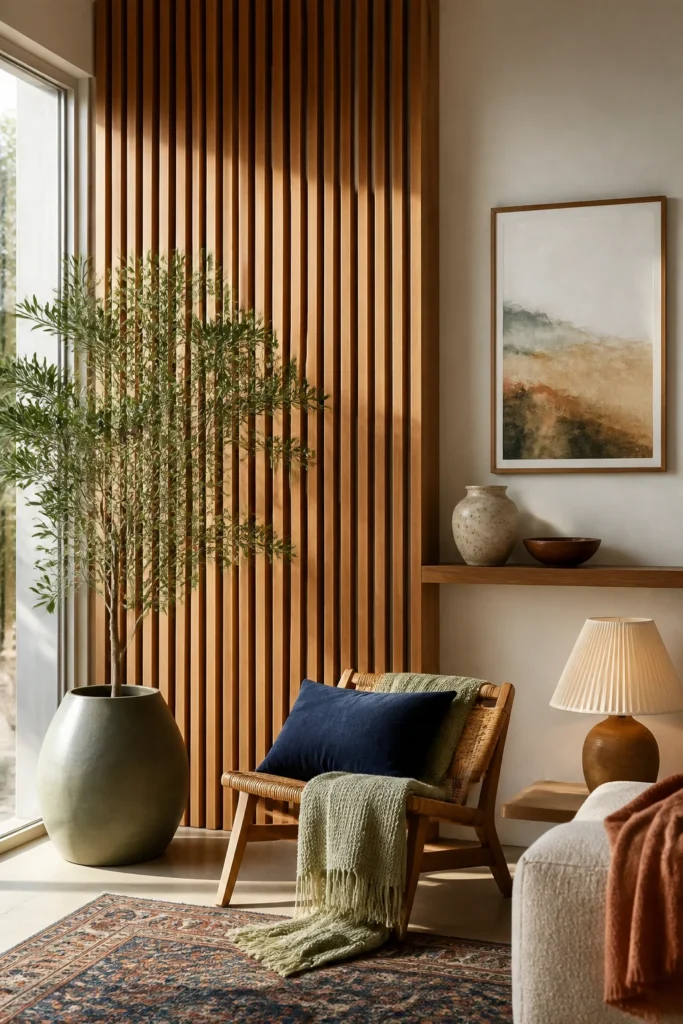
A wooden slat divider already has a strong rhythm, so it does not need much decoration attached to it. Instead of hanging lots of art directly on the slats, decorate the wall or furniture nearby.
A simple styling formula works well:
- One medium framed print
- One small object, like a ceramic vase or candle holder
- One useful piece, like a lamp or narrow shelf
- One plant to soften the vertical lines
Avoid attaching heavy frames to thin slats unless the divider has strong backing. For DIY builds, hooks should go into a solid frame or wall anchor, not just a decorative strip of wood.
9. Add Plants for a Softer, Lived-In Look

Plants break up the straight lines of a slatted divider and make the room feel less rigid. A tall plant at one end can soften the edge, while a trailing plant on a nearby shelf adds movement.
Choose plants based on the light in the room. Snake plants, ZZ plants, pothos, rubber plants, and philodendrons are popular options because they can handle normal indoor conditions. Bright corners can take fuller plants, while lower-light spots need tougher choices.
Resist the urge to build a tiny jungle at the base. One tall plant often looks calmer than six small pots fighting for attention. The divider should still feel like part of the architecture, not a plant storage rack.
10. Build a Simple DIY Slat Divider
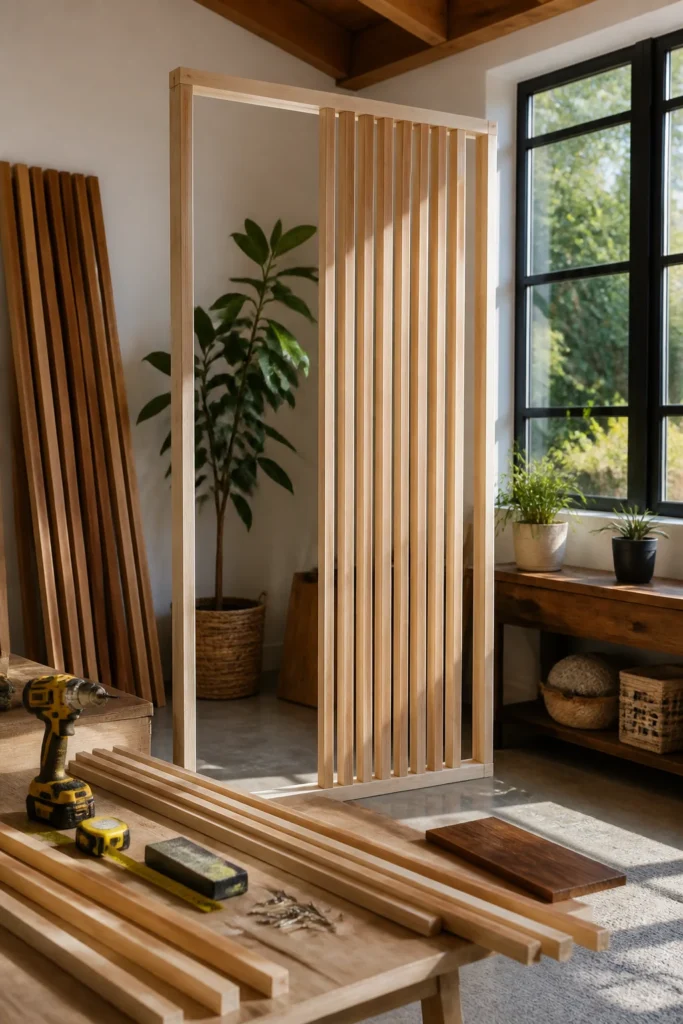
A DIY wooden slat divider is doable if the design stays simple. Straight cuts, even spacing, sanding, and a secure frame matter more than fancy details.
Basic supplies may include:
- Wood battens, square dowels, or narrow boards
- Two horizontal rails or a rectangular frame
- Measuring tape and pencil
- Wood glue or screws
- Sandpaper
- Stain, paint, or clear sealant
- Wall anchors, ceiling mounts, or a freestanding base
Spacing is the step that makes or breaks the project. Use a scrap piece of wood as a spacer between each slat so every gap stays consistent. Uneven gaps are one of the fastest ways for a DIY divider to look rushed.
Sand the edges before finishing. Slats collect dust and hands touch them often, so rough wood will not age well. Let stain, paint, or sealant dry fully before bringing the divider into a bedroom or living area.
Common Mistakes to Avoid
A wooden slat divider looks simple, but the small details matter.
Gaps that are too narrow can block light and make the room feel caged in. Gaps that are too wide may not give enough privacy. For most indoor rooms, 1 to 2 inches is a safe starting point.
Traffic flow also matters. Before installing anything permanent, mark the divider’s footprint on the floor with painter’s tape. Walk around it for a day. Open drawers, pull out chairs, make the bed, and check whether the placement still works.
Too many wood tones can also make a small room feel messy. Two finishes usually look layered. Four different finishes can look accidental. Repeat one wood tone elsewhere in the room through a shelf, bed frame, side table, tray, or picture frame.
Best Places to Use a Wooden Slat Divider
Wooden slat dividers are most useful where you want separation without losing light. They are especially good for rooms that do double duty.
Great places to use one include:
- Studio apartments where the bed needs privacy
- Small bedrooms with a desk or dressing area
- Living rooms that open straight into an entryway
- Shared bedrooms with separate zones
- Dining nooks inside open-plan layouts
- Home offices tucked into multipurpose spaces
- Covered patios where you want a soft privacy screen
For damp or outdoor areas, material choice matters. Use sealed cedar, teak, composite wood, or powder-coated metal with a wood-look finish. Unfinished pine may be fine indoors, but outside it can warp, stain, or age quickly without proper protection.
FAQ
Are wooden slat room dividers good for small rooms?
Yes, wooden slat room dividers are great for small rooms because they separate zones without fully blocking light. Choose a light or medium wood finish if the room already feels tight.
How far apart should wooden slats be?
Most indoor dividers look balanced with gaps around 1 to 2 inches. Use tighter gaps for more privacy and wider gaps for a lighter, more decorative look.
Can renters use wooden slat dividers?
Renters can use freestanding screens, divider shelves, tension-mounted systems, or lightweight panels that do not require drilling. Stability is the main thing to check, especially with tall pieces.
What style works best with wooden slat dividers?
Wooden slat dividers work with Scandinavian, Japandi, midcentury, boho, modern organic, minimalist, and warm contemporary rooms. The finish, lighting, and surrounding furniture decide the final mood.
Conclusion
A wooden slat room divider is a smart way to make an open room feel calmer, warmer, and better organized. It can hide a bed, soften a desk zone, frame a small entry, or create privacy without building a solid wall. Start with the spot that feels most visually messy, then choose a simple slat style, a finish that suits the room, and enough breathing space for everyday life to stay easy.