A shower curtain can make a bathroom feel finished, or it can make the whole room look like it was decorated in a hurry. The tricky part is that it has to do two jobs at once: keep water where it belongs and act like one of the biggest design features in the room.
The good news? Treating a shower curtain more like drapery instantly makes it look more intentional. That means better length, nicer fabric texture, smarter hardware, and a curtain that works with the room instead of just hanging there. Here are practical shower curtain drapery ideas that can make a basic bathroom feel softer, taller, and more styled.
1. Hang the Curtain Higher Than the Standard Rod Placement
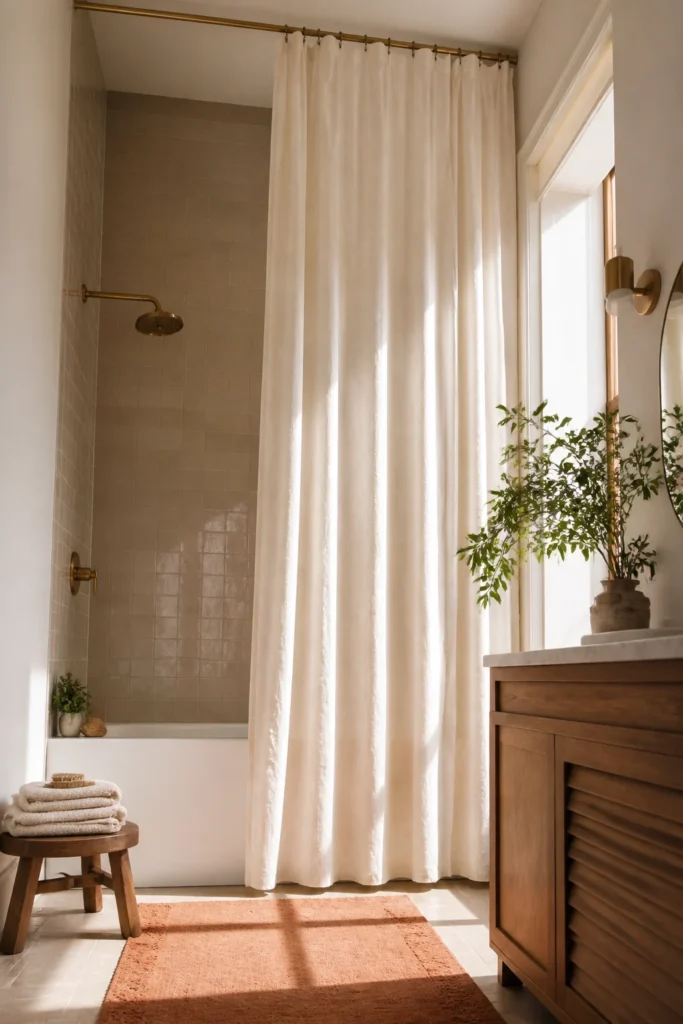
A low shower curtain rod can visually chop the bathroom in half. Raising the rod closer to the ceiling creates a longer vertical line, which helps the room feel taller and more polished.
This works especially well in bathrooms with a tub/shower combo or a plain fiberglass surround. An extra-long curtain can cover more of the tub area and make the shower wall feel less like a built-in plastic box.
For the best look, leave just enough space at the bottom so the curtain does not drag through puddles. If the curtain pools on the floor, it may look romantic for five minutes, then become annoying and damp.
2. Use an Extra-Long Shower Curtain for a Drapery Effect

Standard shower curtains are often around 72 inches long, but an extra-long shower curtain can look much more custom. Lengths around 84, 90, or 96 inches are common options, depending on ceiling height and rod placement.
The goal is not to copy formal living room curtains exactly. The goal is to create a clean, vertical panel that reaches near the floor or tub edge without looking skimpy.
Pair an extra-long curtain with a matching extra-long liner. A beautiful fabric curtain with a liner that stops halfway down will instantly ruin the effect and may not protect the floor properly.
3. Choose Waffle Weave for a Hotel Bathroom Look

A white or cream waffle weave shower curtain is one of the easiest ways to make a bathroom feel cleaner and more expensive. The texture adds depth without adding visual clutter, which is helpful in small bathrooms.
Waffle weave works especially well with:
- White subway tile
- Black or brass hardware
- Wood vanities
- Neutral bath mats
- Simple framed art
Avoid choosing a waffle curtain that is too thin. A slightly weightier fabric hangs better and looks more like drapery instead of a flat sheet.
4. Try Linen or Linen-Look Fabric for a Softer Bathroom

Linen and linen-look shower curtains are great when the bathroom feels cold, shiny, or overly tiled. The soft texture balances hard surfaces like porcelain, glass, metal, and stone.
Real linen can wrinkle and may need more care, so a linen-blend or polyester linen-look curtain is often easier for everyday bathrooms. It gives a similar relaxed look but usually handles moisture better.
Stick with warm white, oatmeal, taupe, soft gray, or muted sage if you want a calm bathroom. These shades look layered without making the shower area feel heavy.
5. Use Two Curtain Panels Instead of One

For a true drapery feel, hang two shower curtain panels and pull them to each side when the shower is not in use. This works beautifully for wider tubs, clawfoot tubs, and bathrooms where the shower wall is the main view from the doorway.
Two panels create symmetry, which makes even a basic bathroom look more designed. Use a waterproof liner behind them and keep the decorative panels outside the tub.
Choose this idea when the bathroom has enough width. In a tiny bathroom, two bulky panels can feel crowded unless the fabric is light and the color is simple.
6. Add Curtain Rings or Hooks That Match the Hardware

Small hardware choices matter because the shower curtain usually sits near faucets, towel bars, vanity pulls, and light fixtures. Matching the ring finish to the bathroom hardware creates a cleaner look.
Good pairings include:
- Matte black rings with black faucets or mirror frames
- Brass rings with warm wood, cream walls, or vintage accents
- Chrome rings with cool-toned tile and silver fixtures
- Brushed nickel rings for a simple, renter-friendly neutral
Skip flimsy plastic rings if the goal is a drapery-style bathroom. Metal rings or smooth-glide hooks make the curtain hang better and move more easily.
7. Go Solid in a Small Bathroom

A busy print can be fun, but in a small bathroom, a large curtain is basically a wall of fabric. A solid curtain often helps the space feel calmer and less boxed in.
Light solids are safest for small, windowless bathrooms because they reflect more light. White, ivory, pale beige, misty blue, sage, or soft gray all work well.
That does not mean the room has to be boring. Add interest through texture instead of pattern: waffle weave, subtle stripes, cotton slub, or a small stitched detail.
8. Use a Bold Pattern as the Main Decor Moment

A patterned curtain can work beautifully when the rest of the bathroom is simple. Think of it as the room’s biggest piece of art.
Good pattern choices include:
- Thin vertical stripes for height
- Botanical prints for a softer, garden-inspired feel
- Block prints for a handmade look
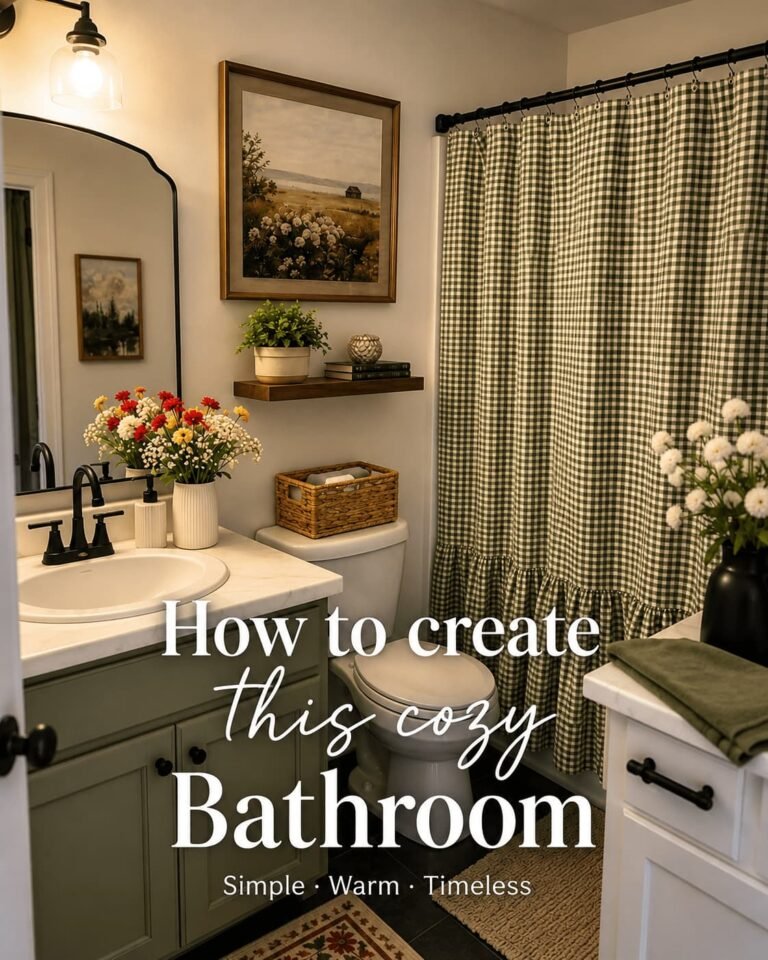
- Classic checks for cottage style
- Abstract patterns for modern bathrooms
Keep the bath mat and towels quieter if the curtain is bold. Too many competing colors near the floor, vanity, and shower can make the bathroom feel busy fast.
9. Choose a Curved Rod for More Shower Space

A curved shower curtain rod is not just decorative. It pushes the curtain outward, giving more elbow room inside the shower. This can be useful in a small tub/shower combo where the curtain tends to cling inward.
Curved rods work best when there is enough floor clearance outside the tub. Measure before buying, especially if the toilet, vanity, or door swing sits close to the shower.
For a polished look, pair the curved rod with a simple fabric curtain. The rod already adds shape, so the curtain does not need to be overly dramatic.
10. Layer a Clear or White Liner Behind Decorative Fabric

A drapery-style curtain should look pretty from the room side, but the liner does the wet work. Use a liner inside the tub and keep the decorative curtain outside.
Clear liners help a small shower feel brighter because they let more light through. White fabric liners look softer and can often be washed, though care depends on the material.
Mildew prevention matters more than the exact liner type. Keep the curtain spread open after showers, run the fan, and wash or wipe the liner regularly. Real user discussions around shower curtains often focus less on style and more on liners getting moldy every few months, so maintenance is part of the design decision.
11. Match the Curtain to One Existing Bathroom Element

A shower curtain looks more intentional when it connects to something already in the bathroom. That could be the wall color, vanity wood tone, floor tile, artwork, or towel color.
Easy formulas:
- Blue tile + white curtain with thin blue stripe
- Brass fixtures + cream curtain with warm beige trim
- Green walls + natural linen or botanical print
- Black floor tile + white waffle curtain with black hooks
- Terrazzo floor + one curtain color pulled from the chips
Avoid matching everything too perfectly. The curtain should coordinate, not look like it came in a 12-piece bathroom set from 2009.
12. Use Tiebacks Only When They Solve a Real Problem

Tiebacks can make a shower curtain look more like drapery, but they are not always practical. They work best when the curtain is decorative, the shower is not used constantly, or the bathroom has a freestanding tub.
For daily showers, a tieback can become one more thing to fuss with. If the curtain needs to dry quickly, spreading it open across the rod is usually better than bunching it tightly to one side.
A simple fabric tie, rope tie, or wall hook can look pretty, but keep it minimal. Heavy tassels or overly ornate tiebacks can make a small bathroom feel dated rather than elevated.
Best Fabrics for a Drapery-Style Shower Curtain
For a bathroom, fabric needs to look good and handle humidity. The best choices are usually:
Polyester: Easy to find, budget-friendly, moisture-resistant, and available in many colors and textures.
Cotton blend: Softer and more natural-looking, but usually needs a liner and regular washing.
Linen blend: Relaxed, airy, and stylish, but better as the decorative outer curtain than the main water barrier.
Waffle weave: Textured, hotel-like, and great for neutral bathrooms.
Avoid very heavy upholstery fabric unless the bathroom is large and well-ventilated. Heavy fabric can hold moisture, block light, and become difficult to dry.
Common Shower Curtain Drapery Mistakes to Avoid
The biggest mistake is choosing a curtain that is too short. A high rod with a standard-length curtain can leave an awkward gap at the bottom, while a low rod with a long curtain can bunch on the floor.
Another common issue is using a dark, dense curtain in a small bathroom with poor lighting. Dark colors can look dramatic, but they may also make the shower area feel like a cave.
Also avoid ignoring the liner. Even the prettiest curtain will feel frustrating if water escapes, the liner smells, or mildew appears quickly. Style and function need to work together in a bathroom.
FAQ
Should a shower curtain touch the floor?
Usually, no. A shower curtain should hang close to the floor or tub edge without dragging. A tiny clearance helps prevent damp fabric, dust buildup, and mildew.
Are fabric shower curtains better than plastic?
Fabric shower curtains usually look more like real drapery and can feel more elevated. Plastic or vinyl liners can be practical for water control, while washable fabric liners are popular with people who dislike disposable plastic liners.
How do I make a shower curtain look expensive?
Hang it higher, choose an extra-long length, use a textured fabric, upgrade the rings, and pair it with a proper liner. A simple white waffle or linen-look curtain often looks more expensive than a loud print in cheap fabric.
What color shower curtain makes a small bathroom look bigger?
White, ivory, soft beige, pale gray, light blue, and sage usually help a small bathroom feel more open. Texture adds interest without shrinking the room visually.
Conclusion
A shower curtain does not have to feel like an afterthought. With the right length, texture, hardware, and liner, it can act like soft bathroom drapery and make the whole space feel more finished. Start with the change that gives the biggest visual payoff: raise the rod, choose an extra-long curtain, or switch to a textured white or linen-look fabric. One smart curtain upgrade can make a basic bathroom feel calmer, taller, and much more intentional.