
A blank corner, open studio layout, or awkward window area can feel unfinished when it needs separation but not a heavy wall. A rope plant divider solves that problem in a softer way: it breaks up the space, keeps light moving, and adds greenery at eye level instead of crowding the floor.
The trick is making it look styled, not random. Rope, jars, hooks, and trailing plants can get messy fast if the spacing, weight, and watering setup are not planned. These DIY rope plant divider ideas will help you create a rustic divider that feels cozy, practical, and safe enough for everyday living.
1. Start With a Simple Ceiling-to-Floor Rope Divider

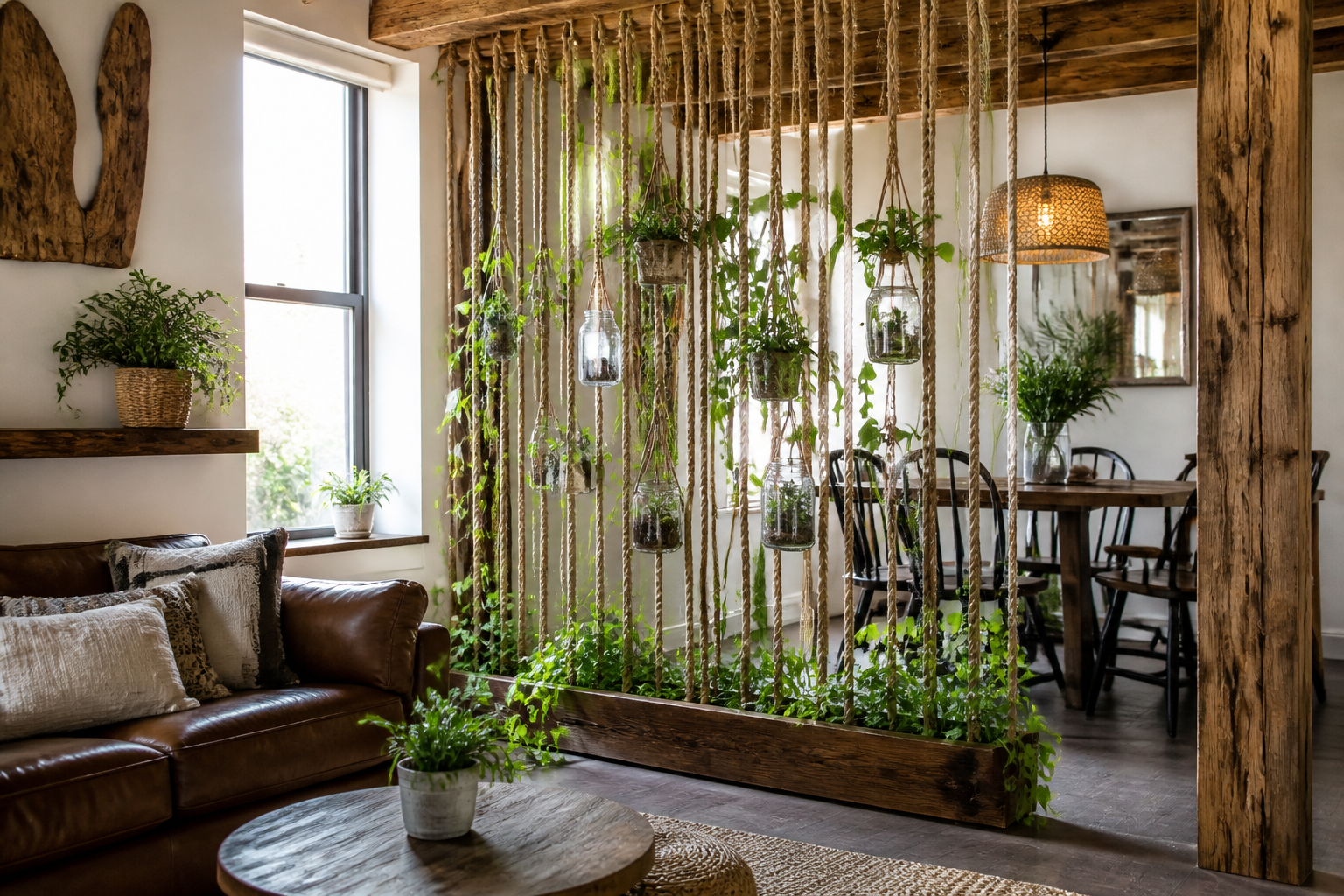
For the cleanest rustic look, run several ropes vertically from a ceiling-mounted rail, wood beam, or sturdy rod. Keep the ropes evenly spaced so the divider feels intentional, not like loose cords hanging in the room.
This idea works best between a living area and dining nook, beside a reading chair, or behind a sofa. Leave enough room to walk around it comfortably, especially if the plants will trail outward over time.
Use natural cotton rope, jute, or hemp-style cord for a warm rustic look. If the room already has wood furniture, woven baskets, or linen curtains, the rope divider will blend in instead of feeling like a separate craft project.
2. Add Hanging Glass Jars for a Rustic Green Wall Look

Glass jars are great for the look shown in the image because they bring in that farmhouse-meets-DIY feeling. Use them for water-propagated cuttings, faux stems, air plants, or small lightweight nursery pots tucked inside.
Avoid filling sealed jars with regular potting soil unless you have a drainage plan. A jar with no drainage can trap water around the roots and cause problems, which is a common concern with indoor hanging planters.
For a cleaner setup, place a small plastic nursery pot inside the jar, remove it for watering, let it drain in the sink, then return it once the bottom stops dripping.
3. Use Pothos for a Fuller, Low-Fuss Divider

Pothos is one of the easiest plants for this style because it trails beautifully and grows fast enough to soften the ropes. Reddit plant discussions often recommend pothos for hanging setups because it looks dramatic without needing constant attention.
Place pothos at different heights so the vines overlap slightly. This creates a natural screen without blocking the whole room.
For a rustic home, golden pothos pairs especially well with rope, terracotta, wood, and warm neutral walls. Trim the vines when they start tangling into walkways or blocking too much light.
4. Create a Window Divider With a Tension Rod

Renters can use a tension rod inside a window frame or between two close walls instead of drilling into the ceiling. The Spruce notes that non-drill hanging methods can include tension rods, magnetic hooks, adhesive hooks, suction hooks, and clamps, depending on the surface and weight.
A window rope divider works well because most hanging plants want bright indirect light. Keep the display light by using small pots, propagation jars, or air plants.
Before adding plants, check the rod’s weight rating. Wet soil is heavier than dry soil, and several small planters can add up quickly.
5. Mix Rope With a Wooden Dowel for a More Finished Look

A wood dowel across the top gives the divider structure and makes it look more designed. Tie the rope strands to the dowel, then hang jars or small planters from each strand.
This is a good option if loose ceiling-to-floor ropes feel too casual. The dowel acts like a frame and helps the whole piece read as a handmade decor feature.
Choose a dowel, branch, or slim reclaimed wood rail that is wider than the plant area. That little extra width keeps the plants from looking squeezed together.
6. Make a Macrame-Style Divider Without Going Too Complicated

Macrame works beautifully for a rope plant divider, but it does not need to be elaborate. A few square knots, wrapped knots, and simple plant cradles can create enough texture.
Keep the pattern open if the divider is meant to separate zones without making the room feel smaller. Dense macrame can look beautiful, but in a small room it may block too much light and create visual clutter.
Better Homes & Gardens includes macrame among common DIY indoor hanging plant holder ideas, along with wood, modular planters, air plants, and hanging shelves.
7. Use a Rope Divider Behind a Sofa

A hanging plant divider behind a sofa can create a gentle boundary between a living room and another zone without needing a console table or bookshelf.
Hang the plants high enough so they do not brush people’s heads when seated. Keep the lowest jar or planter above the sofa back by several inches so the divider feels layered, not intrusive.
For balance, repeat materials already in the room. A jute rug, wood coffee table, woven tray, or linen pillows will make the rope feel connected to the rest of the design.
8. Combine Rope Planters With Open Shelving

If you want more storage, add a narrow open shelf below the hanging rope plants. Room divider ideas often use open shelving because it separates zones while still allowing light and sightlines through.
Use the shelf for books, baskets, candles, or a small lamp. Keep the hanging plants above and the heavier items below so the setup feels grounded.
Do not overload both the shelf and the hanging section. One full, leafy layer is usually enough. If the plants are dense, keep the shelf styling simple.
9. Try Propagation Bottles for a Lightweight Divider

Propagation bottles are easier than full potted plants because they are lighter, cleaner, and visually delicate. They also suit the rustic jar-and-rope look perfectly.
Use cuttings from pothos, philodendron, tradescantia, or ivy-style trailing plants. Change the water regularly and keep the glass clean so the divider does not start looking neglected.
This idea is especially useful for small apartments because it adds greenery without bulky pots or floor planters.
10. Add Warm Lighting Around the Rope Divider

Soft lighting makes a rope plant divider feel cozy after dark. Use a nearby floor lamp, wall sconce, or small plug-in light rather than wrapping hot lights directly around dry rope.
Warm bulbs work better than cool white bulbs for rustic decor. They bring out the texture of jute, wood, glass, and green leaves.
Keep cords hidden along furniture edges or behind the divider frame. Visible cords can make the whole DIY look less polished.
11. Build a Freestanding Rope Plant Divider for Flexibility

A freestanding frame is the best choice if you do not want to drill, cannot trust the ceiling, or want to move the divider later. Build a simple rectangular frame from wood, then string rope vertically or horizontally across it.
This version works well in rentals, studios, and multipurpose rooms. It can sit behind a desk, beside a bed, or between a sofa and dining table.
Make the base wide enough so the divider will not tip. If you plan to use real potted plants, keep heavier pots near the bottom and lighter jars near the top.
Materials and Tools You May Need

For a basic DIY rope plant divider, gather:
- Natural rope, jute cord, cotton cord, or macrame cord
- Ceiling hooks, wall hooks, tension rod, wood dowel, or freestanding frame
- Glass jars, small planters, propagation bottles, or lightweight pots
- Drill and anchors if mounting into ceiling or wall
- Scissors, measuring tape, level, and pencil
- S-hooks or metal rings
- Small nursery pots with drainage
- Optional: wood stain, clear sealer, or rope end caps
Safety matters more than the styling here. Hanging plants should not be attached to light fixtures, sprinklers, or weak surfaces, and weight should be checked before installing.
Common Mistakes to Avoid

The biggest mistake is ignoring weight. A small plant becomes much heavier after watering, especially in ceramic or glass. Use proper anchors, check the hook rating, and keep heavy pots off weak rods.
Another common issue is watering mess. Some plant owners place a tub or container under hanging plants while watering to catch overflow. A cleaner option is removing each nursery pot, watering it in the sink, then replacing it once it drains.
Rope ends can also look messy. Trim them evenly, wrap the ends, or use a neat knot. If using synthetic rope, be careful with heat-sealing and only do it in a ventilated space with proper caution.
Best Plants for a Rope Plant Divider

Choose plants that trail, tolerate indoor conditions, and do not need constant repotting. Good options include:
- Pothos for easy trailing growth
- Philodendron for soft heart-shaped leaves
- Tradescantia for color and fast growth
- Spider plant for a casual, airy look
- Air plants for very lightweight jars
- Faux trailing plants for low-light spots
Avoid heavy plants, oversized pots, or anything that needs frequent soaking unless the divider is easy to access.
FAQ
Can I make a rope plant divider without drilling?
Yes. Use a tension rod, clamp system, freestanding wood frame, or lightweight window setup. Always check weight limits and avoid hanging heavy soil-filled pots from weak supports.
What is the best plant for a DIY rope plant divider?
Pothos is one of the safest choices for beginners because it trails well, grows quickly, and handles normal indoor conditions better than fussier plants.
Can I use glass jars as planters?
Yes, but glass jars are best for propagation, faux stems, air plants, or nursery pots placed inside the jar. For soil plants, drainage is important so roots do not sit in water.
How do I stop hanging plants from dripping indoors?
Water plants in the sink, let them drain fully, then return them to the divider. For plants that must be watered in place, put a tub or tray underneath while watering.
Conclusion
A DIY rope plant divider works because it solves several decor problems at once: it softens an open layout, adds greenery, saves floor space, and brings in rustic texture. Start with one sturdy support, a few lightweight jars or planters, and an easy trailing plant like pothos. Once the spacing feels right, add more greenery slowly so the divider stays airy, safe, and easy to maintain.