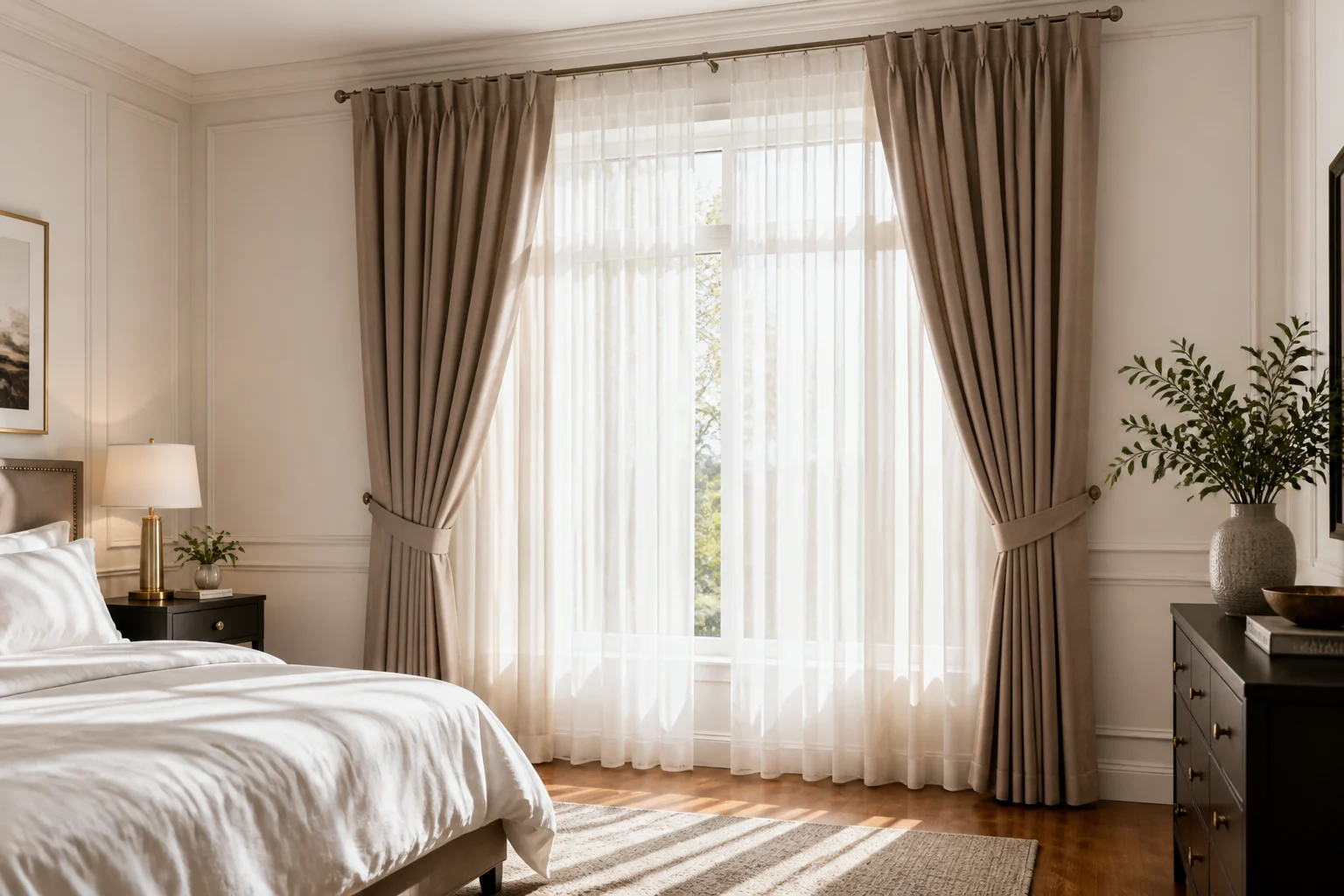
A bedroom window can throw off the whole room when it feels too bare, too bright, or too flat against the wall. Plain blinds may handle privacy, but they rarely soften the space. Single curtain panels can help, but they do not always give enough light control or depth.
Layered bedroom curtains solve that problem with two practical pieces: a light layer for daytime softness and privacy, plus a heavier layer for framing, color, texture, or room darkening. The right pairing can make a window look taller, the bed area feel calmer, and the room feel more finished without changing the furniture.
What Makes Layered Bedroom Curtains Work
Before choosing fabric or color, decide what your bedroom needs most.
For privacy, start with white, ivory, or soft gray sheers. They filter daylight while keeping the room from feeling exposed.
For better sleep, add blackout or room-darkening panels as the outer layer. This is especially useful for street-facing windows, east-facing bedrooms, and city apartments with night lighting outside.
For a softer look, choose fabric with texture: linen blend, cotton weave, slub fabric, velvet, or lightly woven panels. Flat shiny polyester often looks less natural in a bedroom.
For a taller-looking room, hang the rod high and wide. Place the rod several inches above the window trim, or close to the ceiling when possible, and extend it beyond the frame so open panels do not block the glass.
1. White Sheers With Taupe Outer Panels
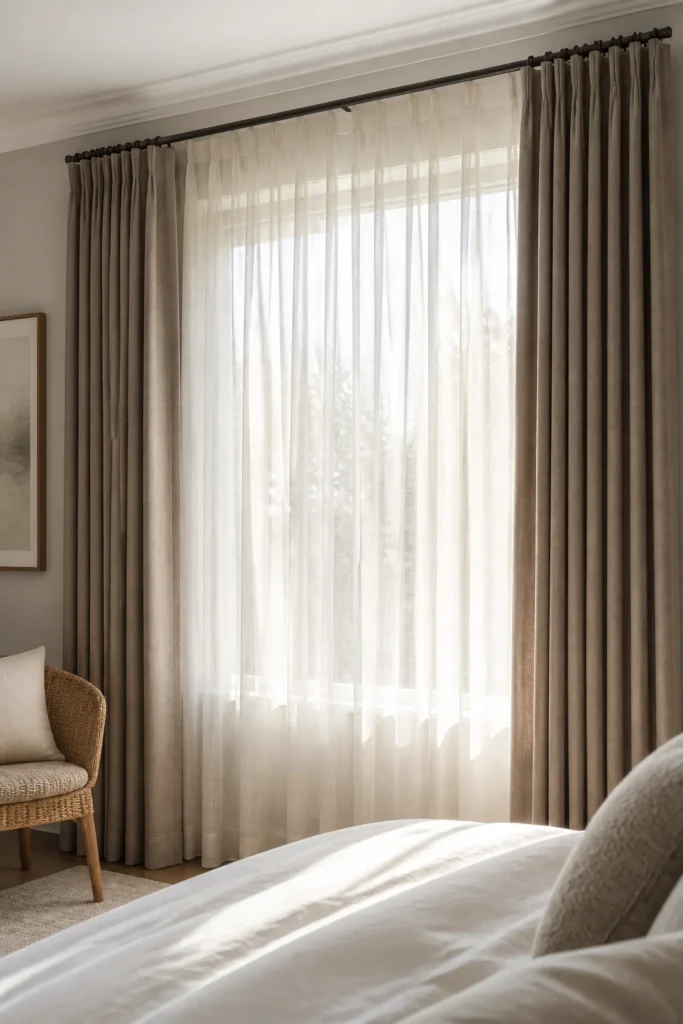
White sheers with taupe curtains create the soft, elegant layered look many bedrooms need. The sheers keep daylight gentle, while taupe panels frame the window without the contrast feeling too sharp.
This pairing works well with warm white walls, beige bedding, greige paint, light oak furniture, and neutral rugs. Taupe also helps connect mixed finishes, such as a white bed, wood nightstands, and brushed metal lamps.
For the best proportions, let the taupe panels sit mostly on the wall when open. A rod that is too narrow makes the panels cover the window and darken the room unnecessarily.
2. Floor-to-Ceiling Curtains for Height
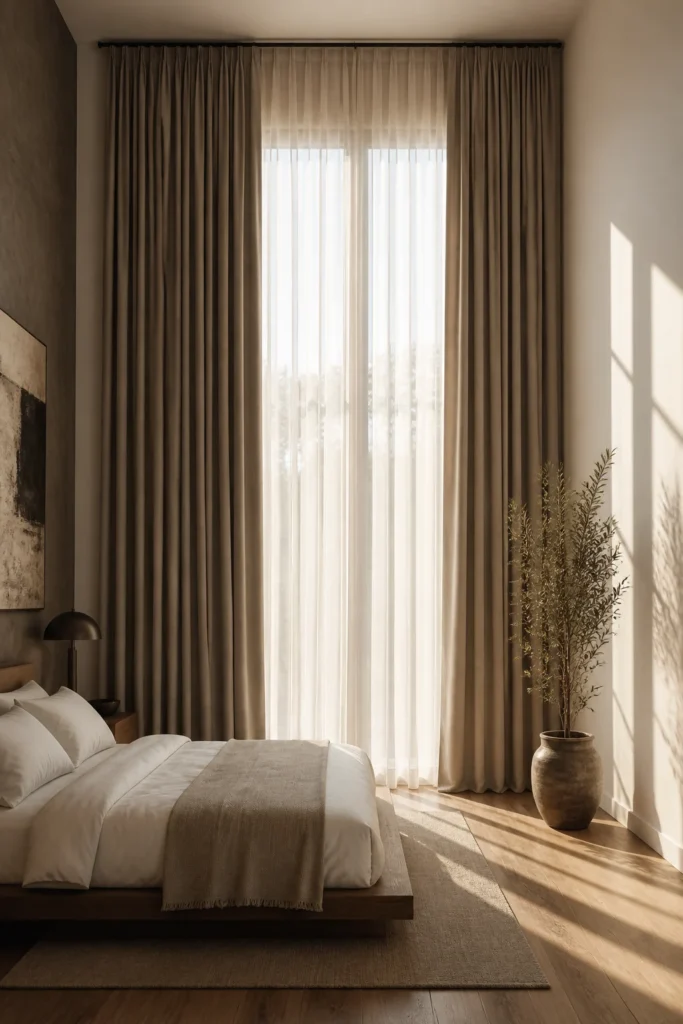
Mounting layered curtains close to the ceiling makes a standard bedroom window look taller. This is especially helpful in rooms with low or average ceilings, where the window area can otherwise feel squat.
Choose both layers in the same length so the sheers and outer panels finish together at the floor. Panels that stop at the sill usually look less elegant in bedrooms unless furniture or a radiator blocks the lower wall.
A light floor touch looks clean and tailored. A small puddle can look romantic, but it collects dust faster and is not ideal beside a bed, pet bed, or high-traffic walking path.
3. Soft Gray Linen Panels With White Sheers
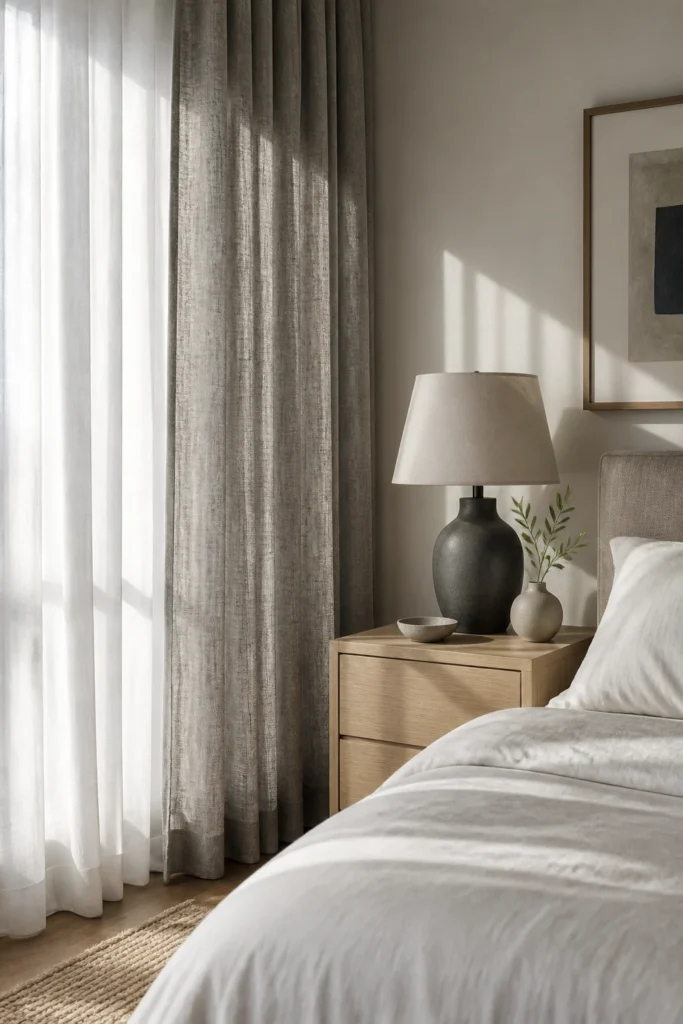
Soft gray linen-style panels feel calm without making the bedroom look cold. The key is choosing a gray with a warm undertone instead of a blue-gray that can clash with cream walls or wood floors.
Pair gray outer panels with white or ivory sheers for contrast. Add a white duvet, pale wood furniture, and one darker accent like a black lamp base or charcoal throw pillow so the room does not feel washed out.
This combination suits modern, transitional, Scandinavian, and minimal bedrooms where the window should look finished but not dramatic.
4. Double Curtain Rods for Flexible Light Control
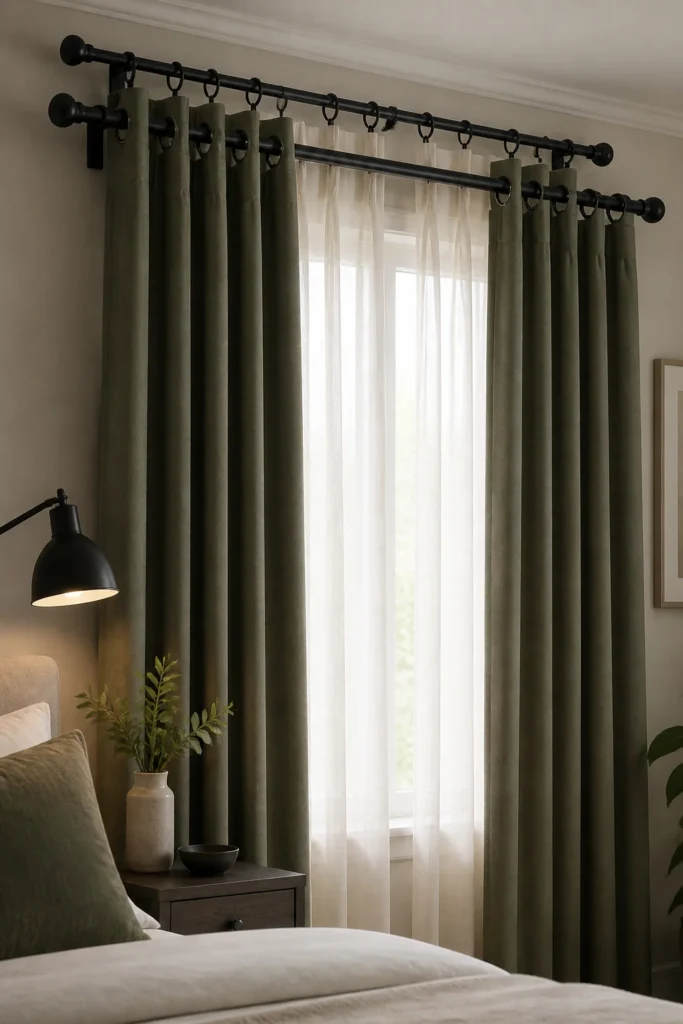
A double rod gives each curtain layer its own track. The sheer panel stays on the back rod, and the heavier panel sits on the front rod. That small hardware choice makes the curtains easier to use every day.
During the day, close the sheers for privacy and keep the outer panels open. At night, close the front panels for a darker, more enclosed sleeping space.
Match the rod finish to something already in the room. Black works with black lamps or picture frames. Brass works with warm wood and cream bedding. Brushed nickel or pewter fits cooler gray palettes.
5. Blackout Layers Behind Decorative Curtains
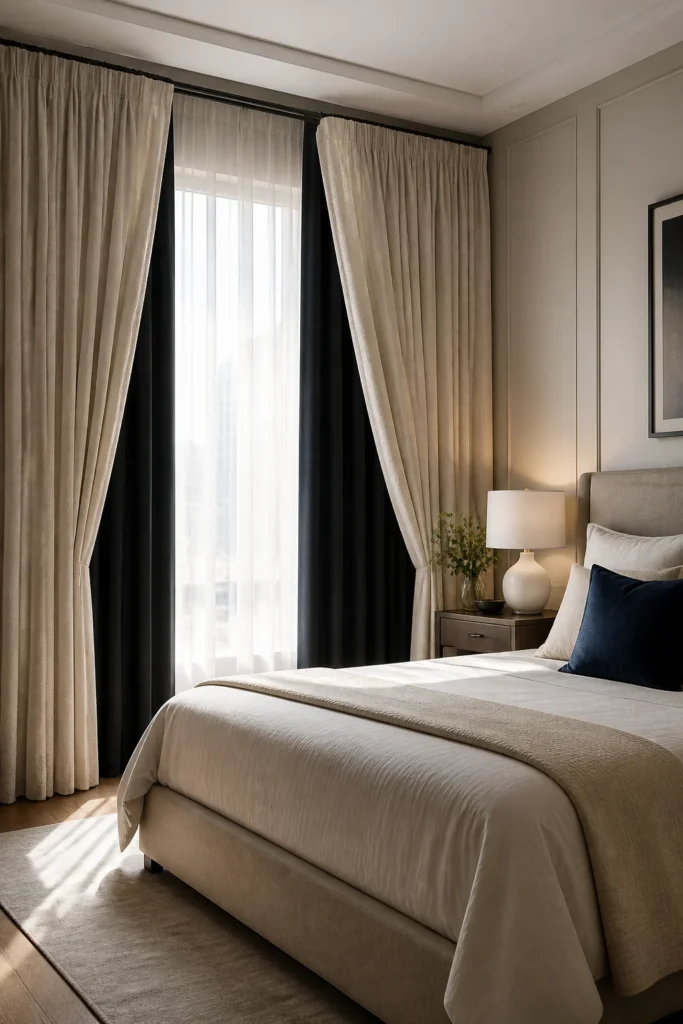
Some bedrooms need more than pretty fabric. If morning sun, streetlights, or headlights cut through the window, add a blackout layer behind the decorative panels.
Blackout liners are useful when you like the look of linen, cotton, or woven curtains but need the room darker. The front panel keeps the window soft, while the liner handles the practical job.
Renters can use clip-on blackout liners, wraparound curtain rods, or tension-mounted blackout panels inside the window frame. These options avoid drilling extra holes and can move with you later.
6. Cream-on-Cream Curtain Layers
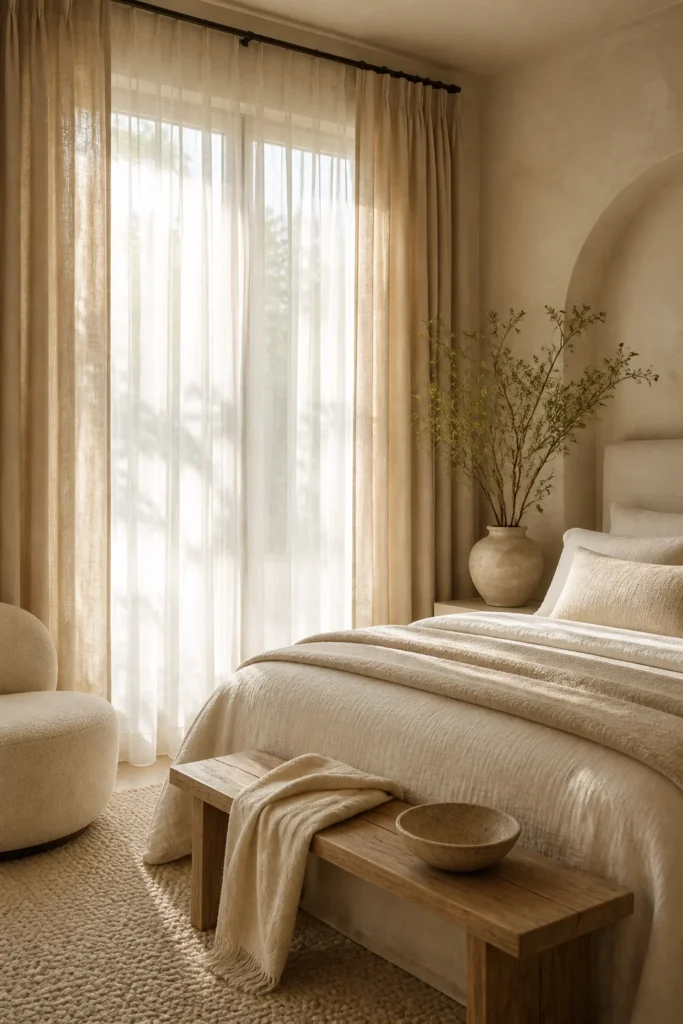
Cream layered curtains look soft and expensive when the fabrics are not identical. Mix ivory sheers with cream, oatmeal, or natural linen outer panels so the layers have slight variation.
Texture matters here. A smooth sheer behind a slubbed linen-style panel creates depth even when the colors are close. Without texture, cream-on-cream can look flat against pale walls.
This idea works especially well with wood floors, boucle seating, rattan baskets, warm white bedding, beige rugs, and softly shaded lamps.
7. Pinch Pleat Outer Panels
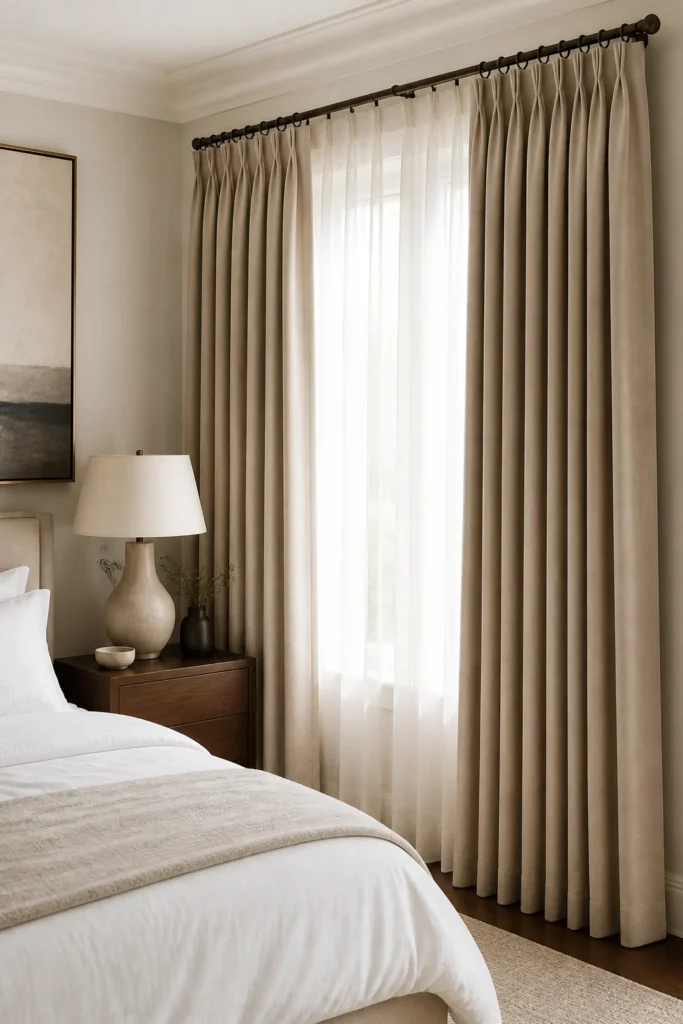
Pinch pleat curtains give layered windows a neater, more custom-looking shape. The folds fall in vertical lines, which helps the wall feel taller and keeps the curtain stack tidy.
Use pleated outer panels with rings, hooks, or a track system. They move more smoothly than rod-pocket curtains and are less likely to bunch unevenly.
This look fits traditional bedrooms, hotel-style bedrooms, and primary bedrooms where the window is a major feature. Keep the sheer layer simple so the pleats remain the main detail.
8. Sheers Inside the Window Frame

Placing sheers inside the window frame creates a lighter layered look. The sheer layer handles daytime privacy, while the outer panels frame the window from the wall.
This works well when the bedroom has deep trim, limited wall space, a radiator, a desk, or a dresser under the window. It also keeps the sheer fabric from crowding the outer curtains.
A tension rod can work for lightweight sheers in a rental, but measure carefully. A sagging rod or wrinkled sheer will make the whole setup look temporary.
9. Beige Curtains in a White Bedroom
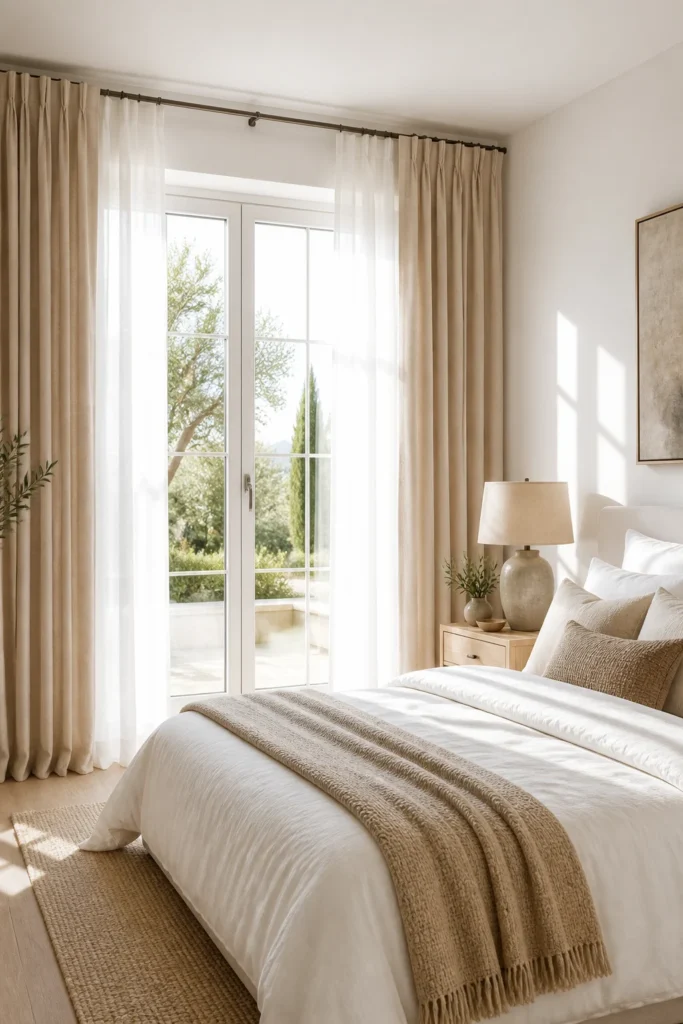
A white bedroom can look crisp but unfinished when every surface is the same tone. Beige outer panels add a soft edge around the window and keep the room from feeling stark.
Use white sheers behind beige, oatmeal, sand, or mushroom panels. Repeat the beige once nearby, such as on a throw blanket, lampshade, bench cushion, or rug detail.
Avoid yellow-beige panels beside bright white walls. Oatmeal, flax, and mushroom tones usually look more current and blend better with white bedding.
10. Textured Linen Layers
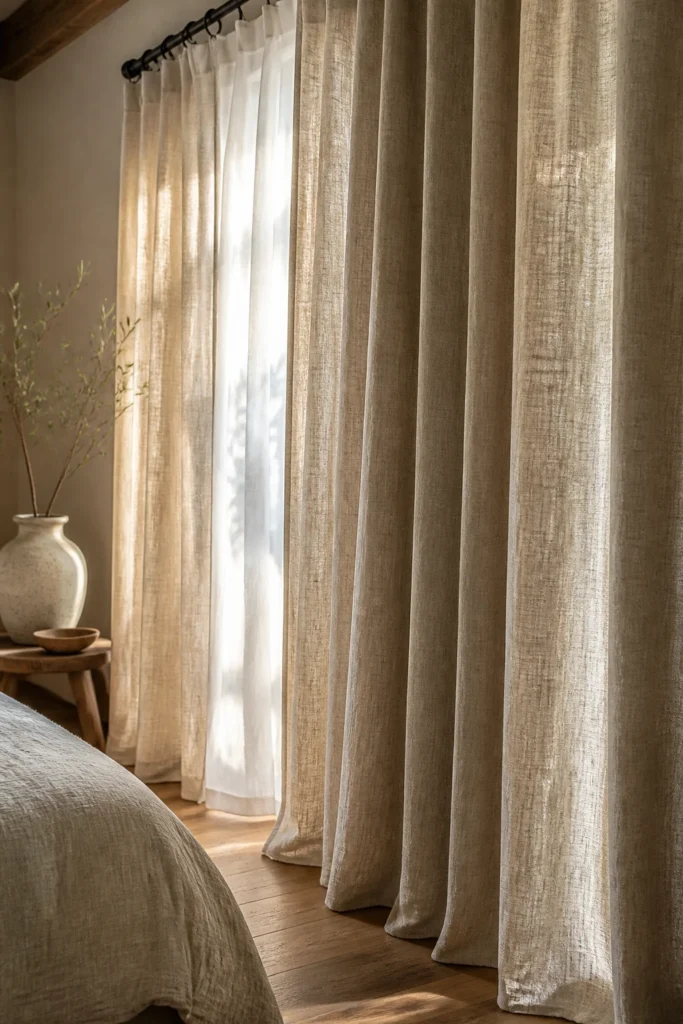
Linen-style curtains are ideal for bedrooms because the weave diffuses light in a soft, uneven way. They look relaxed without feeling sloppy when the length and hardware are right.
Layer white or ivory sheers underneath linen panels in flax, stone, cream, warm gray, or pale taupe. The slight texture works especially well in rooms with natural light, wood furniture, ceramic lamps, and cotton bedding.
Steam the panels after hanging. Soft wrinkles are fine, but hard package creases make even good curtains look cheap.
11. Velvet Outer Panels With Sheers
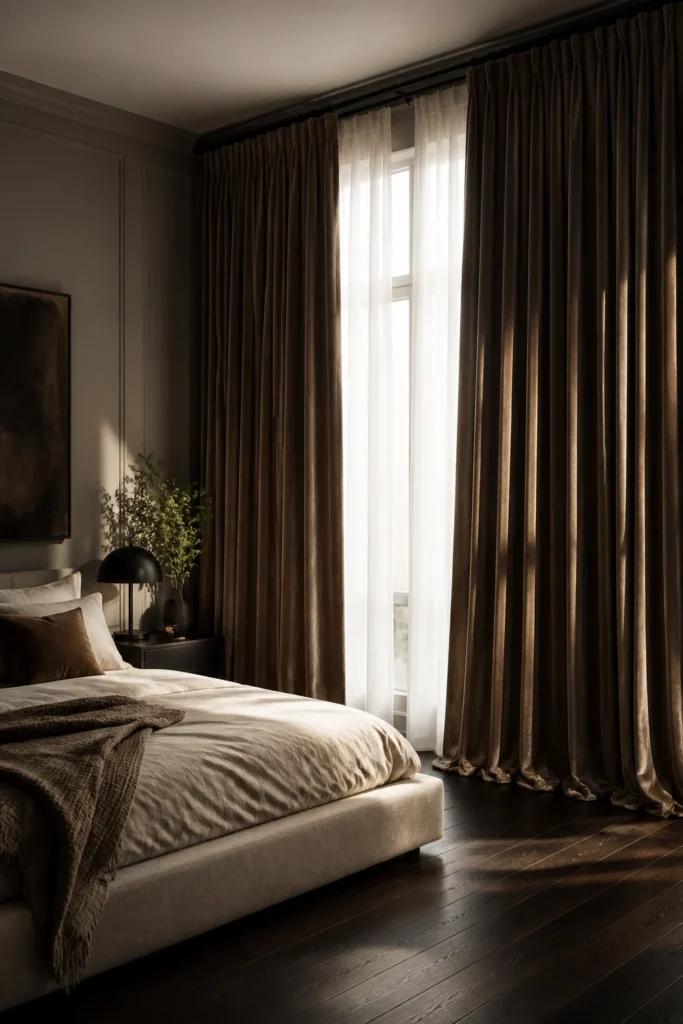
Velvet outer panels bring weight and softness to a bedroom, especially in cooler months or rooms that need better sound absorption. Use them with a plain sheer layer so the window does not feel too heavy.
Good velvet colors for bedrooms include mushroom, charcoal, olive, muted navy, warm taupe, and dusty rose. Keep the bedding calmer if the curtains are dark or rich.
In small bedrooms, avoid overly thick velvet in very dark colors unless the walls are also deep-toned. A high, wide rod and a soft mid-tone velvet will feel easier to live with.
12. Layered Curtains With Tiebacks

Tiebacks control curtain volume and help the layers frame the window instead of crowding it. They are especially useful with thick panels, narrow windows, or bedrooms where curtains sit close to nightstands.
Fabric tiebacks feel soft and classic. Rope tiebacks suit relaxed or cottage-style rooms. Metal holdbacks look cleaner and work well in modern spaces.
Place tiebacks roughly one-third of the way up from the floor. Too high can pinch the curtains awkwardly, while too low makes the panels look heavy.
13. Patterned Sheers With Solid Panels
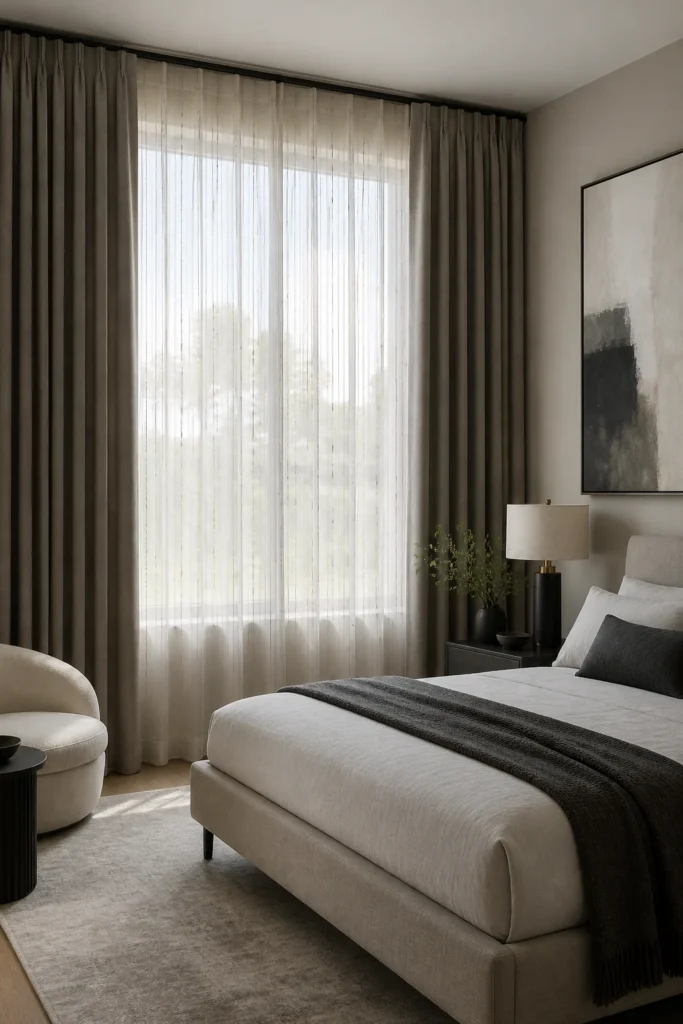
Patterned sheers add detail without putting a bold print front and center. Look for fine stripes, tiny dots, tone-on-tone embroidery, or delicate botanical designs.
Solid outer panels keep the window balanced. This is a smart choice for neutral bedrooms where the bed, rug, and furniture are simple and the window needs a little detail.
Keep the pattern small and soft. Large motifs can look busy when sunlight shines through them, especially on a wide window.
14. Roman Shades With Curtain Panels
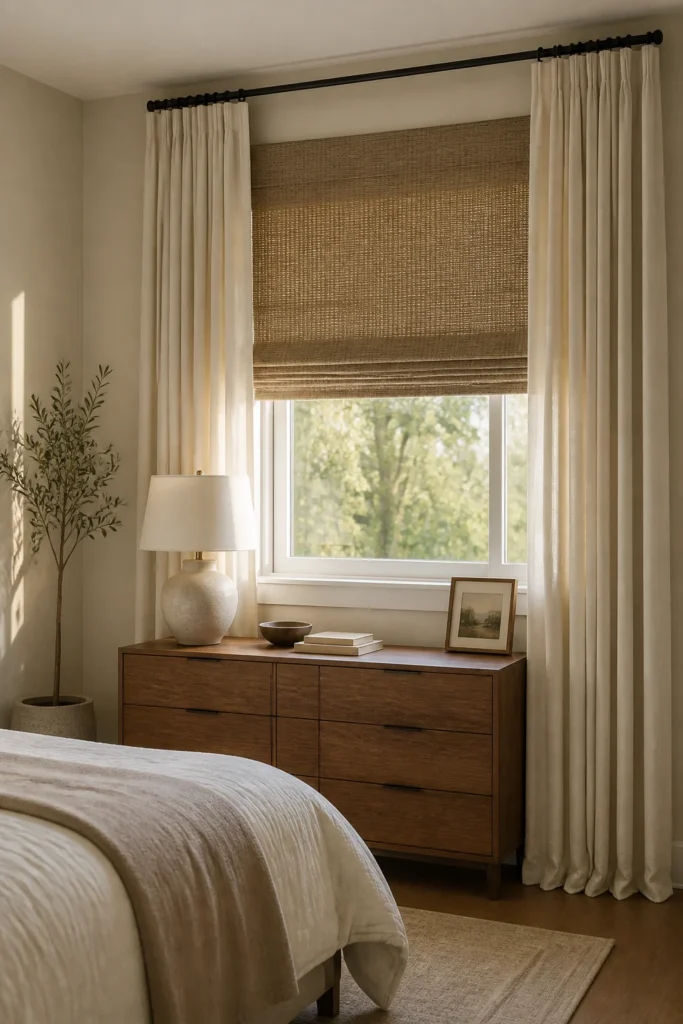
A Roman shade paired with curtain panels gives a structured layered look. The shade controls privacy and light, while the side panels soften the edges of the window.
This setup works well above a desk, dresser, radiator, or window seat where full sheers might be inconvenient. A woven Roman shade adds texture, while a fabric shade looks cleaner and more tailored.
Keep the curtain panels floor-length even if the shade ends at the sill. Long side panels make the wall feel taller and prevent the window from looking chopped up.
15. Soft Green or Blue Outer Panels
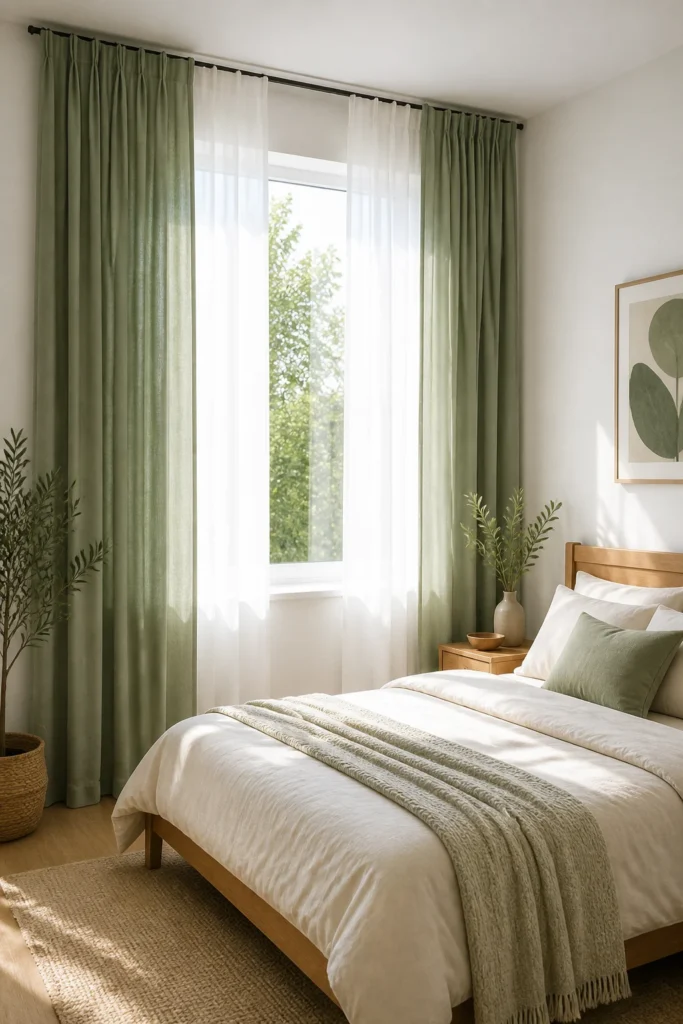
Muted color can still feel restful in a bedroom. Sage, dusty blue, misty teal, muted olive, and soft slate panels add color without making the room feel loud.
Use white or ivory sheers behind the colored panels to keep the window light. Repeat the color once or twice through a pillow, throw, artwork, lampshade, or upholstered bench.
Do not match every accent exactly. A room looks more natural when the curtain color appears in related tones rather than identical copies.
How to Measure for Layered Bedroom Curtains
Measure the width of the window, then add extra space on both sides for the curtain stack. A good starting point is extending the rod 8 to 12 inches beyond the window frame on each side if the wall allows.
For fullness, each curtain layer should usually measure 1.5 to 2 times the width of the area being covered. Skinny panels can look stretched, especially with sheers.
For length, measure from the rod position to the floor. Bedroom curtains usually look best when they touch the floor, barely break, or puddle slightly. Avoid hovering an inch above the floor unless the fabric needs clearance for cleaning, radiators, or uneven floors.
Common Layered Curtain Mistakes to Avoid
A short rod can make the window look smaller. When open panels sit in front of the glass, the room loses daylight and the window feels cramped.
Too many details can also fight each other. Patterned sheers, shiny outer panels, ornate rods, and decorative tiebacks all together can look busy. Choose one main detail and keep the rest quiet.
Hardware needs to match the fabric weight. Velvet, blackout panels, and wide windows need a sturdy rod with proper brackets and often a center support. Thin rods can bow, making the curtains hang unevenly.
Best Budget-Friendly Layering Tips
Layering does not have to mean custom curtains. Start with affordable white sheers, then spend more attention on the outer panels since they are the most visible layer.
For a better look on a budget:
- Choose longer panels and hang them higher.
- Use curtain rings or clips to improve how panels fall.
- Steam the fabric after hanging.
- Buy extra panels for fullness on wide windows.
- Upgrade the rod before buying expensive curtains if the current hardware looks flimsy.
A simple rod, clean sheers, and well-sized neutral panels can look far better than pricey curtains hung too low or too narrow.
FAQ
Are layered curtains good for small bedrooms?
Yes, as long as the fabric is not too bulky. Use light sheers with slim linen, cotton, or room-darkening panels. Hang the rod high and wide so the curtains frame the window instead of crowding it.
Should bedroom curtains touch the floor?
Floor-length curtains usually look best in bedrooms. Panels can just touch the floor, lightly break at the floor, or puddle slightly for a softer look. Sill-length curtains are more practical only when furniture, radiators, or built-ins block the space below the window.
Do layered curtains need a double rod?
A double rod is the easiest option, but it is not the only one. Sheers can also go on a tension rod inside the frame, while outer panels hang on a standard rod. Curtain tracks are another clean option for a more custom look.
What colors work best for layered bedroom curtains?
White and ivory sheers work with almost everything. For outer panels, soft neutrals like taupe, oatmeal, warm gray, cream, and mushroom are the most flexible. Muted green, blue, rose, or olive can work when repeated elsewhere in the room.
Conclusion
Layered bedroom curtains work best when they solve a real room problem: too much light, not enough privacy, a bare wall, or a window that feels small. Start with simple sheers, then add outer panels that match the mood of the room. Good length, enough fullness, and sturdy hardware matter just as much as the fabric. Even a small curtain upgrade can make the bedroom feel softer, calmer, and more complete.