A bedroom filled with books has a different kind of charm. The shelves make the room feel personal, the warm lighting invites you to slow down, and a comfortable bed becomes the perfect place to spend an extra hour with a favorite novel.
The best library bed ideas do more than put books near a mattress. They make the most of the room, whether that means building shelves around the headboard, adding drawers beneath the bed, or creating a tucked-away reading nook beneath a sloping ceiling.
Some designs work best in a spacious primary bedroom, while others are surprisingly practical for small rooms and guest bedrooms. Here are 15 ways to bring that mini-library feeling into your own space, with ideas you can adapt to different layouts and budgets.

1. Build a Library Bed With Integrated Book Storage

One of the most space-conscious approaches is a bed with book storage integrated into its base. Instead of using separate bookcases along the walls, the storage becomes part of the bed’s overall design.
Open cubbies around a purpose-built platform can hold paperbacks, favorite hardcovers, and a few small decorative objects. Keep the books you read most often near the sides of the bed, where they’re easy to reach without getting up.
A warm wood finish adds depth, while neutral bedding prevents the visible book spines from making the room feel too busy. Small, low-glare lights inside selected cubbies can add a gentle evening glow.
For safety, use a storage-bed system specifically designed to support the mattress and occupants. Don’t assume ordinary cube bookcases can safely serve as a structural bed base.
2. Surround the Bed With Floor-to-Ceiling Built-In Bookshelves
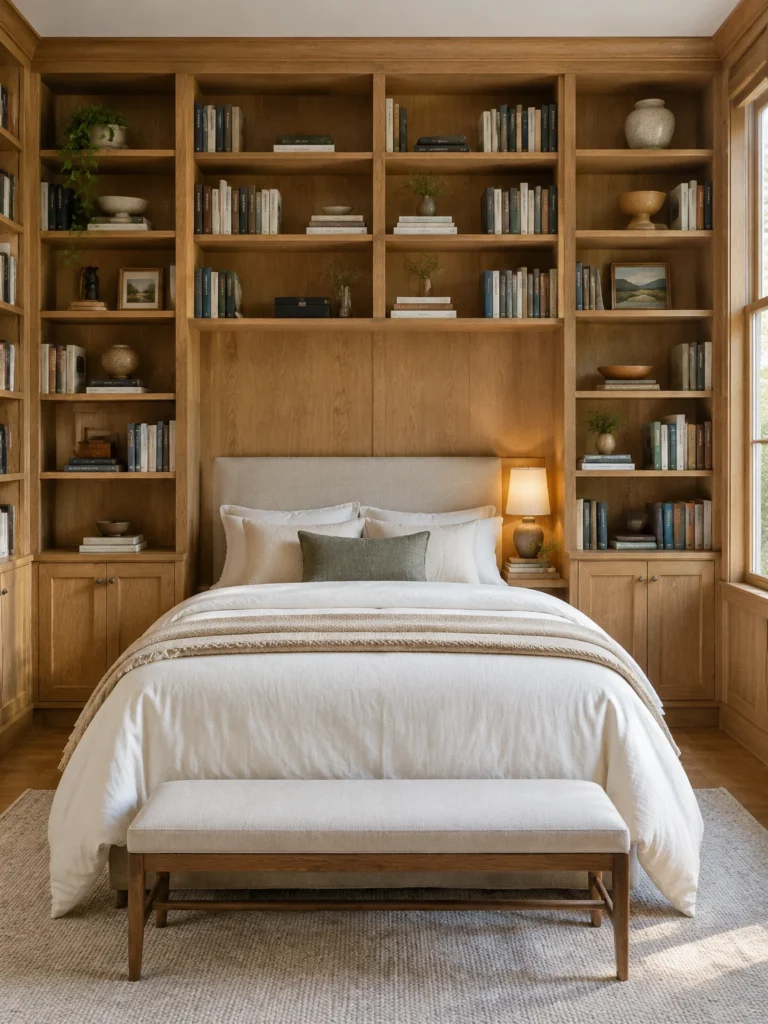
Few designs create a stronger library atmosphere than bookshelves extending from floor to ceiling around the bed. The shelving can frame the headboard, continue along an adjacent wall, and use otherwise overlooked space near the ceiling.
For a more cohesive appearance, match the shelving finish and trim to the rest of the room. White built-ins keep the arrangement light, while natural oak creates a warmer, more traditional reading-room atmosphere.
Keep the bedding relatively simple so the shelves remain the main feature. Arrange books by height or group favorite series together, leaving occasional open spaces for framed artwork or a small ceramic object.
Tall bookcases and wall-mounted shelving need proper support and secure installation. The U.S. Consumer Product Safety Commission recommends anchoring bookcases and other tall furniture to the wall to reduce tip-over risks. CPSC furniture safety guidance.
3. Create a Built-In Bed Nook With Hidden Storage
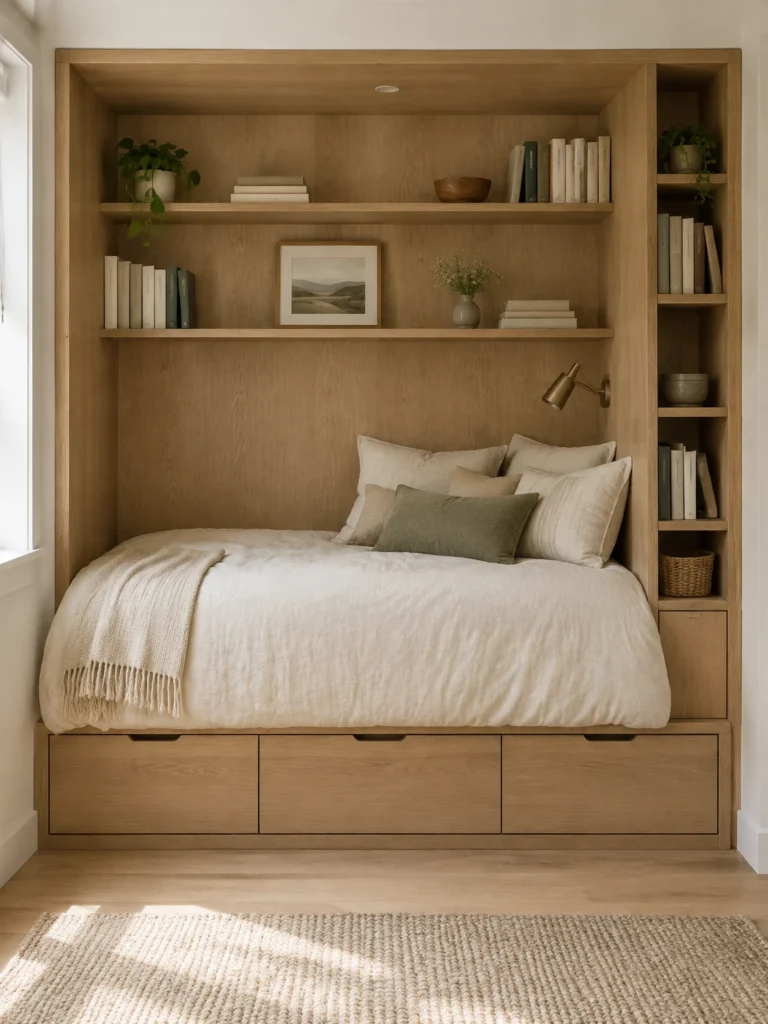
A recessed bed nook surrounded by shelving gives the impression that the sleeping area was designed specifically for the room. The arrangement can include bookshelves above the headboard, narrow shelves on either side, and drawers beneath the mattress.
The hidden storage is especially useful when books aren’t the only things you need to keep organized. Extra bedding, reading accessories, and other bedroom essentials can disappear into the lower drawers.
Break up the shelving with a small framed print or a short horizontal stack of books. Keep most shelves devoted to books, but leave enough open space to prevent the nook from looking crowded.
A small adjustable reading light beside the pillow makes the setup more functional. If you plan to add overhead shelves, check the available headroom carefully so you can sit up comfortably without striking the shelving.
4. Turn an Attic Bedroom Into a Low-Shelf Reading Haven
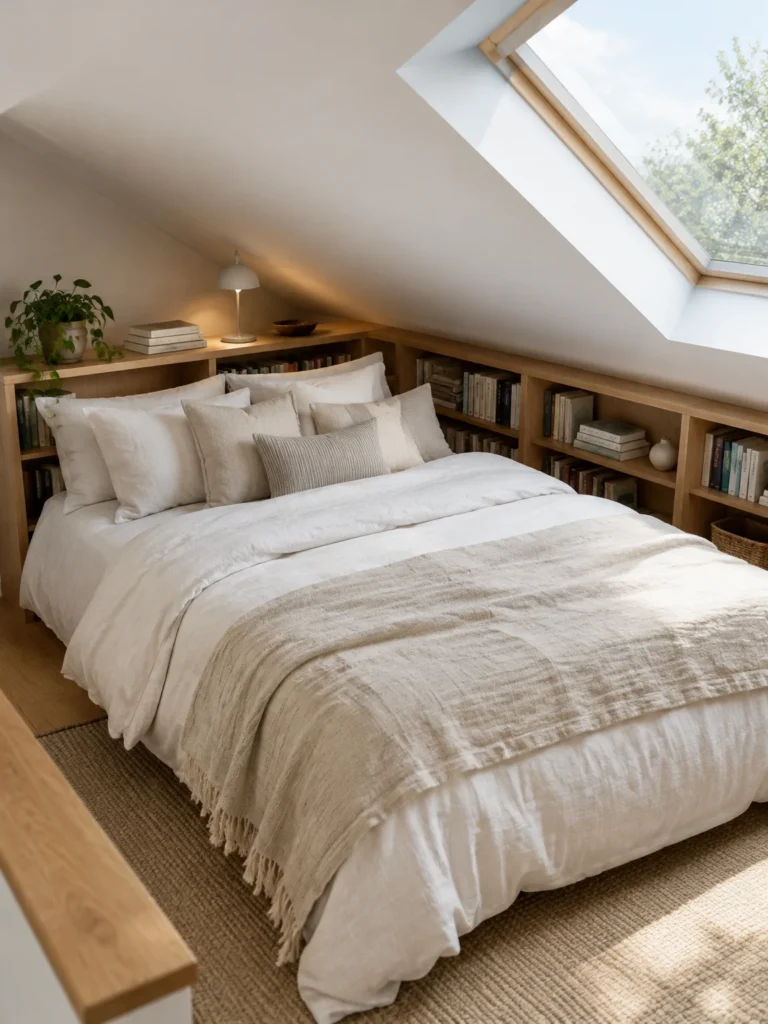
Sloping ceilings can make traditional tall bookcases difficult to position. Instead of fighting the architecture, use low shelves that follow the perimeter of the bed.
The result is a tucked-in bedroom where the books sit close to the mattress without overwhelming the available wall space. A skylight or nearby window can provide daylight, while a small table lamp handles evening reading.
Use the tops of the low shelves as practical bedside surfaces. Leave room for a reading lamp, a small tray for glasses, and a short stack of books you’re currently enjoying.
Layered pillows and a softly textured duvet help the bed feel inviting beneath the sloping ceiling. Just be sure to preserve a clear route into and out of the sleeping area, and avoid filling every available shelf to the edge.
5. Design a Curved Library Alcove With a Daybed

A curved alcove creates a more enclosed reading space than a standard rectangular arrangement. With a daybed tucked inside and bookshelves following the curve, the bedroom can feel like a small private reading lounge.
You don’t necessarily need a fully custom-built room. A low daybed, shelving that follows the wall’s shape, and a coordinated arrangement of cushions can suggest the same idea.
Use two or three larger cushions against the back of the daybed, then add smaller pillows and a soft throw. Open storage beneath the seating area can hold extra books while keeping the floor clear.
For a guest bedroom, leave a small surface within reach for a phone, a glass of water, or reading glasses. That simple detail helps the alcove function as a comfortable place to spend time, rather than just an attractive backdrop.
6. Replace the Traditional Headboard With a Bookshelf Wall
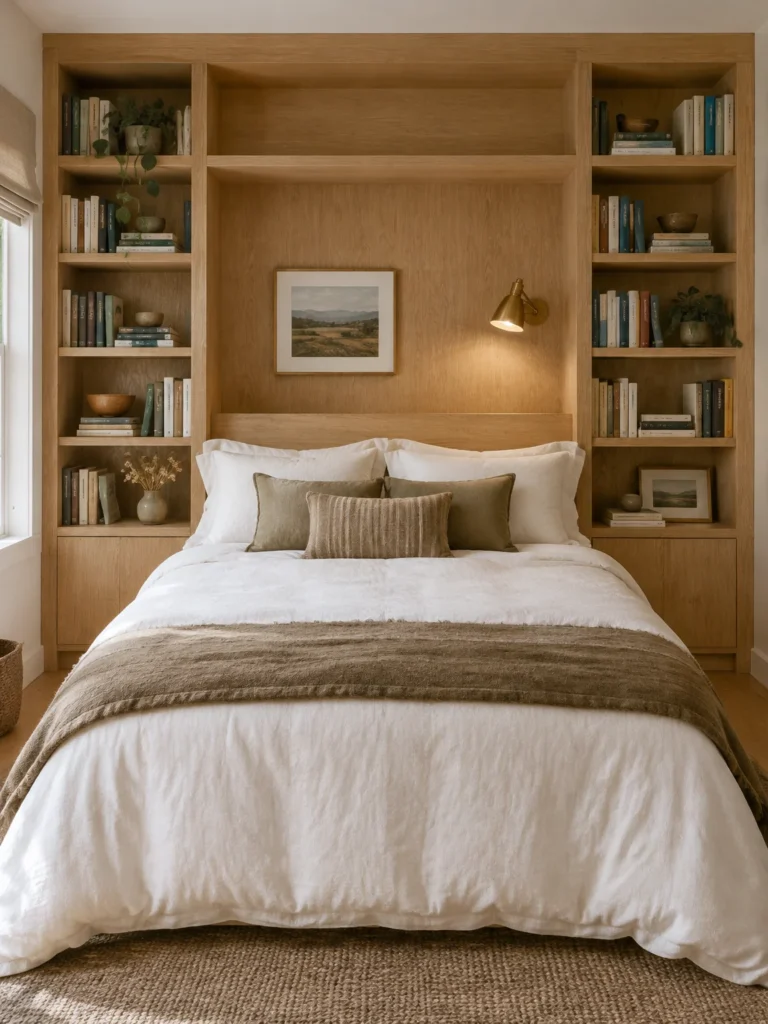
Instead of stopping at the headboard, extend the shelving upward and across the wall behind the bed. The books become the main architectural feature, turning an ordinary sleeping area into a small personal library.
One useful arrangement is to keep the central section visually simple and place books on the shelves to either side. Another is to create a recessed headboard area within a larger bookcase installation.
Choose a shelf depth appropriate for the books you intend to store. The shelves should feel integrated with the bed rather than projecting awkwardly into the sleeping area.
Keep frequently used books on accessible shelves, and reserve higher sections for occasional reading or display. Secure the shelving properly, and avoid placing loose, heavy objects directly over the pillows.
7. Frame the Bed With Open Shelves for a Library Canopy Effect

Open shelving can frame a bed much like a canopy without completely enclosing the sleeping area. Place coordinated shelving along the sides and head of the bed to form a defined nook while allowing light to pass through the structure.
This layout can be useful when a bedroom serves multiple purposes or when you want some visual separation without adding a solid wall.
Keep heavier books on lower shelves and lighter books and small objects higher up. Leave a few compartments partially empty to maintain a sense of openness.
A slim shelf at bedside height can hold a phone or reading glasses, while a nearby lamp provides practical light. If you rent, freestanding shelving may be easier to work with, but choose stable units and use appropriate anti-tip restraints.
8. Combine a Loft Library Bed With a Built-In Desk
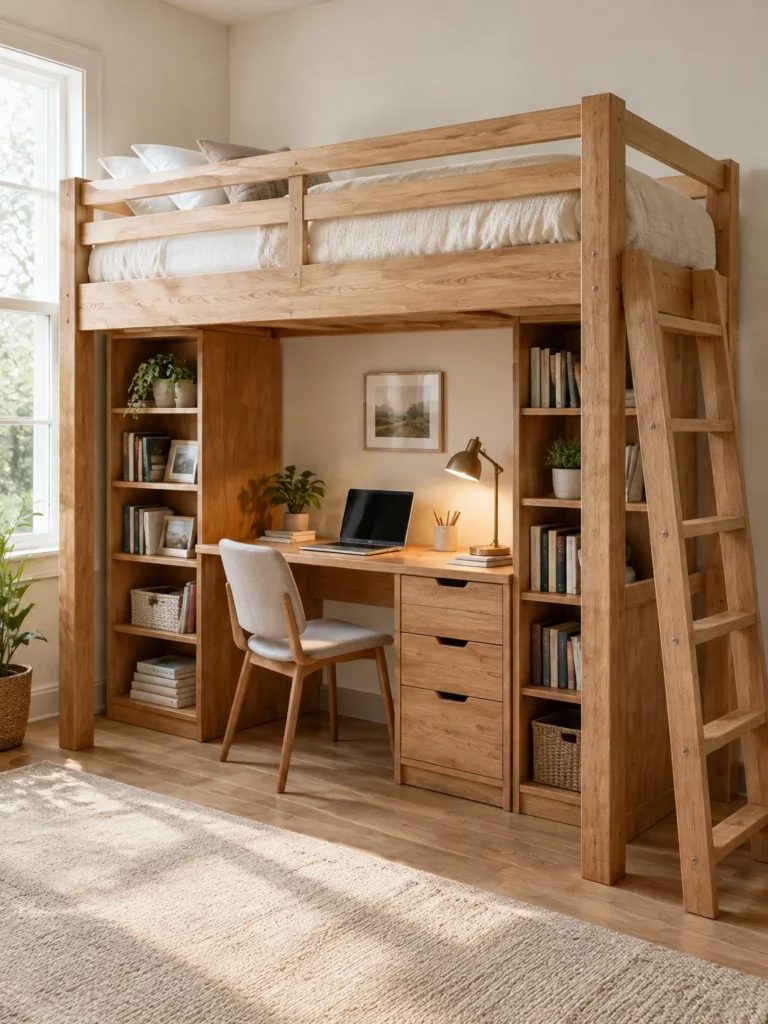
When floor space is limited, lifting the bed can free the area underneath for a compact desk and bookshelves. This arrangement creates separate sleeping and working zones without requiring another room.
A continuous desk surface beneath the bed gives you room for a laptop, notebook, and task lamp. Shelves on either side can hold books and office supplies, while drawers or cabinets below the desk provide concealed storage.
To keep the design from feeling like a child’s bunk room, choose a simple wood finish, restrained hardware, and bedding in two or three coordinated colors.
Use a purpose-built loft bed with its specified ladder and guardrails, and follow the manufacturer’s assembly and use instructions. The CPSC provides guidance on applicable bunk-bed safety requirements, including guardrails for upper bunks. CPSC bunk-bed guidance.
9. Create a Classic Library Wall Behind a Calm Sleeping Area
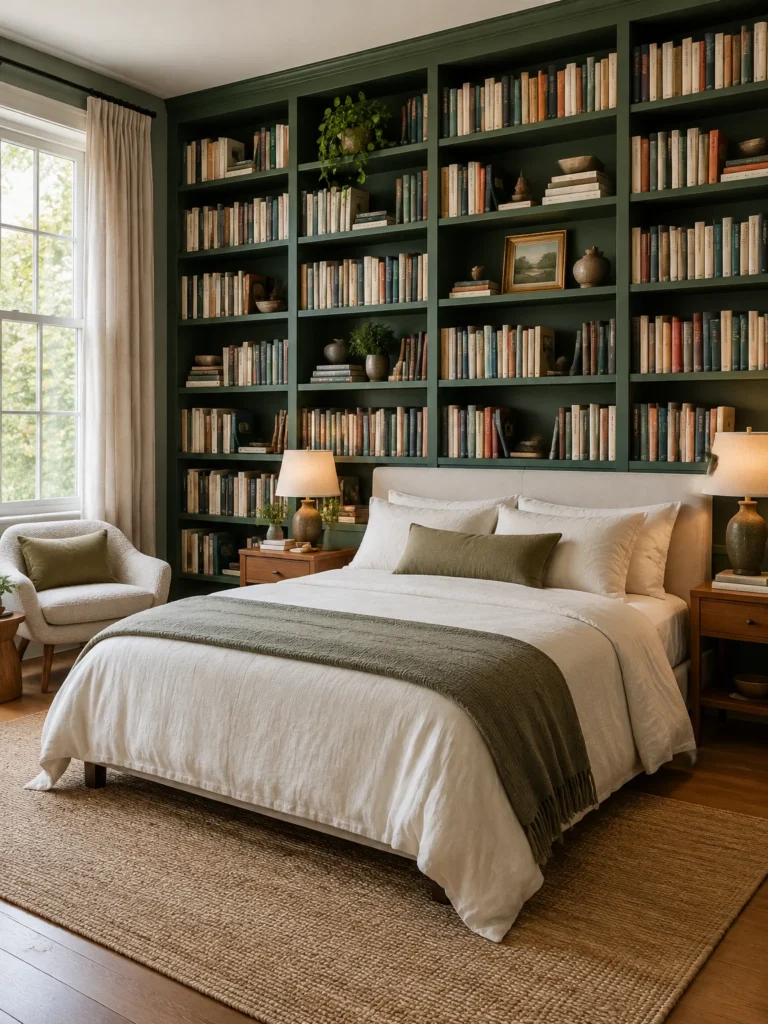
A full wall of bookshelves can make a dramatic statement without requiring storage on every side of the bed. Let the shelving occupy one main wall, then keep the rest of the bedroom relatively simple.
This is a good opportunity to mix upright rows of books with a few horizontal stacks. Grouping books by height or subject can make a large collection easier to navigate, while small gaps keep the arrangement from appearing overly dense.
Warm bedside lamps and a comfortable reading chair, if space allows, help the room feel like a place to read rather than simply store books.
For a darker, traditional library look, consider deep green or walnut-toned shelving with warm white bedding. For a brighter room, white shelving and natural wood accents will create a lighter atmosphere.
10. Build a Window-Seat Library Bed With Storage Drawers
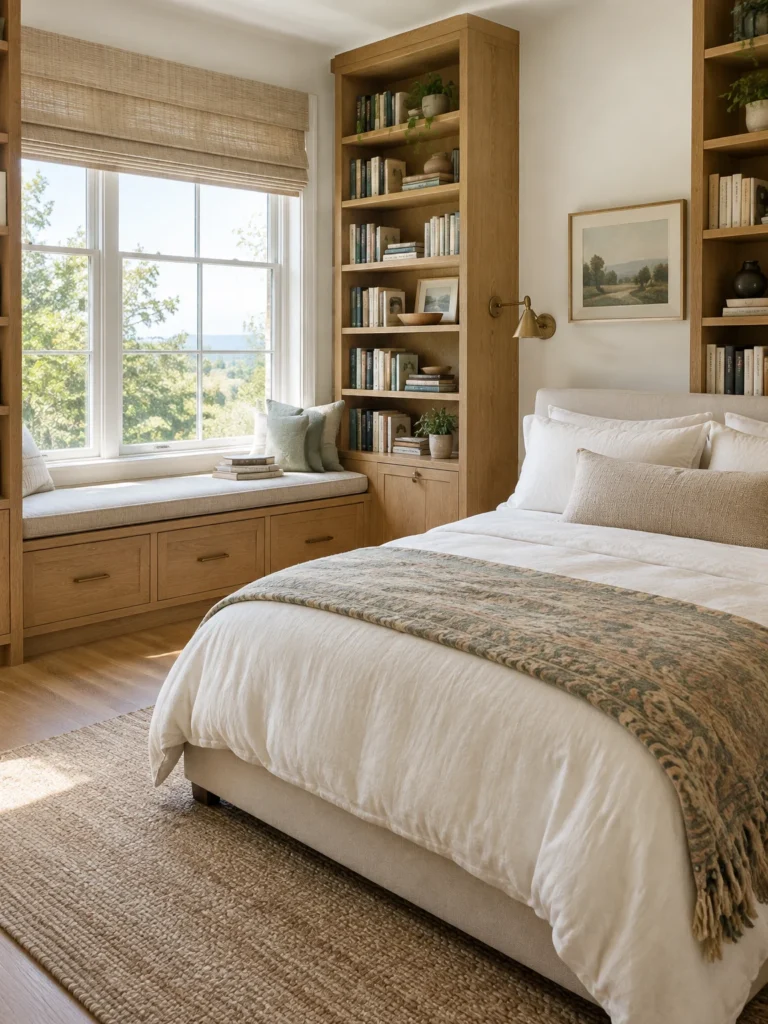
A window seat adds another place to read without making the bed the only comfortable spot in the bedroom. Combine it with a bed featuring storage drawers and bookshelves on one or both sides.
The window seat can have a padded cushion and a small selection of current reads, while the taller shelves hold the rest of the collection. Drawers below the bed or seat can store spare blankets and other bedroom essentials.
Keep the window area relatively uncluttered so natural light remains a feature. A textured cushion, a patterned throw, and warm wood finishes provide interest without competing with the books.
In a guest room, the bench can also serve as a convenient place to sit while unpacking or preparing for the day.
11. Create a Boxed-In Reading Cave With Three-Sided Shelving
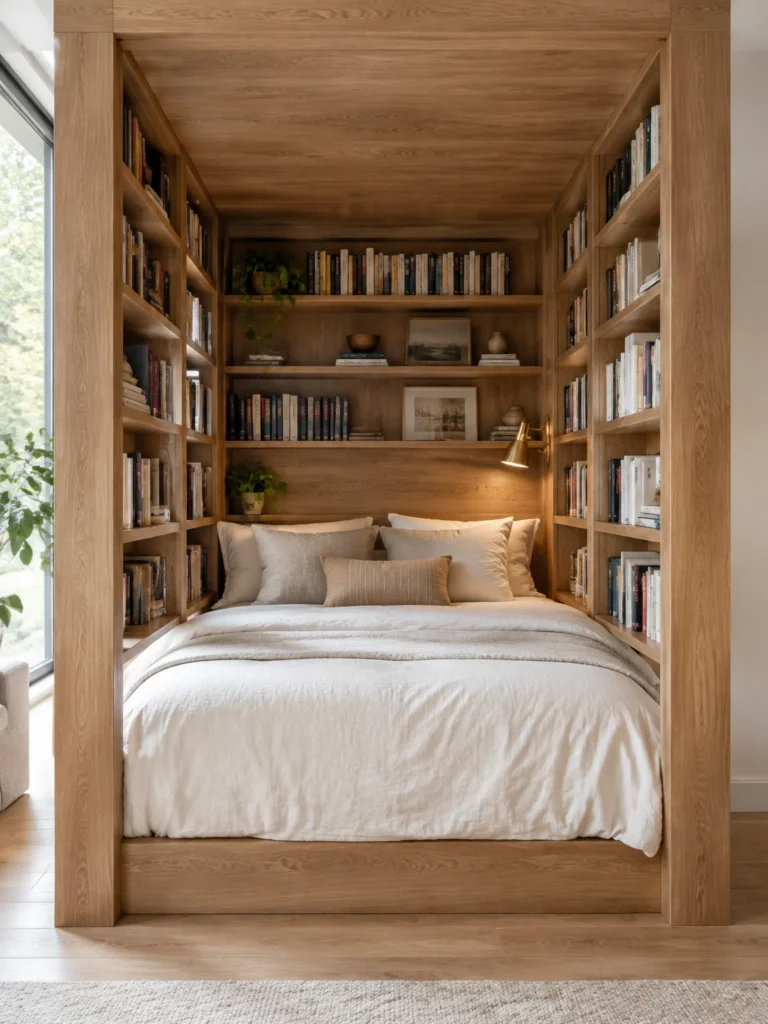
A boxed-in reading nook uses shelving along the head and sides of the bed, with a connecting upper structure that gives the arrangement a sheltered appearance.
The design creates a distinct sleeping zone, especially in a larger room that otherwise feels open or undefined. It can also be adapted to a recessed alcove, where the surrounding walls already provide some enclosure.
Use a consistent wood finish for the shelving and frame so the nook feels intentional. Soft, light-colored bedding and textured cushions help balance the solid structure.
Keep the most-used books at a comfortable height, store heavier volumes lower down, and use a bedside lamp or properly installed reading light rather than relying on dim ambient lighting alone.
The overhead structure should be properly designed and installed. Avoid adding a canopy panel that compromises ventilation, headroom, or safe access to the bed.
12. Add an Arched Entrance for a Secret Library Den
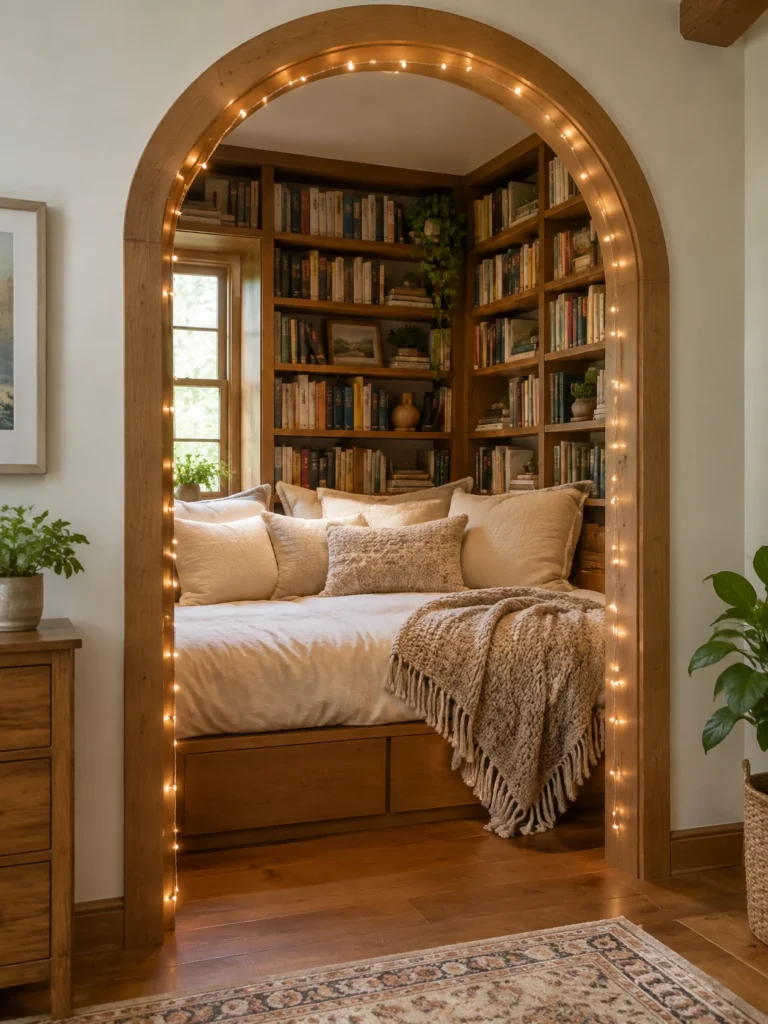
An arched entrance makes a bedroom reading nook feel like a separate little room. Behind the arch, shelves can wrap around the back wall, with the bed or daybed positioned in the center.
A wooden arch trim gives the space an architectural finish, while a softly curved curtain arrangement offers a less permanent way to define the entrance.
Warm-white string lights can trace part of the arch, or a small wall-mounted reading light can illuminate the books. Keep wiring neatly secured and follow the lighting manufacturer’s instructions, especially near fabrics and bedding.
Finish the nook with a few supportive pillows, one textured blanket, and a small tray for reading essentials. The aim is to create a place that feels separate from the rest of the bedroom without filling every inch with decorative objects.
13. Put a Reading Lounge Beneath a Loft Library Bed

This design uses the space beneath a loft bed for a sofa-like bench or daybed, creating a separate place to read, relax, or accommodate a guest.
Unlike the desk arrangement in idea eight, the emphasis here is on comfort. Place a low upholstered seat beneath the bed, flank it with bookshelves, and add a reading lamp at seated eye level.
A short side ledge provides room for a book or phone. Two or three cushions and a single throw make the lounge inviting without leaving it crowded.
Keep heavier books on lower shelves and lighter items higher up. Because an elevated bed is involved, use a properly designed loft system with its required safety features and preserve easy access to both the upper sleeping area and the lounge below.
14. Run High Bookshelves Along the Ceiling Line
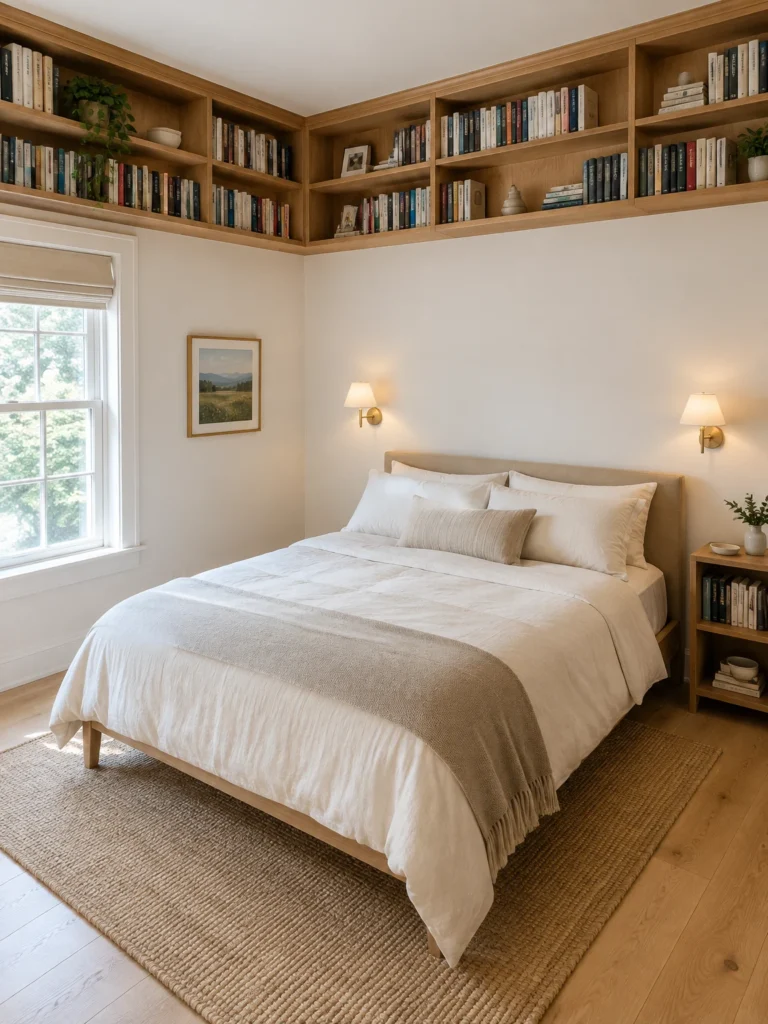
High shelves that follow the upper perimeter of a bedroom can create a library atmosphere while leaving most of the floor and lower walls available for furniture.
The shelves can run over the headboard wall and continue along an adjoining wall to visually connect the room. This works particularly well with a simple bed, a clean-lined headboard, and restrained bedding.
Use the higher storage for books you rarely reach for, such as older reference books or completed series. Keep nightly reading within easy reach of the bed so you aren’t climbing or stretching for a book before bedtime.
A slim bedside bookcase or floating ledge can provide that everyday storage without interrupting the room’s open feel.
High shelving should be appropriately secured and installed for its intended load. Plan for regular dusting and avoid displaying objects that could fall into the sleeping area.
15. Use Slim Book Towers and Floating Bedside Shelves
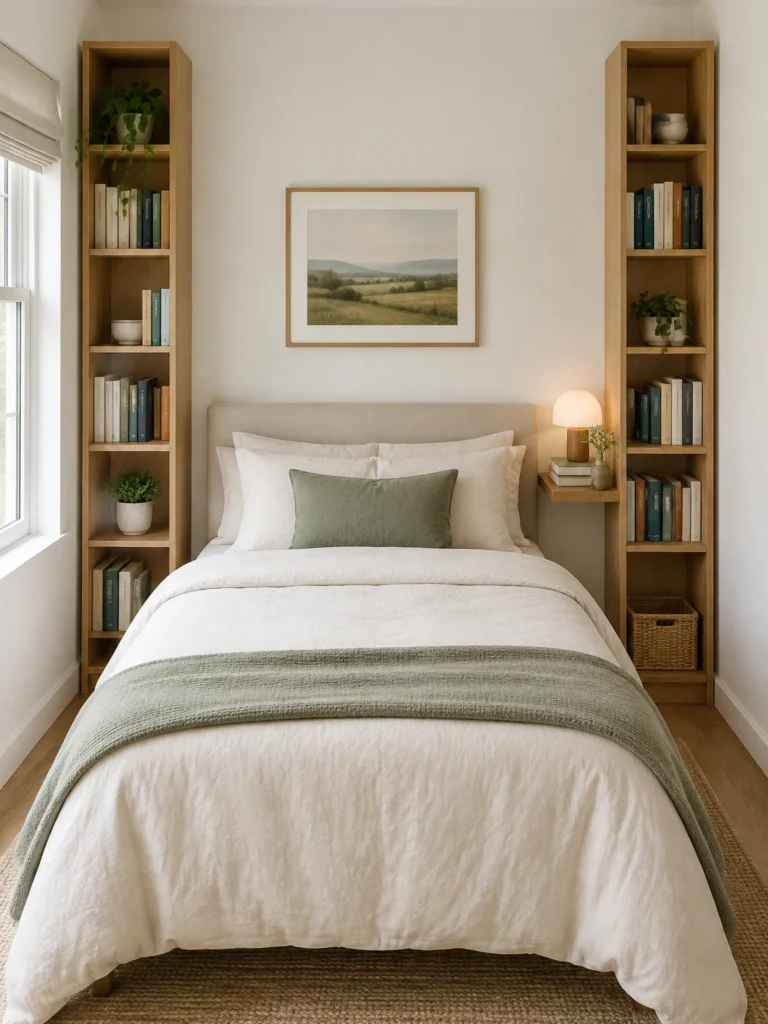
You don’t need a wall of custom cabinetry to create a bedroom that feels like a mini library. Two narrow book towers beside the bed, paired with a simple floating shelf above or near the headboard, can provide much of the same atmosphere on a smaller scale.
Keep the book towers for the bulk of your collection and use the floating shelf for a few current reads and everyday essentials. A small framed print or a compact table lamp can break up the rows of book spines.
Choose matching finishes if you want the arrangement to feel cohesive. Natural wood works well with white bedding, while painted shelving can blend into the wall and make the room feel less crowded.
This is also an easy arrangement to adapt over time. Start with one book tower and add the second only when you need more storage. If using wall-mounted shelves, install them securely and avoid putting unsecured objects directly over the pillow area.
How to Choose the Right Library Bed Idea for Your Bedroom
The best design depends on your available space and how you actually use your books.
For a small bedroom, start with integrated bed storage, slim book towers, or high shelves that leave the floor clear. For a room with an awkward ceiling, low shelves around the bed can use space that taller bookcases cannot. If you want a more dramatic result, floor-to-ceiling built-ins or a boxed-in reading nook can turn the bed wall into the main feature of the room.
Think about comfort and safety alongside appearance. Make sure frequently used books are easy to reach, shelving is securely installed, and the bed remains easy to enter and leave. A beautiful library bed should make everyday life more enjoyable, not create obstacles around the sleeping area.
You can also build the look gradually. Add a small bookcase, improve the bedside lighting, and arrange the books you read most often before committing to a larger renovation.
The goal is not to squeeze every book into the bedroom. It’s to create a place where your collection feels at home and where settling down with a good book becomes a natural part of the day.