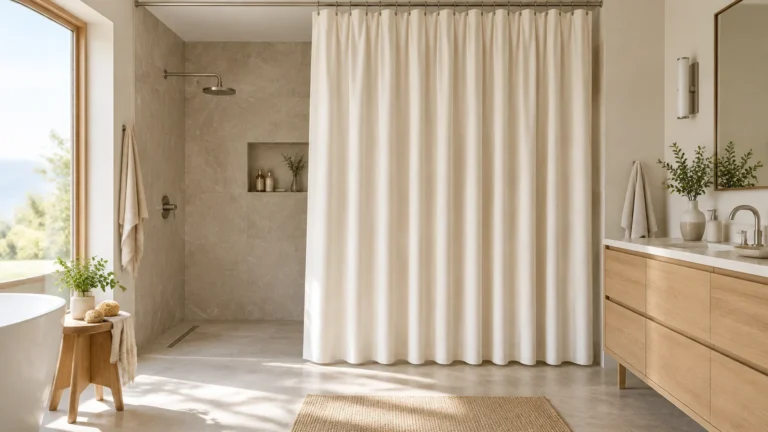
A shower curtain can do more than keep water off the bathroom floor. When you use two curtain panels or layer a decorative curtain with a practical liner, the shower starts to feel like part of the room’s design rather than a purely functional corner.
For winter, the difference often comes down to texture, color, and how the curtains hang. Creamy fabrics, deep green patterns, warm plaid, and richer colors can make a bathroom feel more inviting without replacing the tile, vanity, or fixtures.
The key is understanding which double-curtain setup suits your bathroom. Two decorative panels that meet in the middle create a tailored, hotel-inspired look. A decorative outer curtain paired with a waterproof liner gives you a similar layered appearance while keeping the functional part of the shower separate.
Here are nine double shower curtain ideas worth considering, along with practical ways to adapt each one to your space.

1. Hang Two Matching Curtains for a Hotel-Inspired Look
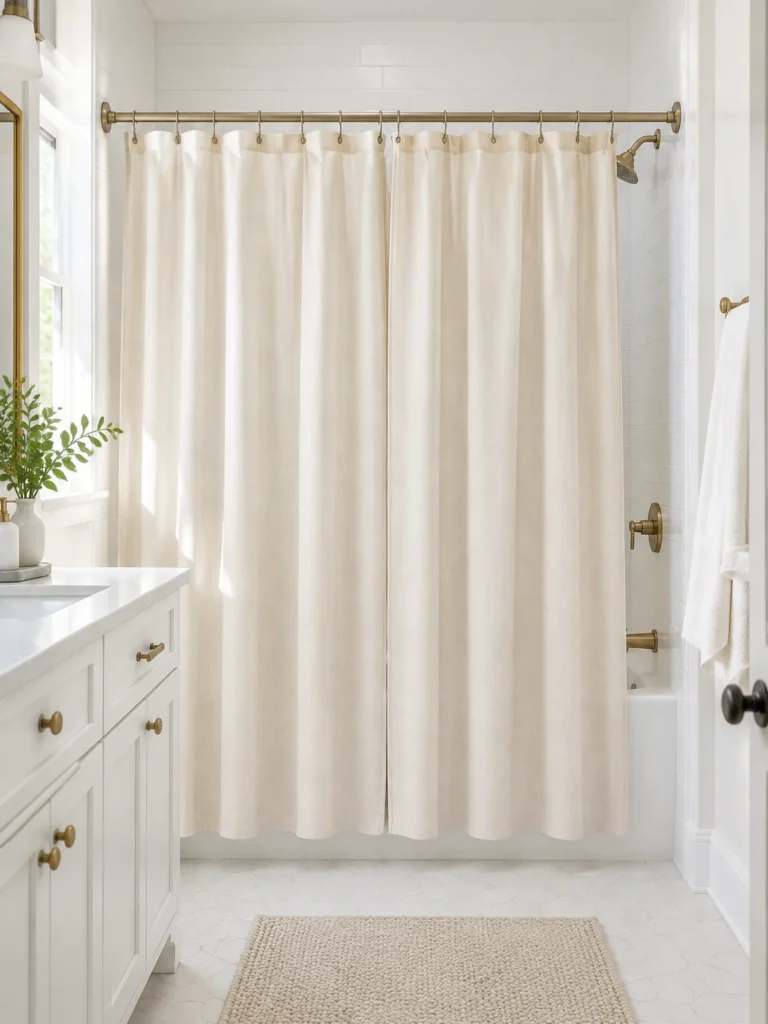
Two matching curtain panels create a balanced, symmetrical appearance that feels closer to a dressed window than a standard shower enclosure. Instead of pulling one curtain from side to side, you open the panels from the center.
For a cozy winter bathroom, look for ivory, soft white, or warm oatmeal curtains with a subtle woven texture. These shades work particularly well with white tile, natural wood, and brushed brass fixtures.
How to style it: Hang the panels on a rod that allows them to meet comfortably in the middle. Keep the folds relaxed rather than tightly gathered, so the fabric looks full without becoming bulky.
Make sure the panels overlap slightly when closed, and use an appropriate waterproof liner behind them. This setup is best for anyone who wants a polished, traditional look without undertaking a bathroom renovation. Pairing curtains is a recognized way to soften the shower area and create a more symmetrical design. (Apartment Therapy)
2. Pair a Linen-Look Curtain With a Waterproof Liner
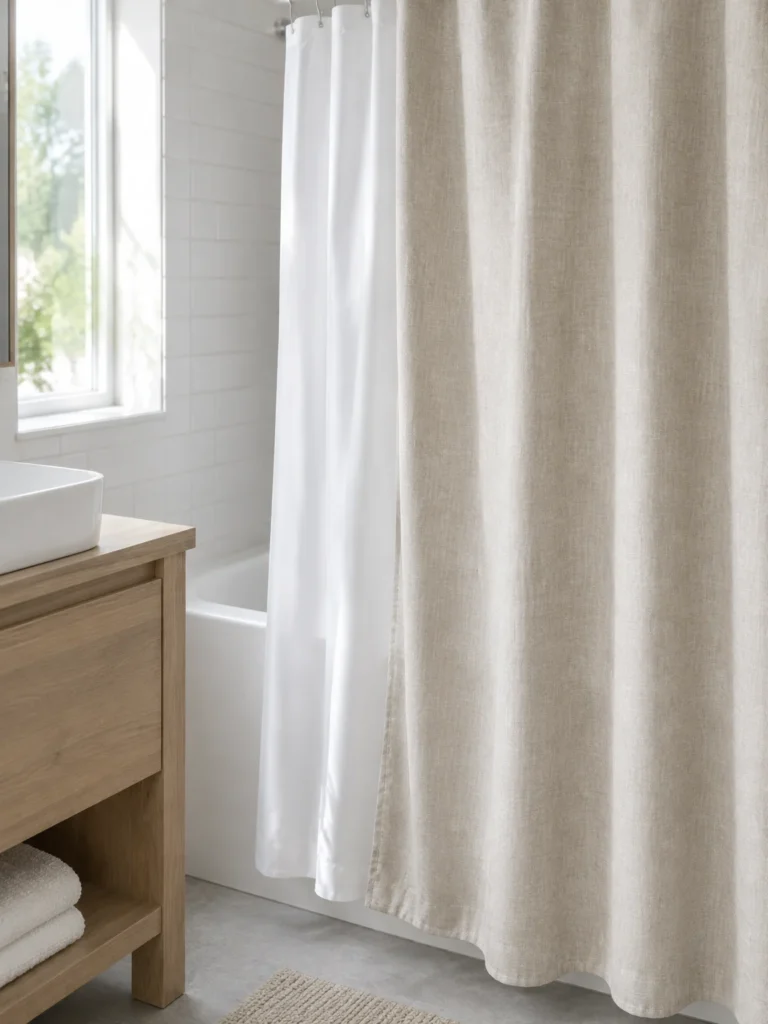
If you prefer a relaxed, natural aesthetic, a linen-look outer curtain is an easy place to start. Its visible texture adds depth without requiring a bold pattern or strong color.
Choose an oatmeal, warm white, or soft taupe curtain. Behind it, use a separate waterproof liner that can be positioned inside the tub or shower to contain splashes.
This combination works particularly well in bathrooms with wood vanities, stone-look countertops, woven storage baskets, or simple ceramic accessories. The slightly irregular appearance of a linen-look weave keeps the room from feeling too clinical.
One practical detail matters: Real linen and textured fabrics can have different care requirements, so check the fabric label before buying. A washable polyester linen-look curtain may be easier to maintain in a frequently used bathroom.
The outer curtain provides the decorative layer; the liner handles water protection. You don’t need both layers to be thick or heavy to get the effect.
3. Use Forest Green for a Deep, Wintery Look
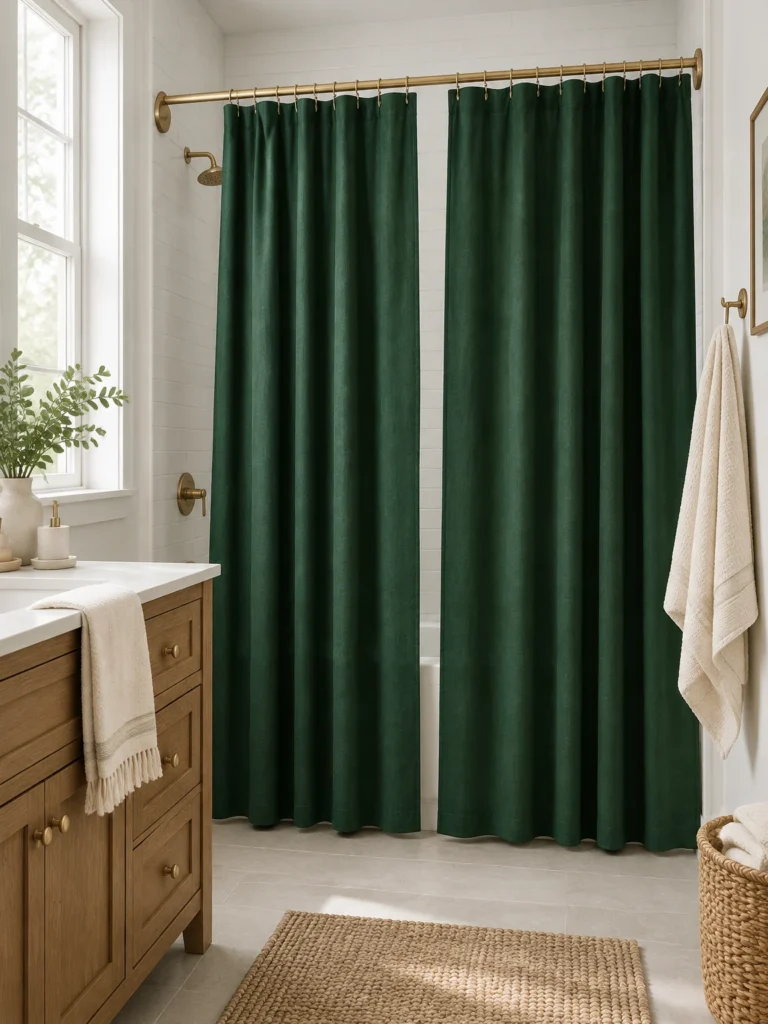
Forest green brings a richer seasonal color into the bathroom without relying on obvious Christmas decorations. It looks particularly effective against white tile, warm wood, and brass or bronze-colored hardware.
For a double-curtain arrangement, choose two matching deep green panels that part in the middle. Alternatively, use a green decorative curtain outside a separate waterproof liner if you prefer one continuous panel.
The surrounding colors will determine how dramatic the green looks. Warm white towels and light-colored tile keep the room from feeling too dark, while walnut-toned accessories create a deeper, more traditional atmosphere.
Try this combination: Forest green curtains, cream towels, a natural wood tray, and a simple brass-colored shower rod.
This idea suits bathrooms that already have neutral finishes but could use more character. It also works beyond winter, so you won’t need to replace the curtains when the season changes.
4. Bring In Classic Plaid With Warm, Neutral Accents
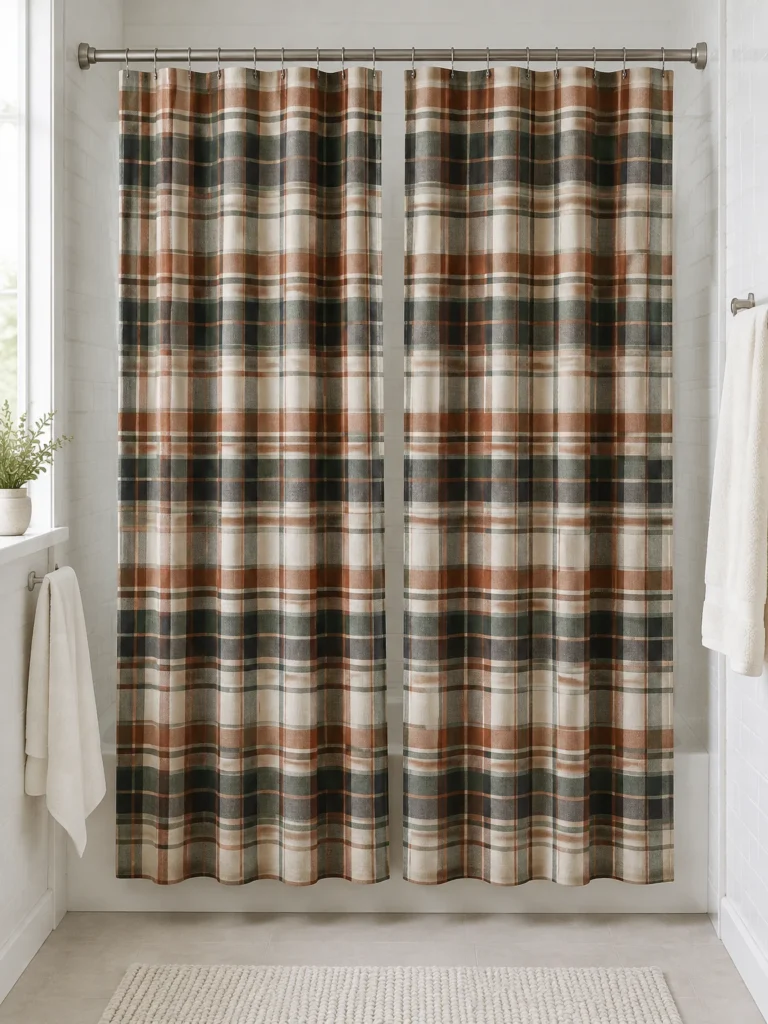
Plaid gives a winter bathroom a familiar, cabin-inspired character. The trick is choosing a pattern that feels comfortable in a bathroom rather than overly festive.
Look for plaid with muted combinations of rust, charcoal, cream, deep green, or navy. A medium-scale pattern is usually easier to coordinate with existing tile than a busy print filled with numerous contrasting colors.
You could use two matching plaid panels for a symmetrical effect, or choose a patterned outer curtain with a plain liner behind it.
Keep the rest of the room simple. Solid-colored bath towels, uncomplicated hardware, and minimal countertop accessories help the pattern remain the main visual feature.
A useful selection tip: Check the colors in your existing floor tile and vanity before choosing the plaid. Even one shared shade can help the curtain feel connected to the rest of the room.
5. Create a Soft, Tonal Look With Textured Cream Curtains
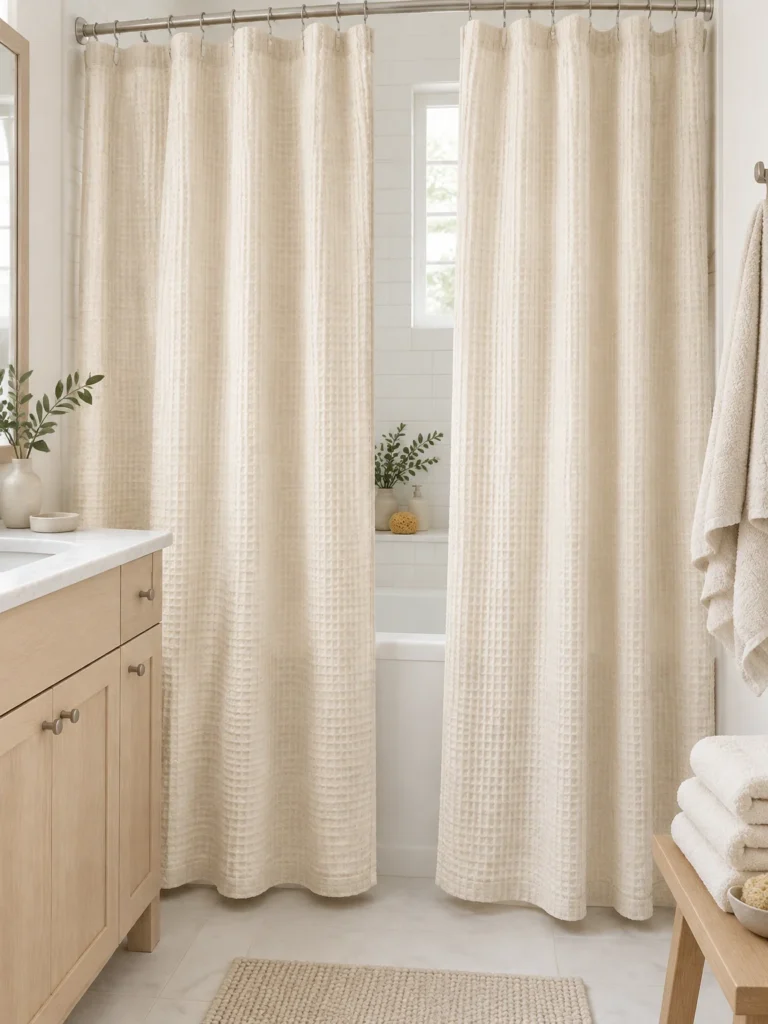
Not every winter bathroom needs a dark palette. A room with cream, white, or light beige finishes can feel cozy through texture alone.
Use two matching curtains made from a waffle weave, a subtle slubbed fabric, or another understated textured material. The two panels add fullness, while the surface detail makes the light color more interesting.
This arrangement is particularly useful in smaller bathrooms, where a large, high-contrast print might compete with the rest of the space.
To keep the look from becoming flat, introduce a few differences in texture: smooth ceramic accessories, thick cotton towels, and a small wood or woven accent. The color palette can stay simple because the materials provide the variation.
Avoid one common mistake: Don’t automatically choose the heaviest fabric available. A thick outer curtain can be cumbersome in a compact shower and may take longer to dry if it becomes damp.
6. Warm Up the Room With Rust and Cream
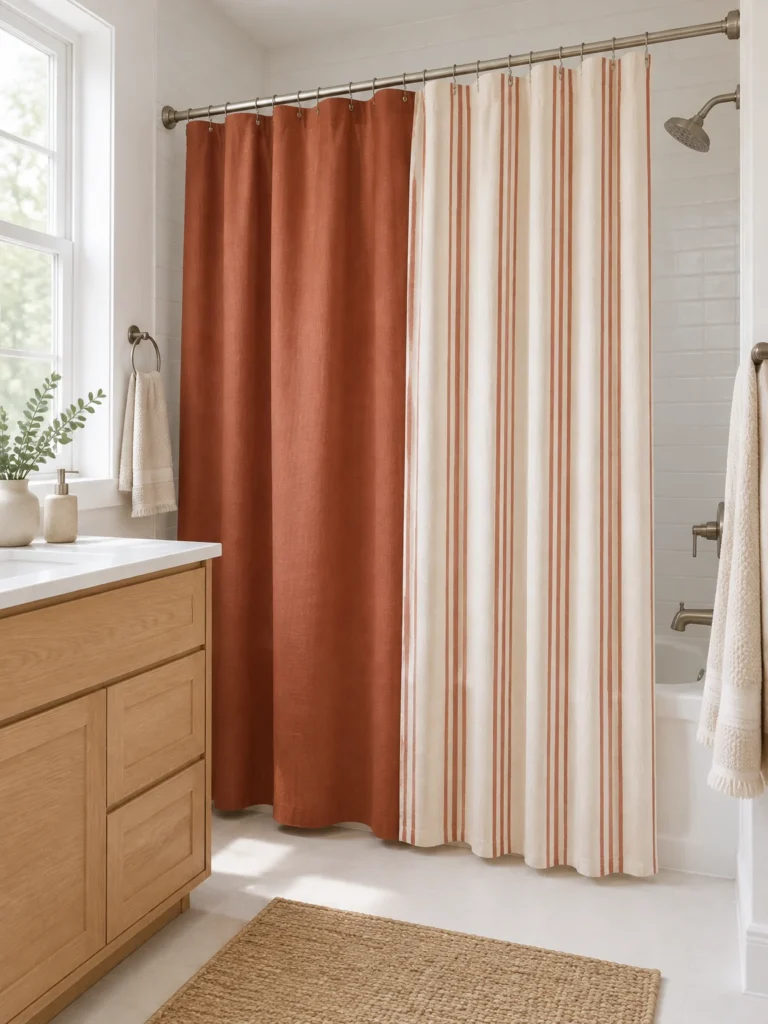
Rust, cinnamon, and muted terracotta can make a bathroom feel warmer without turning it into a themed seasonal display.
For a double-curtain look, use two complementary panels that share a warm palette. One might be a solid rust shade, while the second uses a restrained cream-and-rust stripe or a subtle geometric pattern. This approach works best when the design feels coordinated rather than random.
White tile and a light vanity provide contrast, while wood accessories reinforce the earthy color scheme. If your bathroom has beige or warm gray tile, muted cinnamon shades can also sit comfortably alongside those finishes.
The important part is getting the color balance right. In a small, poorly lit bathroom, use more cream and reserve rust for a narrower accent panel or a smaller area of the overall design.
This idea is especially appealing when you want a seasonal refresh that doesn’t rely on winter graphics, snowflakes, or holiday motifs.
7. Choose a Moody Pattern With a Solid Outer Layer
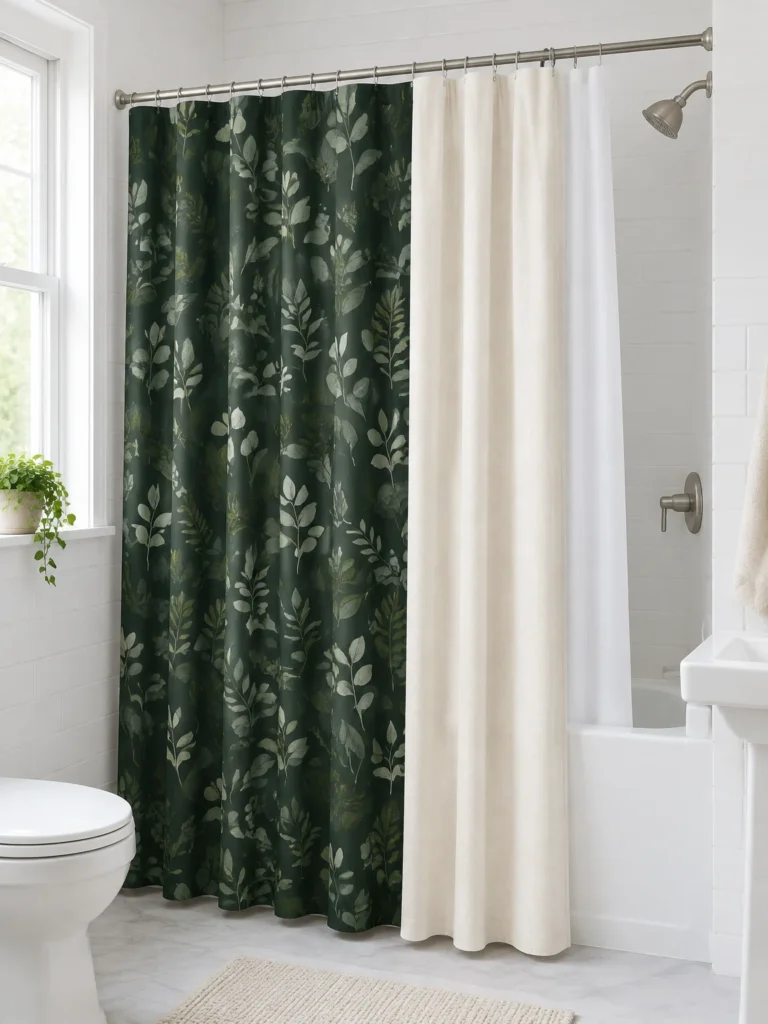
A darker shower curtain can be an effective focal point in a bathroom that otherwise feels plain. Consider botanical leaves, understated vintage florals, or a subtle pattern in deep green, navy, burgundy, or chocolate brown.
To make the result look intentional, avoid combining several equally busy patterns. Instead, place the decorative curtain behind or alongside a coordinating solid-colored panel, depending on your rod arrangement and how you want the curtains to open.
For example, a dark botanical print can work with a warm ivory panel. The ivory softens the pattern, while the deeper colors give the shower area more definition.
This arrangement is particularly suitable for bathrooms with simple white walls or understated tile. If the room already has patterned floors or strong wall tiles, choose a quieter print to prevent visual clutter.
Keep the curtain’s care requirements in mind as well. Darker colors may show soap residue or mineral deposits differently from lighter fabrics, so regular cleaning remains important.
8. Use Longer-Looking Panels to Make the Shower Feel Taller
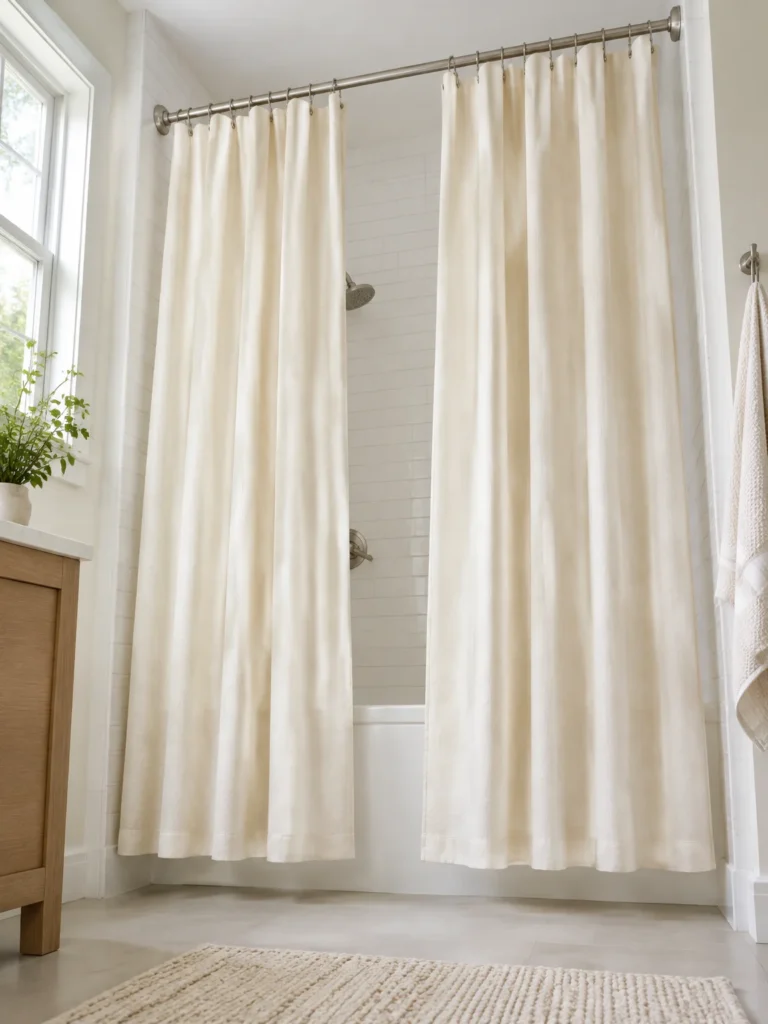
A shower curtain’s proportions can affect how the whole bathroom reads. Curtains that look too short or too narrow can leave the shower area feeling unfinished, even when the fabric and colors are attractive.
For a more tailored appearance, measure the space before choosing the panels. Consider the distance from the rod to your desired curtain endpoint, along with the width of the opening and the amount of fullness you prefer.
Two panels with enough width to form relaxed folds can create a fuller, more substantial appearance than two narrow panels stretched tightly across the rod. If your bathroom has a higher ceiling, check whether longer curtains are suitable for your particular tub or shower configuration.
Before ordering: Measure from the actual hanging point rather than relying only on a product’s listed length. Make sure the decorative fabric doesn’t drag on the floor or interfere with the tub, and ensure the liner remains positioned appropriately to contain water.
This is a useful option when you want a more customized result but can’t change the shower enclosure itself.
9. Create a Light, Airy Look With a Sheer Decorative Layer
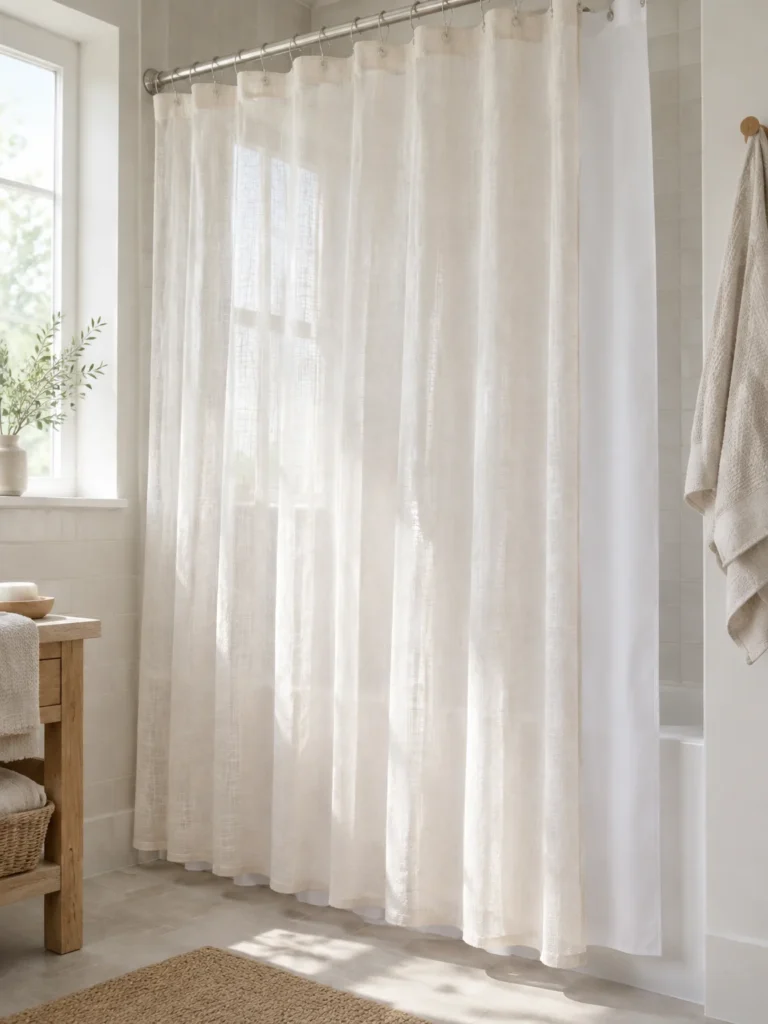
A sheer or semi-sheer outer curtain can soften the shower area, especially when the bathroom has a window or receives plenty of natural light.
Choose a lightweight white, ivory, or softly textured fabric and combine it with a suitable waterproof liner. The outer layer adds visual softness without introducing another strong color or pattern.
This look works well with pale tile, natural wood, simple fixtures, and neutral towels. It also offers a lighter alternative to the heavier textures often associated with winter decorating.
However, the sheer fabric shouldn’t be expected to provide the same privacy or water protection as an opaque curtain and suitable liner. Check the opacity and intended use of the material before choosing it.
If the bathroom is already full of decorative details, a simple sheer layer can provide contrast without adding another competing pattern.
How to Make Double Shower Curtains Work in a Real Bathroom
The design is only part of the decision. A good setup should also be easy to open, clean, and maintain.
Choose the right arrangement. Two matching panels on one rod work well for a center-opening look. A decorative curtain with a separate liner is a different arrangement that prioritizes a practical inner layer. Decide which effect you want before buying hardware.
Measure before purchasing. Check the rod width, the available length, and the space needed for the curtains to open. Two panels need enough combined width to close the opening without leaving a gap in the middle.
Keep water where it belongs. For a tub-and-shower combination, make sure the liner sits inside the tub when the shower is running. The outer decorative curtain can remain outside, as long as the setup doesn’t allow water to escape around the edges.
Plan for cleaning and drying. Shower curtains and liners regularly encounter moisture and soap residue. Extend the curtain and liner after showering, and run the bathroom exhaust fan or provide suitable ventilation to help them dry. Cleaning experts recommend spreading the curtain out rather than leaving it bunched in damp folds. (The Spruce)
Check the manufacturer’s washing instructions, especially for textured or lined fabrics. The liner may need more frequent attention than the decorative curtain.
Which Double Shower Curtain Idea Should You Choose?
The best option depends on what your bathroom needs most.
For a classic, polished look, start with two matching ivory panels. If you want a stronger winter mood, try forest green, muted plaid, or rust paired with warm neutrals. For a softer, brighter room, textured cream or a sheer decorative layer may be a better fit.
Think about the finishes you already have before choosing a curtain. A palette that works with your tile, vanity, and towels will generally feel more cohesive than one that introduces several unrelated colors.
A double-curtain arrangement can make a noticeable decorative difference, but it doesn’t need to become a complicated project. Choose a clear color direction, measure carefully, and keep water protection and drying in mind. Those decisions will do more for the finished result than adding extra accessories.