A glass bead curtain can look beautiful in a photo and still feel completely wrong once it is hanging in your house. I have learned that the hard way — beads that clack too loudly, strands that tangle every time someone walks through, curtains that looked dreamy online but blocked nothing in real life. The good news is that glass bead curtains work beautifully when you choose them for the right spot, the right light, and the right kind of daily use.
Why Glass Bead Curtains Work So Well in Real Homes
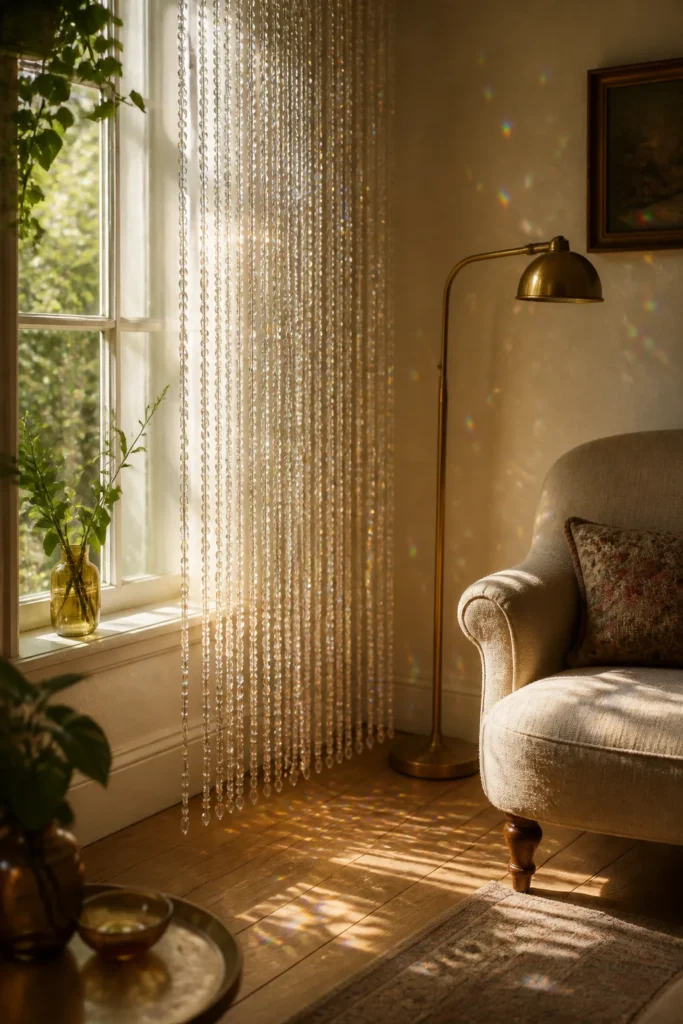
A glass bead curtain does something fabric curtains rarely do: it changes throughout the day.
In morning light, it can look soft and barely there. In late afternoon, it can throw little flecks of color across the wall. At night, with one lamp nearby, it turns into texture instead of just a hanging divider.
That is why glass bead curtains are so useful for:
- Windows that need decoration more than full privacy
- Doorways that feel too plain without an actual door
- Room dividers in open spaces
- Small apartments where solid partitions feel heavy
- Boho, vintage, eclectic, glam, and coastal interiors
- Corners that need movement, shine, or softness
They are not the right answer for every space, though. If you need blackout coverage, sound control, or serious privacy, glass beads will disappoint you. If you want light, shimmer, texture, and a gentle visual boundary, they can be exactly right.
Glass Bead Curtain Ideas for Windows
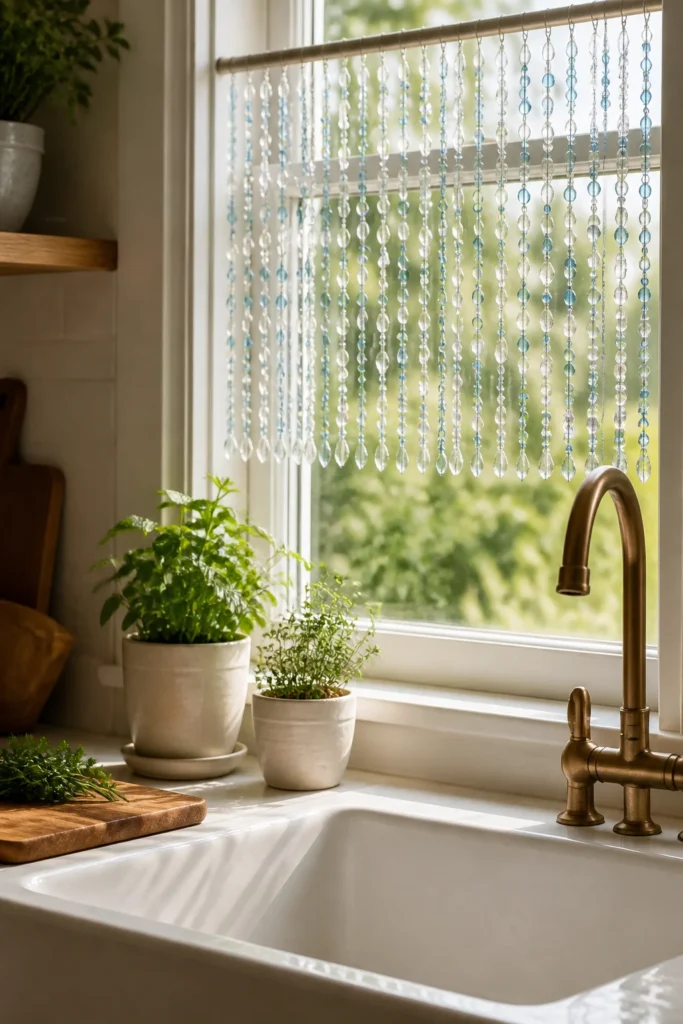
Windows are usually the easiest place to start because the curtain does not have to survive people walking through it all day.
For a window, I usually think about three things first: light direction, bead size, and how much privacy the room needs. A glass bead curtain over a sunny window can look stunning, but it may also create glare if the beads are too reflective.
Best Window Uses for Glass Bead Curtains
A glass bead curtain window treatment works especially well in places where you want light to pass through.
Good spots include:
- Kitchen windows above a sink
- Bathroom windows with frosted glass behind them
- Small bedroom windows that already have blinds
- Sunroom windows
- Studio or craft room windows
- Narrow side windows near doors
- Breakfast nook windows
For a kitchen window, I prefer shorter strands or a beaded valance. Full-length beads near a counter can get annoying fast, especially if they brush against dishes, plants, or anything you use daily.
Layer Glass Beads Over Simple Curtains
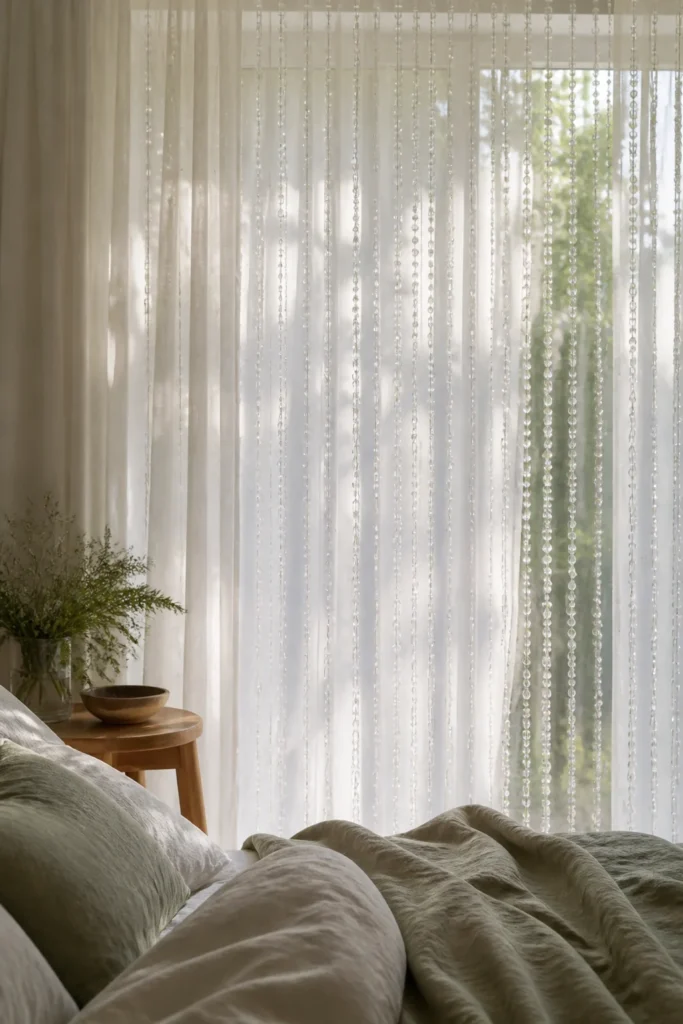
One of the easiest ways to make glass beads practical is to layer them.
Use a plain sheer or linen curtain behind the beads, then hang the glass bead curtain in front. The fabric gives you softness and coverage, while the beads add sparkle and structure.
This works well when you want:
- More privacy without losing the decorative effect
- A softer background behind colorful beads
- Less visual clutter from the outside
- A more finished window treatment
For bedrooms, I would not rely on beads alone. They look pretty, but when the lights are on at night, they do not give the same coverage as fabric, bamboo shades, or blinds.
Glass Bead Curtains for Doorways
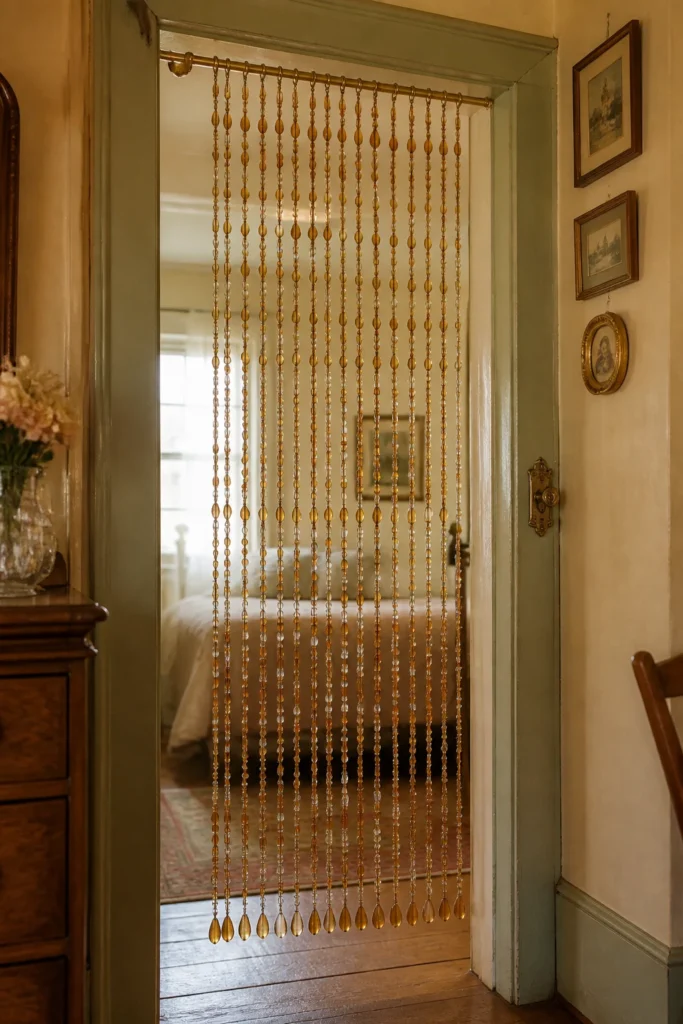
Doorways are where glass bead curtains have the most personality — and where mistakes become obvious quickly.
A glass bead door curtain needs to move well. If the strands are too dense, people push through them awkwardly. If the beads are too fragile, they chip or pop loose. If the curtain is too short, it can look accidental instead of intentional.
Where Doorway Bead Curtains Work Best
I have had the best results using bead curtains in doorways that do not need a solid door.
Try them for:
- Closet entrances
A beaded curtain can hide visual clutter without making the closet feel closed off. - Pantry doors
Use this only if the beads are easy to wipe clean and not too delicate. - Bedroom entrances in low-traffic areas
This works better in a guest room or studio than a main bedroom used by two people every morning. - Home office openings
Beads create a soft boundary without blocking airflow or light. - Laundry room entries
A simple beaded doorway curtain can make a utility area feel less harsh. - Hallway transitions
This is where a curtain can act like a decorative pause between spaces.
A doorway bead curtain should usually hang close to the floor but not drag. I like leaving about half an inch to one inch above the floor so the strands move freely and do not collect dust at the bottom.
Glass Bead Curtain Room Divider Ideas

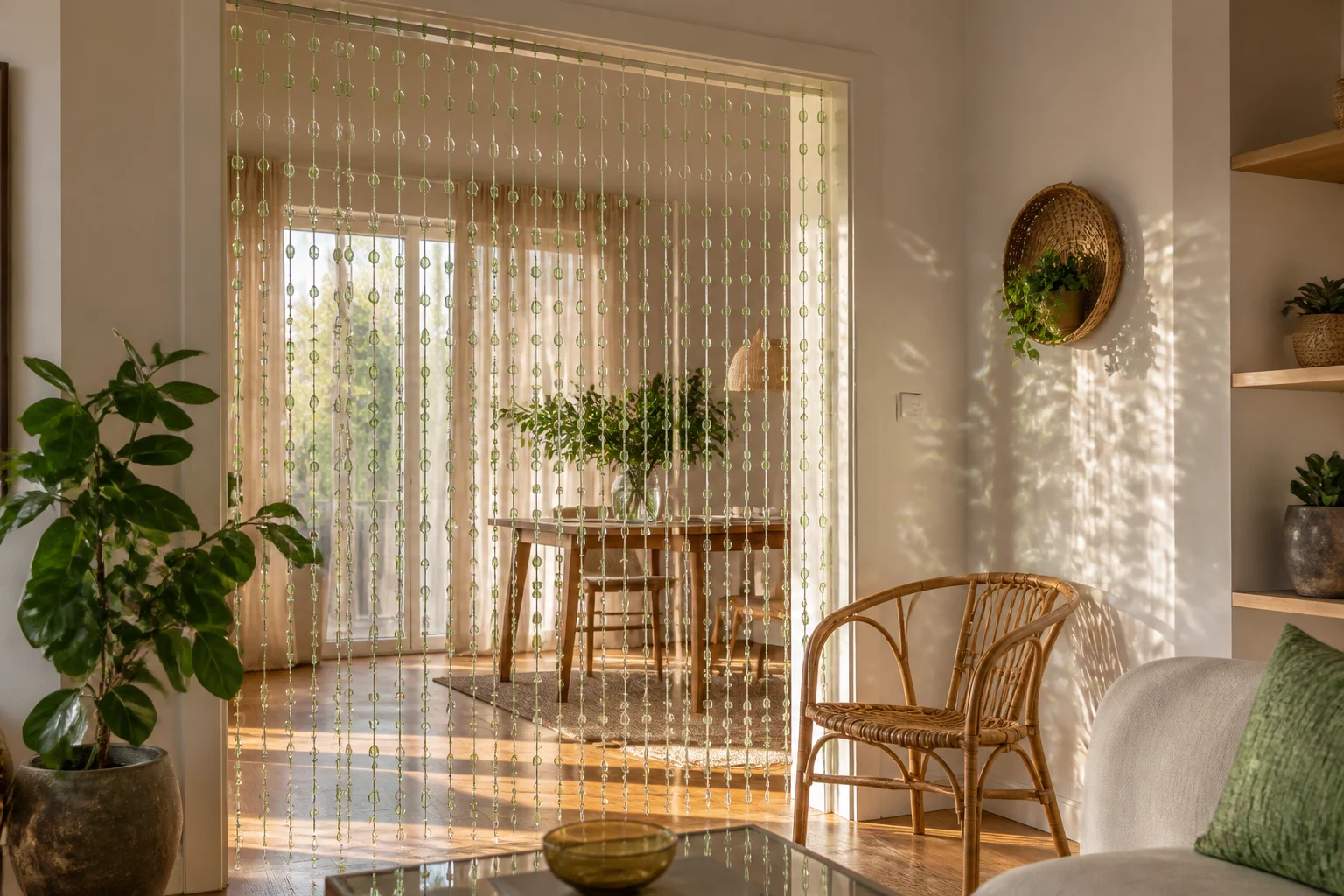
A glass bead curtain room divider works best when you want separation without making a room feel smaller.
I have used bead curtains in spaces where a bookcase felt too bulky and a folding screen blocked too much light. Beads gave the eye something to stop on, but the room still felt open.
Best Room Divider Placements
Glass bead curtains work beautifully between:
- Sleeping and living areas in a studio apartment
- A dressing area and bedroom
- A vanity corner and the rest of the room
- A dining nook and living space
- A meditation corner or reading area
- A closet wall and open bedroom
- A craft zone and office area
For room dividers, width matters more than people expect. A narrow curtain can look like a decorative strip instead of a divider. If you want the beads to visually separate a space, cover the full opening or use multiple panels side by side.
When to Choose Beads Instead of Fabric
Choose glass beads when the goal is visual softness, not full separation.
They work well when you want to:
- Keep natural light moving through the room
- Add texture without adding a heavy wall
- Create a gentle boundary
- Make a small room feel layered
- Add movement to a still corner
Fabric gives more privacy. Glass beads give more atmosphere. That difference matters when deciding where to hang them.
Choosing the Right Style of Glass Bead Curtain
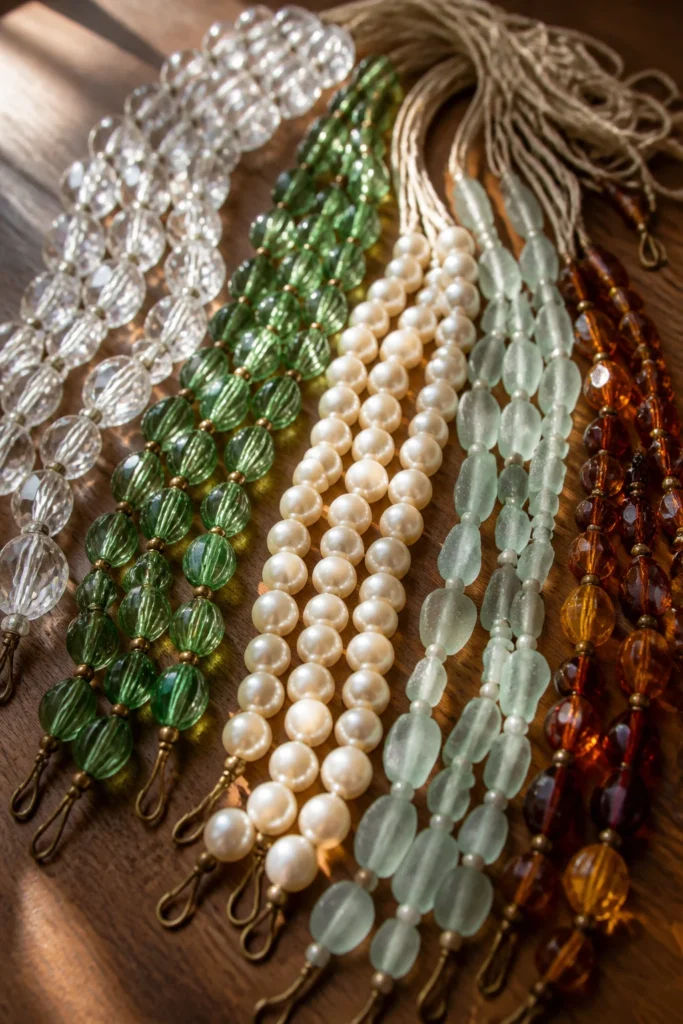
Not every glass bead curtain gives the same effect. The style changes the whole room.
A clear crystal curtain feels different from sea glass beads. A green beaded curtain feels different from pearl strands. The right one depends on whether you want the curtain to blend in or become the main decorative feature.
Clear Crystal Glass Bead Curtains
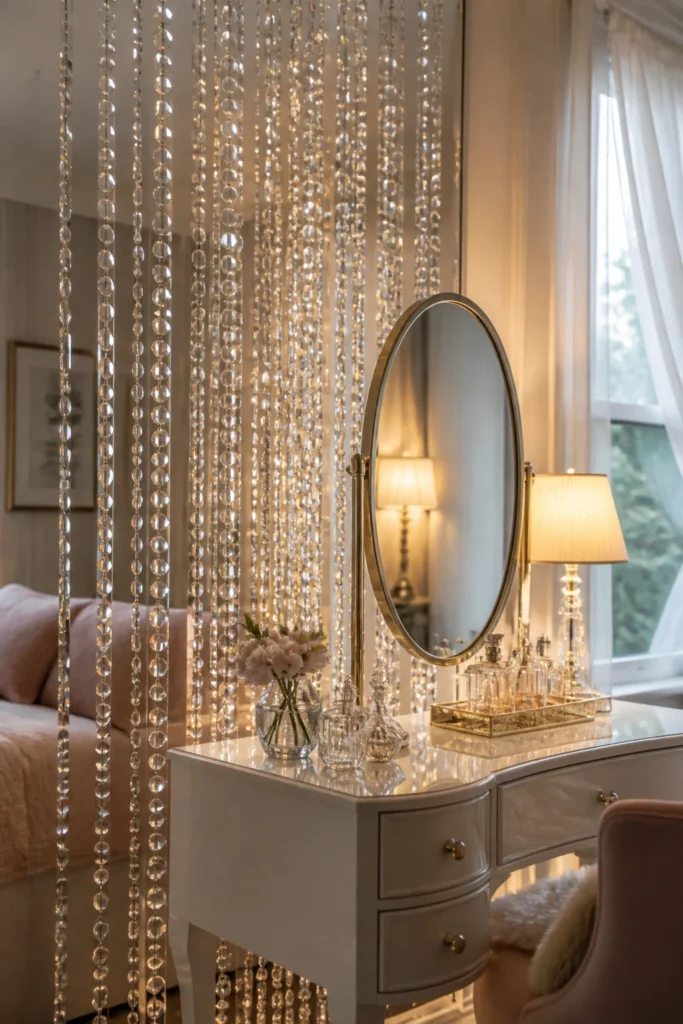
A crystal glass bead curtain looks clean, bright, and polished.
Use it for:
- Glam bedrooms
- Vanity corners
- Wedding-inspired decor
- Bright windows
- Elegant doorway accents
- Soft modern interiors
Clear beads catch light easily, so they look best when there is a nearby window or lamp. In a dark hallway, they can disappear unless the bead size is large enough to show texture.
Colored Glass Bead Curtains
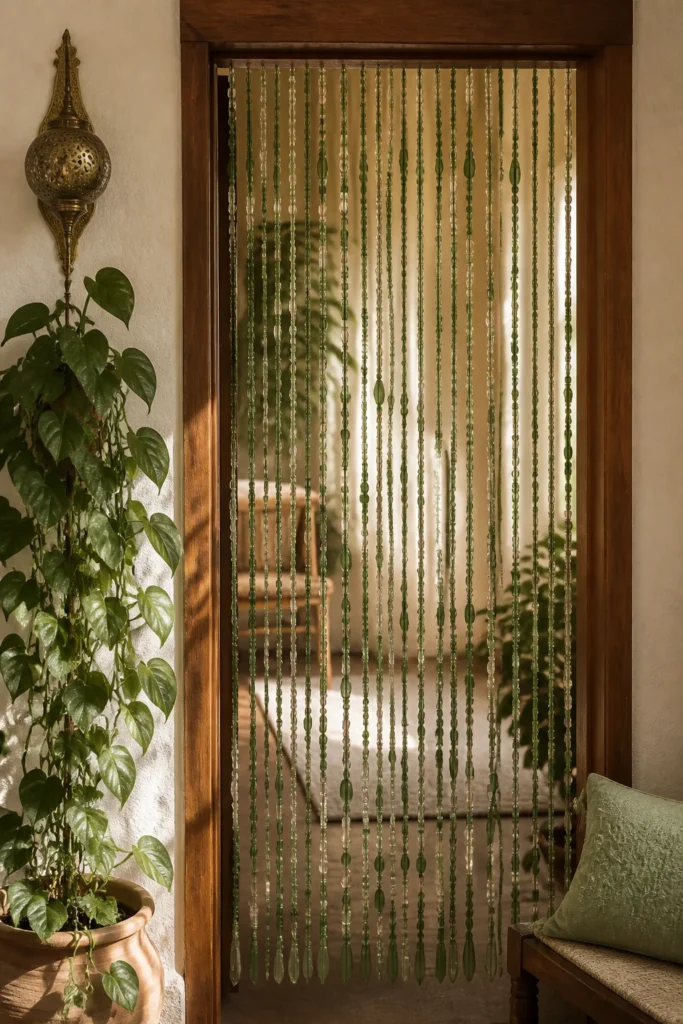
Colored beads bring more personality. They also need more restraint.
A green glass bead curtain can look earthy and vintage. A blue crystal curtain can lean coastal or calm. A purple bead curtain can look playful or moody, depending on the room around it.
Use colored bead curtains when the room already has a color story. If everything else is neutral, the beads will become the focal point.
Good color pairings include:
- Green beads with wood, cream, brass, and plants
- Blue beads with white, rattan, pale wood, and coastal decor
- Amber or gold beads with warm lighting and vintage furniture
- Multicolor beads with boho, maximalist, or creative rooms
- White beads with cottage, romantic, or soft bedroom styling
A strong bead color works better when you repeat that color once or twice elsewhere in the room — a cushion, a vase, a lampshade, or framed print is enough.
Sea Glass Bead Curtains
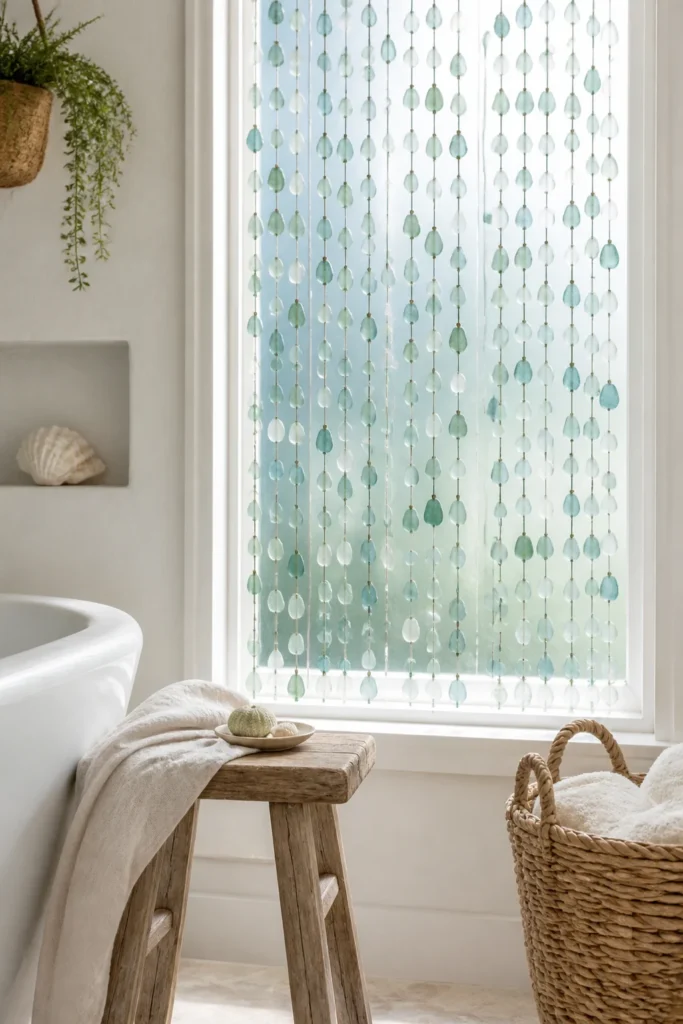
A sea glass bead curtain has a softer look than polished crystal. It usually feels more relaxed, especially in beachy, coastal, or airy rooms.
It works especially well for:
- Bathroom windows
- Sunrooms
- Coastal bedrooms
- White kitchens
- Porch-adjacent doors
- Soft blue, green, and frosted color palettes
Sea glass beads do not need much styling around them. They look best when the surrounding space has natural textures like linen, rattan, unfinished wood, stone, or woven baskets.
Short Glass Bead Curtain Ideas
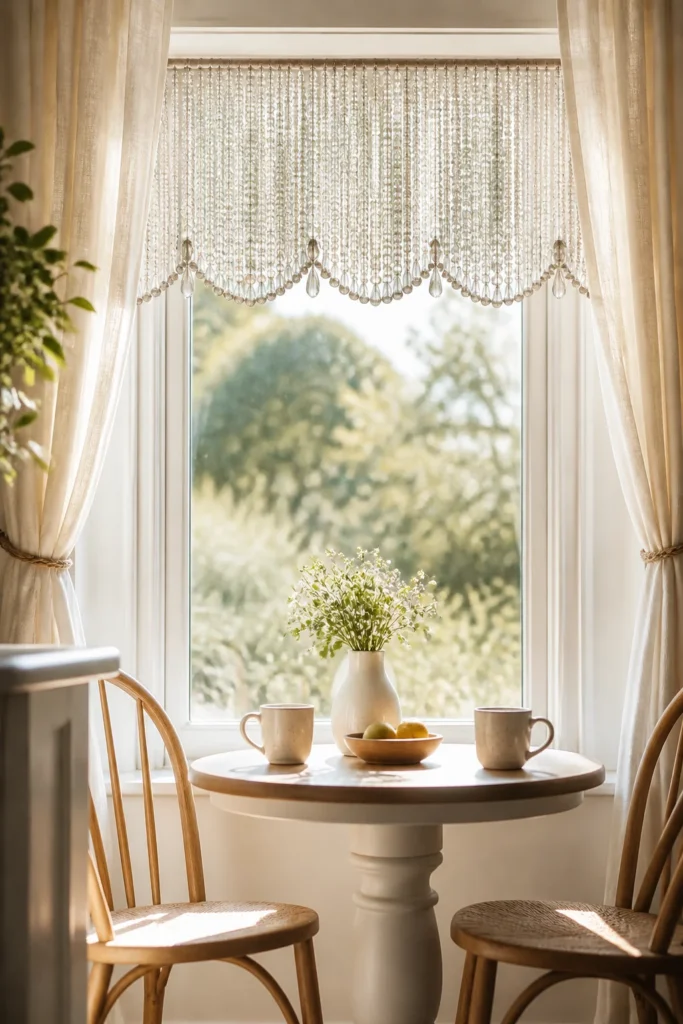
A short glass bead curtain can solve problems that a full-length curtain creates.
I like short bead curtains for places where full strands would get bumped, grabbed, or tangled. They add detail without becoming something you have to manage every day.
Use a short glass bead curtain for:
- Kitchen windows
- Bathroom windows
- Top halves of doors
- Cabinet openings
- Small closet nooks
- Above a desk
- Window valances
- Decorative wall hangings
A valance with beads can be especially useful in a kitchen. It gives the window a finished look without hanging into the sink area or blocking daylight.
For a cleaner look, keep the bead length consistent. For a more relaxed style, choose a scalloped or uneven bottom edge.
DIY Glass Bead Curtain Ideas
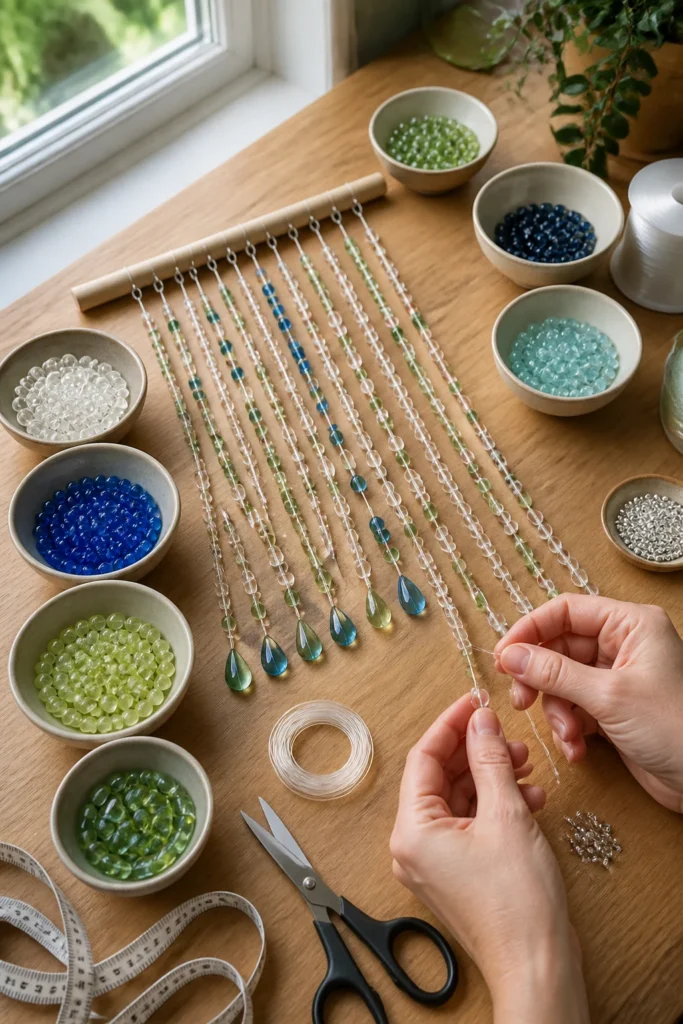
A DIY glass bead curtain is worth making when you need a custom size, a specific color mix, or a softer handmade look.
The biggest lesson I have learned from making beaded curtains is simple: do not start with the beads. Start with the space.
Measure the width, decide how dense you want the strands, then calculate how many vertical lines you actually need. A curtain with too few strands looks sparse. A curtain with too many strands becomes heavy, expensive, and harder to walk through.
Basic DIY Materials
For a simple DIY beaded curtain, you may need:
- Glass beads
- Strong nylon cord, fishing line, or beading wire
- A wooden dowel, tension rod, or curtain rod
- Crimp beads or knots
- Small hooks or eye screws
- Scissors or wire cutters
- Measuring tape
- Optional spacer beads
- Optional bottom weights
For doorways, I prefer stronger cord over thin thread. Doorway curtains move constantly, and weak string can snap right where the top bead meets the rod.
Simple DIY Bead Curtain Pattern
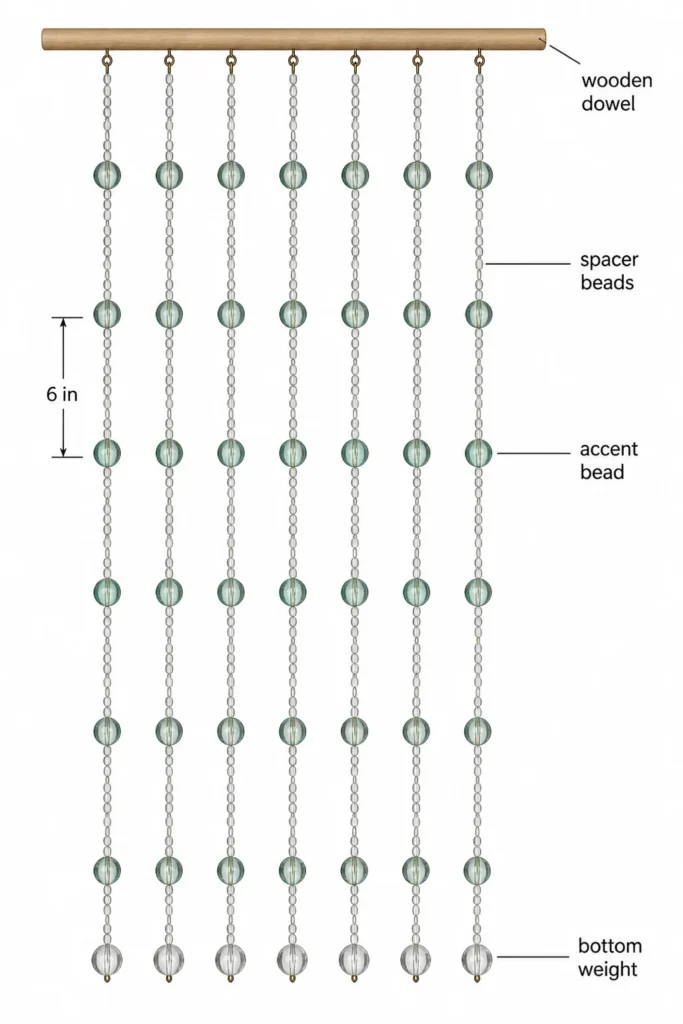
A good beginner pattern is easier than it looks.
Try this structure:
- Choose one main bead color.
- Add one accent bead every 5 to 8 inches.
- Use smaller spacer beads between larger beads.
- Keep every strand the same length.
- Add a slightly heavier bead at the bottom of each strand.
This gives the curtain rhythm without making it too busy. If you want a more vintage look, use warm amber, green, pearl, or smoky glass beads instead of bright mixed colors.
How to Hang a Glass Bead Curtain Properly
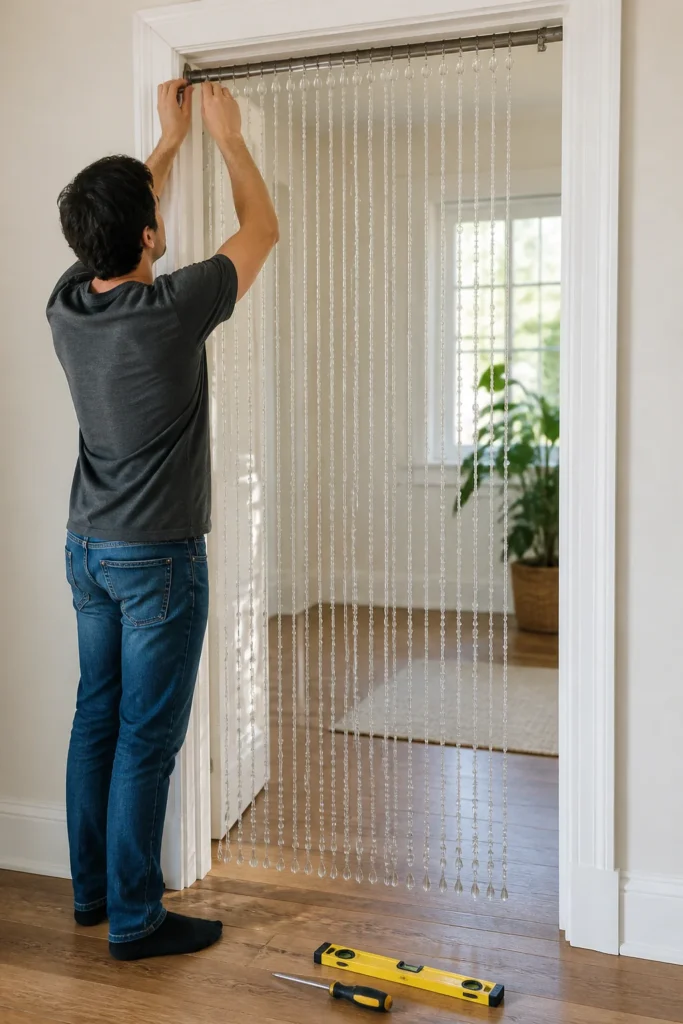
The hanging method matters almost as much as the beads.
A beautiful curtain can look messy if the rod sags, the strands bunch together, or the top sits too low. Before hanging anything, check whether the curtain will be decorative only or touched every day.
Hanging Options That Actually Work
Here are the most practical options:
- Tension rod: Best for renters and lightweight curtains
- Mounted curtain rod: Best for windows and wide openings
- Wooden dowel with hooks: Best for DIY bead curtains
- Ceiling track: Best for room dividers
- Inside-frame hooks: Best for doorways with trim
- Wall-mounted brackets: Best for heavier glass bead curtains
For heavy glass beads, avoid flimsy adhesive hooks. They may hold for a few days, then fail when the curtain gets pulled or bumped.
Doorway Hanging Tip
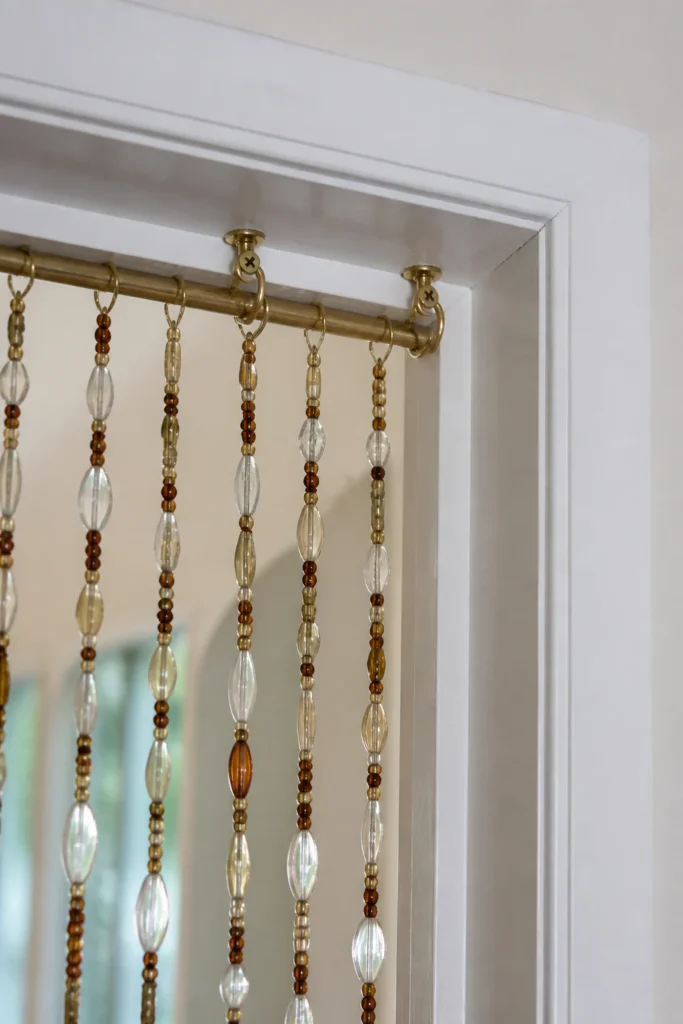
Hang the curtain slightly above the door frame if you want height. Hang it inside the frame if you want a cleaner, more built-in look.
For busy doorways, inside-frame hanging usually behaves better because the beads stay contained and do not swing into the wall as much.
Privacy: What Glass Bead Curtains Can and Cannot Do
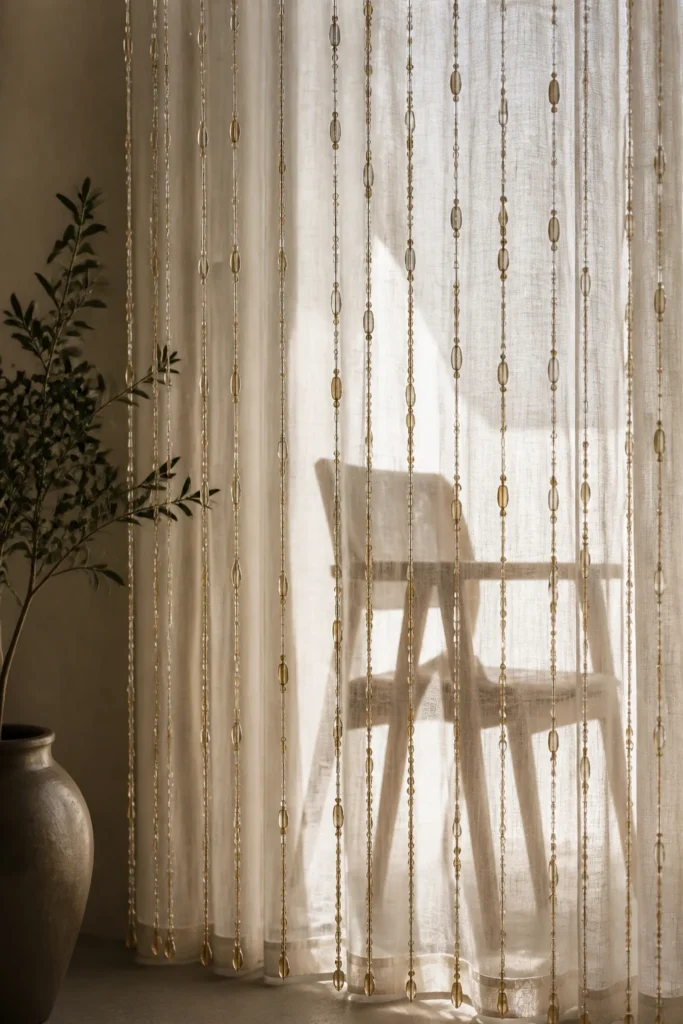
A beaded privacy curtain gives visual interruption, not true privacy.
That distinction saves a lot of disappointment. From across a room, the beads can blur a view and soften a doorway. Up close, people can still see shapes, movement, and light through the strands.
Glass bead curtains offer light privacy for:
- Closet openings
- Studio zones
- Decorative room dividers
- Low-traffic doorways
- Windows with blinds behind them
- Corners you want to visually separate
They do not work well alone for:
- Bathrooms without frosted glass
- Bedrooms facing neighbors
- Street-facing windows at night
- Rooms where full privacy matters
- Spaces where sound separation is needed
If privacy matters, layer the beads with sheer curtains, bamboo shades, frosted film, or fabric panels. The beads can still be the decorative front layer.
Best Rooms for Glass Bead Curtains
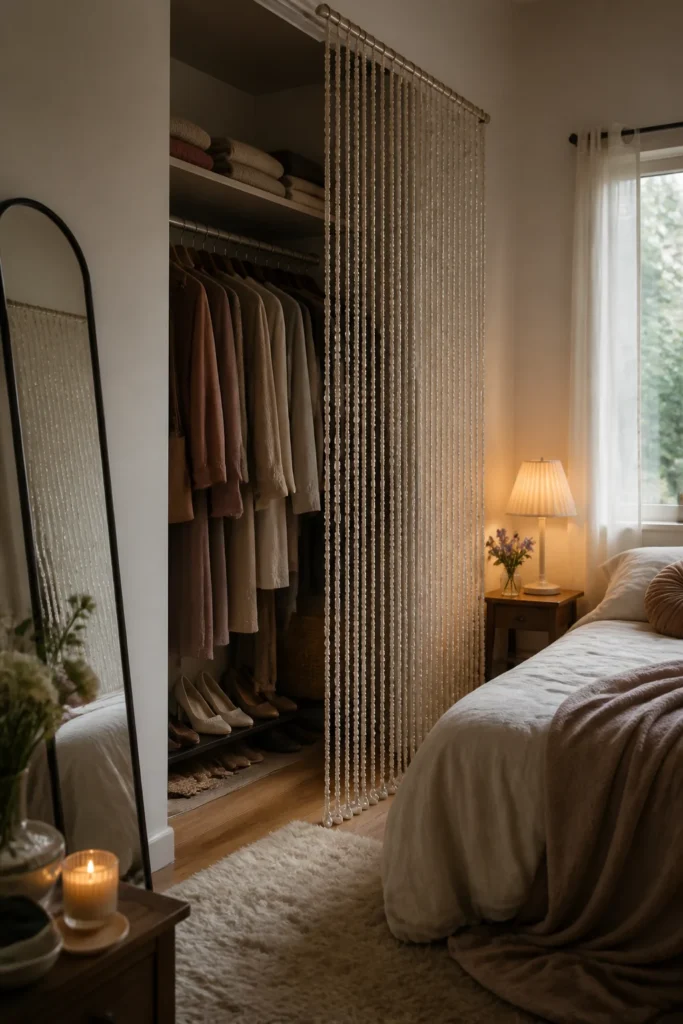
Some rooms handle bead curtains better than others.
Bedrooms, kitchens, studios, and sunrooms tend to work well. Main hallways, tight bathrooms, and children’s play areas need more caution because beads can tangle, make noise, or get pulled.
Bedroom
A crystal bead curtain for bedroom styling can look soft and calm when used near a window, vanity, closet, or dressing corner.
For bedrooms, I like:
- Clear crystal beads near a lamp
- Pearl beads for softer decor
- White beaded curtains for cottage-style rooms
- Green or amber beads for vintage warmth
- Short bead curtains over small windows
Avoid very noisy beads near the bed. If the curtain moves every time the air conditioner turns on, it can become irritating at night.
Kitchen
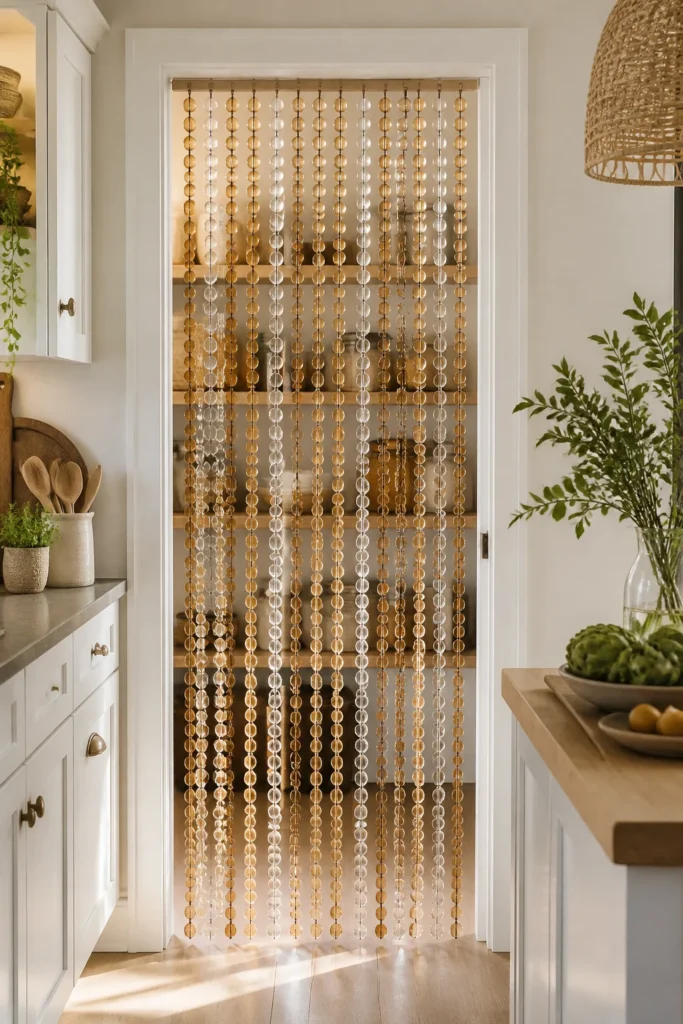
A glass bead curtain kitchen idea works best when it stays away from grease, steam, and heavy daily traffic.
Good kitchen placements include:
- A small window valance
- A pantry doorway
- A breakfast nook window
- A decorative divider between kitchen and dining space
Choose beads that wipe clean easily. Textured beads can trap dust and cooking residue faster than smooth glass.
Living Room
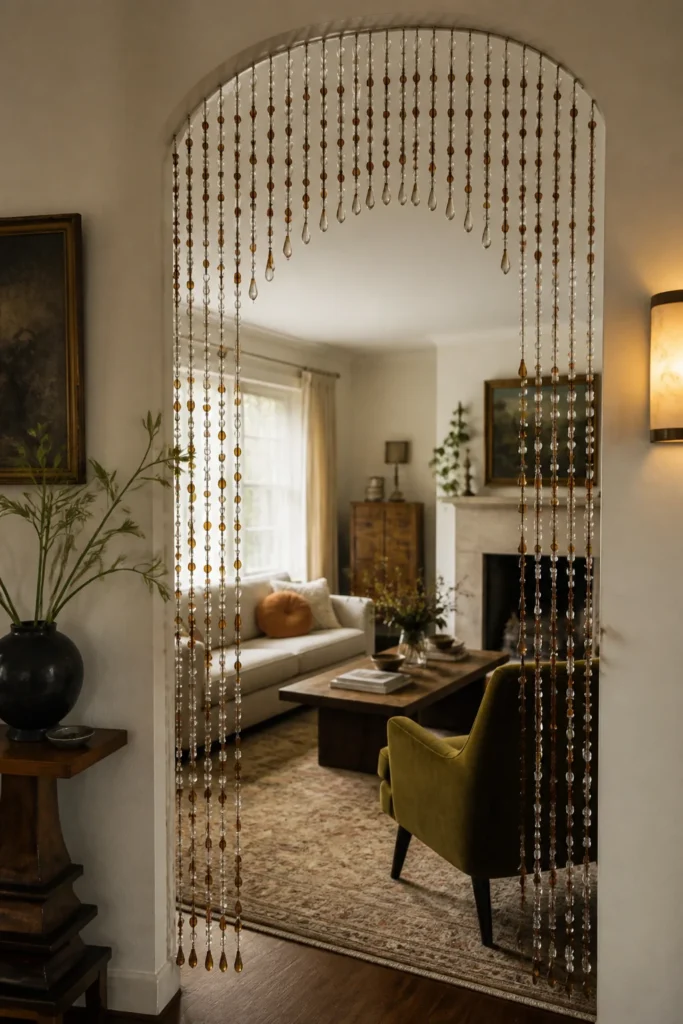
In a living room, beads can soften a plain wall or frame an opening without adding another piece of furniture.
Try them:
- Behind a sofa as wall texture
- Across a wide archway
- Around a reading corner
- Between a living room and dining space
- Over a window that already has shades
If your living room has a lot of patterns already, choose clear, white, or neutral beads. If the room feels flat, colored beads can bring in a small amount of movement without repainting or replacing furniture.
Bathroom
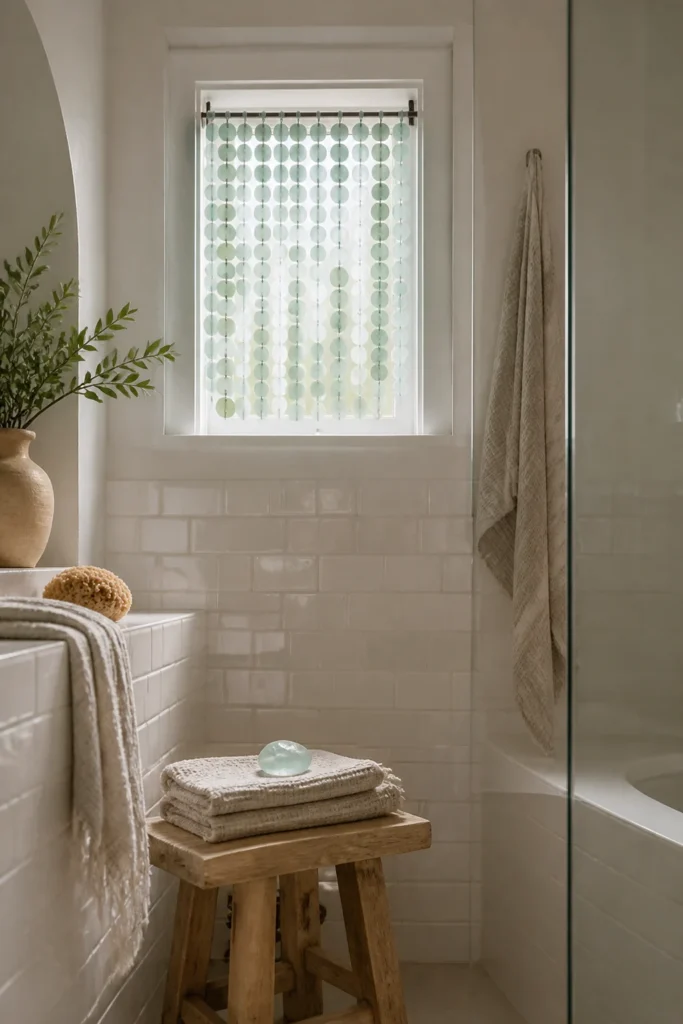
Glass beads can work in a bathroom, but only in the right place.
Use them on:
- Frosted windows
- Decorative wall hooks
- Vanity corners
- Small upper windows
- Spa-style alcoves
Do not use them as a shower curtain unless the curtain is specifically designed for wet areas. Regular bead curtains can rust at the hardware, collect soap residue, or become difficult to clean.
Common Glass Bead Curtain Mistakes
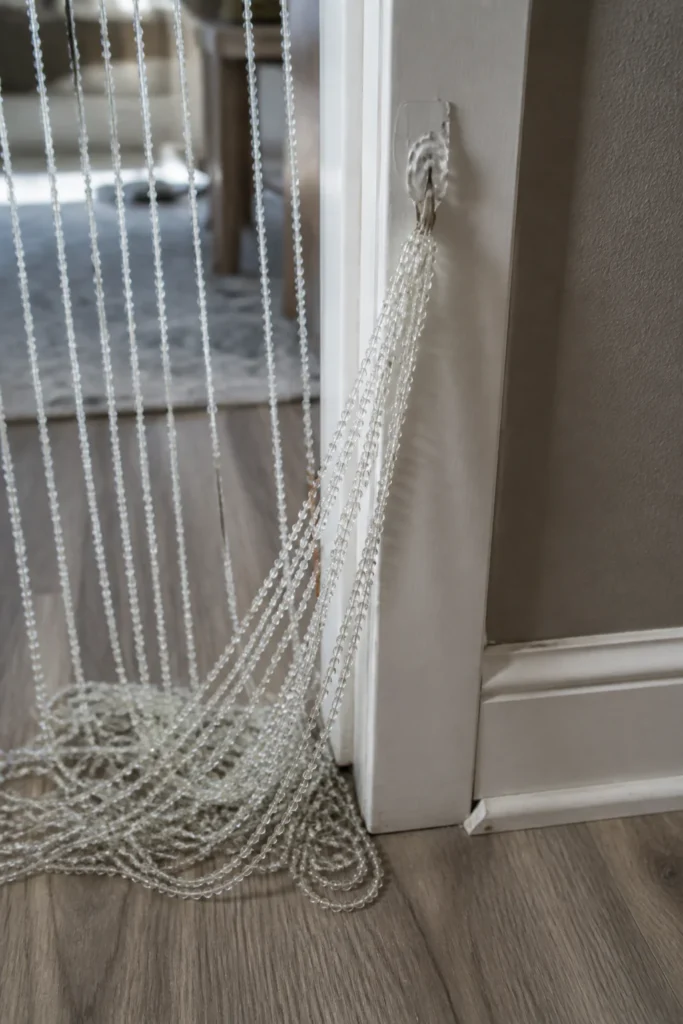
Most bead curtain mistakes are not about style. They are about daily use.
A curtain that looks good but annoys you every morning will not stay up for long.
Mistakes to Avoid
- Choosing beads that are too loud
Large glass beads can clack together in doorways. - Hanging the curtain too low
Strands that drag on the floor collect dust and tangle. - Using weak hardware
Glass beads are heavier than plastic or wood. - Ignoring privacy needs
Beads alone rarely block enough for bedrooms or bathrooms. - Choosing the wrong density
Sparse strands can look unfinished. Overly dense strands can feel like walking through a wall. - Putting delicate beads in high-traffic spots
Save fragile crystal strands for windows, not busy doors. - Skipping measurements
A curtain that is too narrow looks accidental, especially in a room divider setup.
For most standard doorways, measure the full width of the opening and choose a curtain that covers it generously. A few extra inches on each side usually looks better than a curtain that barely reaches the edges.
How to Style Glass Bead Curtains Without Making the Room Look Busy
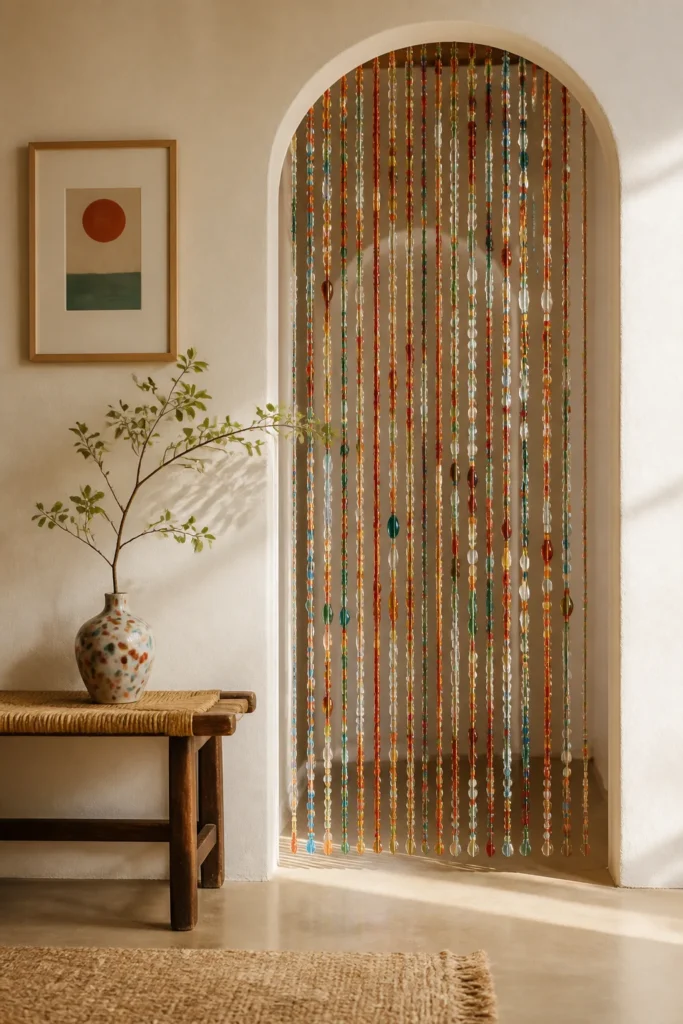
The easiest way to style glass bead curtains is to let them have one clear job.
They can add color, sparkle, softness, privacy, or movement — but they should not try to do all five at once.
Keep the Surrounding Area Simple
If your curtain has colorful beads, keep the wall behind it quiet.
Good backgrounds include:
- White walls
- Soft beige paint
- Natural wood
- Pale green or blue walls
- Simple tile
- Linen curtains
- Plain closet interiors
If the curtain is clear crystal, you can place it near patterned wallpaper or a bold wall color because it will reflect the surroundings instead of competing with them.
Repeat One Material Nearby
A room looks more intentional when the bead curtain connects to something else.
You can repeat:
- Glass through vases or candleholders
- Brass through curtain rods or lamps
- Pearl through drawer pulls or frames
- Wood through furniture or baskets
- Color through pillows or artwork
You do not need a perfect match. One quiet callback is enough.
Glass Bead Curtain Ideas by Decor Style
A bead curtain can lean vintage, boho, glam, coastal, or playful depending on the beads and placement.
Here are a few style directions that work well.
Boho Glass Bead Curtain

Use mixed beads, warm colors, imperfect shapes, and natural materials around it.
Pair with:
- Rattan chairs
- Macrame
- Woven baskets
- Plants
- Patterned rugs
- Warm-toned lamps
A boho bead curtain works especially well in doorways, reading corners, and creative studios.
Vintage Glass Bead Curtain
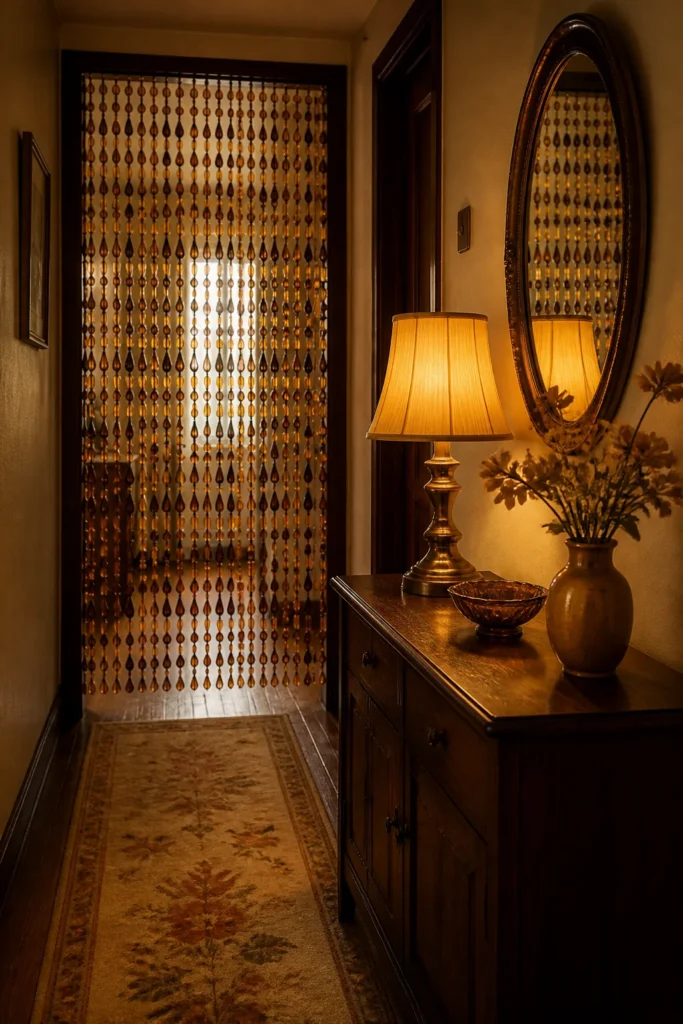
A vintage bead curtain can look charming when the beads have amber, green, smoky, pearl, or muted tones.
Style it with:
- Brass hardware
- Dark wood furniture
- Floral prints
- Antique mirrors
- Warm lamps
- 60s or 70s-inspired accents
For a stronger retro look, a 70s beads curtain or 60s beaded curtain style can work well in a hallway or music room. Keep the surrounding furniture edited so the space does not turn into a theme room.
Glam Crystal Bead Curtain
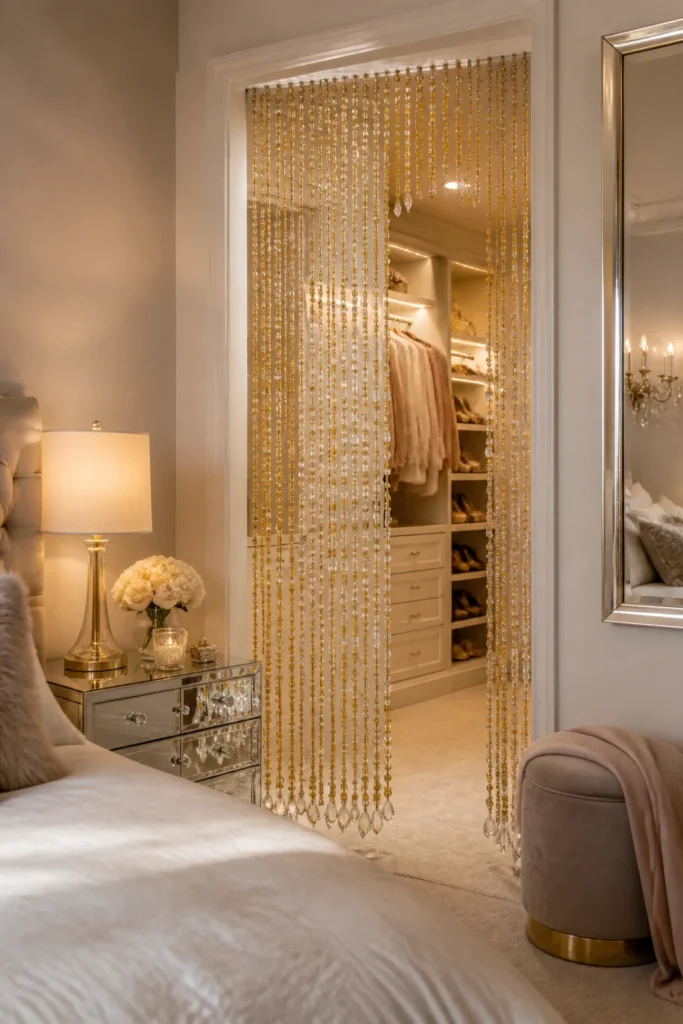
For glam rooms, use clear crystal, champagne gold, silver, or pearl beads.
Good placements include:
- Vanity backdrops
- Bedroom windows
- Closet entrances
- Dressing areas
- Party corners
- Elegant room dividers
A champagne gold crystal bead curtain looks best with warm lighting. Silver crystal beads usually feel cooler and cleaner, especially near white walls or mirrored furniture.
Coastal Sea Glass Bead Curtain
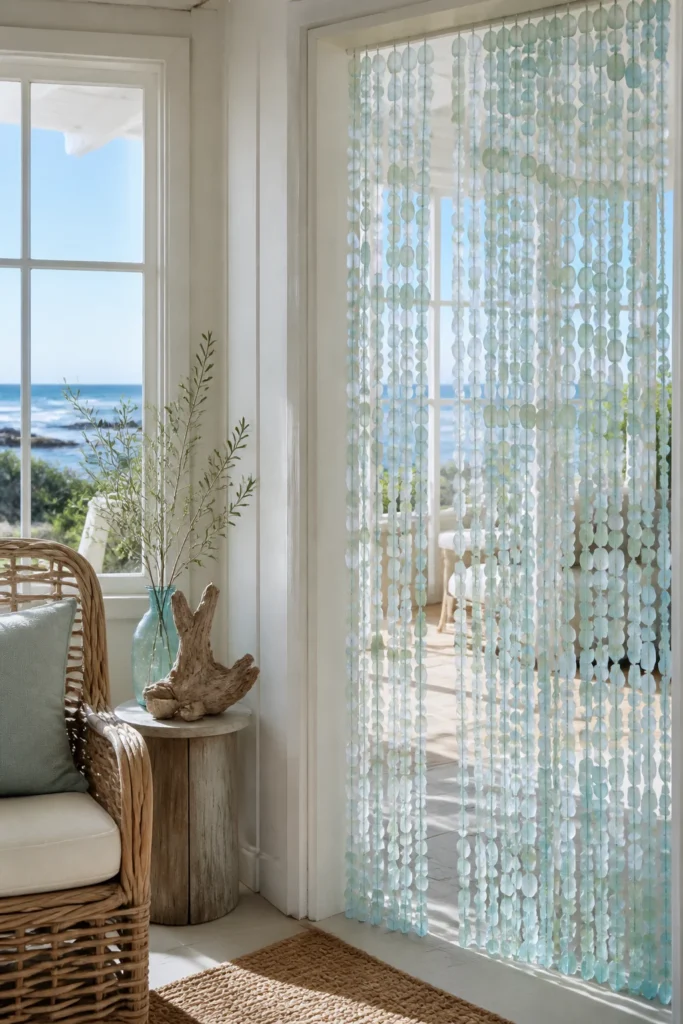
A coastal bead curtain should feel light, not overly decorated.
Use:
- Frosted sea glass beads
- Soft blue and green tones
- White walls
- Linen curtains
- Driftwood accents
- Simple woven textures
This style works nicely near a sunny window because the beads catch light without looking too shiny.
Cleaning and Maintaining Glass Bead Curtains
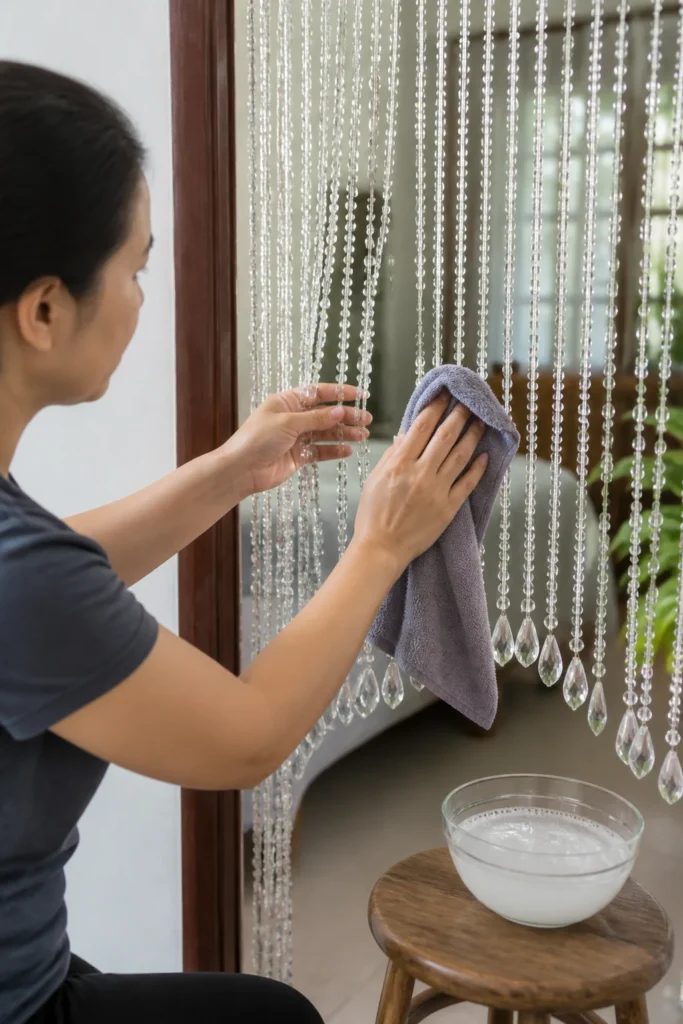
Glass bead curtains collect dust, especially near windows and doorways.
Cleaning them is simple, but it takes patience. I prefer light maintenance often instead of waiting until every strand looks cloudy.
Easy Cleaning Routine
Try this:
- Use a microfiber duster once a week.
- Hold the bottom of each section gently while dusting.
- Wipe individual beads with a damp cloth when needed.
- Use mild soap for greasy kitchen residue.
- Dry metal hardware after cleaning.
- Check knots, wires, and hooks every few months.
For tangled strands, do not yank from the bottom. Start near the top and separate one strand at a time. Pulling hard can loosen beads or stretch the hanging cord.
Buying Tips Before You Choose a Glass Bead Curtain
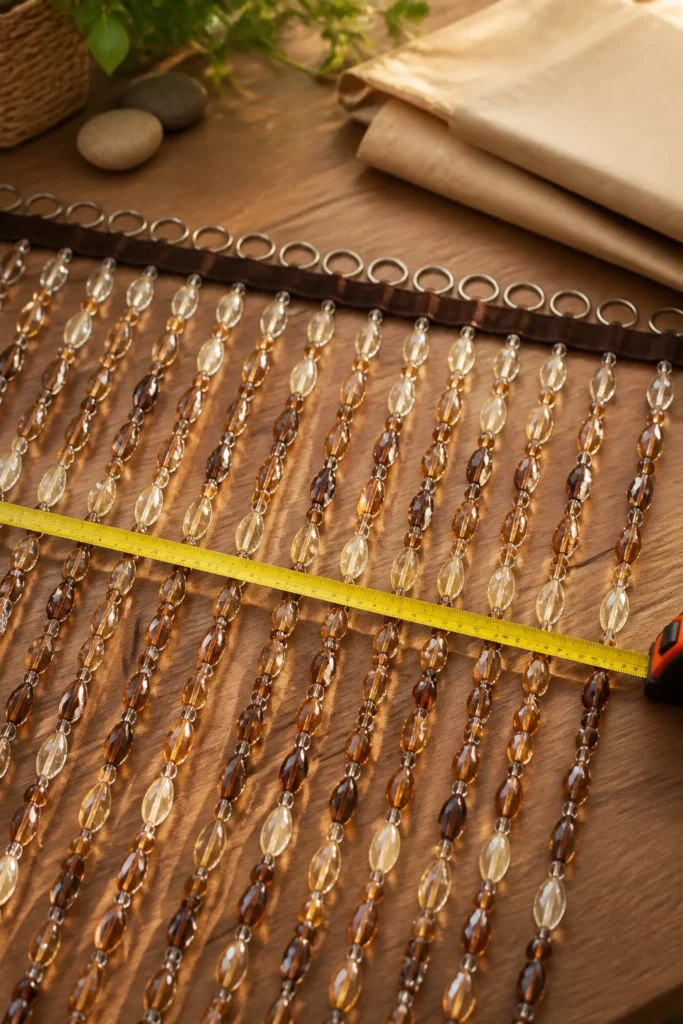
A good listing photo does not tell you everything.
Before buying, check the details that affect how the curtain will behave in your room.
Look for:
- Actual width and length
- Bead material
- Strand count
- Weight
- Rod or hanging method
- Spacing between strands
- Whether hardware is included
- Return policy
- Photos from real buyers
- Cleaning instructions
If you want a doorway curtain, pay close attention to weight and strand density. If you want a window curtain, focus more on light reflection, color, and length.
For room dividers, consider buying two matching panels instead of stretching one narrow curtain across a wide space.
Quick Matching Guide
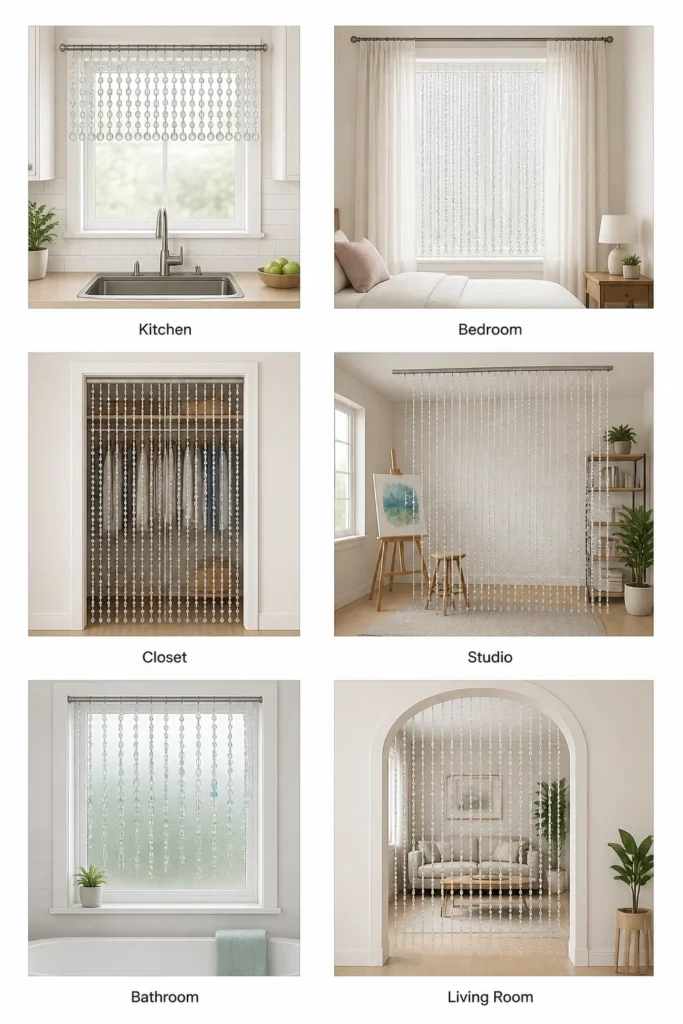
| Space | Best Glass Bead Curtain Type | What to Avoid |
|---|---|---|
| Kitchen window | Short beads or beaded valance | Long strands near sink or stove |
| Bedroom window | Crystal, pearl, white, or soft color beads | Beads alone for full privacy |
| Closet doorway | Medium-density doorway curtain | Fragile strands in daily-use closets |
| Studio divider | Multiple panels or ceiling-hung beads | One narrow panel across a wide space |
| Bathroom window | Frosted, sea glass, or short beads | Unprotected beads in wet shower areas |
| Living room archway | Clear, vintage, or colored glass beads | Overly dense strands in high traffic |
Final Styling Checklist
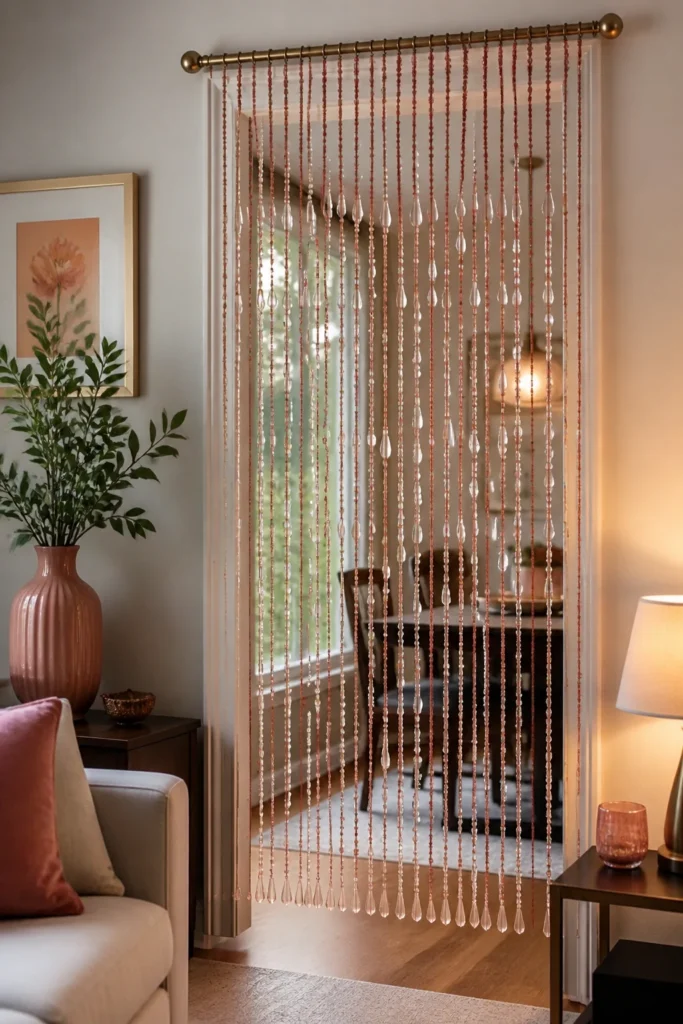
Before you hang the curtain, walk through this quick checklist:
- Does the curtain match the way the space is used daily?
- Will people walk through it often?
- Does it need to provide privacy or just soften the view?
- Is the hardware strong enough for glass beads?
- Will the beads hit furniture, counters, or walls?
- Does the color connect to anything else in the room?
- Can you clean it easily where it hangs?
- Does it still look good at night, not just in daylight?
That last one matters. A bead curtain can look completely different after sunset, especially near lamps, mirrors, or street-facing windows.
Conclusion
A glass bead curtain is less about covering a space and more about changing how light, movement, and texture pass through it.
The best placement is the one that respects real life: the doorway people actually use, the window that gets afternoon sun, the corner that needs a boundary without a wall. Start with one spot, hang it well, and let the beads earn their place in the room.