Teaching fire safety to preschoolers takes more than telling them what not to touch. Young children learn through repetition, pictures, movement, and hands-on activities. A paper fire truck, a smoke alarm matching game, or a simple escape-plan drawing can introduce important safety concepts in a way that is easier for them to understand and remember.
These fire safety crafts and activities for preschoolers work well at home, in daycare, or in a preschool classroom, especially during Fire Prevention Week. The collection includes paper crafts, coloring activities, printable worksheets, pretend-play exercises, and practical learning games.
The goal is to help children recognize common fire hazards, understand what smoke alarms mean, and learn how to respond when an adult or an alarm signals danger. Keep activities calm and age-appropriate, and always supervise cutting, gluing, and other craft work.
1. Paper Plate Fire Truck Craft
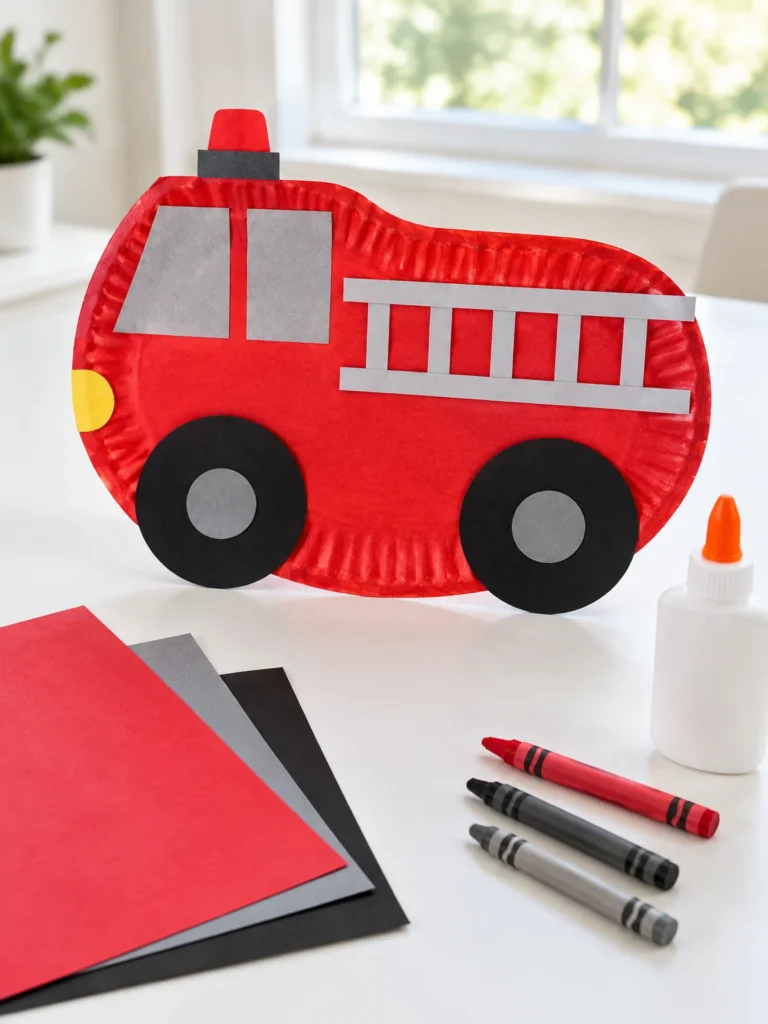
Materials: A paper plate or red construction paper, black and gray paper, glue, crayons, and child-safe scissors.
Cut a red fire truck body from construction paper or use a paper plate as the base. Add black wheels, gray windows, a ladder, and small yellow details. Help children identify each part as they assemble their trucks.
For a learning extension, ask what firefighters use a fire truck for and why emergency vehicles need clear roads. This craft introduces firefighters as community helpers without using frightening images of fires.
2. Firefighter Hat Craft
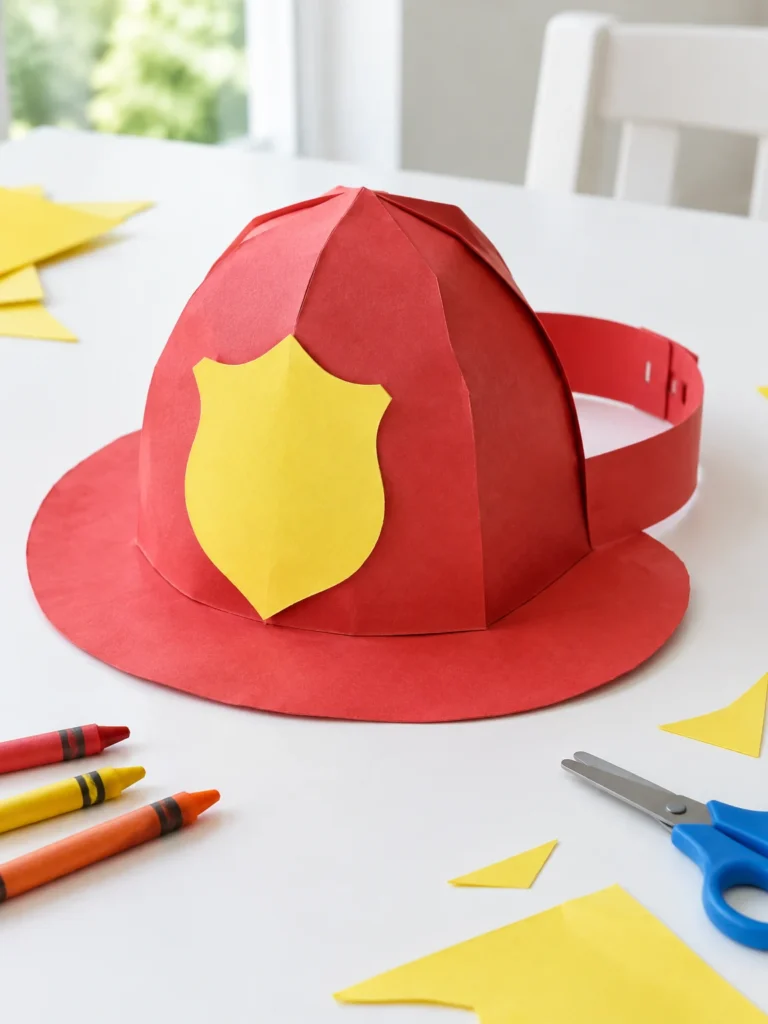
Materials: Red construction paper, yellow paper, crayons, child-safe scissors, and glue.
Cut a simple firefighter hat shape from red paper and add a yellow badge or shield. An adult can prepare a headband that fits the child comfortably.
While decorating, explain that firefighters wear protective equipment when responding to emergencies. Encourage children to recognize firefighters as people who help others.
Use the activity to discuss an important safety message: if a fire happens, children should follow their escape plan and never hide from firefighters.
3. Handprint Firefighter Artwork
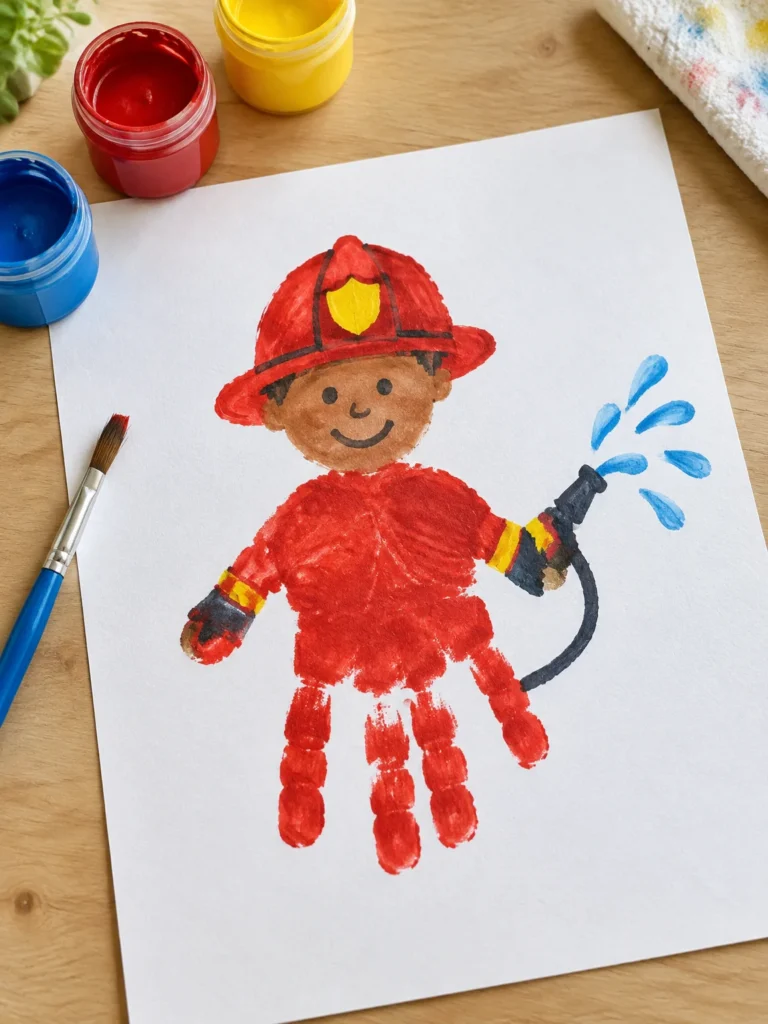
Materials: Washable red, yellow, and brown paint, white paper, a paintbrush, and markers.
Make a handprint on the paper and allow it to dry. Transform the print into a firefighter illustration by adding a helmet, boots, and simple facial features with markers.
Write a short, factual caption such as Firefighters Help Keep Us Safe. Children can add drawings of a fire truck or fire station around the handprint.
This is a good option for younger preschoolers because the adult can handle the drawing details while children focus on painting and choosing colors.
4. Tissue Paper Flame Collage
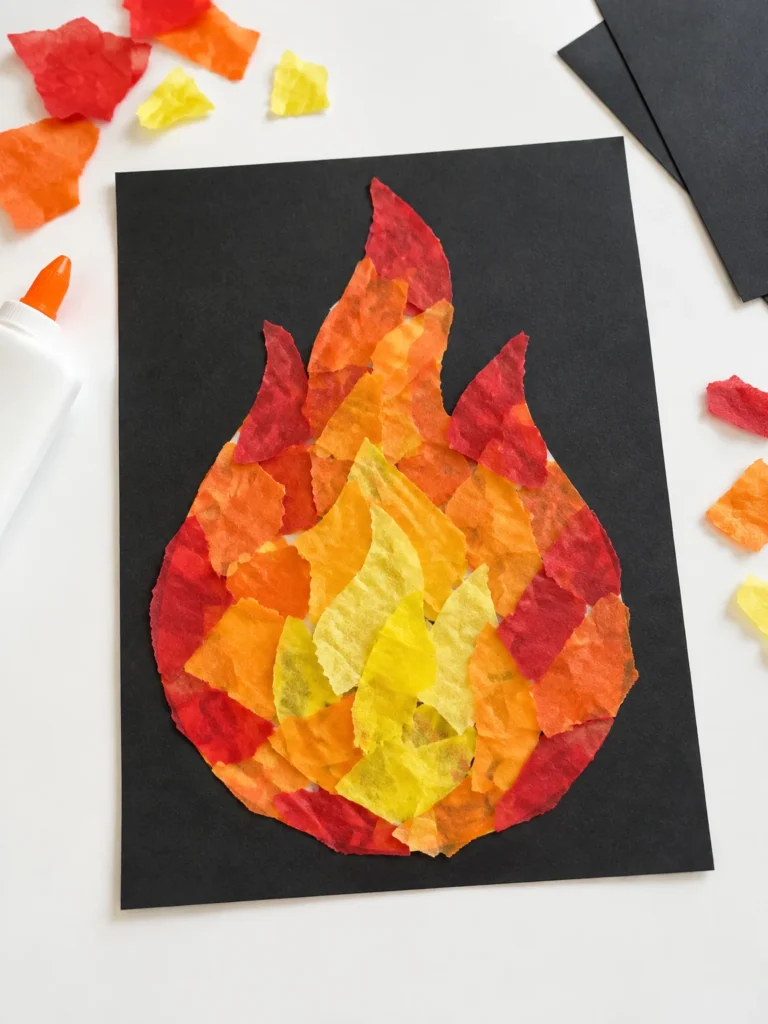
Materials: Red, orange, and yellow tissue paper, cardstock, glue, and a pencil.
Draw a large flame outline on cardstock. Let children tear tissue paper into small pieces and arrange the colors inside the outline before gluing them down.
Keep this activity strictly about recognizing the appearance of a flame. Explain that real flames are dangerous and that children should never touch matches, lighters, candles, or other sources of fire.
The finished collage can become part of a larger classroom display about fire prevention.
5. Build-a-Fire-Truck Printable
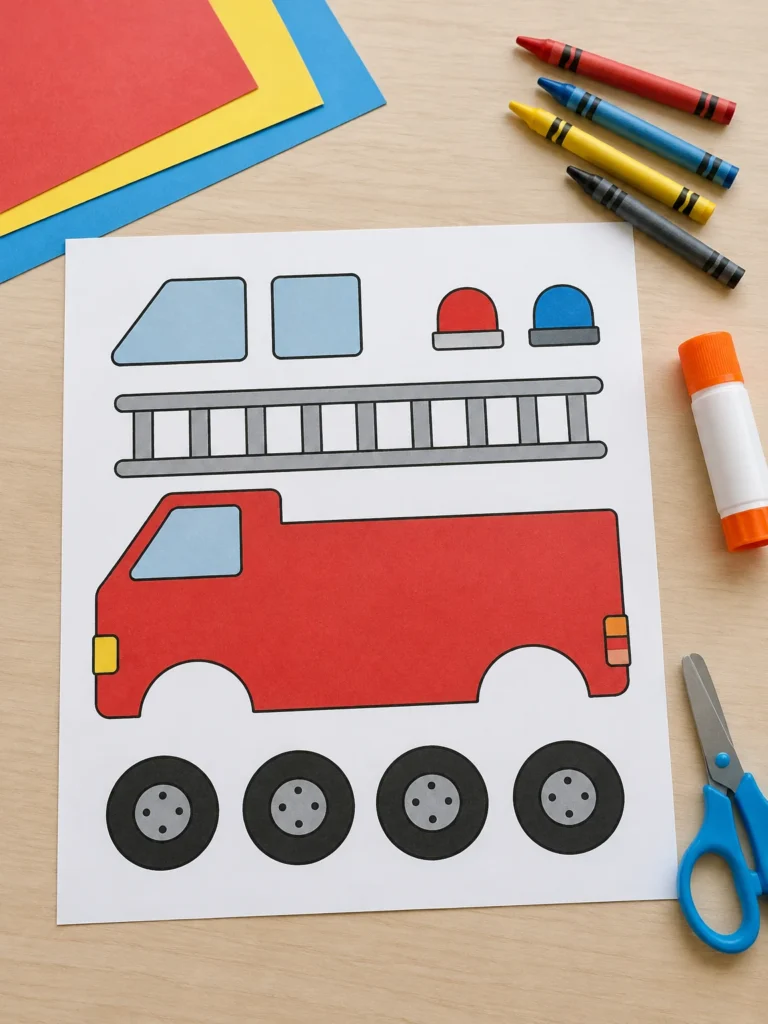
Materials: A printable fire truck template, crayons, child-safe scissors, and glue.
Provide a worksheet with separate pieces for the truck body, wheels, windows, ladder, and emergency lights. Children color the pieces, cut them out with supervision, and assemble the vehicle.
For children who are still developing scissor skills, prepare the pieces in advance and let them handle the coloring and gluing.
Ask children to identify the truck’s parts and explain why firefighters might use the vehicle during an emergency. This activity combines fine motor practice with simple community-safety learning.
6. Smoke Alarm Coloring Page
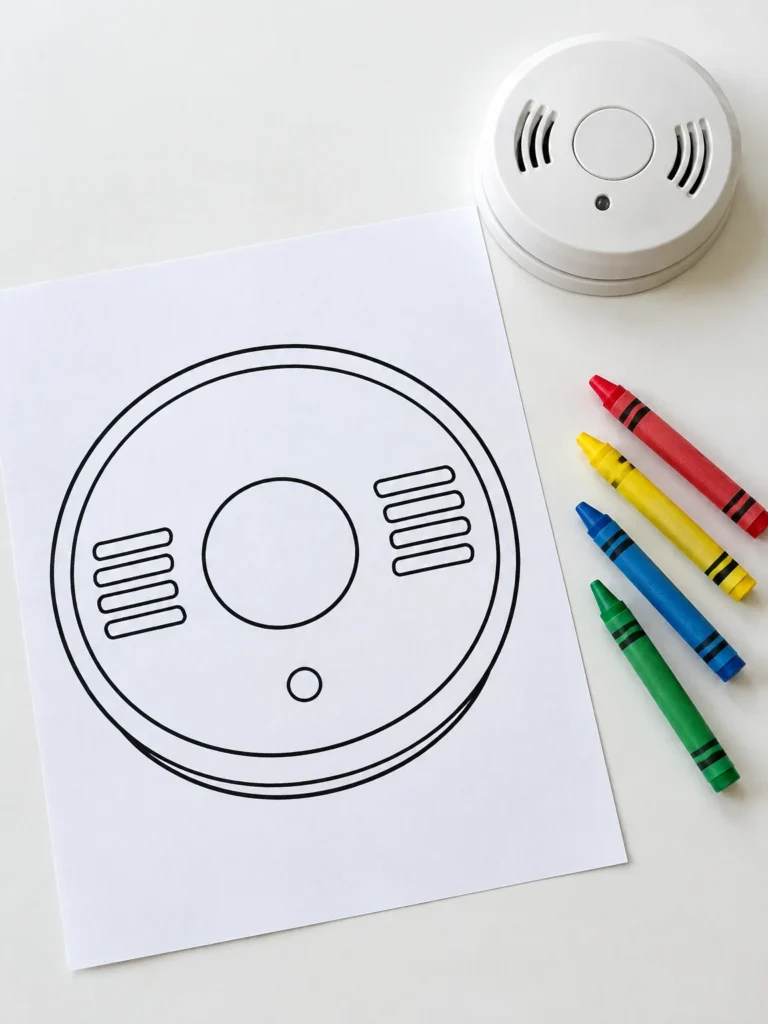
Materials: A smoke alarm coloring sheet, crayons, and a real or printed picture of a smoke alarm.
Give children a picture of a smoke alarm to color. Point out its shape and explain, in simple language, that the alarm makes a loud sound when it detects smoke.
Children should learn that hearing the smoke alarm means they need to leave immediately and follow their family’s or school’s escape plan.
An adult can demonstrate the alarm’s sound using the manufacturer’s test feature at an appropriate time. Never create smoke or light anything to simulate a fire.
7. Fire Safety Stop-and-Go Sorting Game
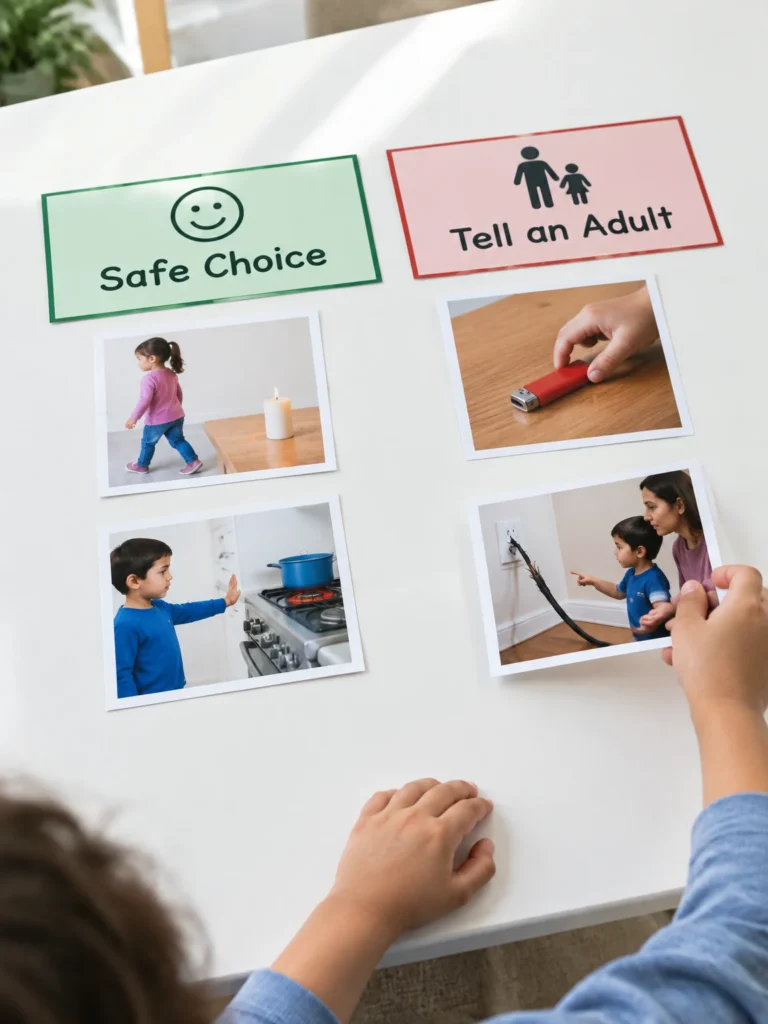
Materials: Picture cards showing everyday situations, two paper signs labeled Safe Choice and Tell an Adult, and a table or floor space.
Prepare picture cards depicting situations such as walking away from a candle, finding a lighter, keeping away from a hot stove, or telling an adult about a damaged electrical cord.
Ask children to place each picture beside the appropriate sign. For situations involving danger, emphasize that they should move away and tell a trusted adult rather than attempting to fix the problem.
Because preschoolers may interpret pictures differently, discuss each answer instead of treating the activity as a test.
8. Home Fire Escape Plan Drawing
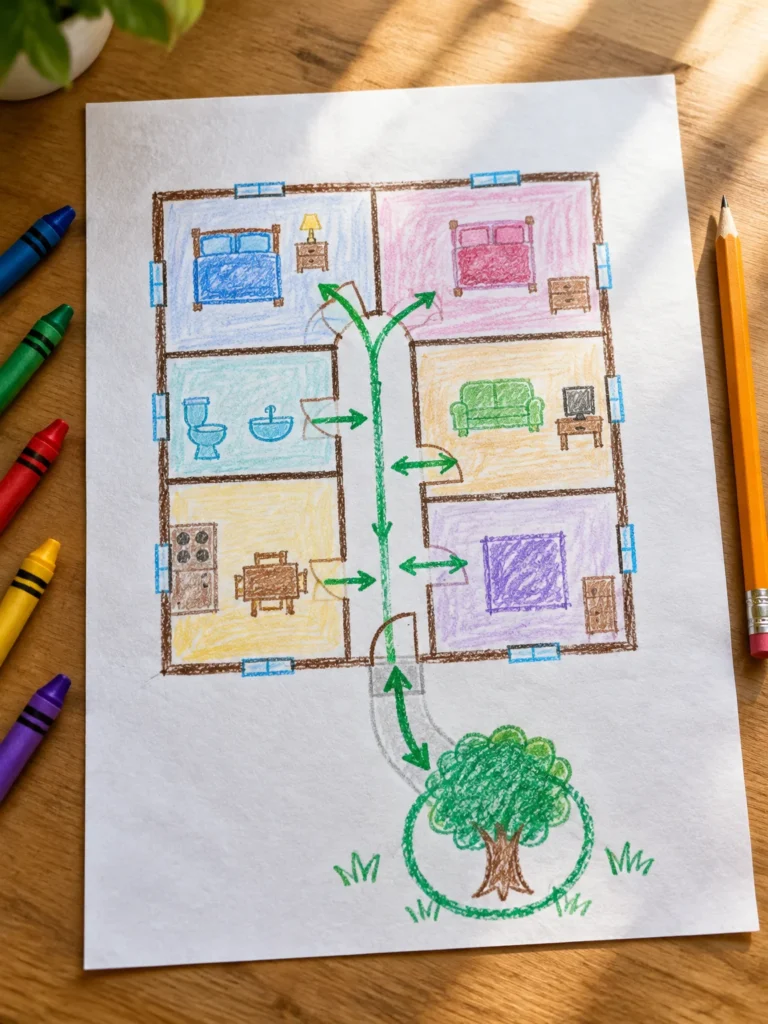
Materials: Paper, crayons, and a simple adult-prepared outline of a home.
Draw a basic floor plan with a few recognizable rooms. Help children mark doors and windows that can serve as exits, depending on the home’s layout and safety arrangements.
Identify two possible ways out of each room where possible, and mark an agreed-upon outdoor meeting place a safe distance from the home.
Adults should verify every route and make sure windows and doors can actually be opened. Practice the escape plan together; a child’s drawing alone is not a substitute for a working family plan.
The National Fire Protection Association recommends preparing and practicing a home fire escape plan. NFPA escape planning guidance.
9. Fire Escape Path Maze
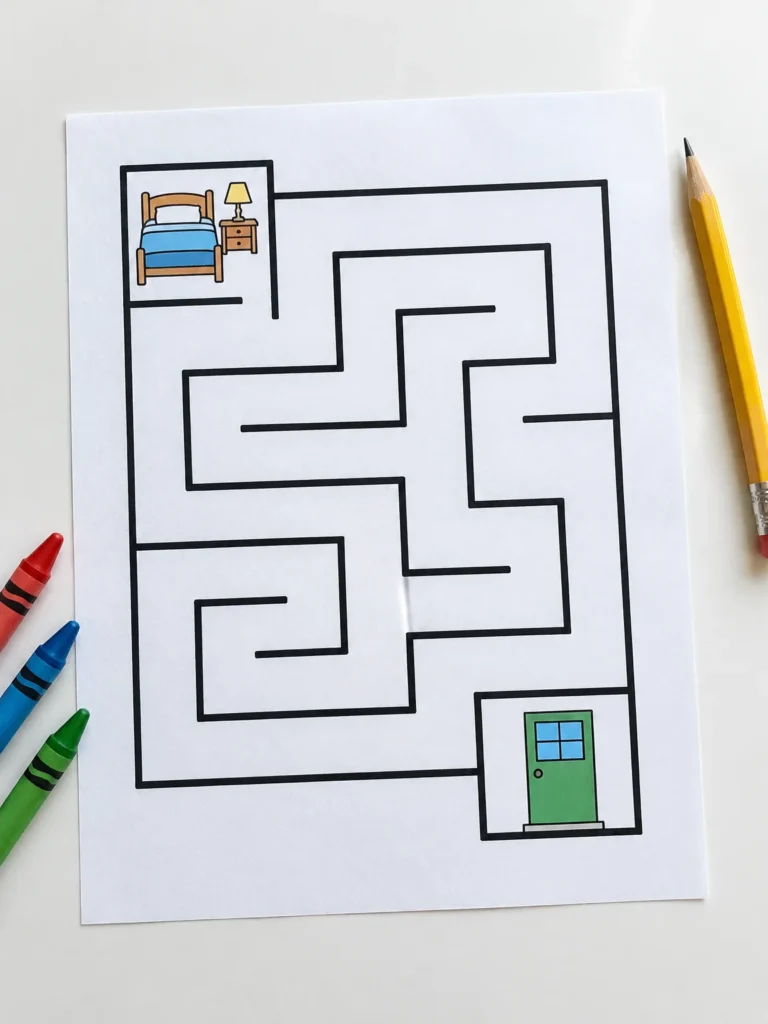
Materials: A printed maze worksheet, pencils, and crayons.
Choose a simple maze showing a child moving from a room toward a safe exit. Have preschoolers trace the route with a pencil or finger before coloring the page.
Use the maze to explain that people should get outside when the smoke alarm sounds and should not return inside for toys or belongings.
Keep the page uncomplicated. The purpose is to rehearse the idea of reaching an exit, not to make children solve a complicated puzzle while imagining an emergency.
10. Firefighter Equipment Matching Cards
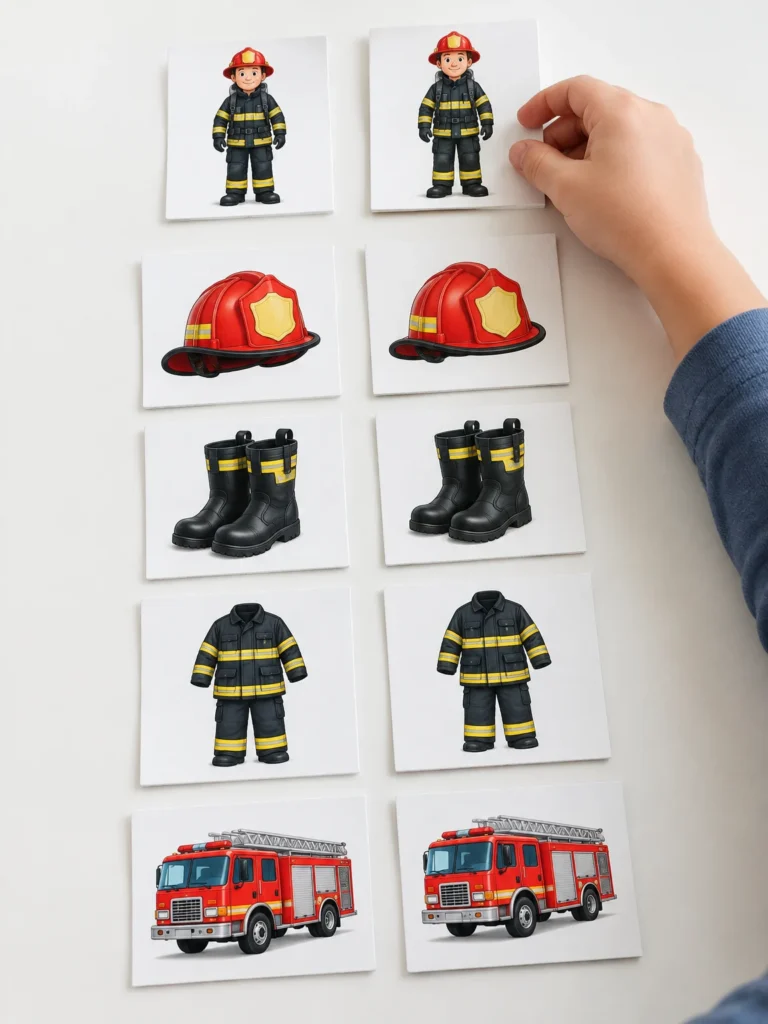
Materials: Picture cards of firefighters, helmets, boots, protective clothing, fire trucks, and other relevant equipment.
Create pairs of matching pictures. Place the cards face up for younger children or turn them over for a simple memory game.
As children find a match, explain what the item is used for in broad, age-appropriate terms. For example, firefighters wear protective clothing when responding to dangerous situations.
Avoid suggesting that children should put on emergency equipment and enter dangerous areas themselves. Their role is to get away from danger and follow instructions from responsible adults.
11. Fire Safety Week Cutting Worksheets
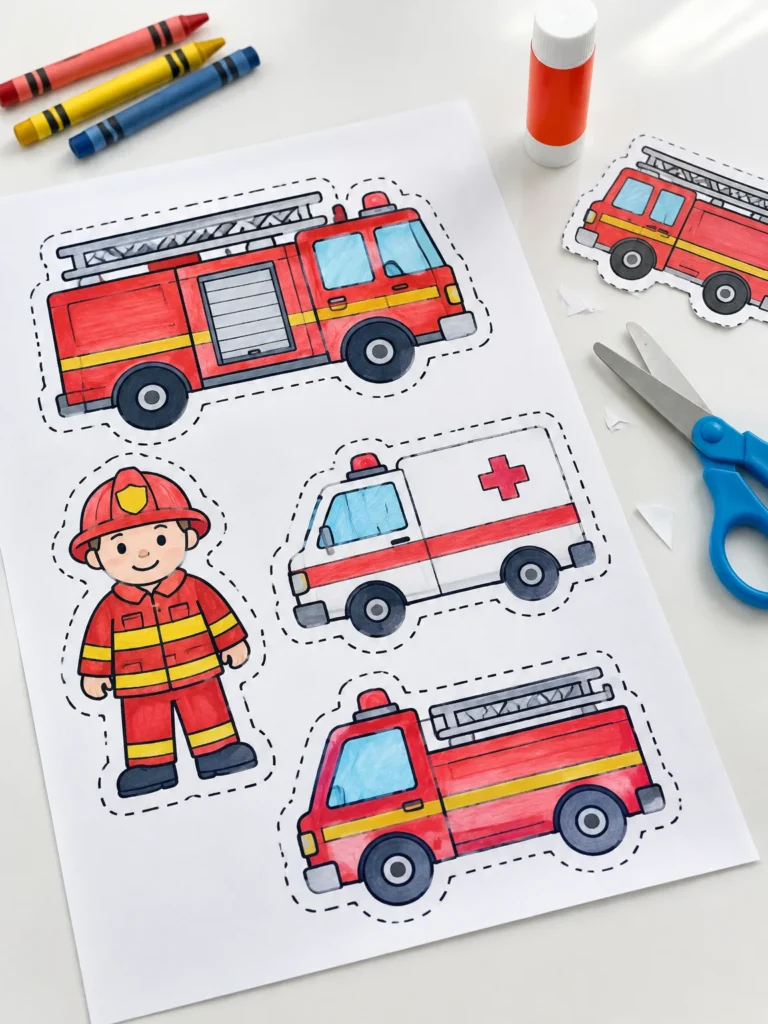
Materials: Printable cutting worksheets, child-safe scissors, glue, and paper.
Prepare worksheets with dotted lines, simple shapes, and pictures related to fire safety. Children can cut out a fire truck, a firefighter, or other familiar illustrations and paste the pieces onto another sheet.
Pair the craft with a short conversation about what to do when the smoke alarm sounds.
Choose short cutting lines and large shapes for younger children. Adults should handle complicated cuts and supervise scissors throughout the activity.
12. Red, Yellow, and Orange Fire Truck Collage
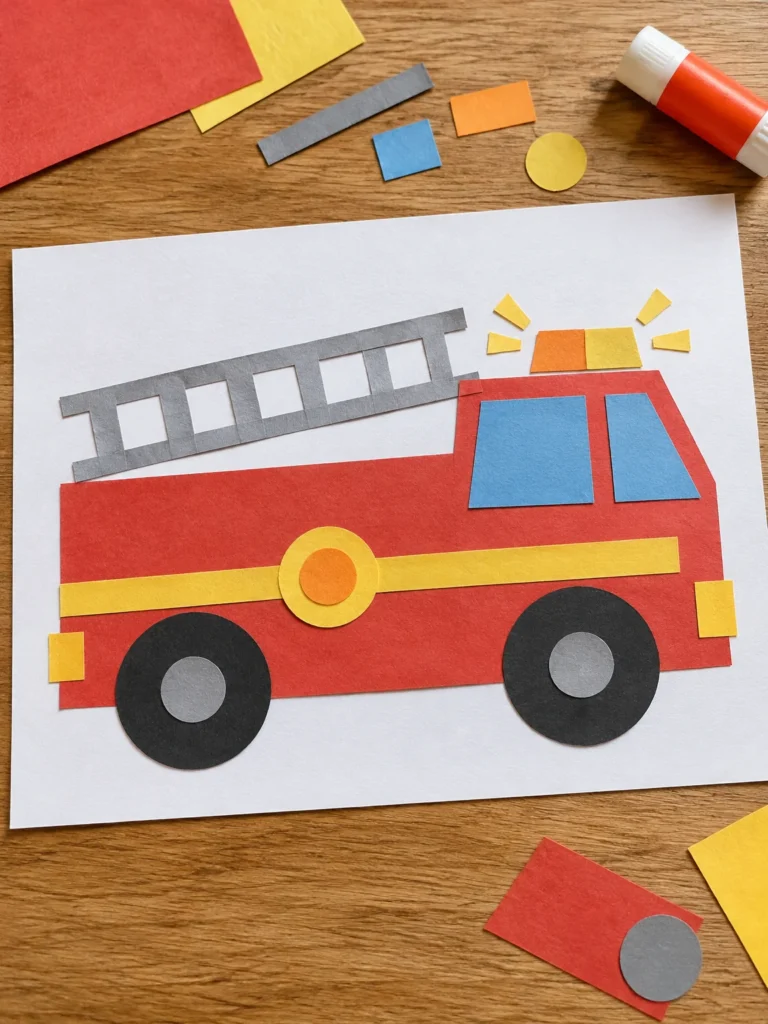
Materials: Red, yellow, orange, and black construction paper, glue, and a large sheet of cardstock.
Invite children to build a fire truck by arranging colored paper shapes into a vehicle. Add wheels, a ladder, windows, and emergency lights.
Rather than providing a finished example for everyone to copy, let children choose where to place the pieces. Ask them to point out the ladder, wheels, or windows when the collage is complete.
The result can be displayed alongside other fire safety projects to create a classroom gallery.
13. Smoke Alarm Sound Recognition Game
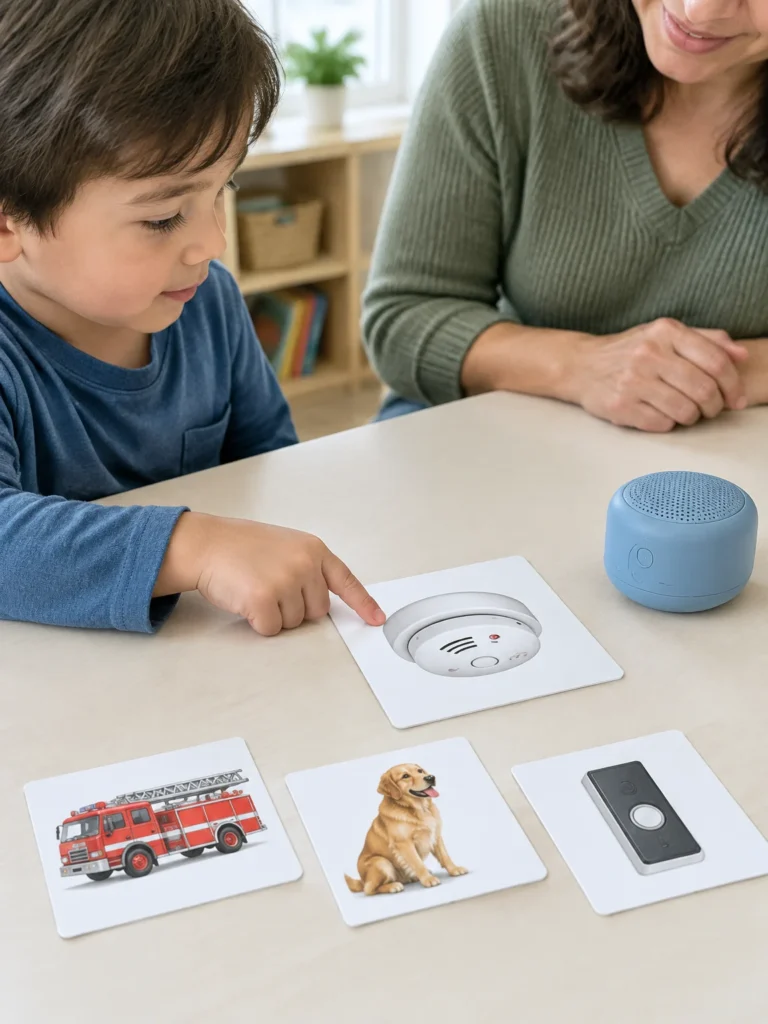
Materials: A recording of a smoke alarm from a trusted source, picture cards, and a quiet space.
Explain that a smoke alarm makes a distinctive sound to warn people about danger. Play a brief recording at a comfortable volume and ask children to identify the matching smoke alarm picture.
Next, practice the correct response: stop the activity, leave using the planned route, and go to the outdoor meeting place with the responsible adult.
Do not surprise or deliberately frighten children with a loud alarm. Make sure they understand that this is a learning exercise, while real alarm sounds require immediate action.
14. Paper Plate Firefighter Mask
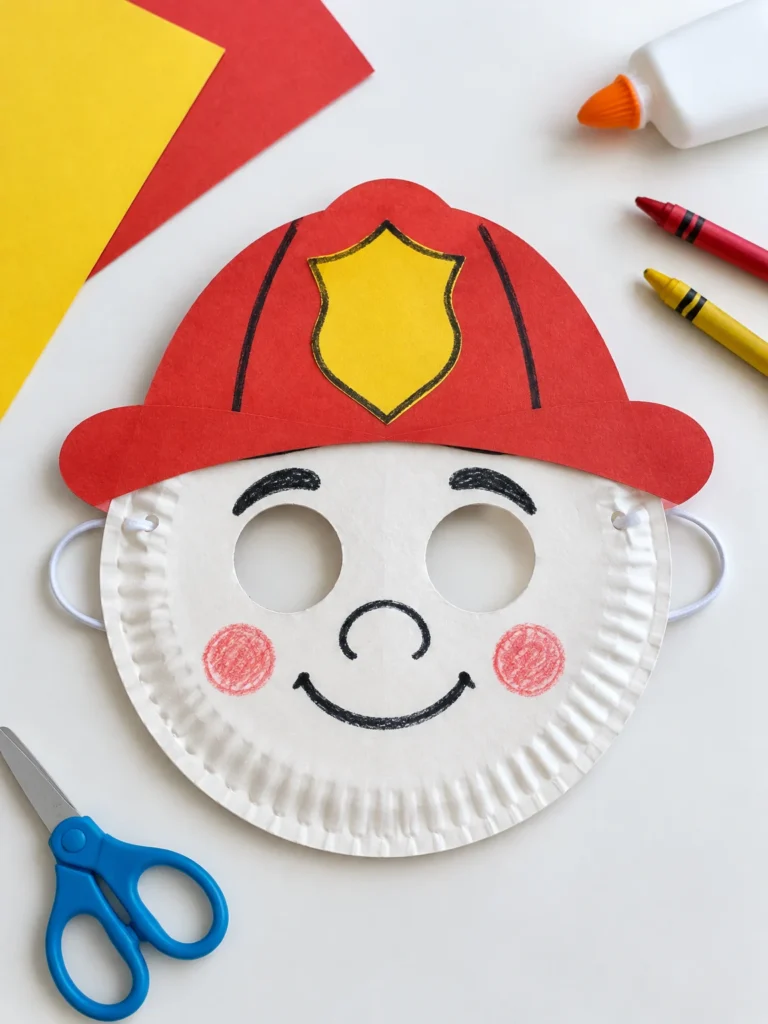
Materials: A paper plate, crayons, construction paper, glue, and child-safe scissors.
Decorate a paper plate to resemble a firefighter’s face or helmet. An adult can prepare any openings needed for safe visibility, or the plate can simply be used as a wall decoration.
During the activity, talk about firefighters as trained emergency responders who use protective equipment.
Avoid masks that obstruct vision or make it difficult to breathe. Displaying the finished plate may be more suitable than wearing it during active play.
15. Fire Safety Picture Sequencing Cards
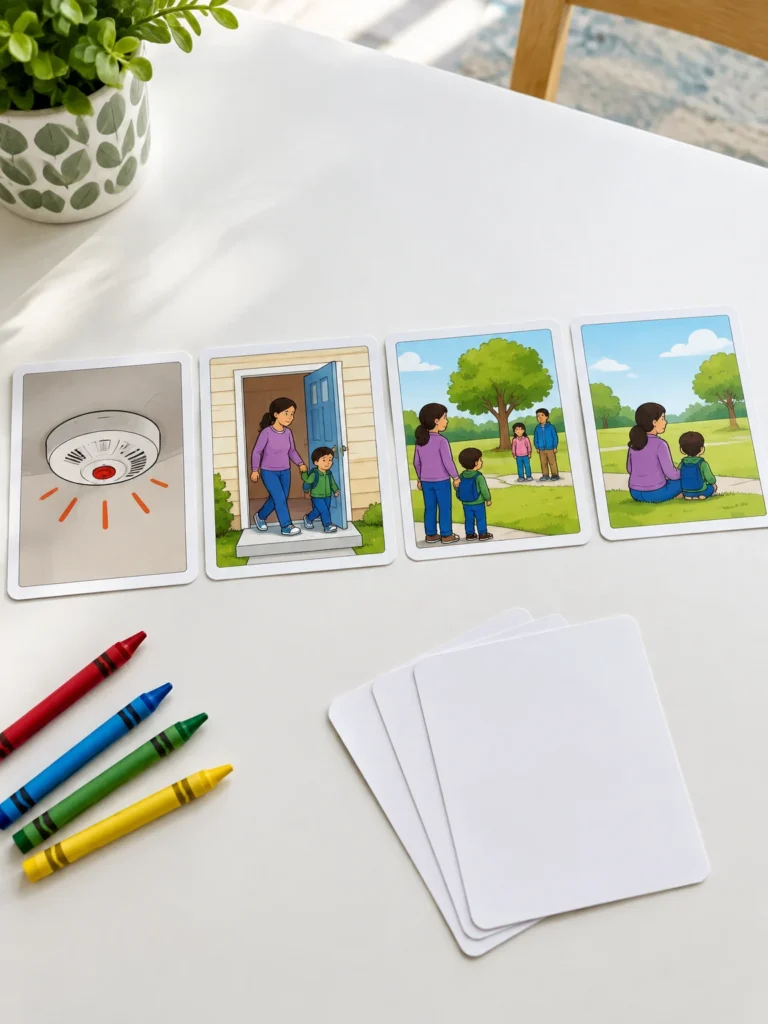
Materials: Four or five illustrated cards showing a smoke alarm sounding, a child leaving with an adult, reaching an outdoor meeting place, and staying outside.
Mix up the cards and invite children to arrange them in the correct order. Use short verbal cues to explain each step.
The central sequence is simple: recognize the alarm, get out, go to the meeting place, and stay outside. Adults should adapt the sequence to the child’s actual escape plan.
This activity introduces the order of actions without relying on long written instructions.
16. Never Touch Matches or Lighters Activity
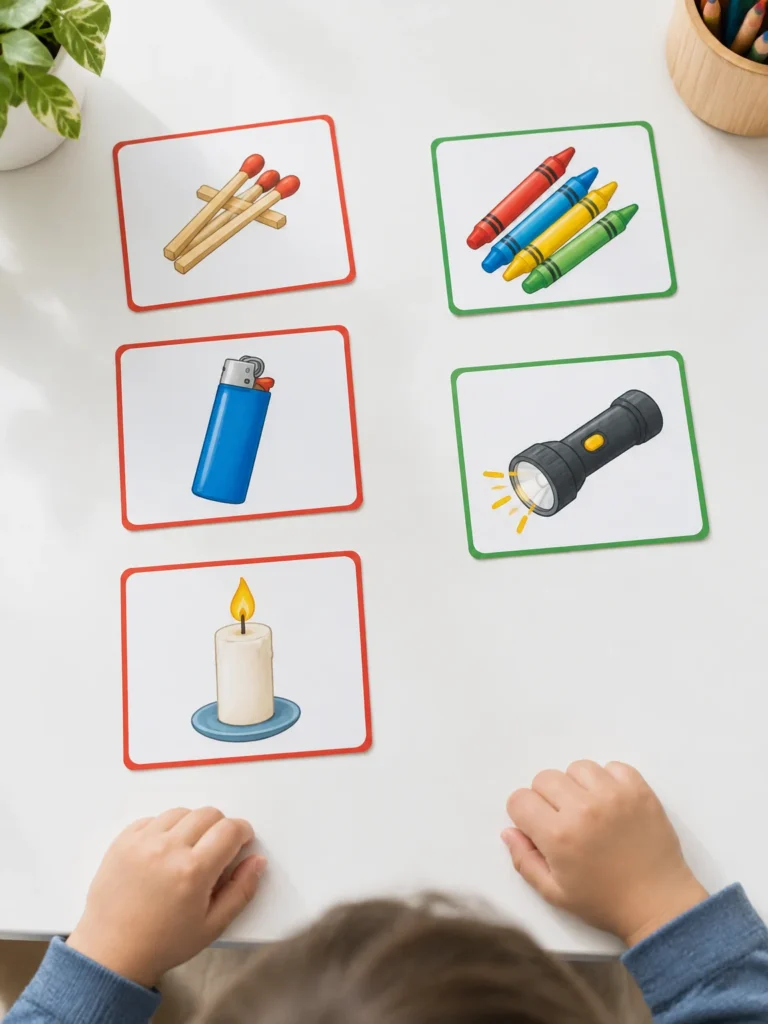
Materials: Picture cards showing matches, lighters, candles, and safe alternatives such as crayons or flashlights.
Show the pictures one at a time. Explain that matches and lighters are not toys and that children must never touch them.
Ask children what they should do if they find these items. Reinforce the answer: move away and tell an adult.
Keep all real matches and lighters out of the activity area. Use illustrations rather than actual ignition devices, and avoid demonstrations involving flames.
17. Fire Station Pretend Play
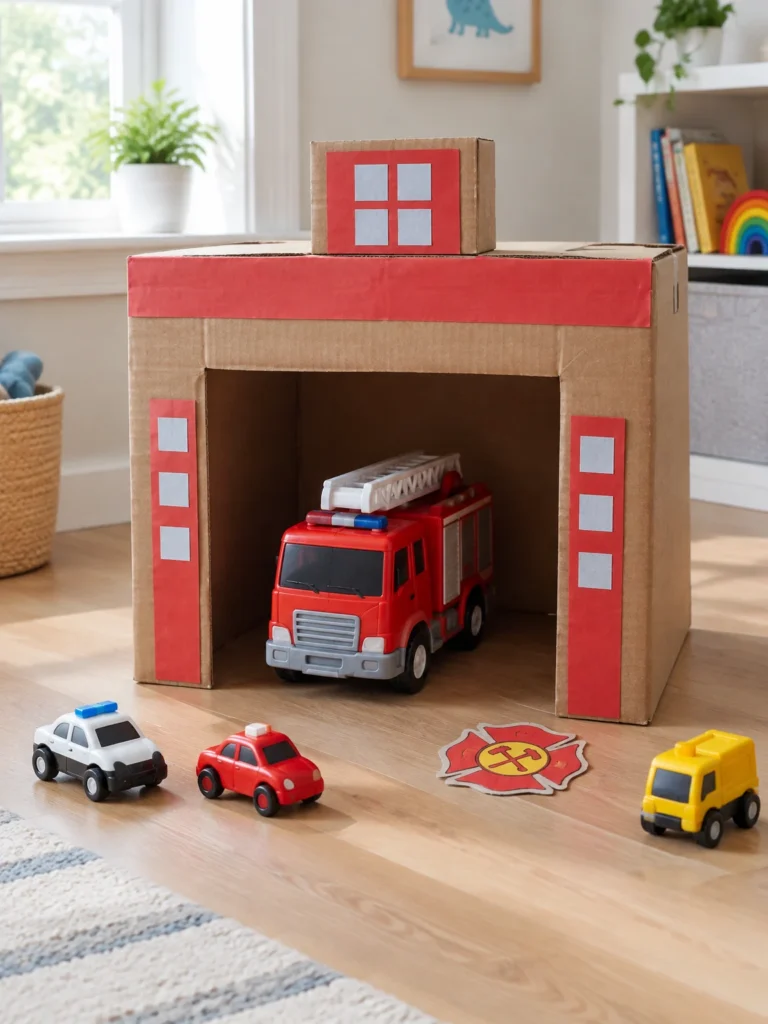
Materials: Toy fire trucks, cardboard boxes, paper badges, and simple firefighter picture cards.
Use a cardboard box to create a pretend fire station. Children can park toy trucks, arrange paper equipment, and take turns pretending to be community helpers.
Introduce situations that require safe choices, such as a smoke alarm sounding in a pretend home. Guide the children through leaving the building and meeting outside.
Keep the scenario reassuring and realistic. Children should understand that they do not investigate a fire or attempt to extinguish one themselves.
18. Stop, Drop, and Roll Practice

Materials: An open, clear space and picture cards illustrating the three actions.
Explain that if clothing catches fire, the recommended response is to stop, drop to the ground, cover the face, and roll to help put out the flames. Demonstrate the movements without using fire, matches, heated objects, or smoke.
Let children practice slowly on a clear floor or suitable mat under close supervision.
This exercise should supplement—not replace—the more immediate lessons about staying away from ignition sources, escaping a building, and getting help from a trusted adult. Revisit the steps periodically rather than expecting children to master them in one session.
19. Fire Truck Number and Color Matching
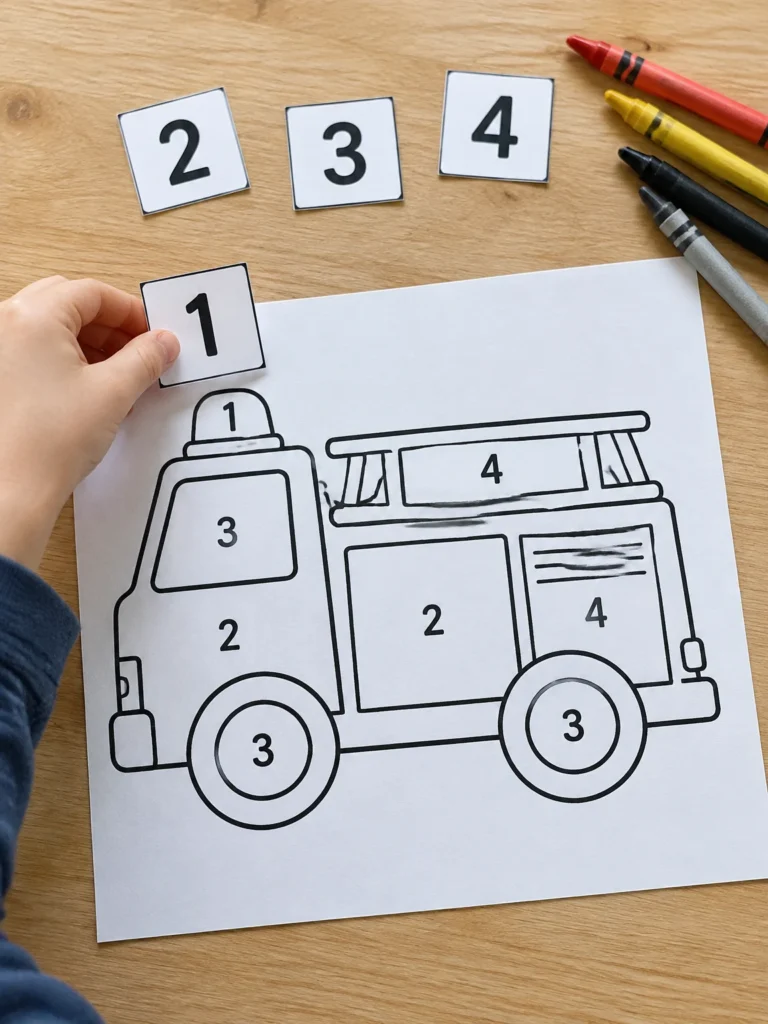
Materials: A fire truck printable, number cards, crayons, and colored paper.
Prepare a worksheet featuring a fire truck divided into simple numbered spaces. Children can match numbers, count wheels, identify shapes, and color the vehicle.
As they work, introduce basic facts about emergency vehicles and firefighters. Keep the educational conversation connected to community safety rather than turning every coloring choice into a safety rule.
This activity works especially well for children who enjoy combining art with early math practice.
20. Emergency Meeting Place Collage
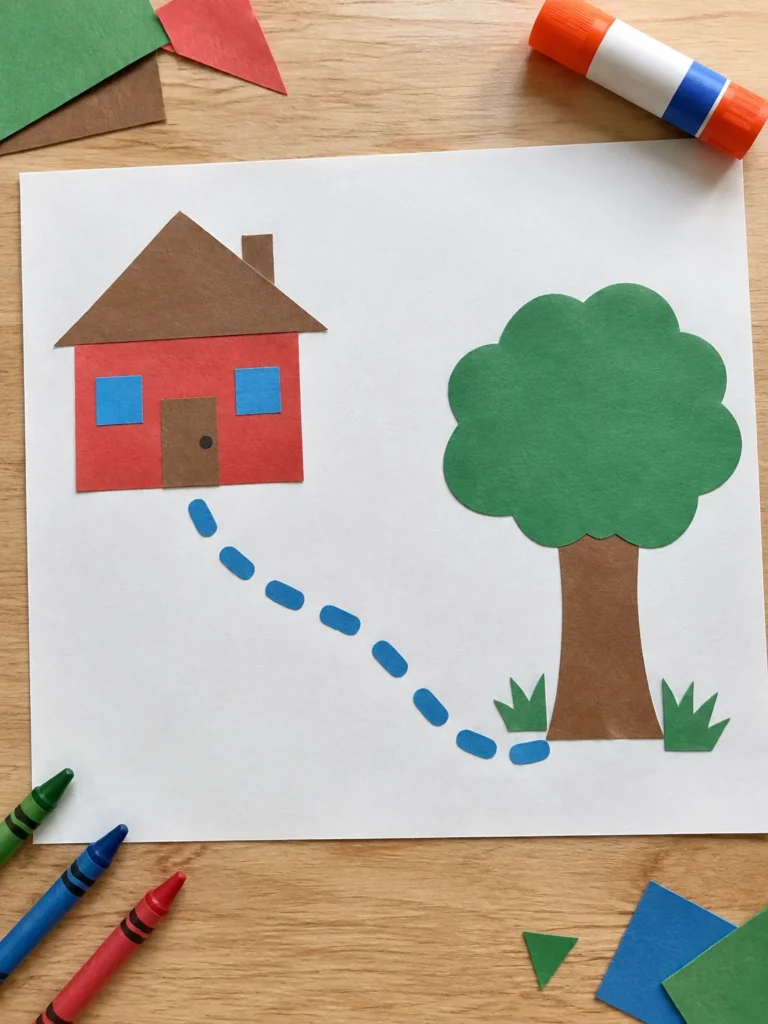
Materials: Construction paper, crayons, glue, and pictures of recognizable outdoor landmarks.
Ask children to create a picture of a safe outdoor meeting place, such as a designated tree or another fixed landmark a safe distance from the home.
Explain that family members should meet at the same agreed-upon place after escaping a fire. The location should be selected by the adult and should not require children to cross a dangerous road or return to the property.
Finish by asking children to identify their family’s chosen meeting place. Adults should make sure every family member knows the actual location and understands how to get there safely.
21. Fire Safety Mini-Book
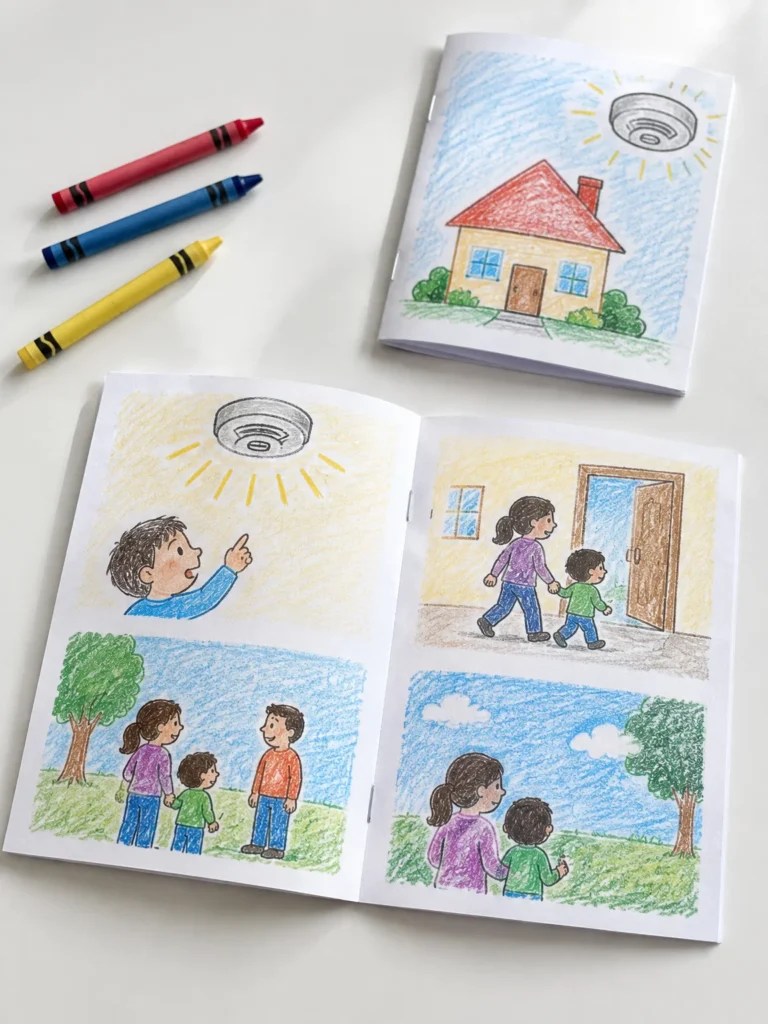
Materials: Several sheets of paper, crayons, a stapler used by an adult, and simple printed illustrations.
Fold and staple a few sheets into a small book. Give each page one short message, such as:
- Never play with matches or lighters.
- Recognize the smoke alarm.
- Know how to get outside.
- Meet at the agreed-upon outdoor location.
- Stay outside and tell an adult or emergency responder if someone may still be inside.
Let children draw a picture for each message. An adult can write the words underneath the drawings so the book remains easy to understand.
Read the booklet together and revisit it during the school year. Keep the messages consistent with the child’s actual home or classroom emergency plan.
Tips for Teaching Fire Safety to Preschoolers
The most useful fire safety activities reinforce a small number of clear actions instead of overwhelming children with information. A few practical guidelines make the lessons more effective.
Keep real fire out of craft activities. Use paper, drawings, and recordings rather than flames, smoke, matches, or lighters. Store ignition sources securely and out of children’s reach.
Practice the real escape plan. Crafts help children become familiar with safety concepts, but they cannot replace an adult-led walk-through and regular practice. Identify two ways out of rooms where possible, choose an outdoor meeting place, and make sure routes are accessible.
Teach the correct response to a smoke alarm. Children should recognize the sound, leave immediately with their responsible adult or follow the established school procedure, and stay outside. They should never re-enter a burning building.
Keep explanations short and reassuring. Preschoolers benefit from clear instructions, pictures, repetition, and calm demonstrations. Avoid frightening images or pretending that an emergency is actually happening.
Adapt the activities to the children. Some preschoolers can manage simple cutting and sequencing tasks, while others need pre-cut shapes or picture-based instructions. Choose materials and tasks that match their abilities.
For additional educational activities, the National Fire Protection Association’s Sparky.org activities include coloring pages, puzzles, escape-plan activities, and other resources for children.
Conclusion
The best fire safety crafts and activities for preschoolers combine creative play with a clear, practical lesson. Fire trucks and firefighter hats introduce emergency responders, while smoke alarm games, escape-plan drawings, and sequencing cards help reinforce what children should do when danger occurs.
Choose a few activities that fit your group, repeat the essential messages, and connect the lessons to a real, adult-prepared escape plan. The aim is not to make preschoolers responsible for managing emergencies, but to help them recognize danger, avoid unsafe objects, and respond appropriately when they need to get to safety.