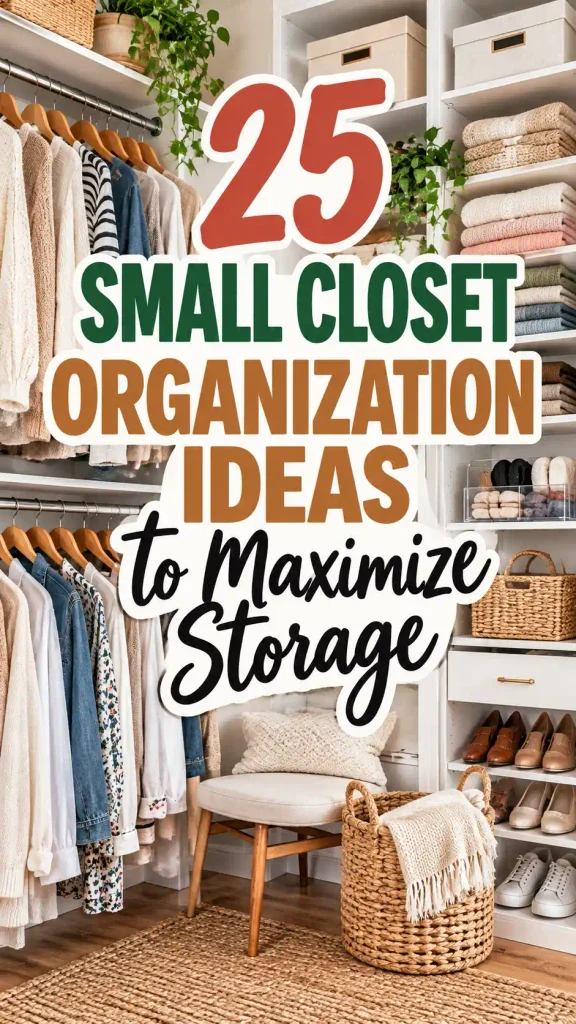
A small closet can feel full long before you have actually run out of space. Bulky hangers, crowded shelves, piles of shoes, and forgotten items tucked into corners all make it harder to find what you need. The good news? You don’t always need a bigger closet. Sometimes, a few smart changes can make the space you already have work much harder.
These 25 small closet organization ideas focus on practical ways to use vertical space, make shelves easier to manage, store shoes and accessories, and keep everyday essentials within reach. Whether you’re organizing a tiny bedroom closet, a small apartment wardrobe, or a compact walk-in closet, you’ll find ideas that can work with different layouts and budgets.
Smart Ways to Maximize Vertical Closet Space
1. Add a Second Hanging Rod
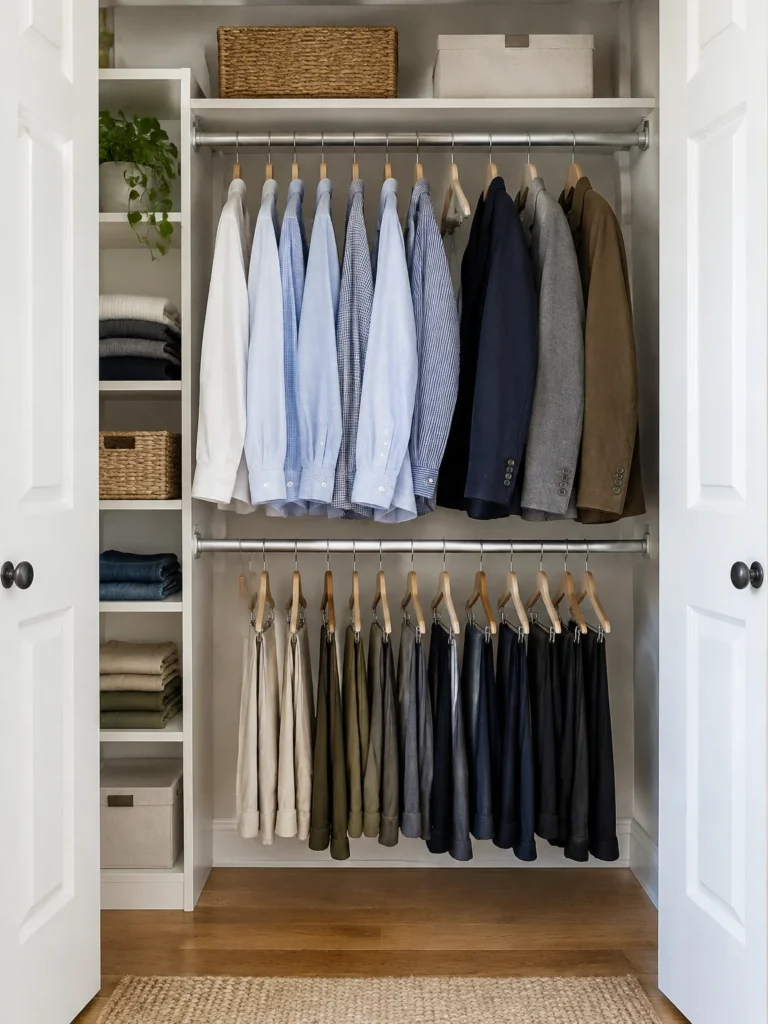
If your closet has a long, empty section beneath the hanging clothes, consider adding a second rod. Shorter items such as shirts, skirts, folded trousers on hangers, and children’s clothing can fit on two levels.
This simple change makes better use of the height inside the closet without requiring a complete makeover. An adjustable or tension-mounted rod may also work in some rental spaces, provided it can safely support the weight of the clothing.
2. Switch to Slim, Matching Hangers
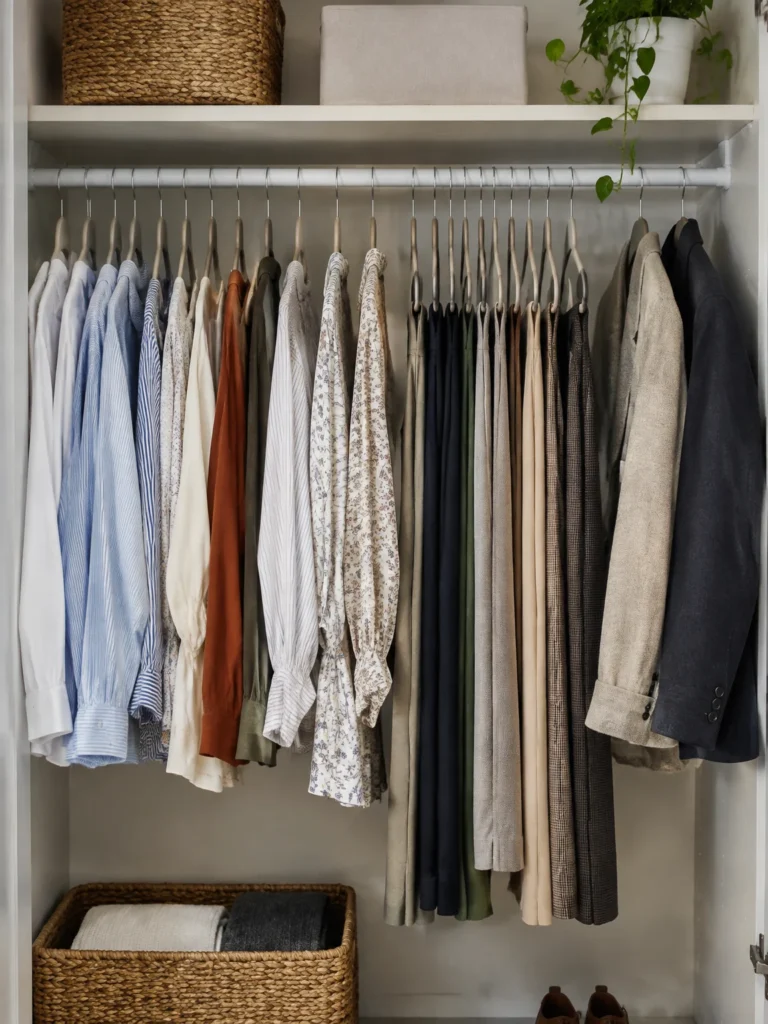
Thick plastic or wooden hangers can take up more room than necessary, especially when every inch of hanging space matters. Slim velvet or other space-saving hangers help clothes sit closer together and create a more consistent look.
Start with the section that feels most crowded rather than replacing every hanger at once. Make sure the hangers you choose can support heavier garments without bending.
3. Install Shelf Dividers
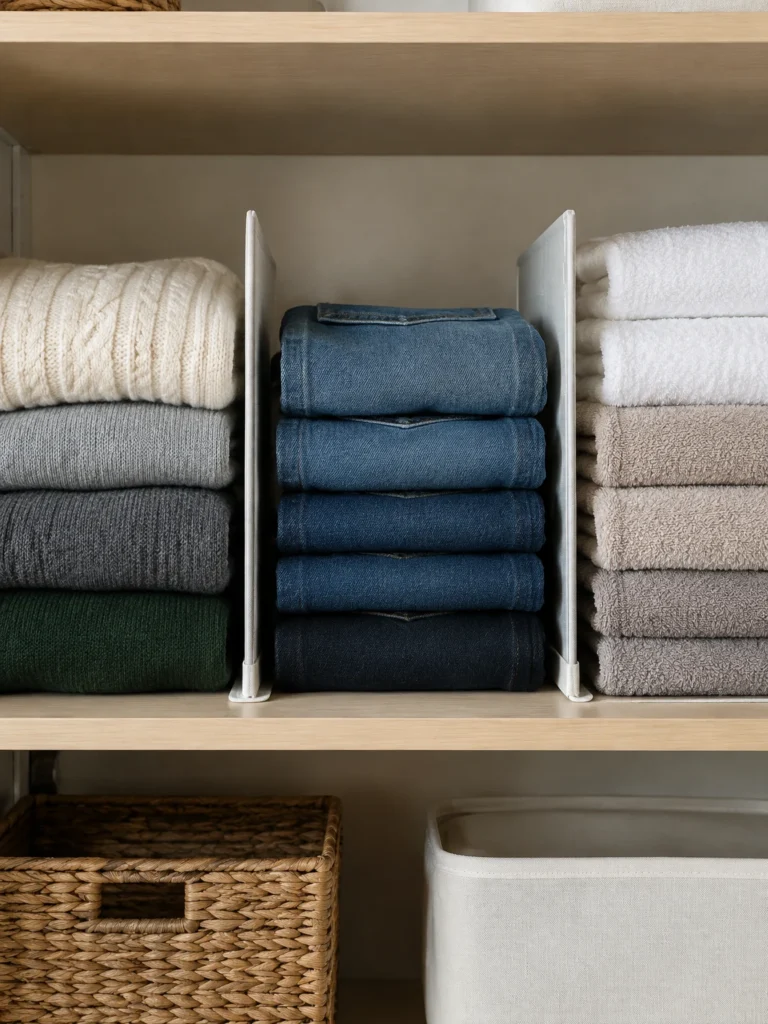
Folded sweaters and jeans have a habit of leaning into one another until the entire shelf becomes a pile. Shelf dividers help separate stacks and make each group easier to maintain.
Use them for sweaters, handbags, jeans, or towels. Adjustable dividers are especially useful because you can change the spacing as your storage needs change.
4. Store Seasonal Items in Clear Bins
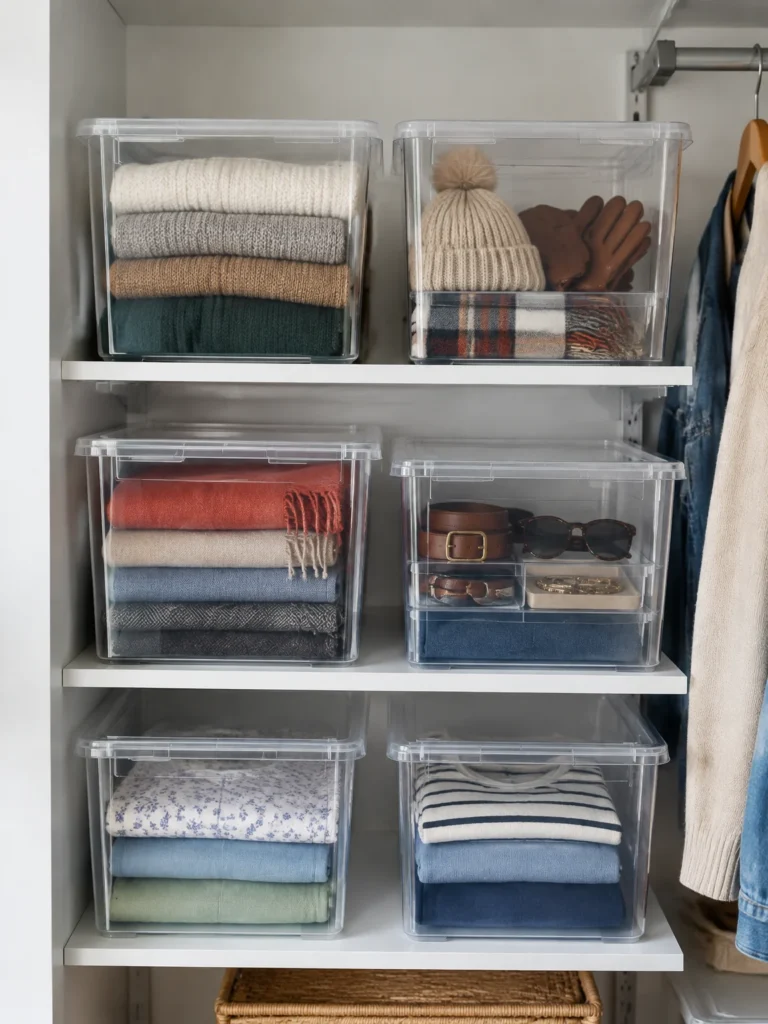
Winter accessories, swimsuits, and occasional-use clothing don’t need to occupy your most accessible shelves all year.
Place these items in clear, lidded containers and store them on higher shelves or beneath hanging clothes when space allows. Transparent bins make it easier to identify what’s inside without opening every container.
For items that need protection from dust or light, opaque containers with clear labels can be a better choice.
5. Make Use of the Highest Shelf
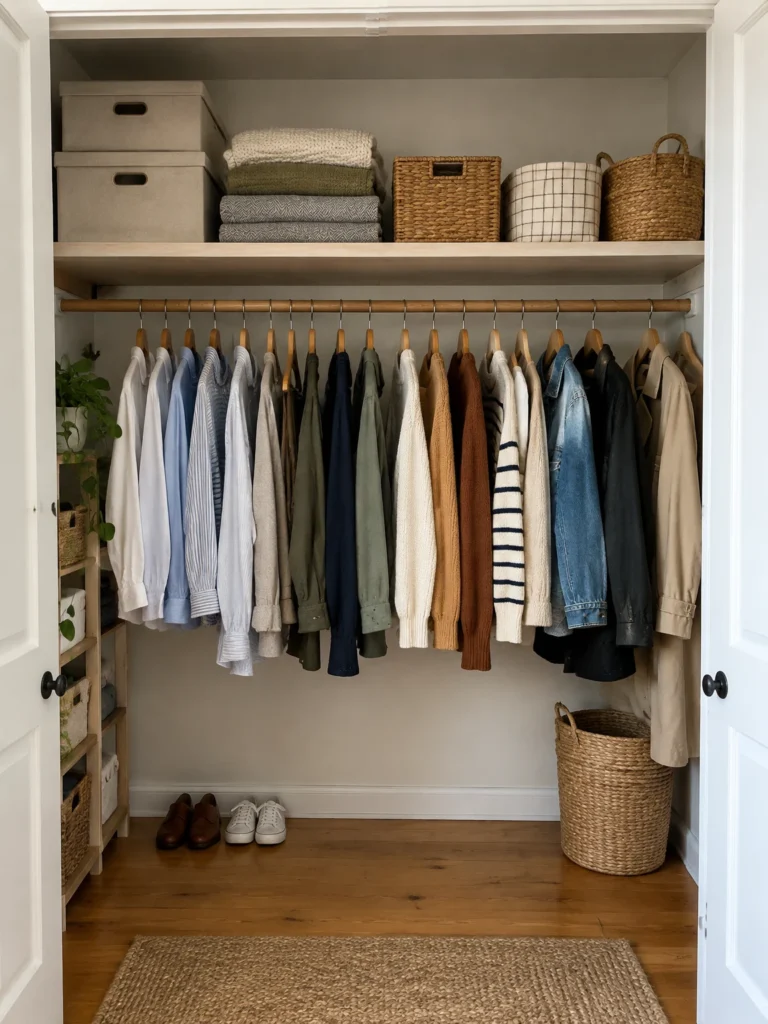
The top shelf often becomes a random collection of bags, boxes, and things you rarely use. Give it a purpose by reserving it for seasonal clothing, spare bedding, or luggage accessories.
Keep frequently used items at eye level and place less frequently used belongings higher up. A small step stool can help, as long as the shelf and containers are easy and safe to reach.
Make the Closet Door Part of the Storage Plan
6. Hang an Over-the-Door Organizer
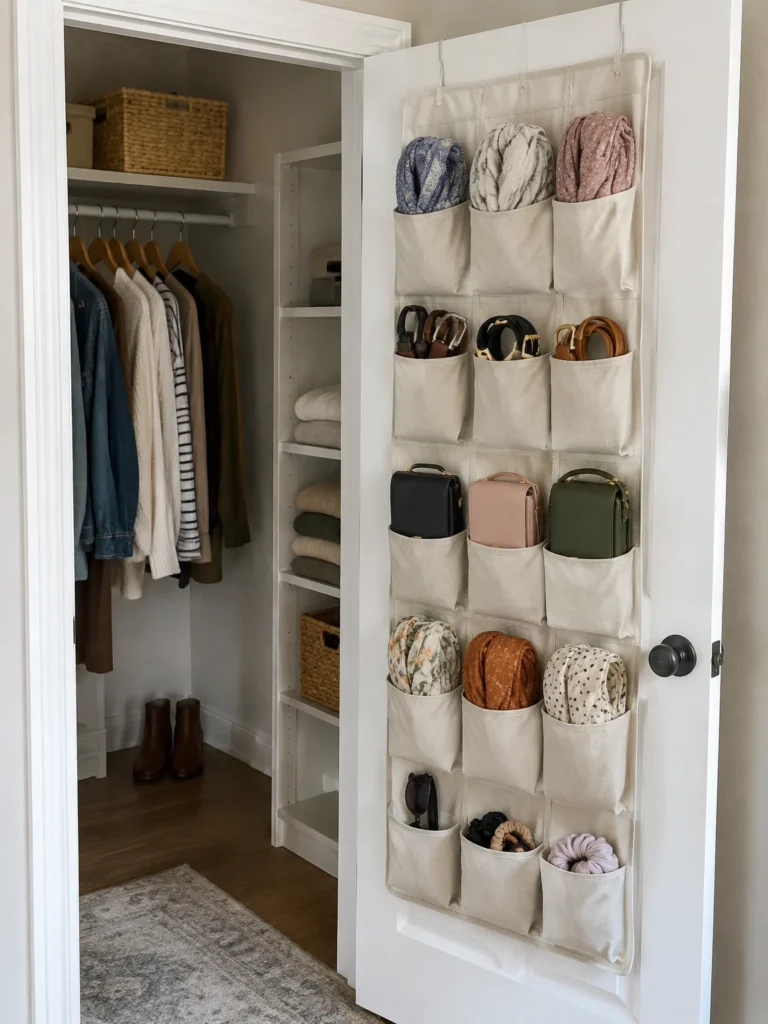
The back of a closet door can provide useful storage without taking up floor or shelf space. Pocket organizers can hold scarves, belts, small bags, accessories, or lightweight shoes.
Choose a design that fits your door and check that the door can still close properly. This is particularly helpful in small apartments where additional furniture isn’t practical.
7. Add Hooks for Bags and Accessories
Create a realistic photograph of a narrow shoe rack fitted inside a small closet or along a closet wall. Show several pairs of sneakers, flats, loafers, and ankle boots arranged neatly on compact shelves. Keep the rack slim enough to demonstrate how footwear can be stored without consuming excessive floor space. Include realistic shoe materials, subtle signs of normal use, and clear visibility of the arrangement. Bright neutral daylight, natural colors, crisp editorial photography, horizontal 4:3 composition. No text, logos, or watermarks.
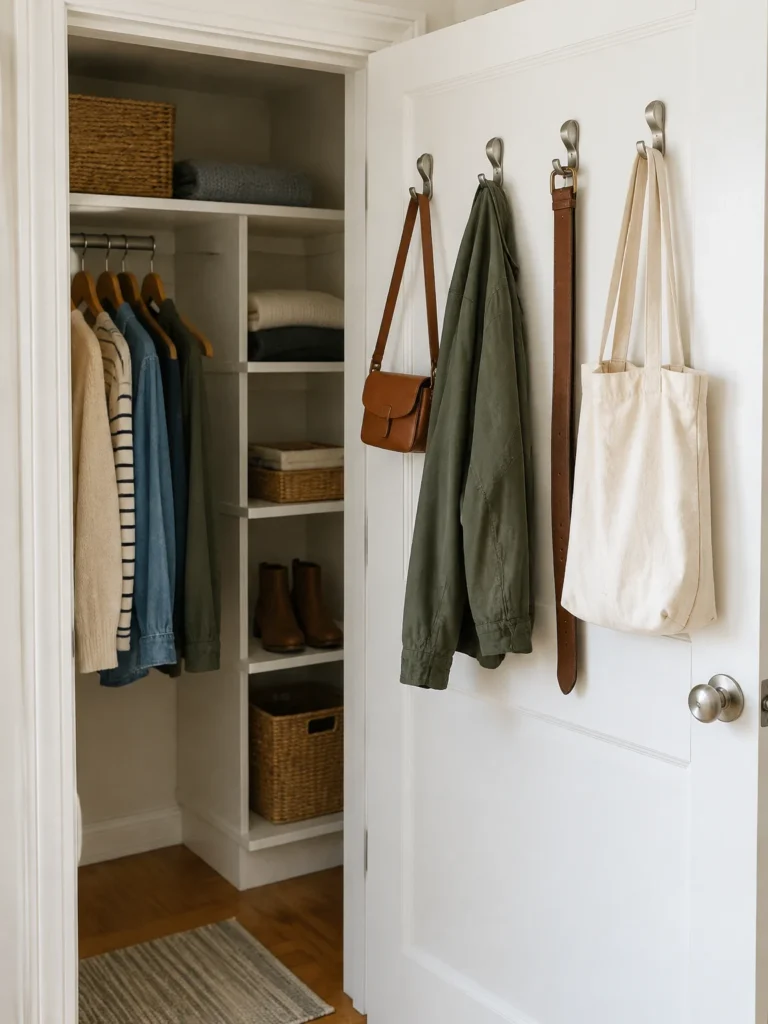
A few well-placed hooks can keep handbags, hats, scarves, and frequently worn accessories off shelves and away from the floor.
Mount hooks on an appropriate wall or use removable options when suitable for the surface. Keep heavier bags on sturdy hooks and avoid overcrowding them, which can stretch straps or make items difficult to remove.
8. Organize Shoes Vertically
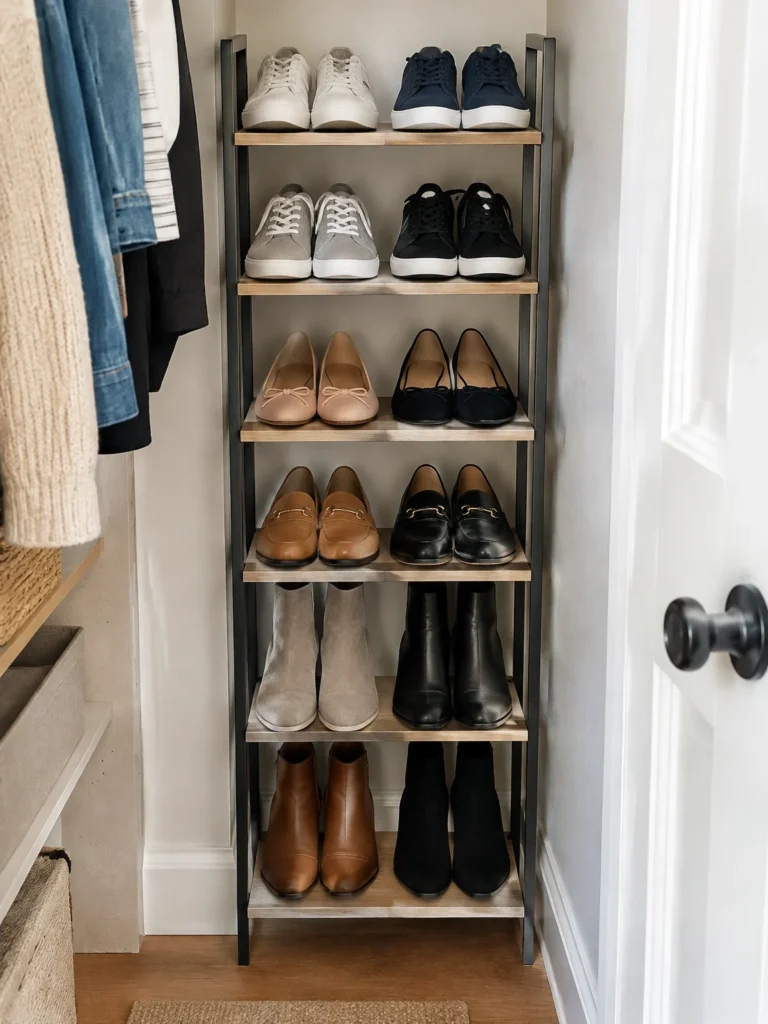
Shoes can quickly take over the bottom of a small closet. A narrow vertical shoe rack or hanging shoe organizer can free up floor space and make pairs easier to find.
Arrange everyday shoes at a comfortable height and place occasional-use pairs higher or lower. If you use a hanging organizer, check that it doesn’t interfere with the closet door or the clothes behind it.
9. Use a Mirror That Includes Storage
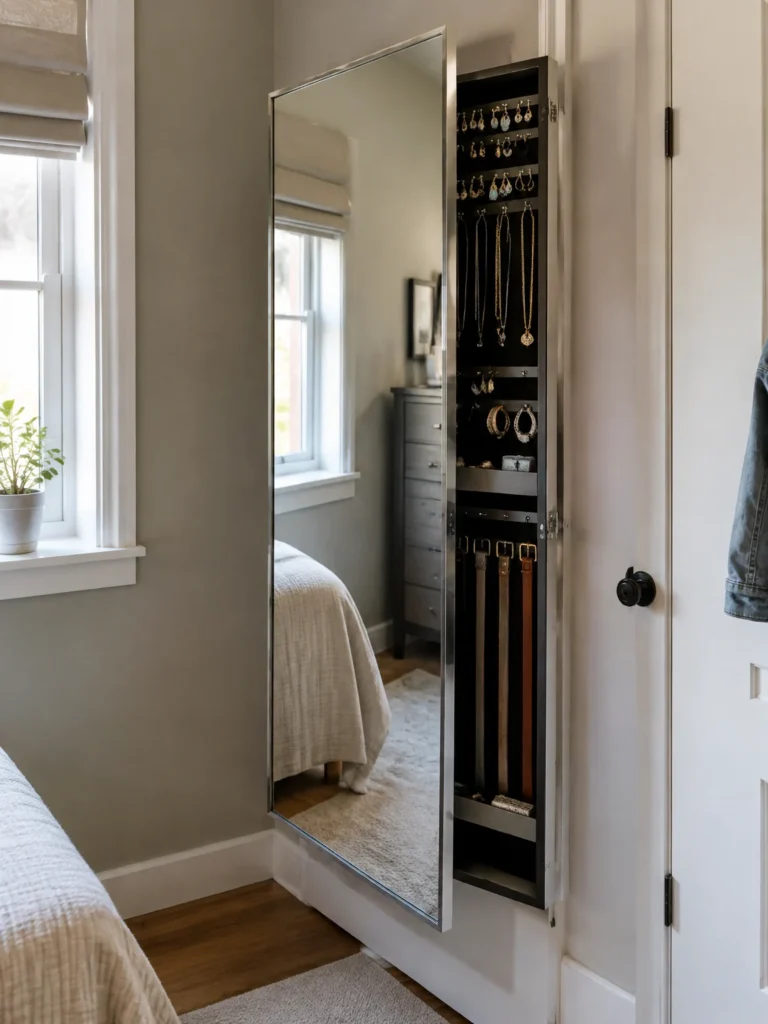
A full-length mirror is useful in a bedroom, but a mirror with a slim storage cabinet can do more than one job.
Depending on the design, it may hold jewelry, sunglasses, small accessories, or other lightweight items. This idea is especially useful when the bedroom has little room for a separate accessory organizer.
10. Give Door Pockets Specific Jobs

An over-the-door organizer works best when every pocket has a clear purpose. One pocket might hold belts, another hair accessories, and another small bags or everyday essentials.
Add simple labels if several people share the closet. Avoid filling the pockets with unrelated items, since that can turn a space-saving solution into another place where clutter collects.
Make Shelves and Drawers Easier to Use
11. Add Pull-Out Baskets
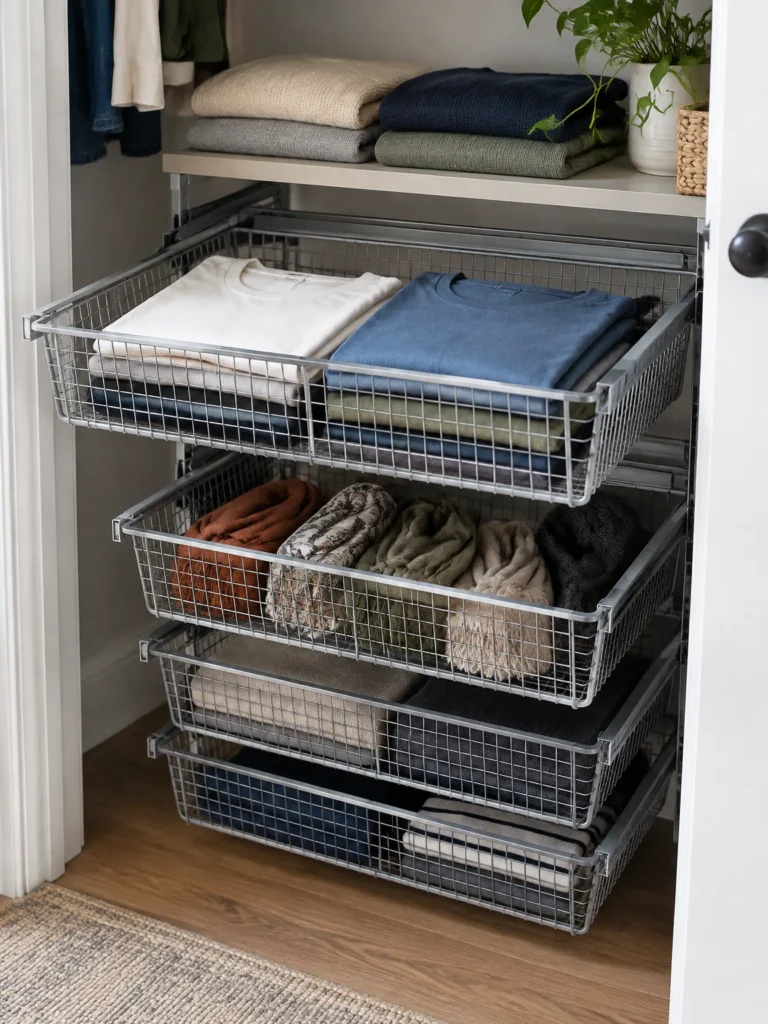
Deep shelves can hide items at the back, making it easy to forget what you own. Pull-out baskets bring those belongings forward and make the full shelf easier to access.
Use them for workout clothes, accessories, spare towels, or smaller clothing items. Measure the shelf depth and width before buying baskets so they slide comfortably without blocking nearby drawers or doors.
12. Divide Drawers Into Smaller Sections
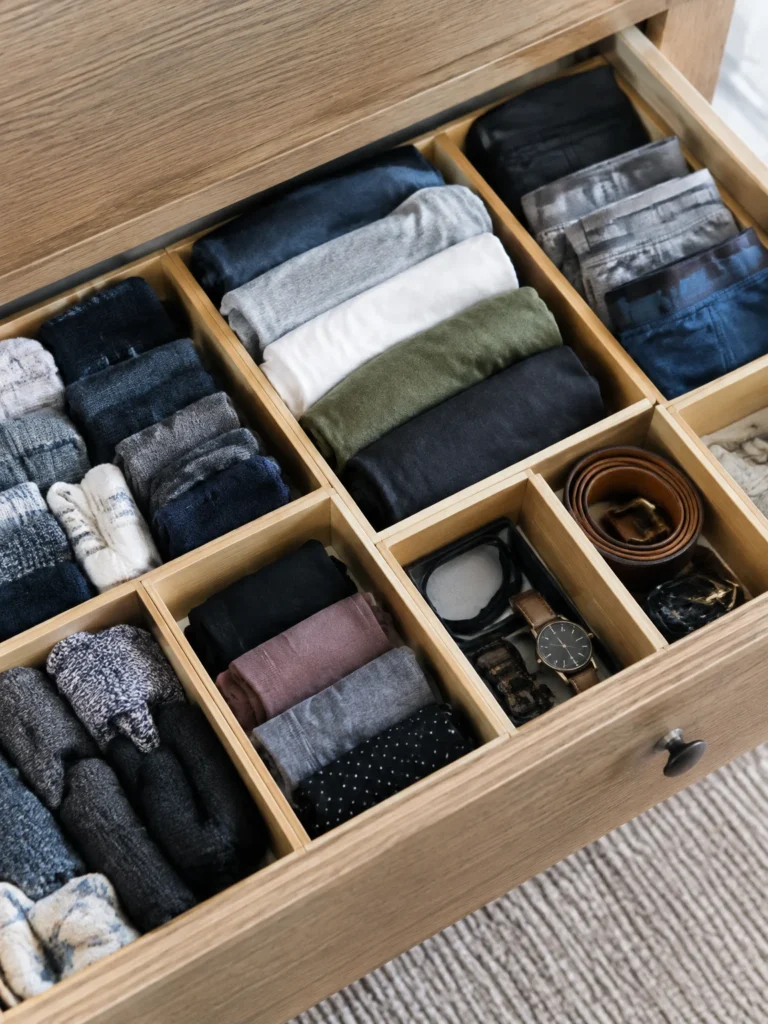
A drawer filled with socks, underwear, belts, and accessories can become messy within days. Drawer dividers create separate compartments that help each category stay in place.
You don’t need an elaborate system. A few adjustable dividers or simple fabric organizers can make everyday items easier to find and return to their proper spots.
13. File-Fold Everyday Clothing
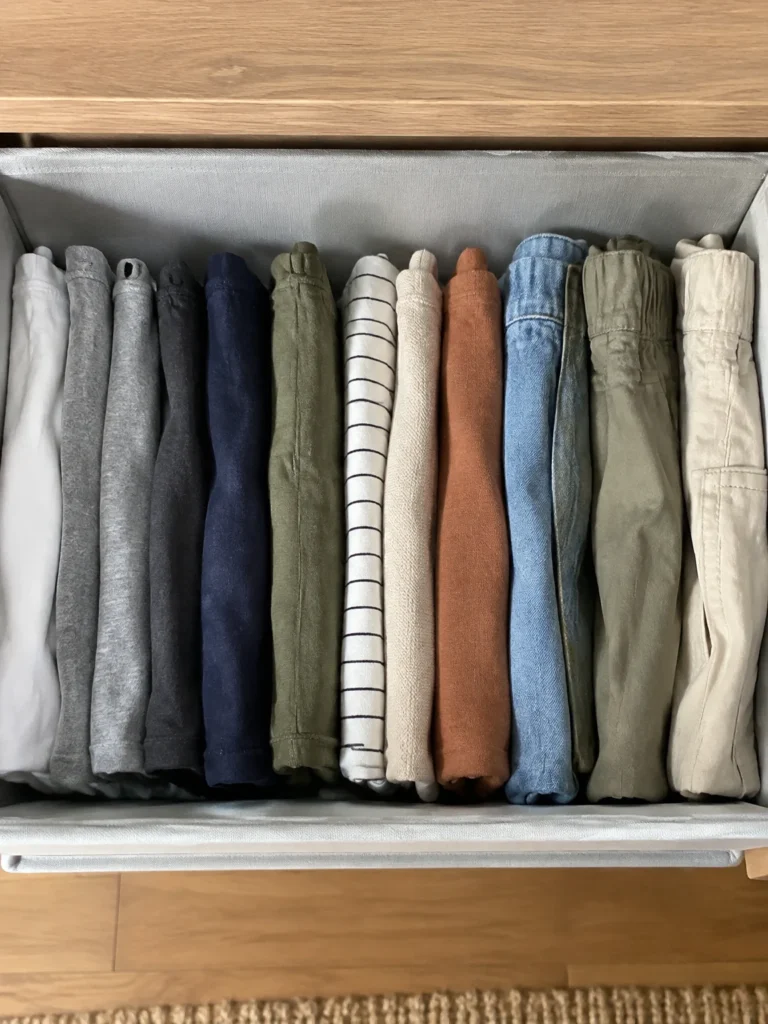
Instead of stacking T-shirts and leggings in tall piles, fold them into compact rectangles and arrange them vertically in drawers or bins.
This method lets you see more items at once and reduces the need to lift one stack to reach another. It works particularly well for casual clothing, pajamas, workout gear, and lightweight tops.
14. Use Under-Shelf Baskets
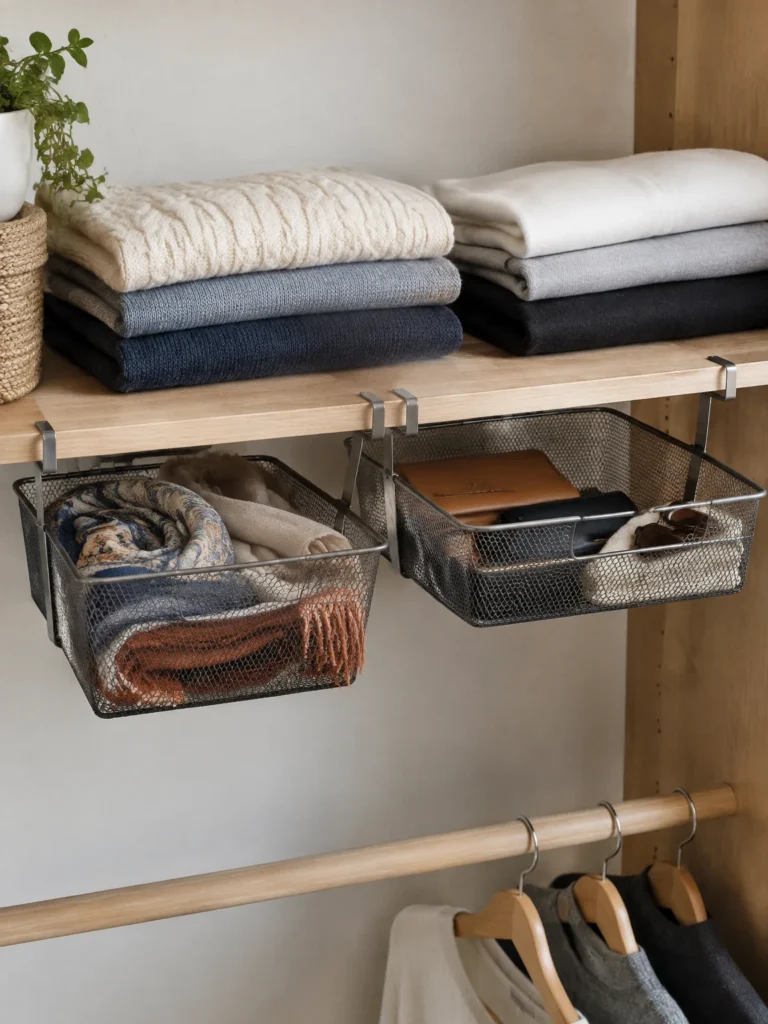
When a shelf has unused space beneath it, a slide-on basket can create another small storage level. These baskets can hold lightweight accessories, washcloths, or folded items that don’t need much height.
Check the shelf thickness and the basket’s weight limits before installing one. Keep heavier objects on solid shelves rather than in baskets that are not designed to carry them.
15. Organize by Category and Frequency
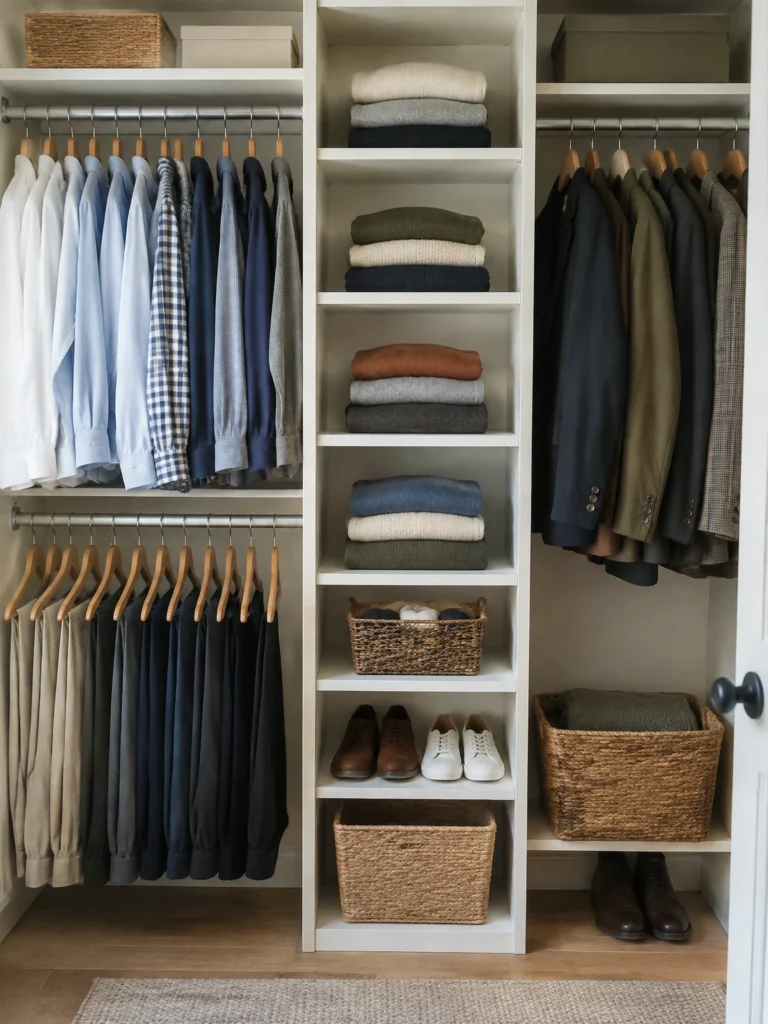
A closet becomes easier to maintain when similar items live together. Group tops with tops, trousers with trousers, shoes with shoes, and accessories with accessories.
Within each category, keep your most frequently worn items in the easiest-to-reach spots. This reduces daily searching and makes it simpler to notice when one section is becoming overcrowded.
Small Walk-In Closet Ideas That Save Space
16. Put Awkward Corners to Work
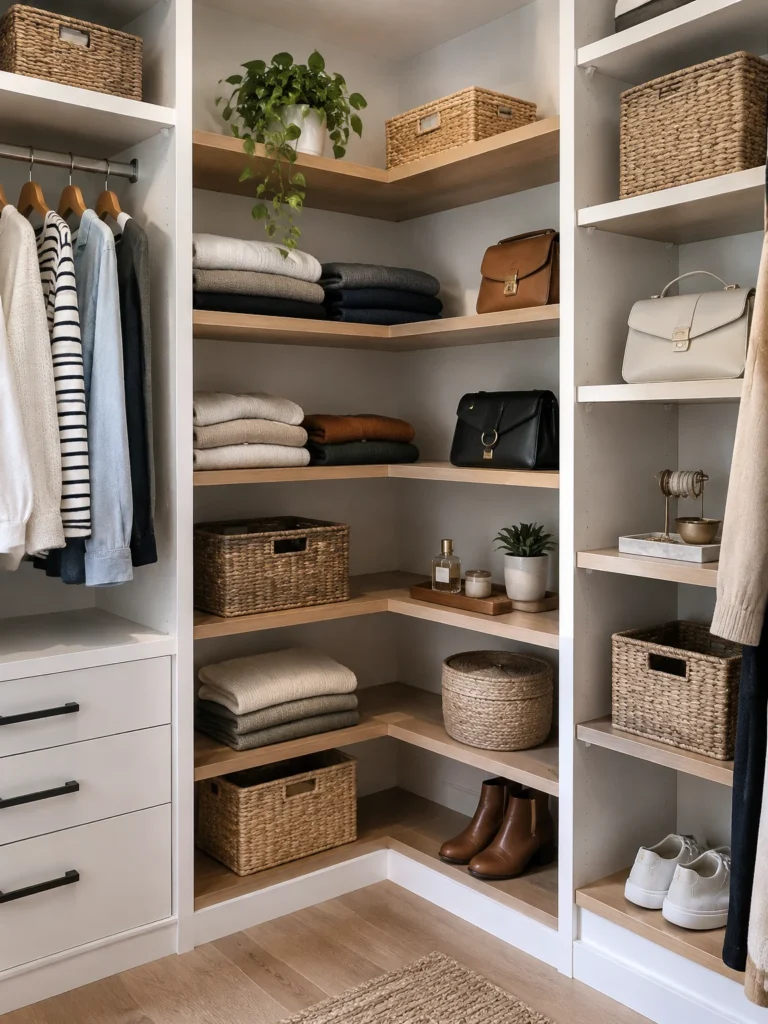
Corners can be difficult to use, especially in a compact walk-in closet. Narrow corner shelves or carefully sized shelving units can provide a home for bags, folded clothing, or small storage containers.
Avoid adding deep shelves that block the walkway. The goal is to gain usable storage without making the closet uncomfortable to move around in.
17. Choose Open or Wire Shelving Where It Makes Sense

Open and wire shelving can help a small closet feel less enclosed than bulky cabinets. They also allow you to adjust the arrangement as your clothing and storage needs change.
Use appropriately sized bins to keep small objects from falling through wire shelves. If you’re renting, look for freestanding or approved no-drill solutions instead of making permanent changes without permission.
18. Fit a Narrow Dresser Into an Unused Section
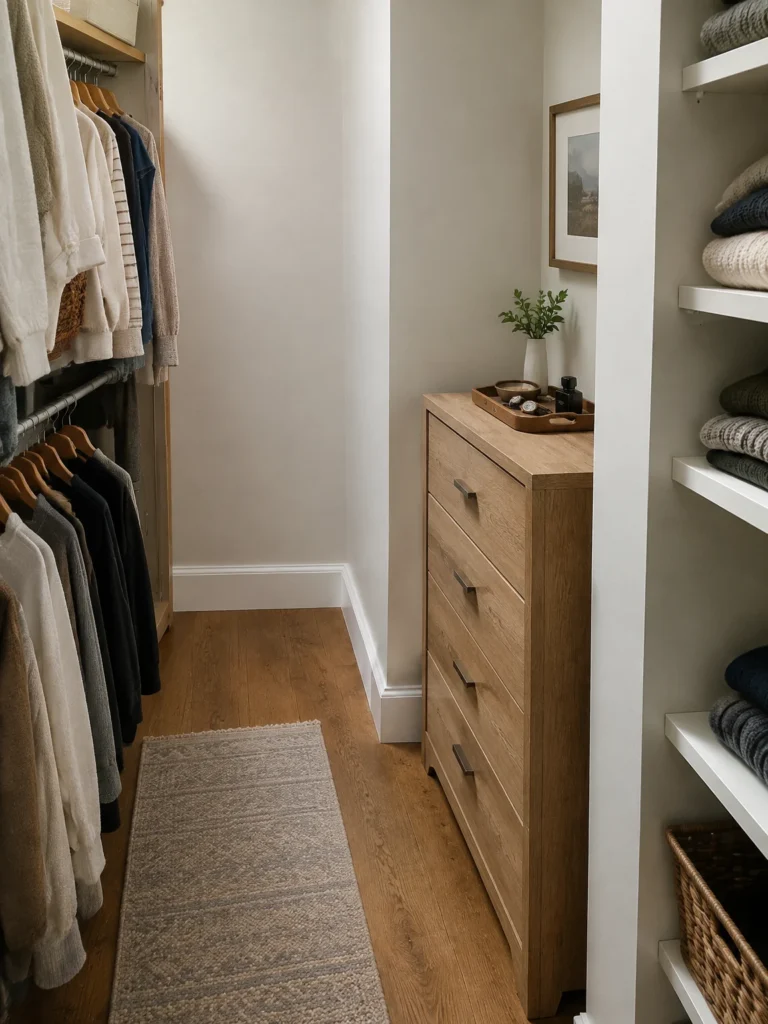
If the closet has enough floor space, a slim dresser can provide drawers for underwear, T-shirts, pajamas, and other folded clothing.
Measure carefully before bringing one in. Leave enough room to open the drawers fully and move comfortably around the closet. In especially narrow layouts, baskets or hanging organizers may be a more practical alternative.
19. Use Matching Storage Bins
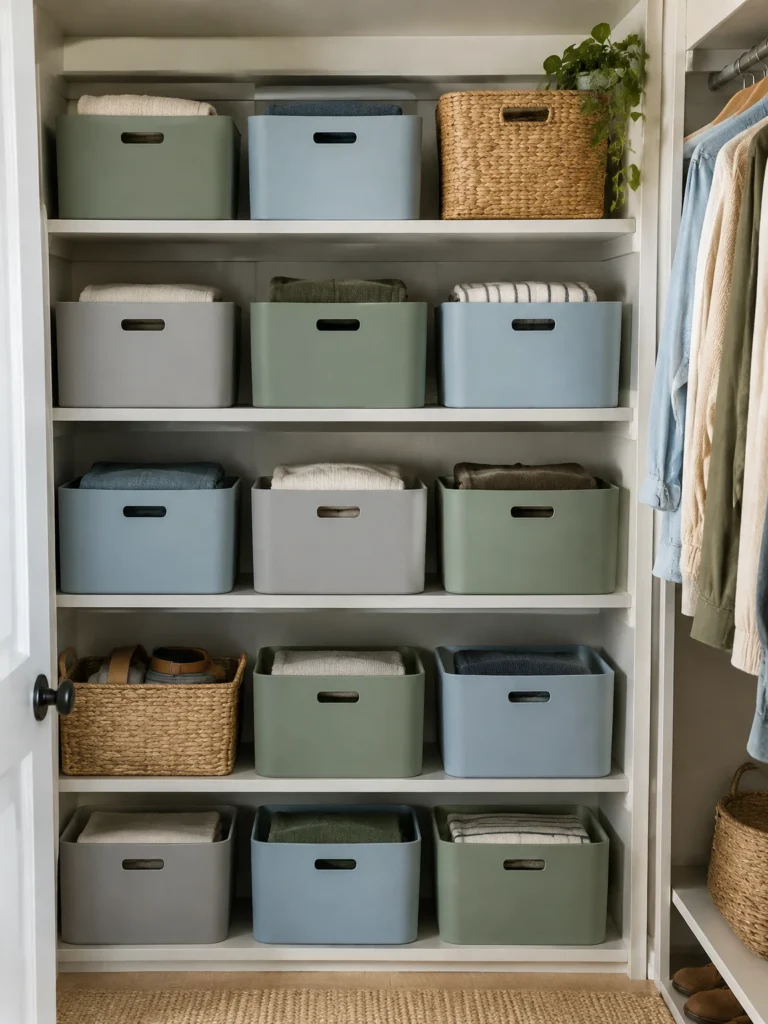
A collection of unrelated boxes can make even an organized closet look visually busy. Matching bins create a more consistent appearance and help define separate storage zones.
Choose sizes that fit your shelves and use labels to identify the contents. You don’t need to buy a complete set at once; begin with the shelves that are hardest to keep tidy.
20. Keep a Small Step Stool Nearby
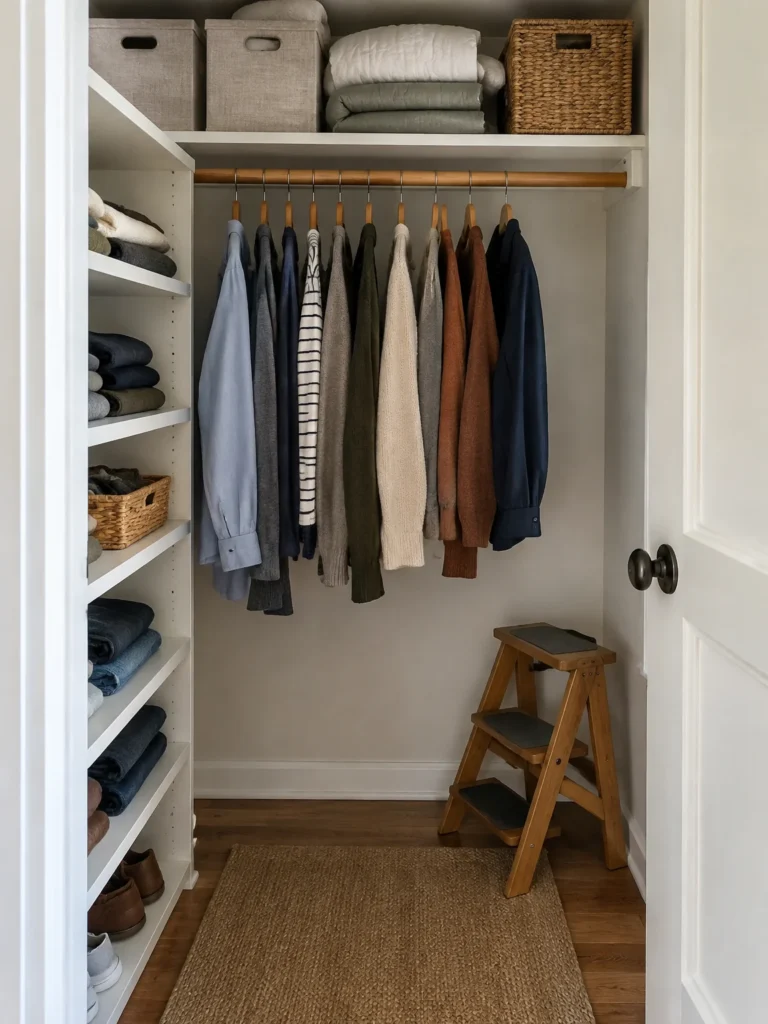
High shelves are useful only when you can reach them safely. A compact folding step stool makes it easier to access seasonal clothes, spare linens, and other items stored overhead.
Choose a stable stool and place it somewhere accessible without blocking the closet entrance. Keep heavy or frequently used objects on lower shelves to avoid repeated reaching and lifting.
Organizing Specialty Closets in Small Homes
21. Add Tiered Risers to a Pantry Closet
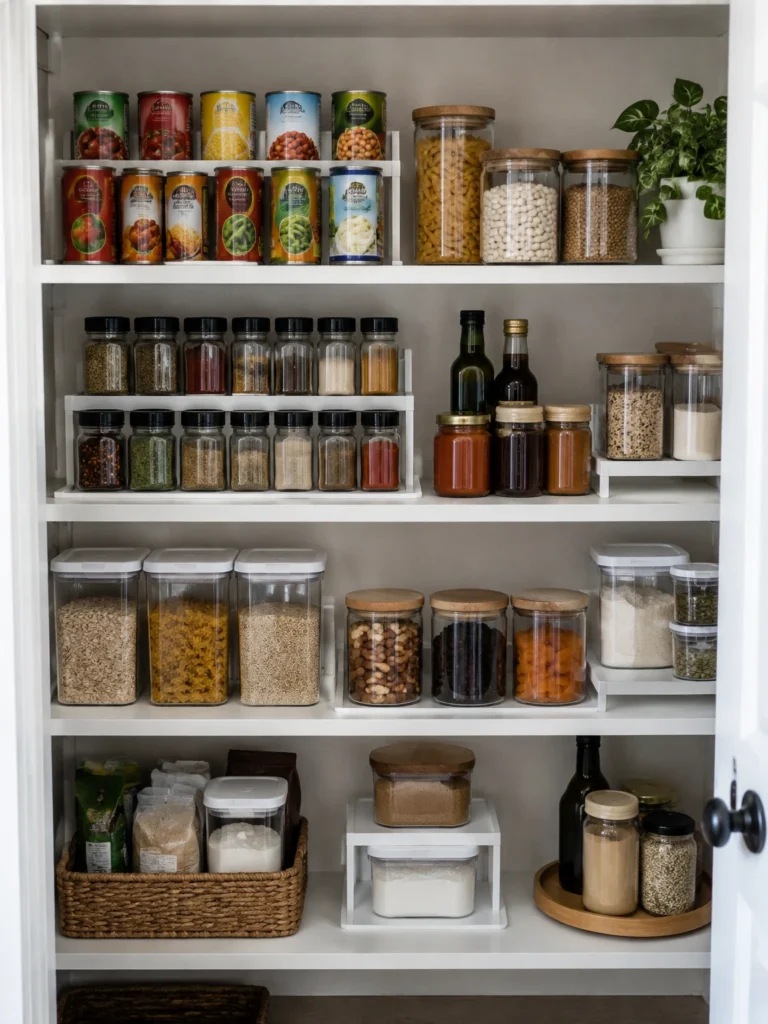
A small pantry can become crowded when cans, jars, and packets are arranged in several rows. Tiered risers elevate items at the back so their labels remain easier to see.
Group similar foods together and leave enough room to remove items without knocking over nearby containers. This approach also works for small household supply closets, depending on the items being stored.
22. Roll Towels in a Linen Closet
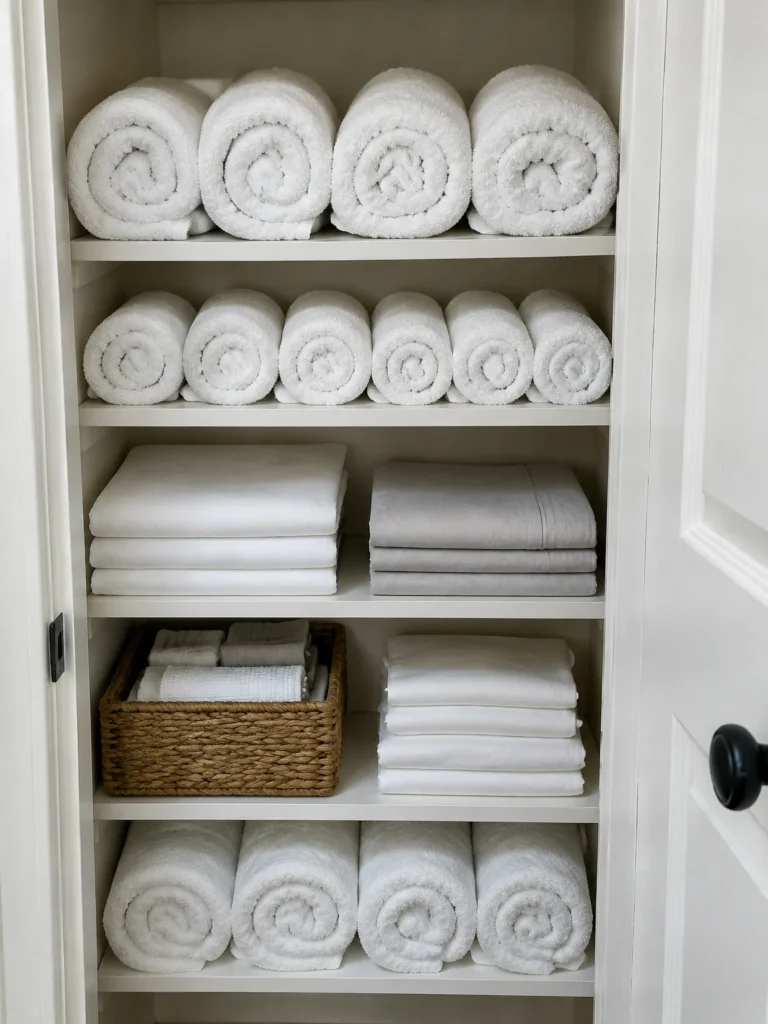
Bulky towels can consume a surprising amount of shelf space. Rolling them can make it easier to arrange several towels in a narrow basket or on a compact shelf.
Choose the folding method that best fits your shelf dimensions and towel sizes. The real benefit comes from keeping the stacks manageable and avoiding unnecessary gaps between items.
23. Move Laundry Supplies Off the Floor
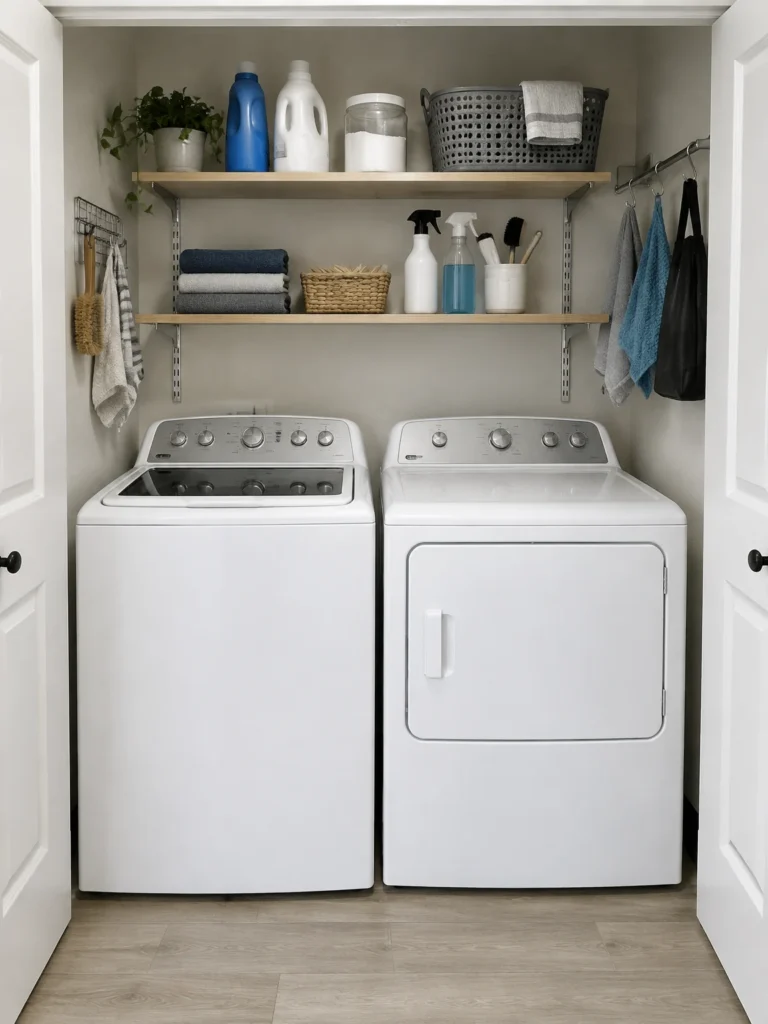
A laundry closet often has to accommodate detergent, cleaning products, laundry baskets, and tools in a limited area.
Wall-mounted shelves or a narrow rack can move suitable supplies off the floor and make the remaining space easier to use. Store products securely, follow their label instructions, and keep detergents and cleaning chemicals out of children’s reach.
24. Make Children’s Closets Easier to Reach
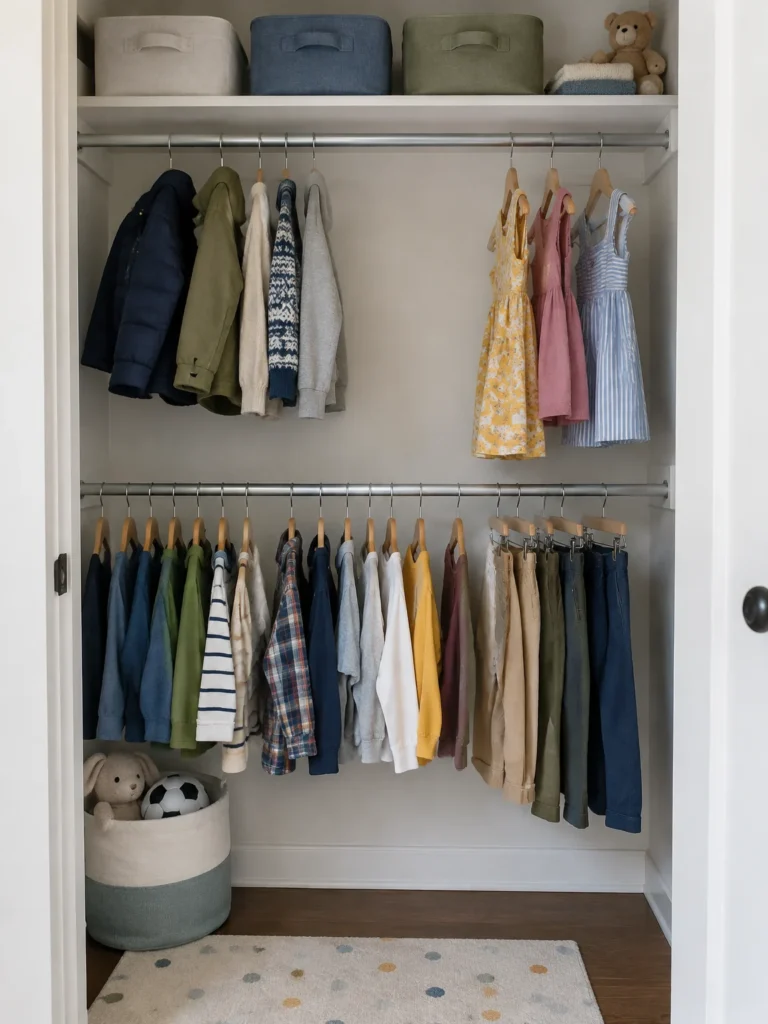
A closet is easier for children to maintain when their everyday belongings are within reach. Lower hanging rods, accessible baskets, and simple labels can help them put clothing and toys away independently.
Adjustable systems can change as children grow. Keep heavy objects on low, secure shelves and avoid placing climbing temptations near unstable furniture or shelving.
25. Create Zones in Hall and Utility Closets
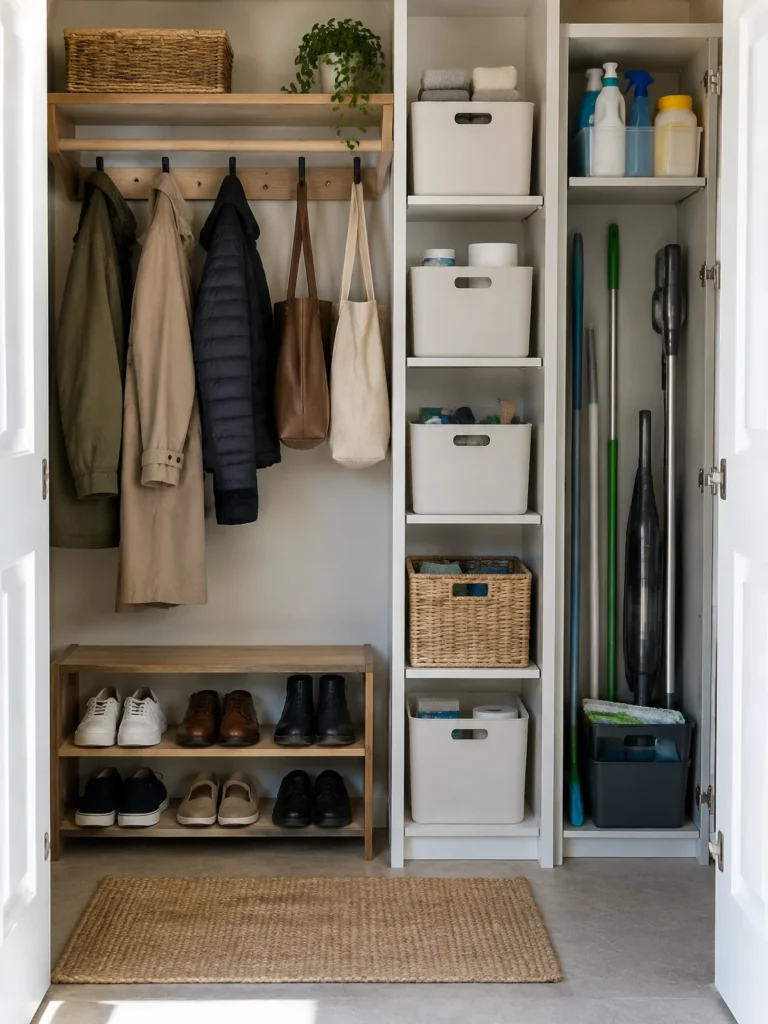
Hall closets often hold coats, shoes, cleaning supplies, umbrellas, and miscellaneous household items. Without clear zones, these belongings tend to accumulate in one crowded space.
Assign each category a specific area. Use hooks for frequently worn coats, a small tray or bin for accessories, and separate containers for suitable household supplies. Keep the floor and doorway clear so the closet remains practical rather than simply packed.
Final Thoughts
A small closet doesn’t need a complicated renovation to become more useful. Often, the biggest improvements come from making better use of vertical space, choosing storage that fits the layout, and giving every category of belongings a clear home.
Start with one frustrating area, such as crowded hangers or a messy shoe section, and make one change at a time. Once that system works, move on to the next shelf or drawer.
These small closet organization ideas to maximize storage can help make a compact closet easier to use and simpler to maintain. You may not gain more square footage, but with a thoughtful layout, you can make much better use of the space you already have.