A studio apartment doesn’t need more square footage to feel organized, comfortable, and beautifully designed. Sometimes, the secret is simply creating a clear distinction between the places where you sleep, relax, work, and eat. The right divider can make a single room feel like several thoughtfully planned spaces without closing it off completely.
The challenge is finding a balance between privacy and openness. A solid partition may provide separation but block precious daylight, while an oversized bookcase can make a compact apartment feel crowded. Fortunately, there are plenty of ways to define different zones without sacrificing the features that make studio living appealing.
These 21 studio apartment separation ideas combine practical layouts, attractive materials, and flexible solutions for different budgets. Whether you’re renting a small city apartment or decorating your first studio, these ideas can help you create a home that feels intentional rather than improvised.
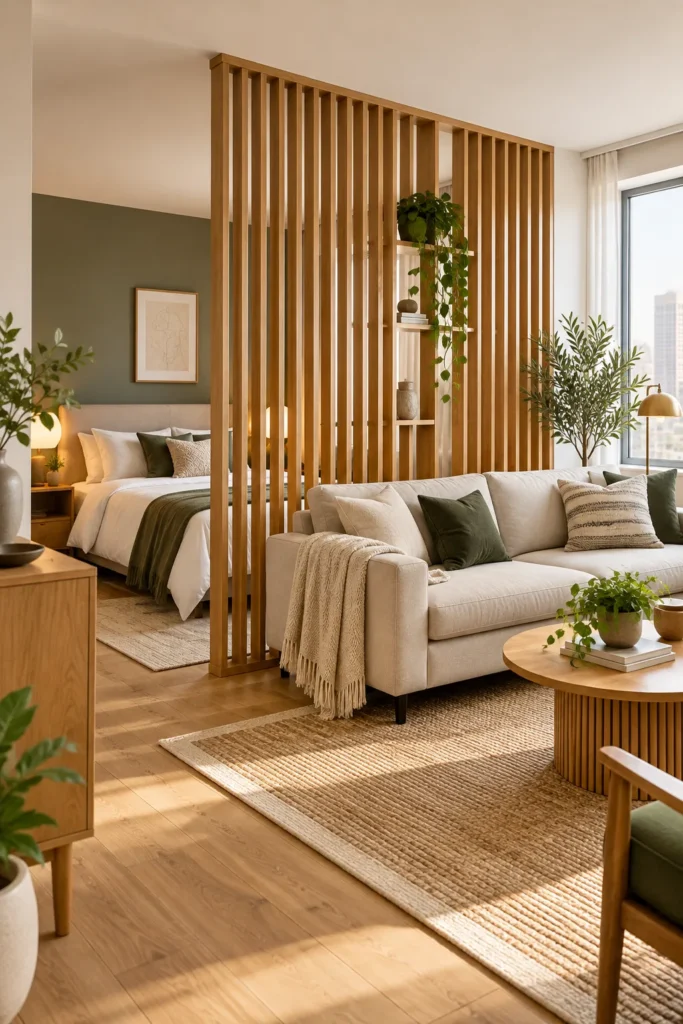
Quick Pick: Which Studio Apartment Divider Should You Choose?
Need bedroom privacy? Consider ceiling-mounted curtains, folding screens, or a strategically placed wardrobe.
Want to preserve natural light? Try glass panels, open shelving, sheer curtains, or vertical wood slats.
Need additional storage? Choose a bookcase, modular cube system, low cabinet, or storage-backed divider.
Renting and avoiding permanent changes? Look for freestanding screens, tension-mounted curtains, and furniture-based zoning.
Want an expensive-looking interior on a budget? Start with full-length curtains, a coordinated rug, and carefully arranged furniture before investing in a permanent partition.
21 Studio Apartment Separation Ideas (With When to Use Each)
1. Floor-to-Ceiling Curtains
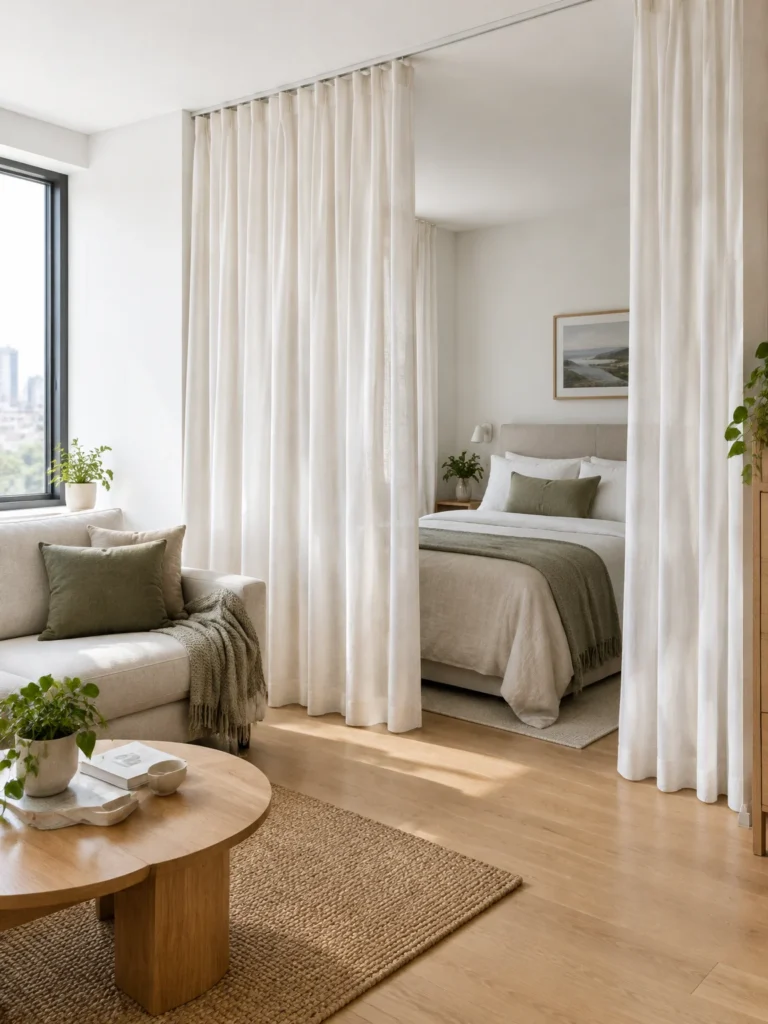
Best for: Flexible bedroom privacy
Estimated cost: $50–$250
Space impact: Low
Renter-friendly: Depends on installation
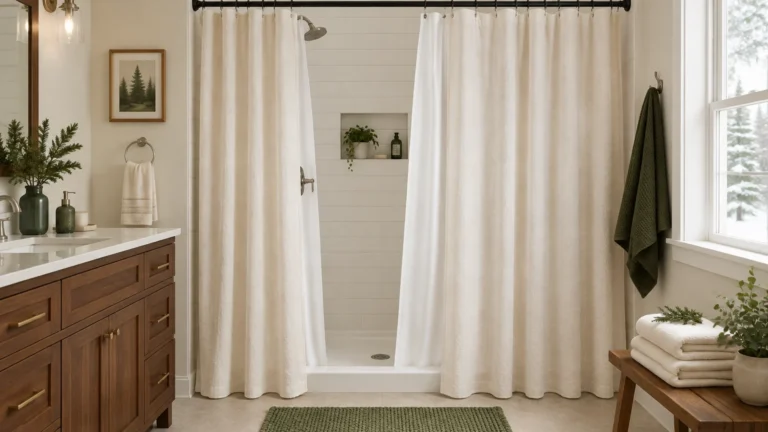
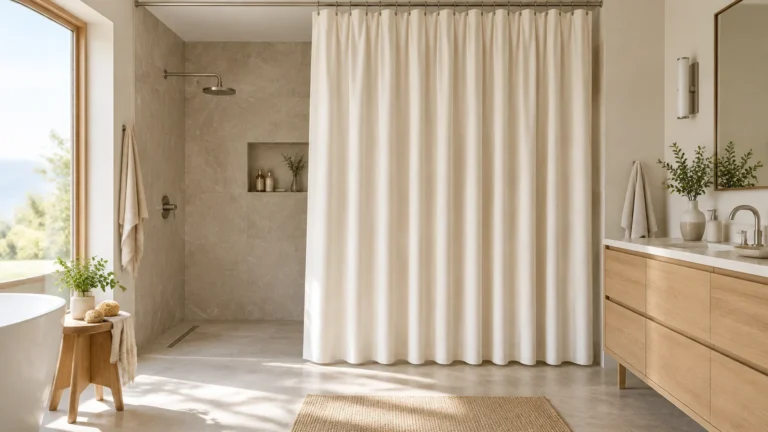
Floor-to-ceiling curtains are one of the simplest ways to create a separate sleeping area. They soften the room, introduce texture, and can be pulled closed at night or opened completely during the day.
For an elevated look, hang the curtain track close to the ceiling rather than directly above the bed. Linen-look fabrics work beautifully in relaxed interiors, while heavier curtains offer more coverage. Choose a color that complements your bedding and existing window treatments so the divider feels like part of the overall design.
2. A No-Drill Curtain Divider
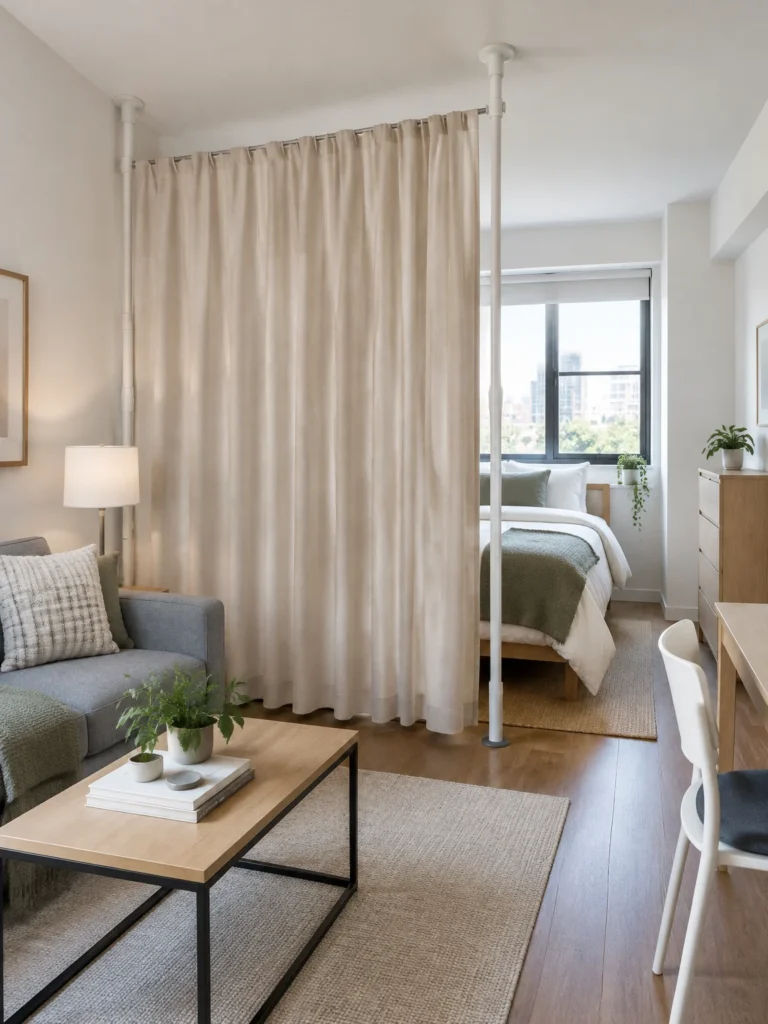
Best for: Temporary separation in rental apartments
Estimated cost: $30–$120
Space impact: Low
Renter-friendly: High when compatible with the space
A tension-mounted curtain rod can create a simple boundary without drilling into the walls. It works particularly well for separating a bed from the living area in a narrow studio.
Use lightweight curtains and check the rod’s specified weight and span limits before installing it. This approach is best for temporary arrangements rather than heavy blackout curtains or wide openings that require more substantial support.
3. An Open Bookshelf Room Divider
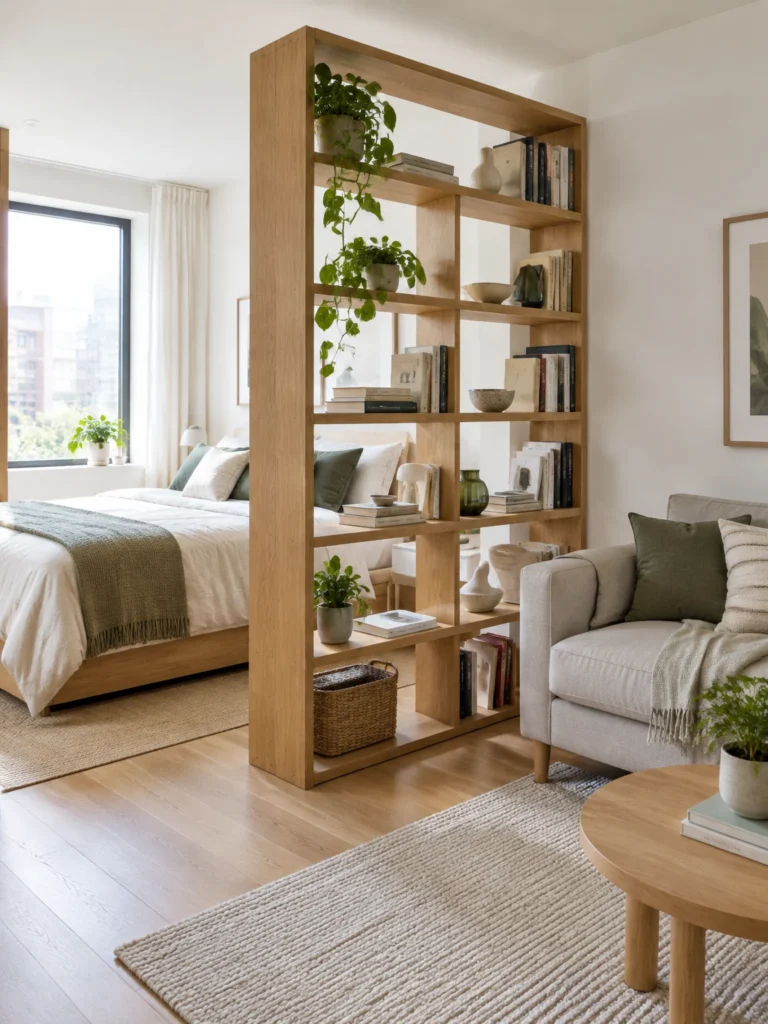
Best for: Storage and visual separation
Estimated cost: $90–$300
Space impact: Medium
Renter-friendly: Usually
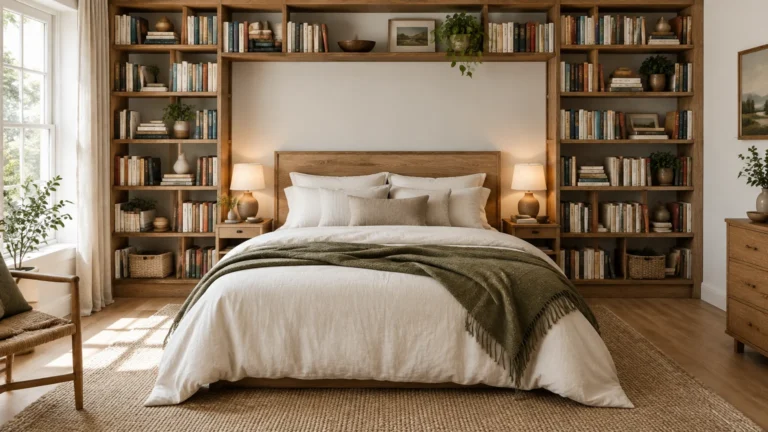
An open bookshelf can establish a clear boundary between the bedroom and living room while allowing light to pass through. It also gives you room to display books, baskets, plants, and a few favorite decorative objects.
Avoid filling every compartment. A mixture of open space and useful storage keeps the divider from looking too heavy. Choose a depth that suits the available floor space, and secure the unit according to the manufacturer’s instructions to reduce the risk of tipping.
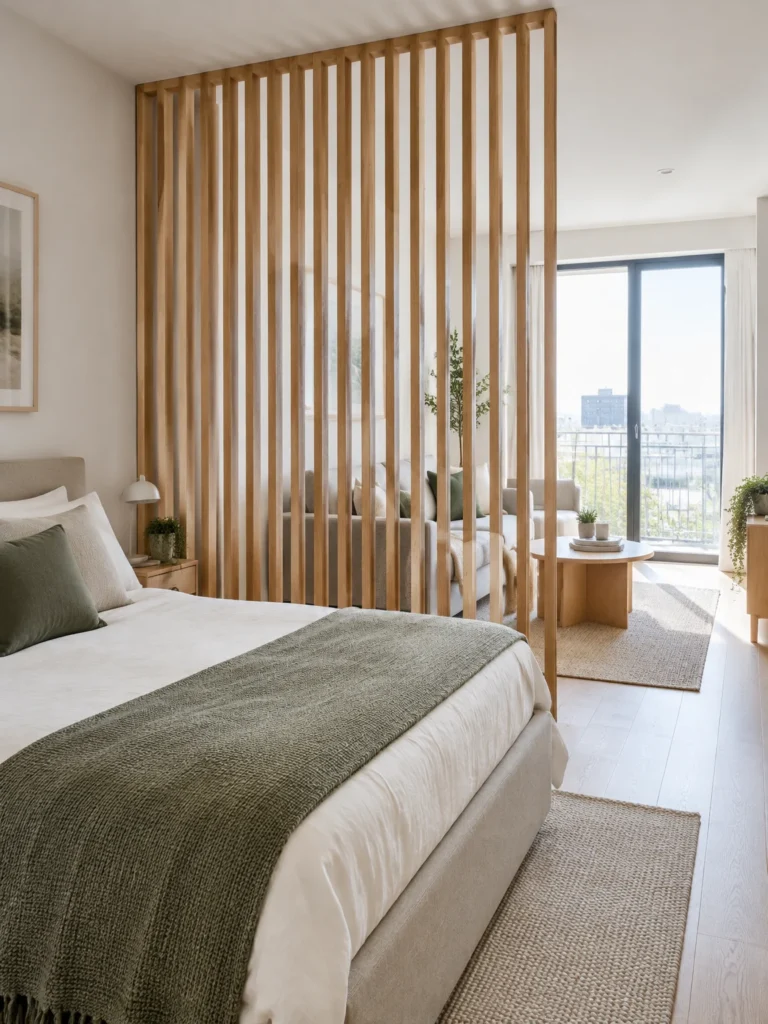
4. Vertical Wood Slats
Best for: A modern architectural look
Estimated cost: $200–$800
Space impact: Low to medium
Renter-friendly: Depends on installation
Vertical wood slats introduce architectural detail without creating the visual weight of a solid wall. They can frame a sleeping nook, define the edge of a living area, or separate a small home office.
Light oak creates a bright, relaxed appearance, while walnut adds richer contrast. For a cohesive interior, repeat the same wood tone in a coffee table, shelving, or bed frame. If you rent, consider a freestanding slatted screen rather than a permanently installed partition.
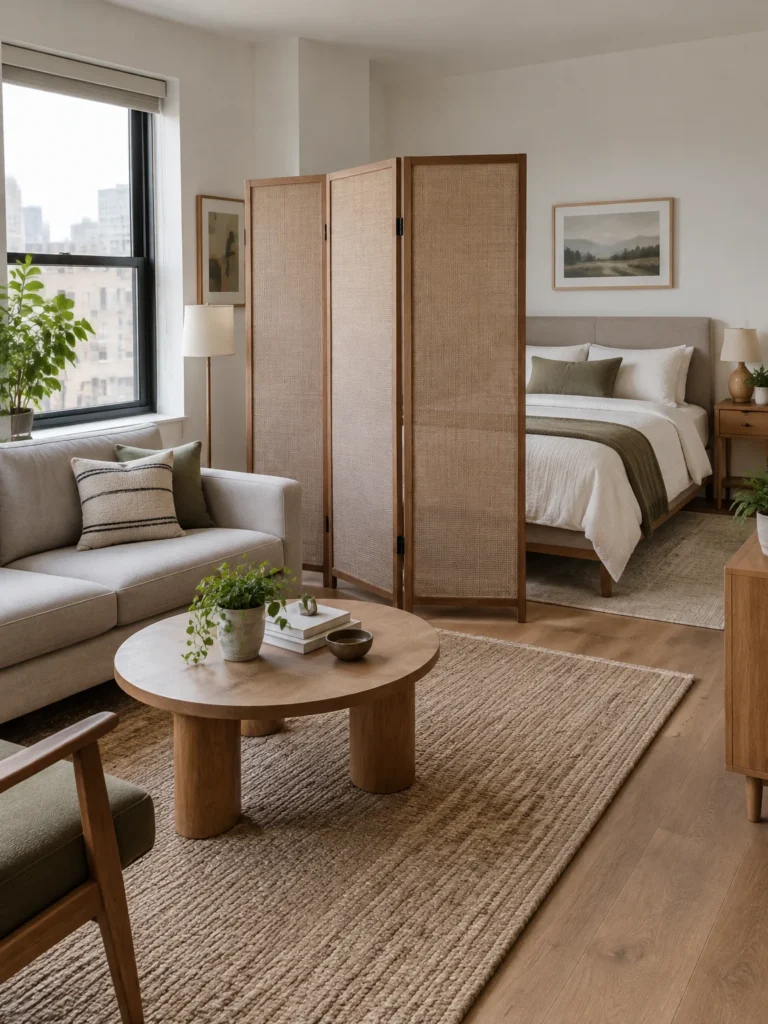
5. A Folding Screen With Rug Zoning
Best for: Flexible layouts
Estimated cost: $80–$300
Space impact: Low
Renter-friendly: High
A folding screen provides privacy when you need it and can be moved aside whenever you want the apartment to feel more open. Pair it with a rug beneath the bed or sofa to make the separation feel more deliberate.
Choose a screen that complements the room’s materials and proportions. A simple wood frame, woven panel, or understated fabric design can introduce texture without competing with the rest of the furniture.
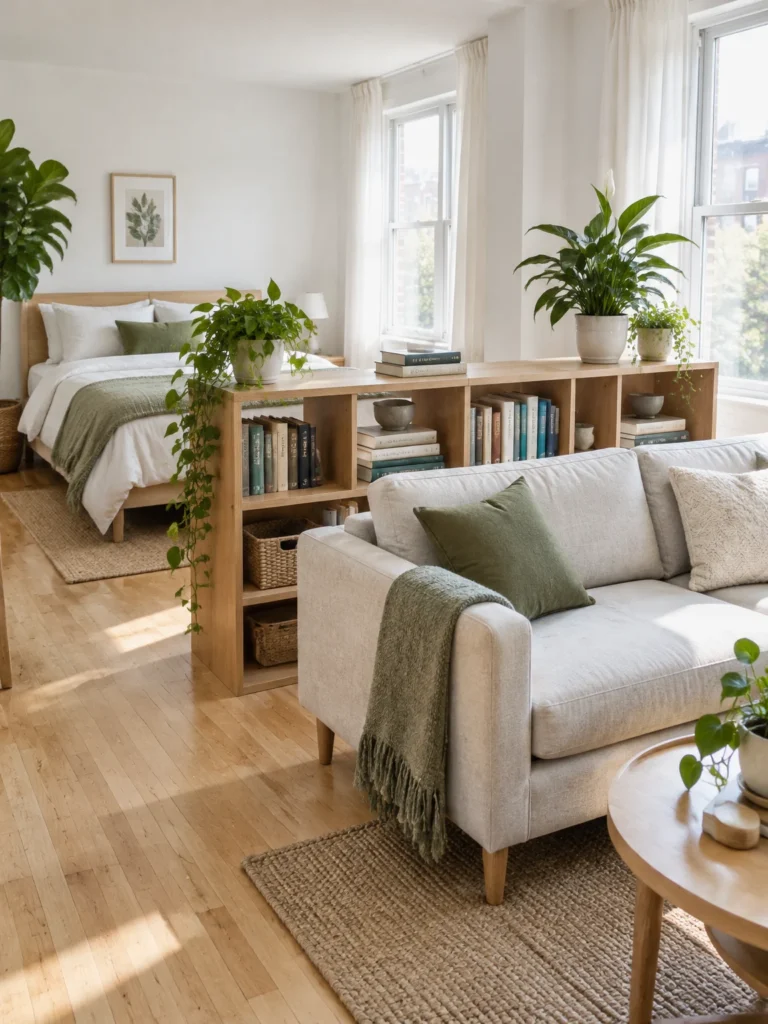
6. A Low Bookcase With Plants
Best for: Subtle separation without blocking views
Estimated cost: $120–$400
Space impact: Medium
Renter-friendly: Usually
A waist-high bookcase creates a visual boundary while keeping the upper part of the room open. It works well between a bed and a sofa or along the edge of a small dining area.
Add a few plants, books, or decorative objects to soften the top surface, but avoid overcrowding it. The goal is to suggest two distinct areas without making the apartment feel divided into narrow compartments.
7. Glass or Acrylic Panels

Best for: Bright studios with limited windows
Estimated cost: $300–$1,200
Space impact: Low
Renter-friendly: Usually low for permanent installations
Transparent or translucent panels create a defined boundary while allowing daylight to travel between spaces. Clear panels preserve the view, while frosted or textured finishes provide more visual privacy.
This option can be especially useful when the bed sits away from the main window. For permanent or large installations, choose appropriate safety-rated materials and check the mounting requirements before proceeding.
8. A Sliding Partition

Best for: Flexible bedroom separation
Estimated cost: $250–$1,000
Space impact: Low to medium
Renter-friendly: Usually low
Sliding panels provide a more architectural alternative to curtains. They can close off the sleeping area at night and slide away during the day without requiring the swing space of a conventional door.
Consider simple wood panels, translucent finishes, or a lightweight design that complements the apartment. Before installing a track, verify that the supporting wall or ceiling can handle the required load.
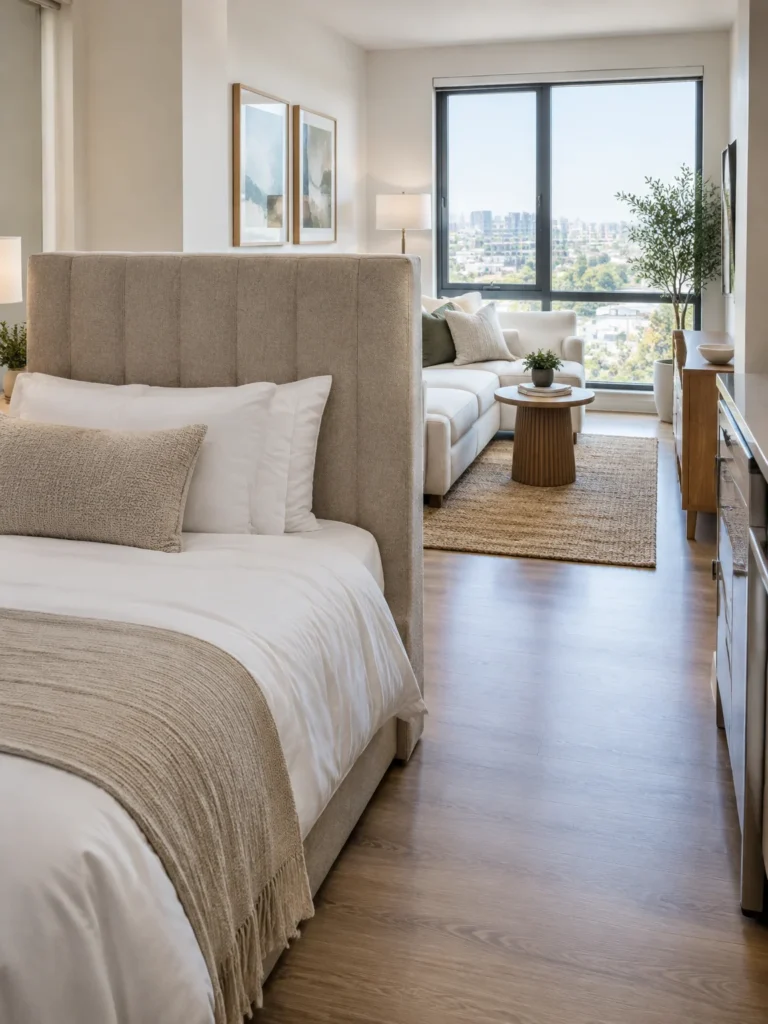
9. A Bed Headboard as a Divider
Best for: Creating a defined sleeping nook
Estimated cost: $100–$450
Space impact: Low
Renter-friendly: High
Positioning the bed with its headboard facing the living area can establish a natural bedroom boundary. This arrangement is particularly useful when there is no wall separating the bed from the sofa.
A tall upholstered headboard creates a softer, more substantial visual break, while a simple wood design works well in contemporary interiors. Leave comfortable access to the bed and ensure the arrangement does not block windows, doors, or essential walking routes.
10. Sofa-Back Zoning With a Console Table

Best for: Defining the living room
Estimated cost: $150–$500
Space impact: Low
Renter-friendly: High
Position the sofa with its back toward the sleeping area, then place a narrow console table behind it. This creates a natural transition between the living and bedroom zones without adding another large partition.
Use the console for a table lamp, books, or a small tray. Keep the table narrow enough to preserve the walkway, and coordinate its finish with other furniture for a more polished result.
11. Floor-to-Ceiling Sheer Panels
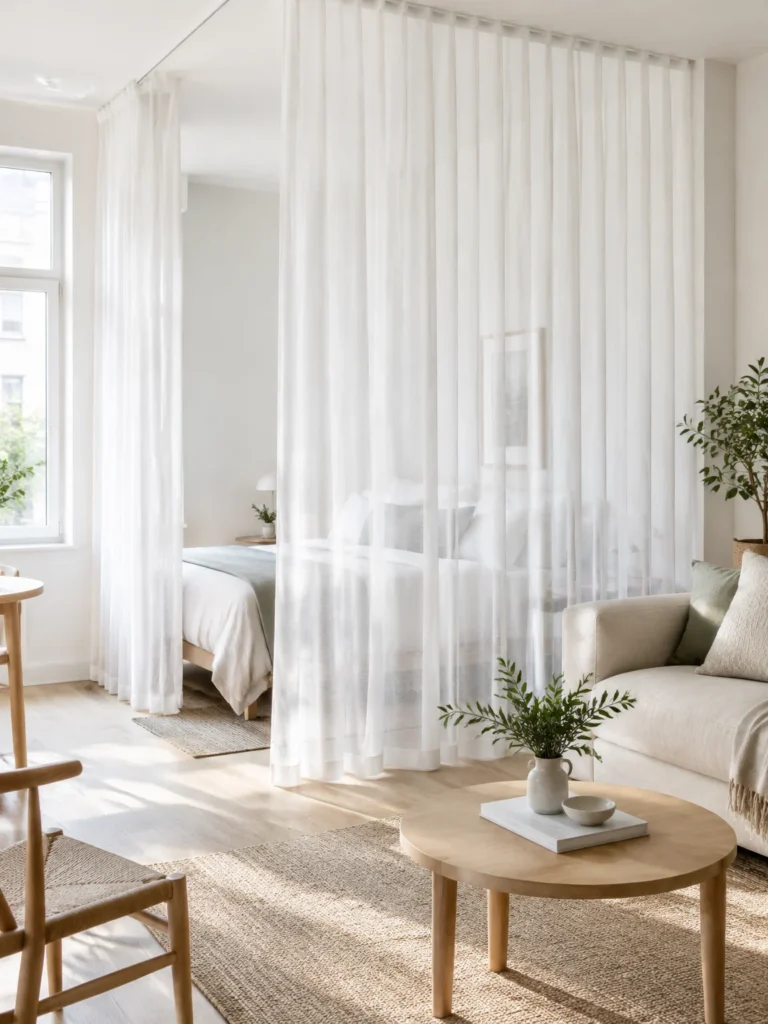
Best for: Soft, airy separation
Estimated cost: $80–$300
Space impact: Low
Renter-friendly: Depends on installation
Sheer panels create a gentle division without making a studio feel enclosed. They are especially useful when you want the sleeping area to feel separate while still allowing daylight to pass through.
White and light neutral fabrics suit many interiors, while subtle woven textures add depth. If you need more privacy at night, consider layering sheers with heavier curtains on the same track.
12. A Slatted Divider With Storage Nooks
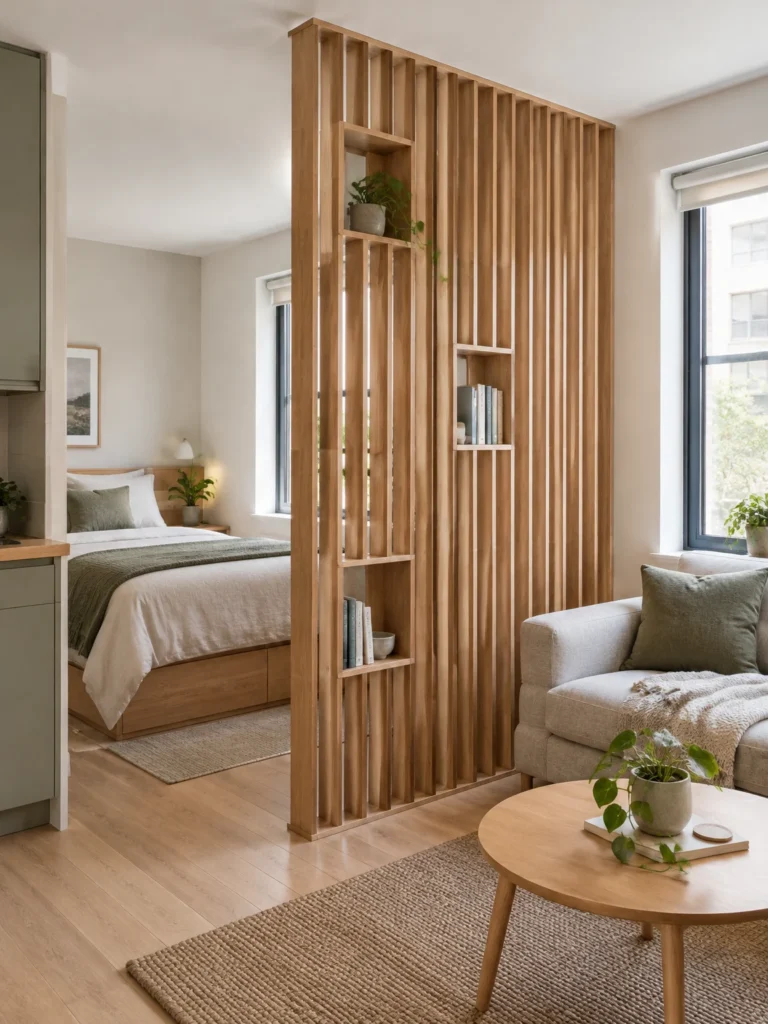
Best for: Combining design and function
Estimated cost: $300–$1,000
Space impact: Medium
Renter-friendly: Depends on installation
A divider that combines vertical slats with small shelving compartments provides separation and useful display space. It can frame a bed, define a workspace, or create a visual boundary near a dining area.
Keep the storage selective. A few books, a small plant, and one or two practical objects will look more intentional than filling every opening with accessories.
13. A Low Cabinet Room Divider
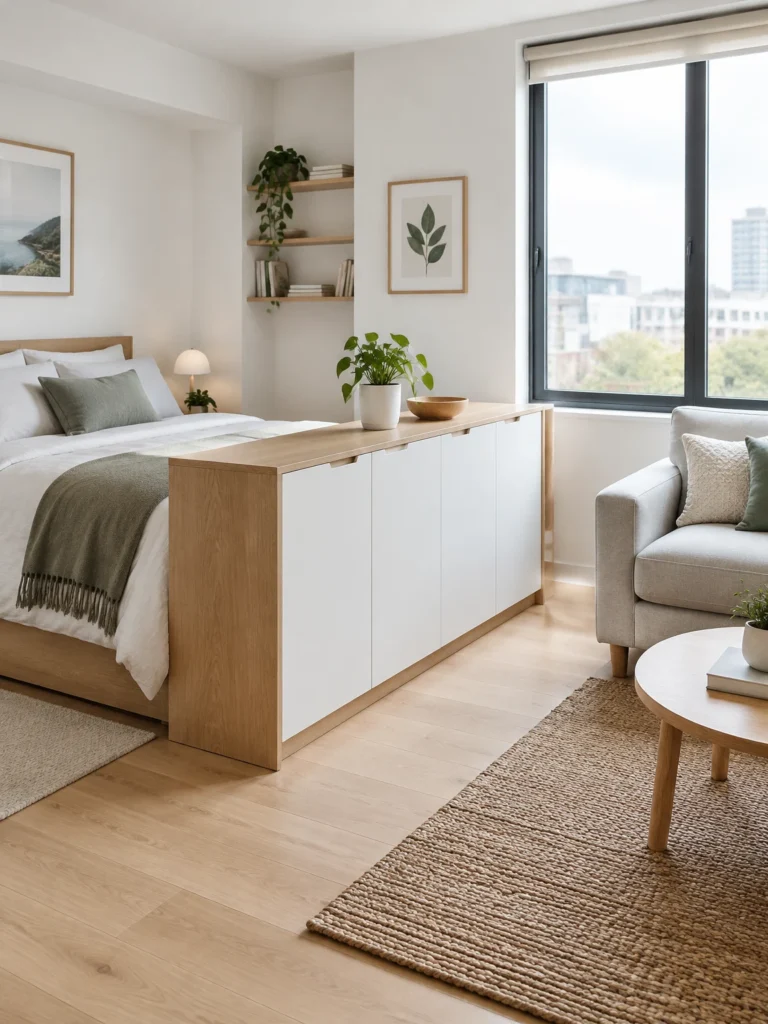
Best for: Concealed storage
Estimated cost: $200–$650
Space impact: Medium
Renter-friendly: Usually
A low cabinet separates two areas while keeping the view above it open. It is a practical option when your studio needs additional storage for clothing, linens, electronics, or household essentials.
Place it where it naturally supports the furniture layout rather than cutting across the main walkway. Matching its finish to the bed frame or living room furniture helps create a consistent look.
14. A Freestanding Wardrobe Divider
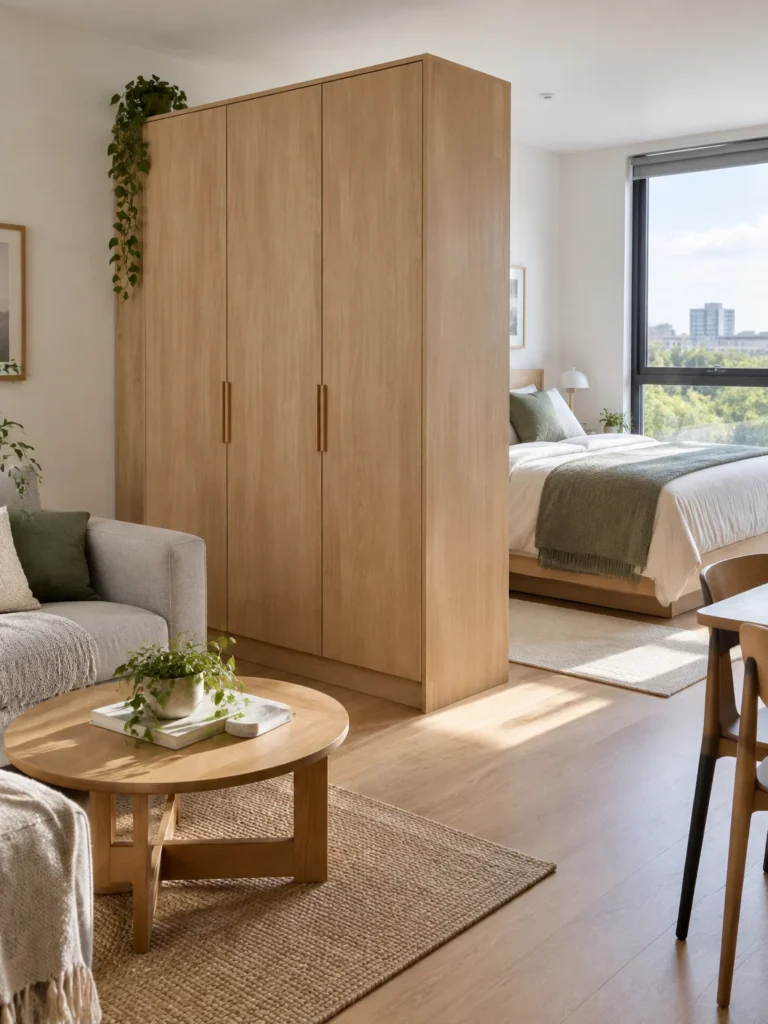
Best for: Bedroom privacy and extra clothing storage
Estimated cost: $250–$800
Space impact: High
Renter-friendly: Possible with careful placement
A wardrobe can create a substantial boundary around the sleeping area while solving a storage problem at the same time. This is particularly helpful in studios without a separate closet.
Choose a finish that complements the rest of the room, and measure carefully before placing a large unit away from a wall. Consider door clearance, ventilation, and access to the bedroom. Tall wardrobes should be secured according to the manufacturer’s instructions.
15. Japanese-Inspired Shoji Screens
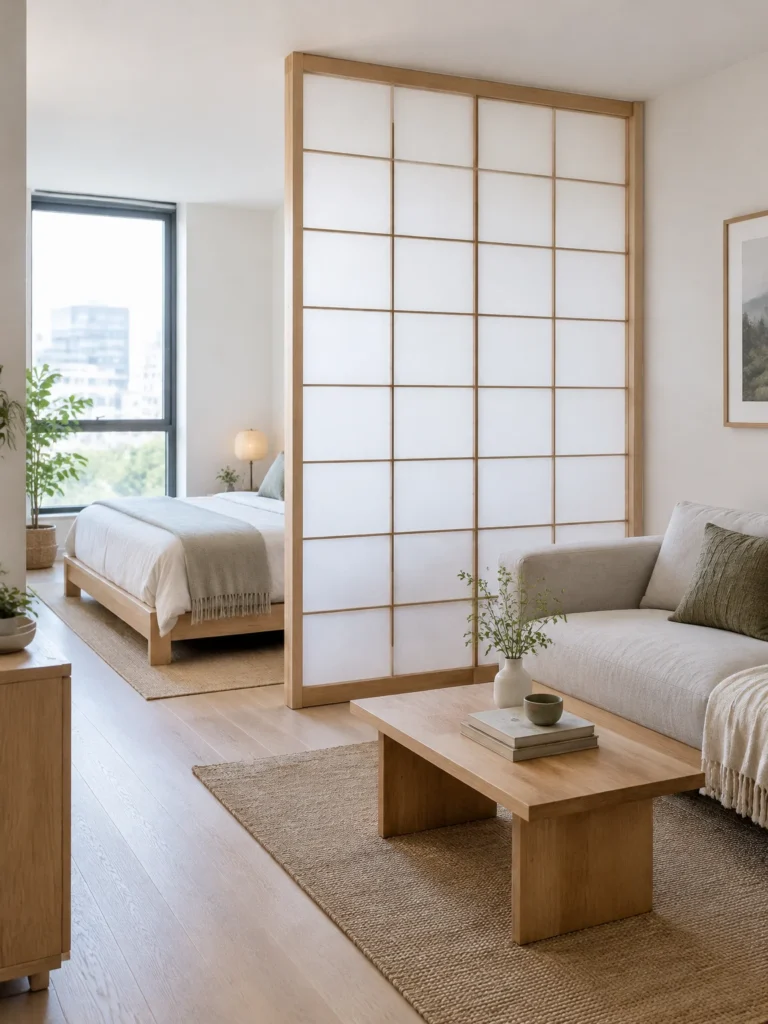
Best for: Calm, minimalist interiors
Estimated cost: $150–$600
Space impact: Low
Renter-friendly: High for freestanding versions
Shoji-inspired screens bring a quiet, understated character to a studio apartment. Their translucent panels soften the view between zones without creating the heaviness of a solid partition.
Pair them with simple furniture, natural wood, and restrained colors. A freestanding screen is especially useful for renters because it can be moved or repositioned as the layout changes.
16. A Rope or Wooden Bead Divider
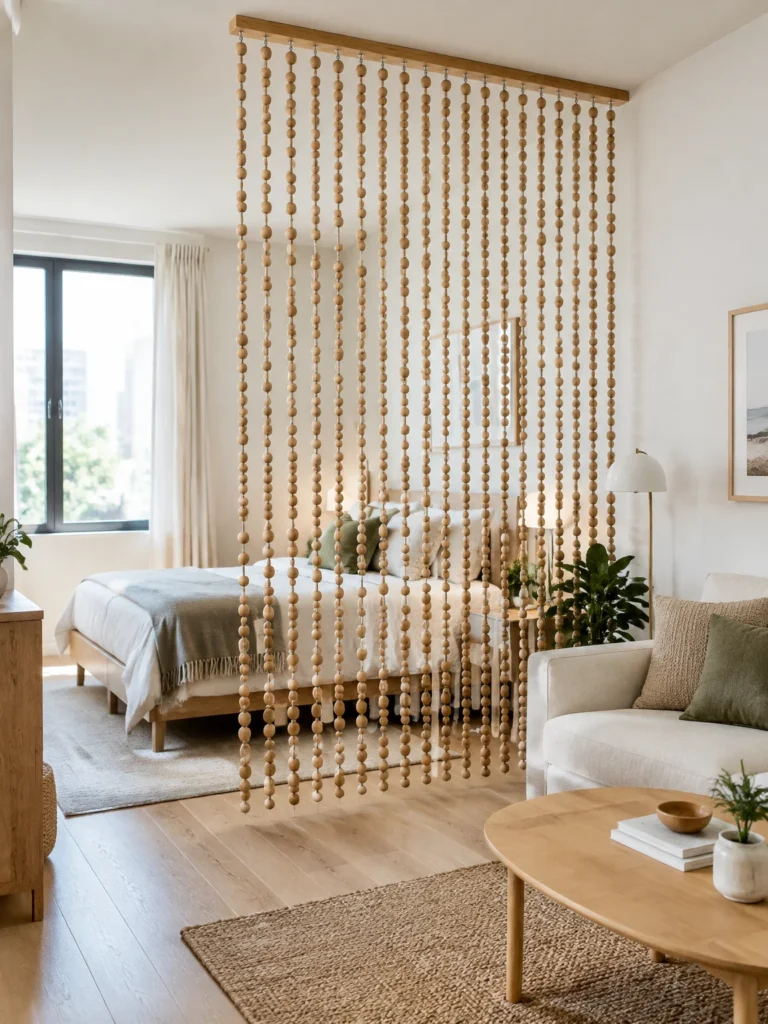
Best for: Decorative separation
Estimated cost: $50–$220
Space impact: Very low
Renter-friendly: Depends on installation
A rope or wooden bead divider introduces texture and movement while leaving the space visually open. It can mark the transition between a small entry area and the living room or create a subtle boundary around a sleeping nook.
This is primarily a decorative solution rather than a privacy screen. Choose a simple material and finish that complements the room, and avoid adding too many competing decorative details.
17. Modular Cube Storage
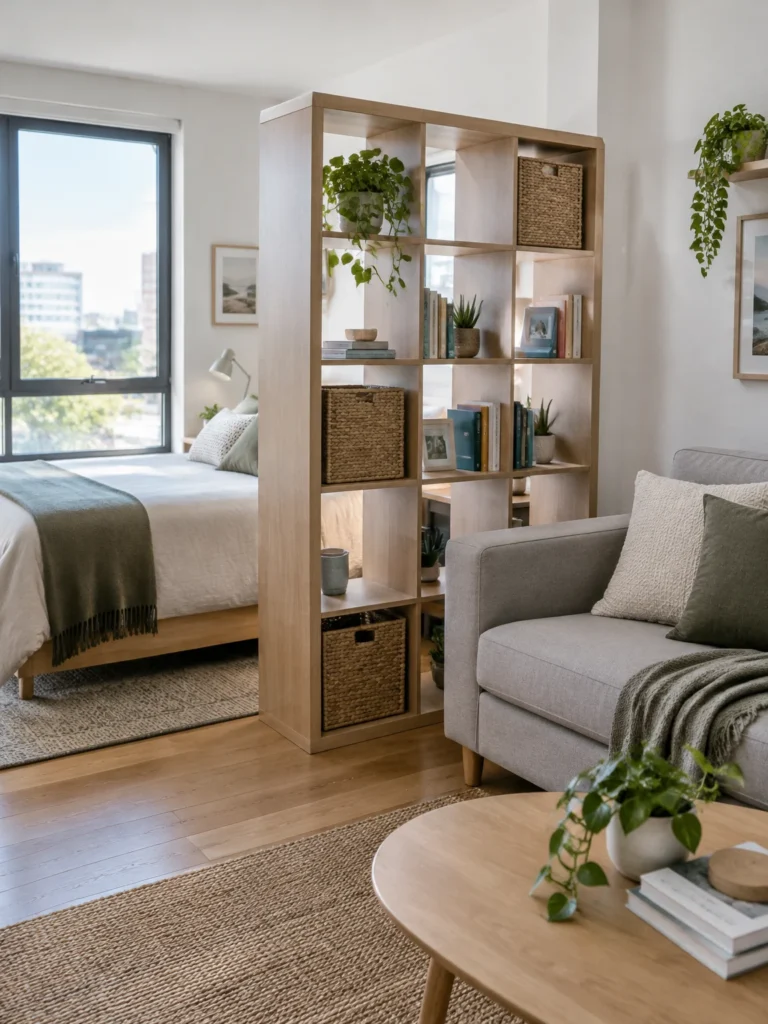
Best for: Flexible layouts and everyday organization
Estimated cost: $120–$500
Space impact: Medium
Renter-friendly: Usually
Modular cube units can be rearranged as your needs change. Use them to separate a workspace, display books, store baskets, or create a partial boundary beside the bed.
Open compartments keep the divider visually lighter, while baskets hide smaller items. Keep heavy objects low and secure the unit as recommended by the manufacturer.
18. A Curtain and Shelf Combination
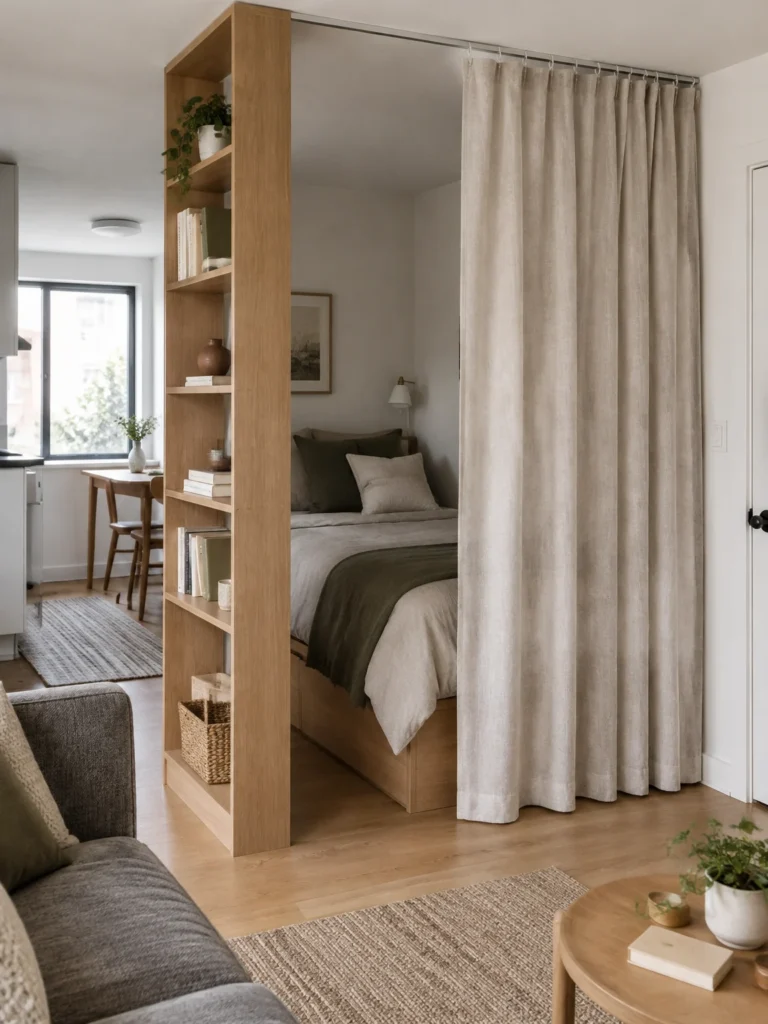
Best for: Privacy plus practical storage
Estimated cost: $100–$350
Space impact: Medium
Renter-friendly: Depends on installation
Combining a curtain with a narrow shelf gives you both a visual boundary and a place to store everyday essentials. The shelf defines the edge of the sleeping zone, while the curtain can be drawn when you want more privacy.
Choose a shallow shelf that will not interfere with movement around the bed. Coordinating the fabric and shelving finish helps the combination feel like one considered design.
19. A Tall Plant Divider
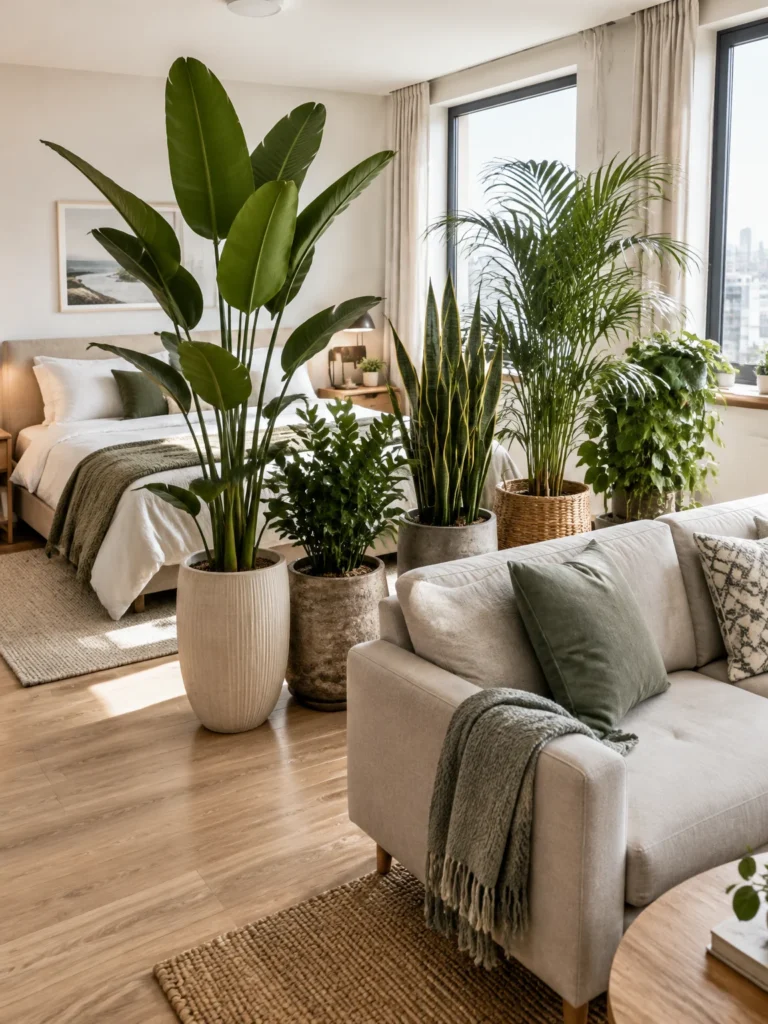
Best for: Natural texture and soft separation
Estimated cost: $80–$400
Space impact: Low to medium
Renter-friendly: High
A group of tall plants can create a relaxed boundary between the living and sleeping areas. Different leaf shapes and heights introduce texture without the solid appearance of a wall.
Select plants based on the light available in your apartment and the care you can provide. If the room receives limited daylight, choose suitable low-light varieties or use a thoughtful combination of real and artificial greenery.
20. Rolling Divider Panels
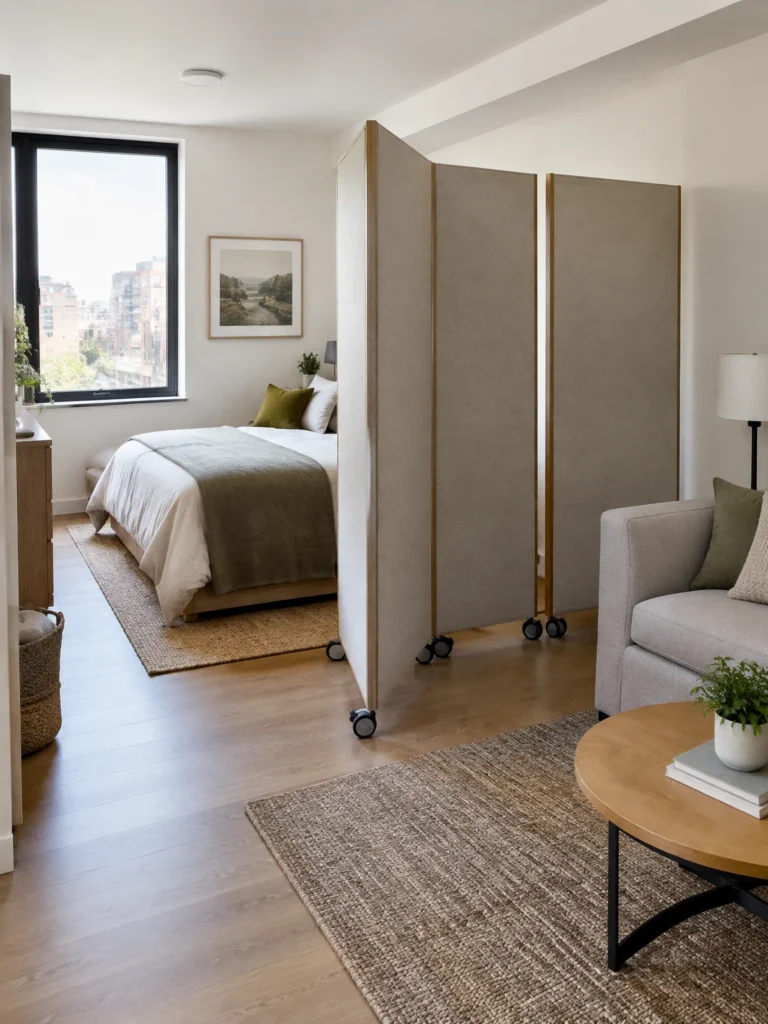
Best for: Spaces that change throughout the day
Estimated cost: $180–$650
Space impact: Low
Renter-friendly: High for freestanding models
Rolling panels are useful when your studio serves several purposes. You can screen a desk during a video call, conceal the bed when guests visit, or move the panels aside to open the room up again.
Choose a stable design with suitable locking wheels. Check that the panels can move safely without obstructing furniture, doorways, or the main circulation path.
21. A Statement Artwork Partition
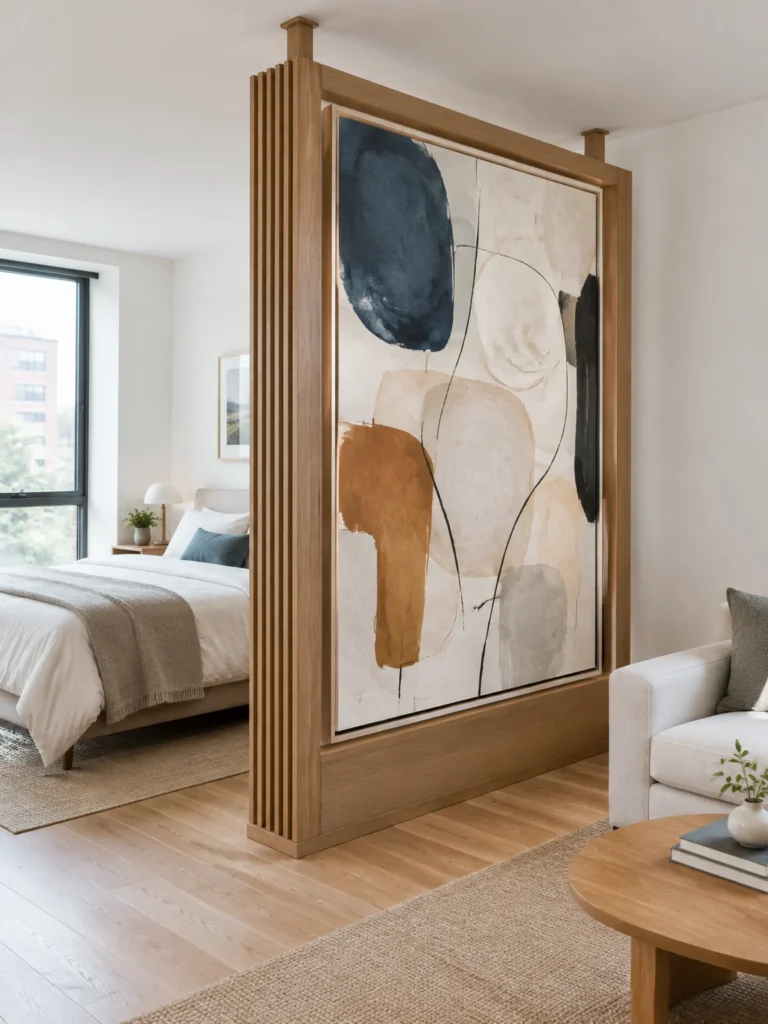
Best for: Adding personality to a simple studio
Estimated cost: $120–$500
Space impact: Low
Renter-friendly: High for freestanding designs
A freestanding artwork panel can separate two zones while acting as a focal point. This approach works particularly well when the furniture is simple and the apartment needs a stronger visual identity.
Choose a design that relates to the room’s colors and materials. One cohesive artwork panel often feels more deliberate than several unrelated decorative objects competing for attention.
Studio Apartment Layout Guide: Where Should the Divider Go?
The best divider depends on the shape of your apartment, the location of its windows, and the way you move through the space.
Long, Narrow Studio
Use a slim bookshelf, a curtain, or a vertical slat divider to define separate areas without creating a bottleneck. Keep the main walkway clear from the entrance toward the window.
Square Studio
Use the bed, sofa, and a low cabinet to establish distinct zones. A rug beneath the living room furniture can help separate the lounge from the sleeping area without introducing another physical barrier.
Studio With a Large Window
Protect the path of natural light. Open shelving, translucent panels, and sheer curtains are generally better choices than a solid partition placed directly across the room.
Studio With a Kitchenette Facing the Living Area
A low cabinet, narrow console, or compact island can establish a boundary between cooking and relaxing. Leave enough room to move safely around the kitchen and access appliances.
Studio With an Entry Area
A slim bookcase, coat-storage unit, or folding screen can create a small foyer. This gives the apartment a more organized entrance without requiring a separate hallway.
Renter-Friendly Studio Separation Tips
Start With Freestanding Solutions
Screens, modular shelving, and furniture-based dividers are easy to reposition. They are a sensible starting point if you are still deciding which layout works best.
Check Before Mounting Anything
Tension rods, adhesive products, and removable tracks have specific weight and installation limits. Check the manufacturer’s instructions and your rental agreement before installing them. Removable does not automatically mean damage-free.
Preserve Light and Airflow
Avoid blocking essential ventilation, windows, heating equipment, or exits. Leave enough space around furniture for comfortable movement and make sure your divider does not create a narrow passage.
Make the Divider Part of the Design
Repeat a material, color, or finish elsewhere in the room. For example, a wood-slat divider can relate to the coffee table, while curtain panels can complement the bedding. These connections help the apartment feel cohesive.
Common Studio Apartment Separation Mistakes
Blocking the Main Source of Natural Light
A tall, opaque divider near the only window can make the apartment feel darker. Consider open shelving or a translucent screen before committing to a solid partition.
Choosing a Divider That Is Too Large
A divider that occupies too much floor space can make a compact studio difficult to navigate. Measure the room and test the proposed placement before buying furniture.
Creating Too Many Separate Zones
A studio still needs to feel like one home. Dividing every activity with its own screen or shelf can make the room look fragmented. Focus on the areas that genuinely need definition.
Ignoring Walking Routes
Leave enough room to reach the bed, kitchen, bathroom, and windows comfortably. A beautiful divider is not useful if it makes everyday movement awkward.
Mixing Too Many Materials
Wood slats, patterned curtains, open shelving, and decorative screens can all look attractive individually. Used together without a consistent plan, however, they can create visual clutter. Choose one main divider and let the other elements support it.
Frequently Asked Questions
How can I separate a studio apartment on a small budget?
Start with curtains, a folding screen, or furniture you already own. A rug and a carefully positioned sofa can also establish distinct areas without the expense of a permanent partition.
What is the best way to separate a bed from the living room?
Floor-to-ceiling curtains offer flexible privacy, while a bookshelf or wardrobe creates a more substantial boundary. The best option depends on your floor space, lighting, and storage needs.
How can I divide a studio without blocking natural light?
Consider open shelving, vertical slats, glass panels, or sheer curtains. These options create a visual distinction while allowing some light to pass between zones.
Are room dividers suitable for rental apartments?
Many freestanding options are suitable for rentals because they do not require permanent construction. Mounted tracks, tension rods, and adhesive fixtures must still be chosen and installed according to their specific requirements.
How do I make a studio apartment look more expensive?
Focus on proportion, consistent materials, layered lighting, and a clear furniture layout. Well-fitted curtains, a thoughtfully positioned bookshelf, and a cohesive color palette can make a bigger difference than adding several decorative dividers.
Final Thoughts
A studio apartment can feel organized and sophisticated without being divided into a series of small rooms. The most successful layouts use separation only where it improves privacy, storage, or the way the space functions.
Start with the biggest problem in your current layout. If the bed feels too exposed, try curtains or a screen. If storage is the main issue, consider open shelving or a low cabinet. If the apartment feels dark, choose a divider that allows light to pass through.
With a clear plan and a few well-chosen elements, one open room can support sleeping, relaxing, working, and entertaining while still feeling connected, comfortable, and beautifully put together.