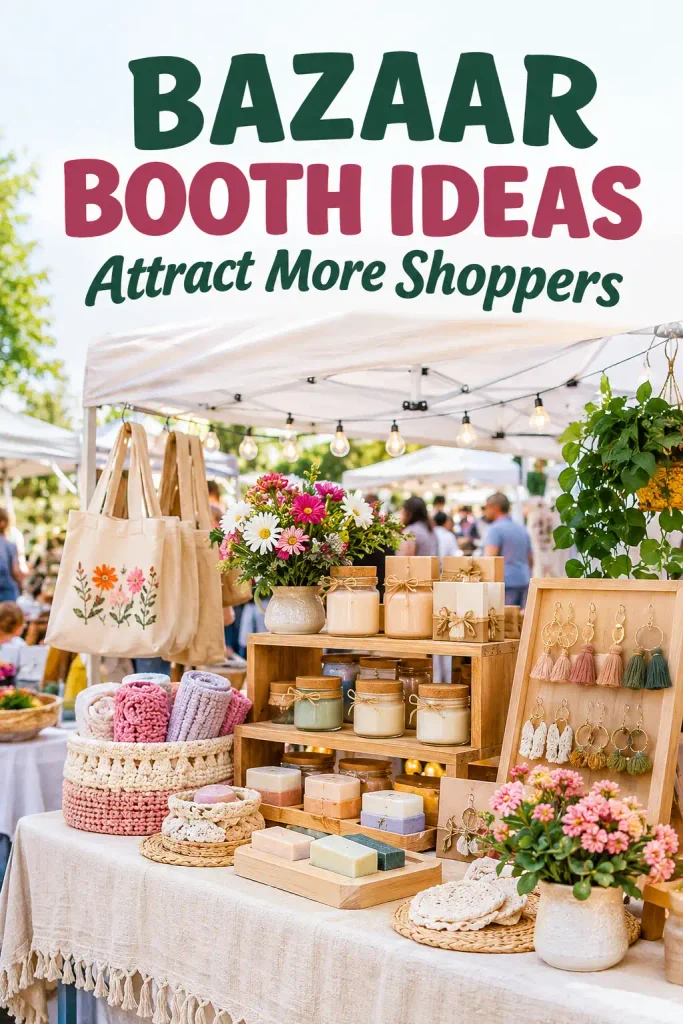
A busy bazaar can be an exciting opportunity for small business owners, handmade sellers, and creative entrepreneurs. But when dozens of vendors compete for attention, having great products isn’t always enough. Your booth needs to make people curious, encourage them to stop, and give them a reason to buy.
The best bazaar booth ideas combine an eye-catching display with a comfortable shopping experience. From clever product arrangements to simple lighting upgrades and creative signage, small changes can make your space feel more inviting without stretching your budget.
Whether you’re preparing for a local market, a seasonal fair, or a weekend shopping event, these ideas will help you create a booth that stands out and makes every square foot count.
1. Design a Booth That Tells a Story
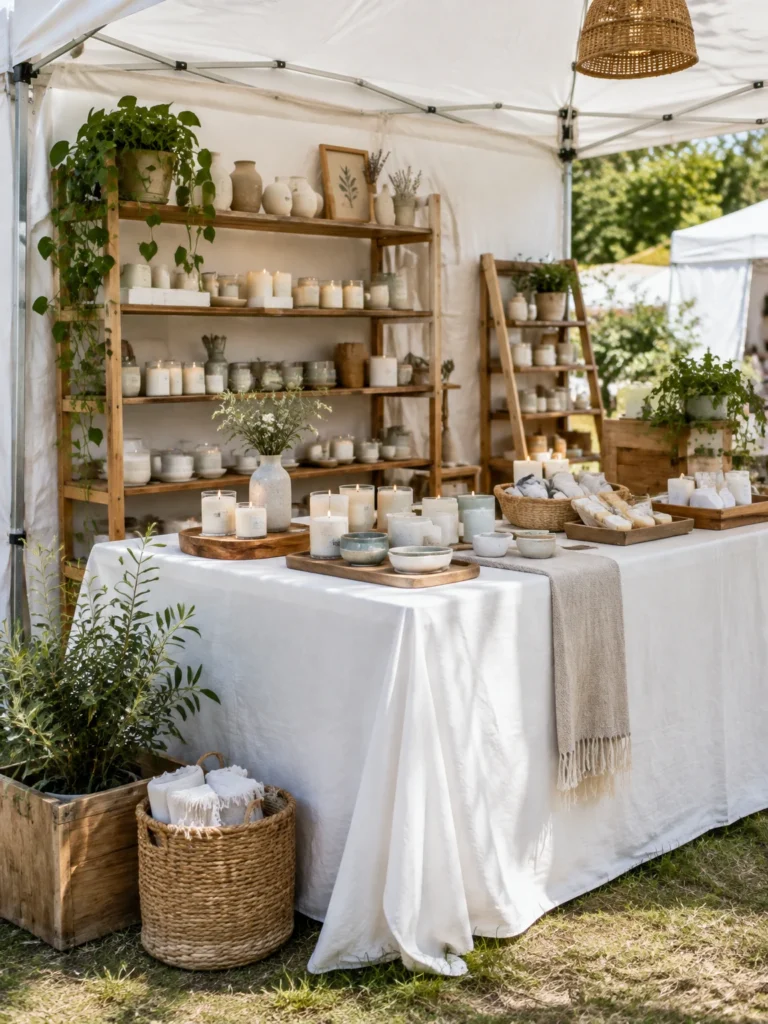
Instead of thinking of your booth as a table filled with products, imagine it as a small storefront. Your display should communicate what your business sells and what makes your products special before a shopper even steps closer.
Start with one clear theme that reflects your products. A handmade jewelry business might use natural wood, linen, and warm lighting, while a colorful gift shop could feature bright displays and playful packaging.
Choose a few props that support your theme, but make sure they don’t compete with the products themselves. A small stack of vintage books, a simple vase, or a wooden riser can add character without creating clutter.
The goal is to help visitors understand your brand at a glance. When your booth feels intentional, shoppers have an easier time noticing individual products and remembering your business.
2. Make the Most of a Small Booth Space
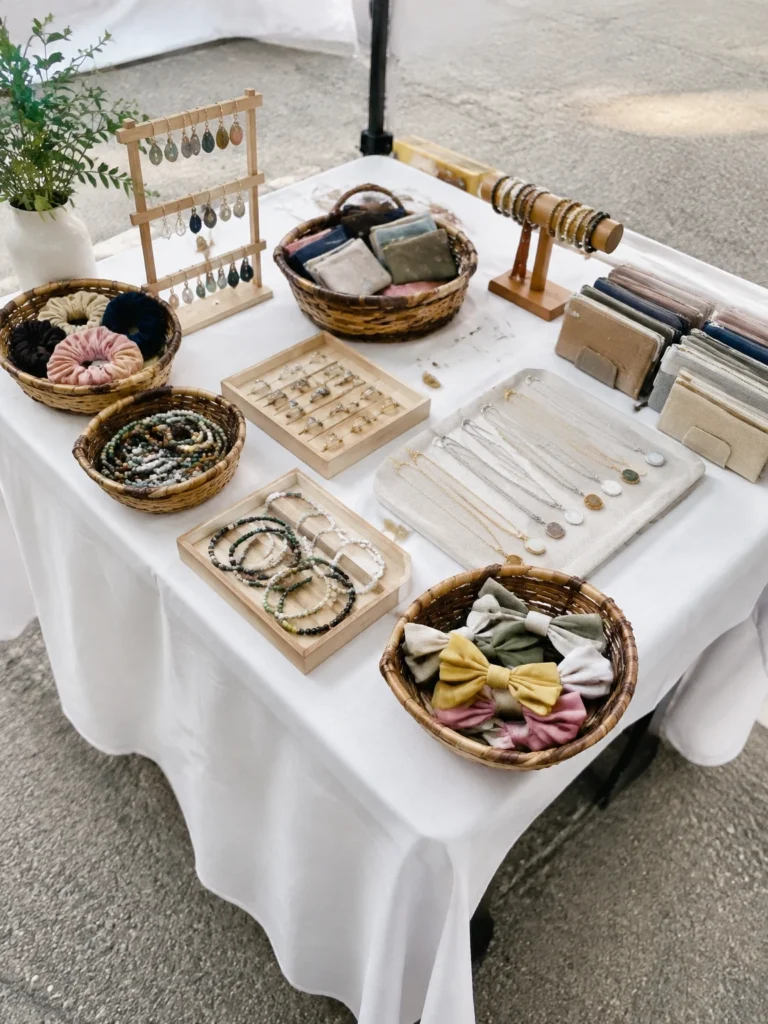
A small booth doesn’t have to look crowded or limited. With a thoughtful arrangement, even a single table can accommodate a variety of products while leaving enough room for customers to browse.
Begin by grouping similar items together. Keep related products in clearly defined sections instead of spreading them across the entire table. For example, a gift vendor could create separate areas for candles, stationery, and ready-to-give gift sets.
Use trays, shallow baskets, and compact organizers to keep smaller items under control. Leave some open space between groups so the display feels organized rather than packed.
Also, consider how shoppers will approach your booth. Keep the most important products visible from the front and avoid placing large signs or tall decorations where they block the view.
A well-organized space makes it easier for customers to explore without feeling that they need to move things around just to see what’s available.
3. Build Height Into Your Product Display
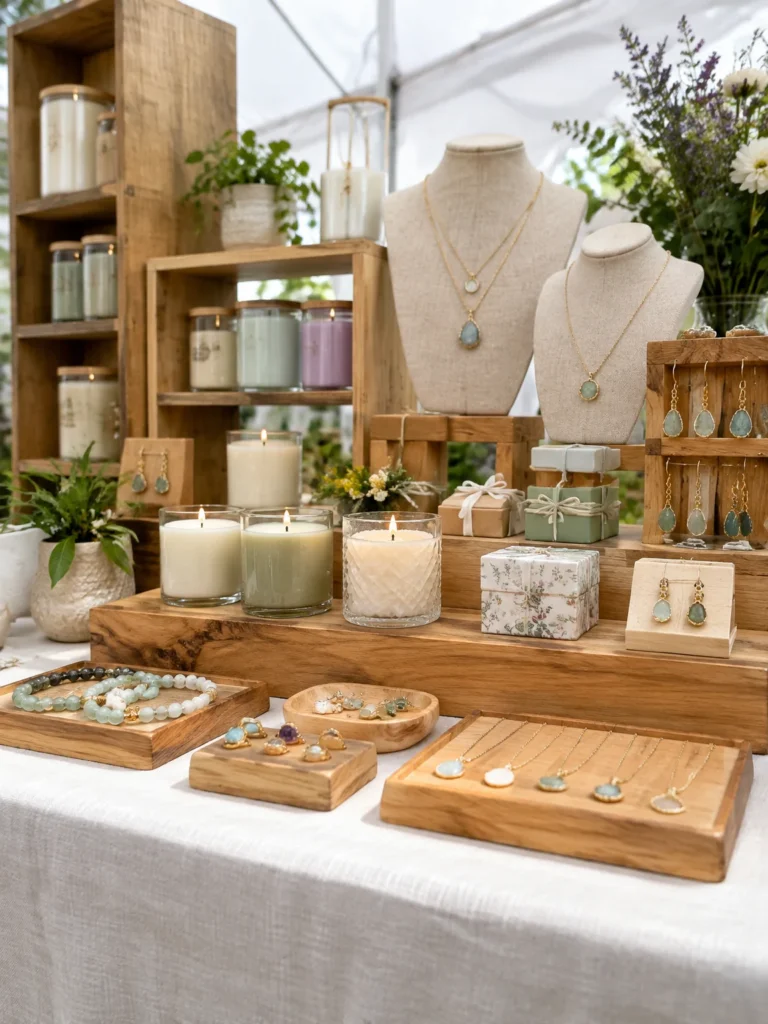
Flat displays can make products disappear into a sea of tables at a busy market. Adding different heights helps create visual interest and makes more of your merchandise visible.
Try using wooden display blocks, tiered stands, sturdy crates, or compact shelving. These pieces can bring smaller products closer to eye level and give each product group its own space.
For example, a candle seller might place larger jars on a low riser, arrange smaller tins on a tray, and display gift boxes on a shelf behind them. A jewelry vendor could use necklace stands and earring boards to create a layered presentation.
Keep taller items toward the back or sides, and leave the front area relatively open for easy browsing.
Before the event, test your setup from several steps away. If your products are difficult to distinguish from a distance, adjust the height and spacing until the main items stand out.
4. Choose Colors That Make Your Products Stand Out

Your booth’s color palette can influence how cohesive and memorable the display feels. Rather than using every color available, choose two or three complementary shades and repeat them across your table covering, signs, display props, and packaging.
Here are a few combinations worth considering:
- Natural and rustic: Warm wood, muted green, and soft white work well for handmade goods, botanical products, and natural home accessories.
- Modern and minimal: Black, white, and one bold accent color create a clean setting for contemporary gifts, art prints, and accessories.
- Warm and playful: Coral, sky blue, and sunny yellow can bring energy to stationery, children’s gifts, and colorful handmade items.
- Elegant and understated: Deep green, warm ivory, and subtle gold accents can complement premium-looking gifts and jewelry.
Your products should remain the stars of the display. If they already feature many strong colors or patterns, keep the surrounding décor relatively simple.
A consistent palette also helps shoppers recognize your booth in photographs and remember your brand after the event.
5. Put Your Best Products Where People Can See Them
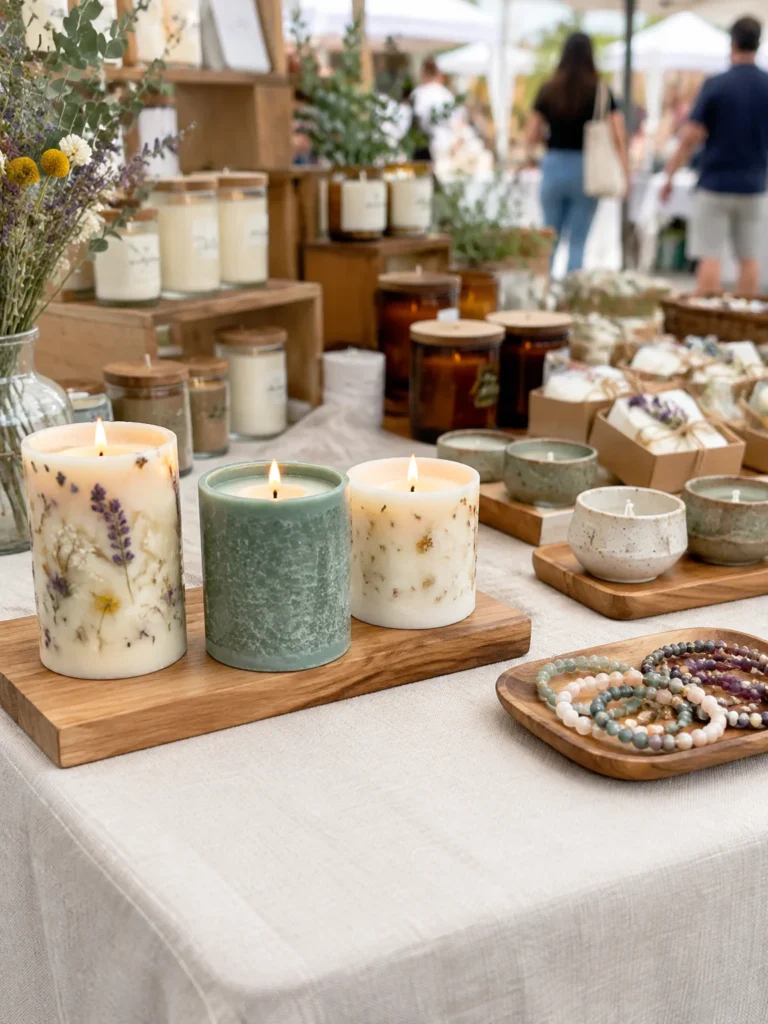
The front of your booth is valuable space. Use it to introduce visitors to the products that best represent your business or are easiest for new customers to understand.
Rather than displaying everything at once, select a few standout pieces and give them enough room to attract attention. A distinctive handmade item, a popular gift set, or a product available at an accessible price can make a useful starting point for browsing.
If you sell several product variations, display a representative selection and keep additional stock neatly stored nearby. This gives shoppers a clear view of their options without overwhelming them.
You can also create a small section for gifts under a specific price, such as “Gifts Under $20,” provided the products genuinely fit that range. Simple groupings like these help customers shop according to their needs and budgets.
Rotate featured products during the event if certain areas become empty or another item attracts more interest. A display that stays neat and well stocked looks more inviting throughout the day.
6. Use Clear Signs That Answer Common Questions
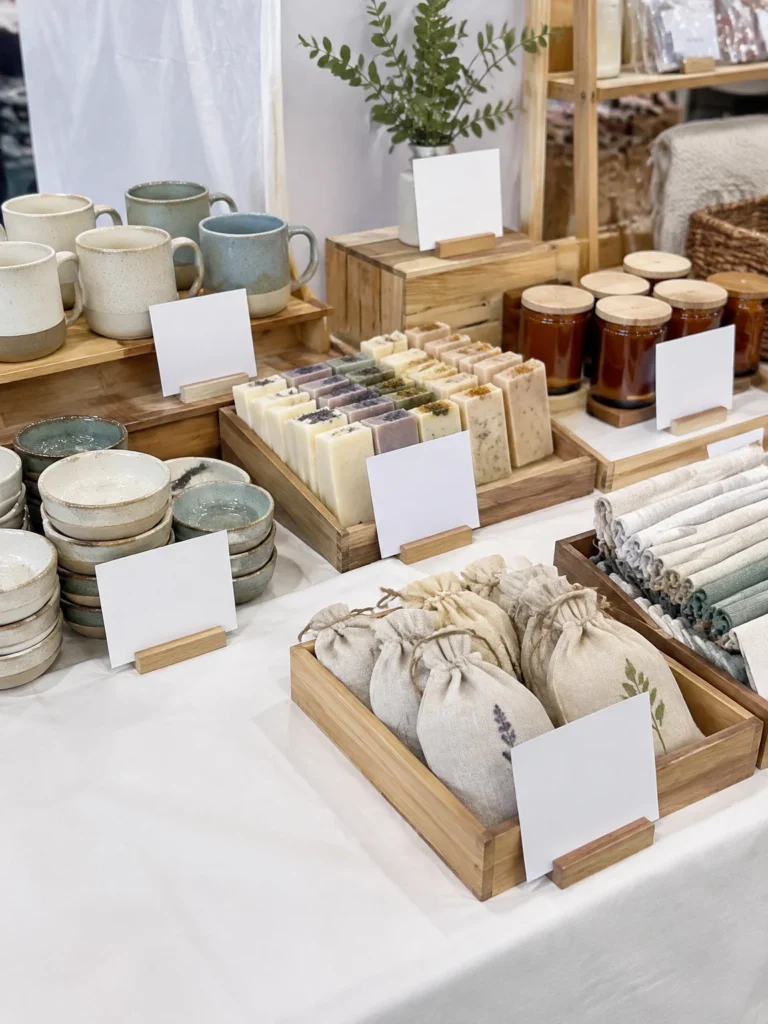
Good signage makes shopping easier. Visitors shouldn’t have to ask about every price, product type, or available option before deciding whether something interests them.
Your booth should have a clearly visible business name and simple signs that identify important product categories. Place prices close to the products they describe, using lettering large enough to read without picking up the item.
You might also include brief information that helps shoppers make decisions, such as material details, available scents, personalization options, or what comes inside a gift set.
Keep the wording short and specific. A sign that says “Hand-Poured Soy Candles” gives shoppers more information than a decorative sign that simply says “Welcome.”
If you offer a genuine bundle price or event-only promotion, make the terms easy to understand. Clear signage reduces uncertainty and lets you spend less time answering the same questions.
7. Create a Display That Shows Products in Use
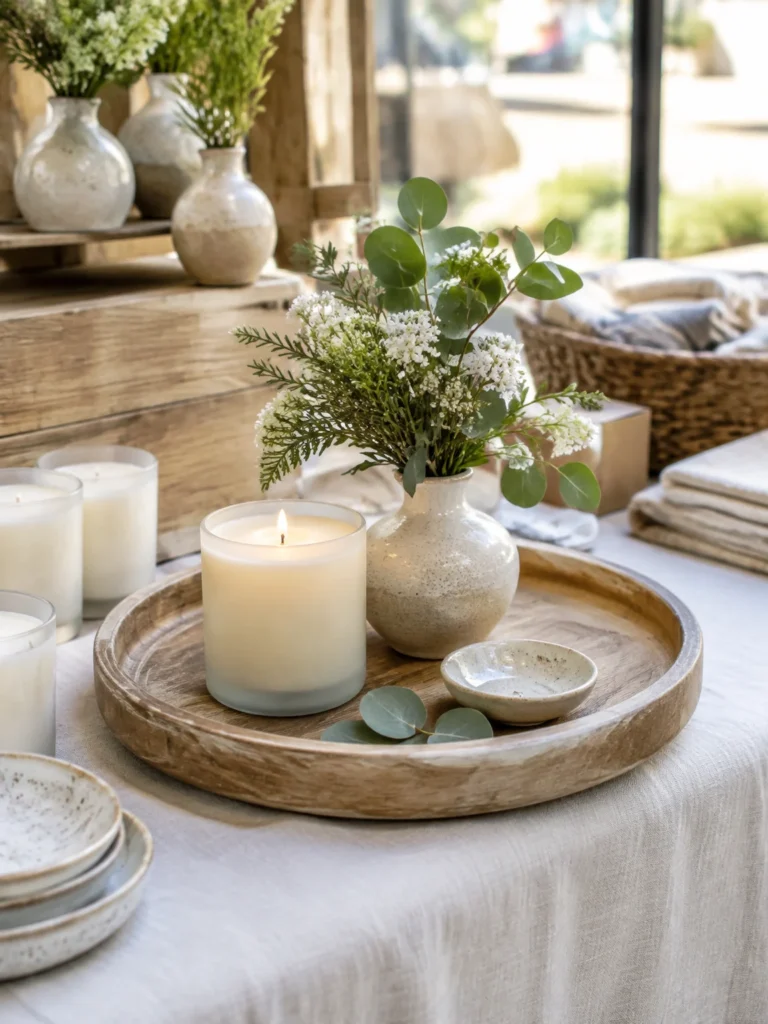
Shoppers often understand a product’s appeal more quickly when they can imagine how it fits into their own lives. That’s why lifestyle-inspired displays can work especially well for home décor, accessories, gifts, and handmade products.
Instead of arranging every item in a straight row, create one small, realistic scene.
A home décor seller might style a decorative tray with a candle and a small vase. A tote bag vendor could display a bag on a hook with a few everyday essentials nearby. A stationery business might arrange a notebook, matching pen, and greeting card together as a ready-to-gift set.
Keep these arrangements practical and easy to recreate. Decorative objects should support the products rather than take up so much space that customers can’t see what you’re selling.
A well-styled display can also give visitors ideas for using the products, making it easier for them to imagine a purchase for themselves or someone else.
8. Add Lighting That Highlights Important Details

Lighting can make a noticeable difference, particularly at indoor markets, evening events, or venues with uneven overhead lighting.
Small rechargeable LED lamps or portable spotlights can highlight jewelry, artwork, glassware, and other products with details that may be difficult to see in dim conditions. Battery-powered string lights can add atmosphere to a suitable booth without requiring access to an electrical outlet.
Position lights carefully to reveal product colors and textures without producing harsh glare. Reflective materials, glass, and glossy packaging may need a little adjustment to prevent distracting reflections.
For a daytime outdoor market, prioritize shade and protection from direct sunlight as well as visibility. Strong sunlight can make signs difficult to read and may affect products that are sensitive to heat.
Check the event’s rules before bringing electrical equipment, hanging decorations, or lighting that requires a power connection. A simple lighting setup is usually easier to manage than one with multiple cables and fixtures.
9. Give Visitors a Reason to Interact
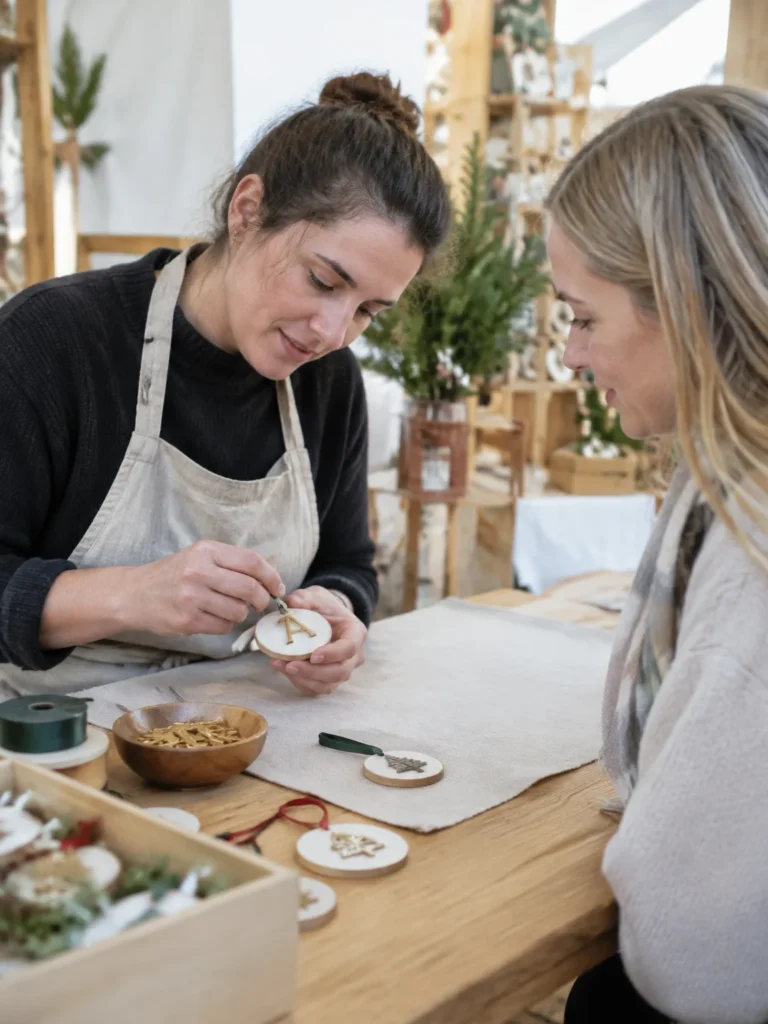
A booth becomes more engaging when shoppers can do something beyond looking at the display. An appropriate hands-on experience can help visitors understand your products and make the interaction feel more personal.
Consider adding an activity that naturally fits your business:
- Product samples: Let visitors taste approved food samples or try suitable beauty and personal-care products where permitted.
- Personalization: Offer a choice of colors, initials, gift messages, or other custom details when your products support them.
- Live demonstrations: Show how a product is made, assembled, packaged, or used.
- Gift-building station: Allow customers to combine a few items into a personalized gift set.
- Small giveaway: Offer a simple branded item or run a clearly explained promotion, subject to the event’s rules.
You don’t need an elaborate activity to make your booth memorable. A short demonstration or a chance to personalize an item may be enough to start a conversation.
Choose an activity you can manage while serving customers. If it requires too much space, equipment, or preparation, it may distract you from the main purpose of the booth.
10. Make Gift Shopping Easy
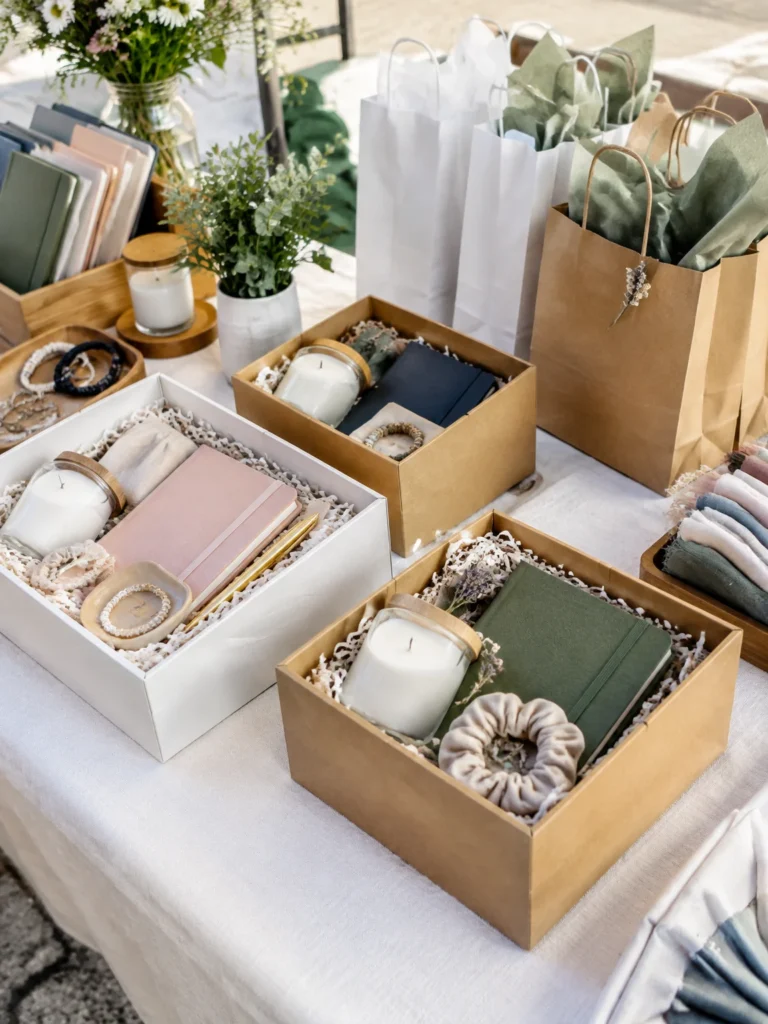
Many bazaar visitors are looking for birthdays, holidays, thank-you gifts, or small surprises for friends and family. Help them find suitable options without making them search through your entire display.
Create a dedicated gift section with products grouped by price, recipient, or occasion. For example, you could feature small thank-you gifts, gifts for teachers, or ready-made gift sets.
Pair complementary items when the combination makes sense. A notebook and pen, a candle and candle accessory, or a handmade item with matching packaging can become a convenient gift option.
Display the contents and price of each bundle clearly. If shoppers can choose their own combinations, provide a simple menu explaining the available options.
Have gift bags, tissue paper, or wrapping materials ready for purchases. Even basic packaging can make a product feel more suitable for gifting and save customers an extra step after leaving your booth.
11. Keep Checkout Simple and Professional
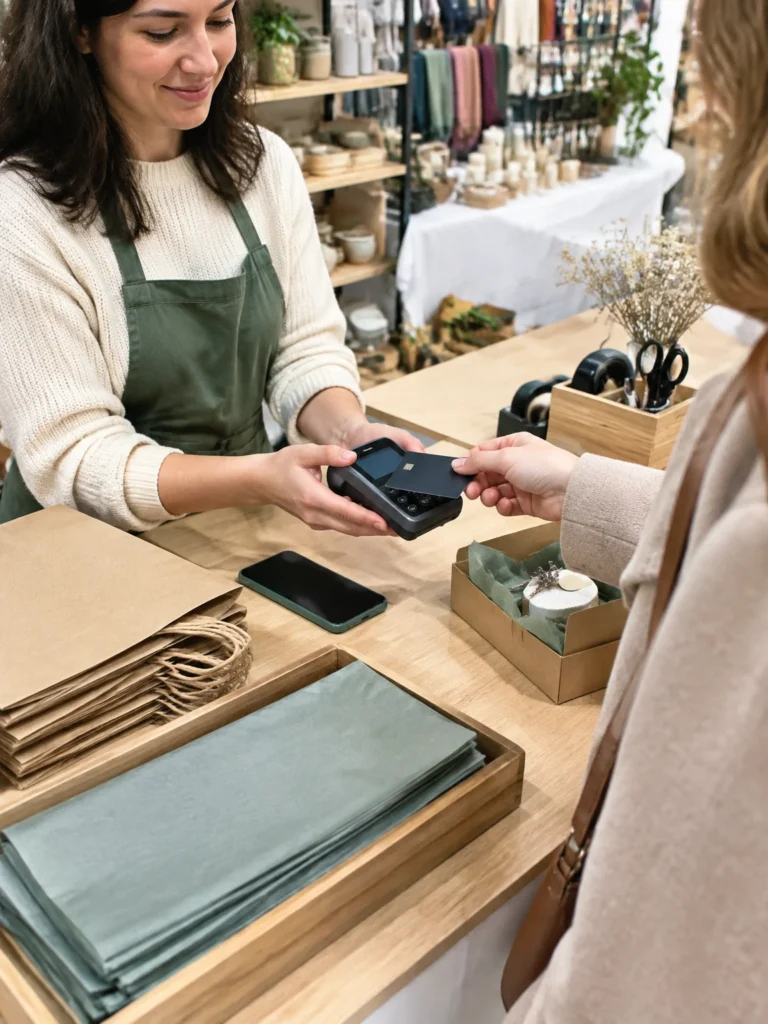
An attractive display can bring people to your booth, but the final purchase should be just as easy as browsing.
Set aside a small checkout area where you can process payments, pack purchases, and answer final questions without disturbing the rest of the display.
Prepare the essentials before the event begins. Depending on the payment options you accept, this may include a charged card reader, a phone with reliable connectivity, a cash float, and clearly displayed payment information.
Keep shopping bags, tissue paper, receipts, and business cards within reach. Store additional supplies underneath the table or in a concealed organizer to prevent the checkout area from becoming cluttered.
If possible, position checkout to one side rather than directly in front of your main products. This helps separate customers who are paying from visitors who are still browsing.
A calm, organized checkout makes the experience feel professional and gives customers a positive final impression of your business.
12. Turn One-Time Visitors Into Future Customers
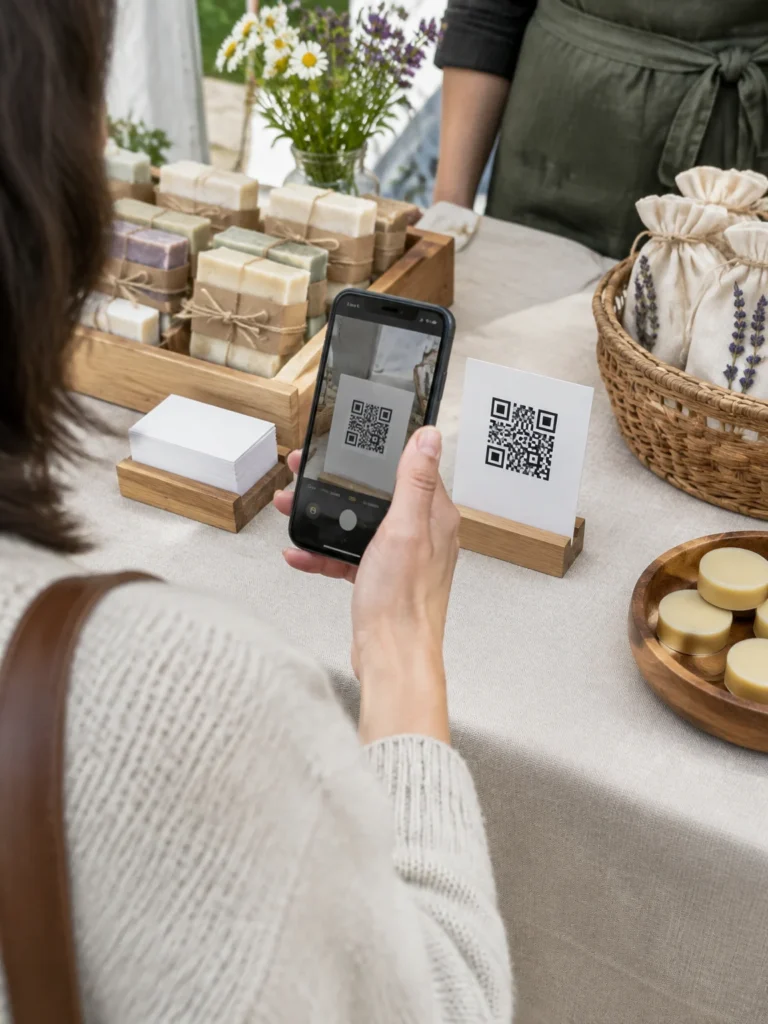
A bazaar can be more than a single day’s sales opportunity. It’s also a chance to introduce people to your brand and make it easier for them to find you again.
Place a small QR code near checkout that links directly to your website, online store, or social media profile. Add a short explanation so visitors know what they’ll find when they scan it, such as new product releases, upcoming market dates, or additional designs.
You can also include a business card or a thank-you insert with purchases. Keep the information simple: your business name, a way to contact you, and a relevant online destination.
If you photograph your booth during the event, ask permission before including identifiable visitors in your content. Product-focused photos can still help you share the atmosphere, show your display, and promote future events.
Make sure any discount or follow-up offer is genuine and easy to understand. The aim is to build a useful connection with interested customers, not simply collect contact details.
13. Refresh Your Booth Throughout the Event
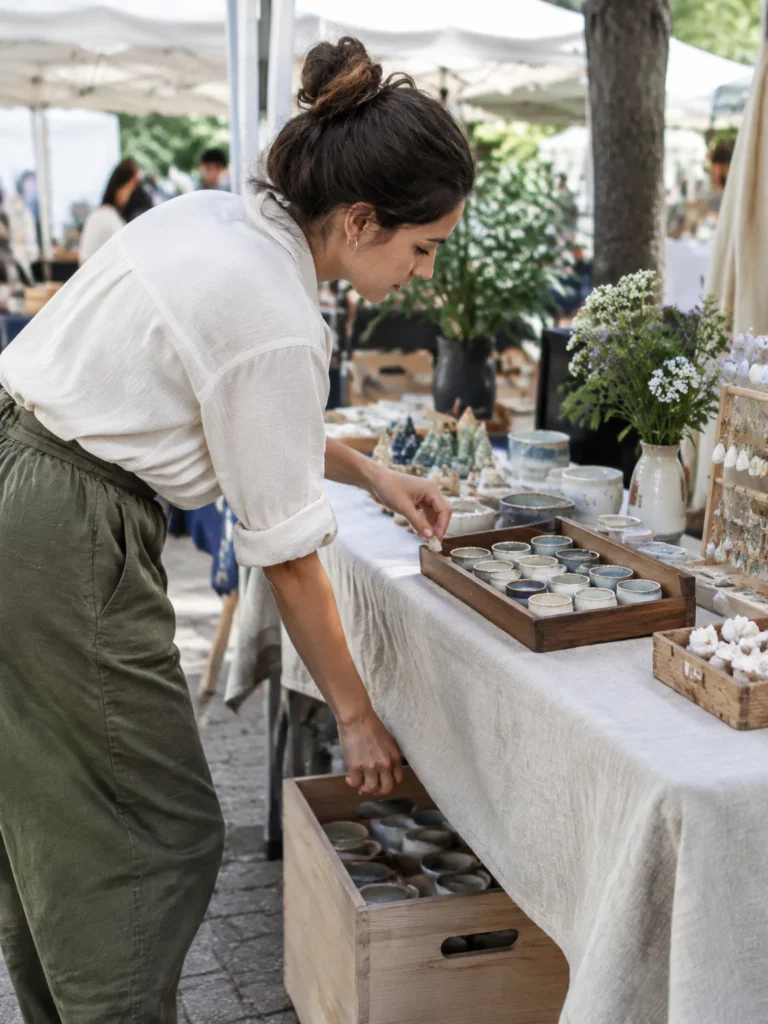
Even a carefully planned setup can become disorganized after several hours of shopping. Products get moved, packaging runs low, and popular items may leave empty spaces on the table.
Schedule quick checks throughout the day. Straighten displays, return misplaced products to their sections, remove rubbish, and refill areas where stock is available.
Keep backup inventory and extra supplies close enough to reach, but out of sight where possible. This allows you to replenish the booth without turning the customer-facing area into a storage space.
Pay attention to the products people stop to examine, the questions they ask, and the items they purchase. These observations can help you decide what to feature more prominently during the event and what to change for the next one.
You don’t have to redesign the whole booth in response to every quiet period. Often, a few small adjustments are enough to keep the display looking fresh and easy to shop.
Final Thoughts
The most effective bazaar booth ideas aren’t necessarily the most expensive or complicated. A clear layout, an attractive product display, consistent colors, readable signs, and an easy checkout can do a great deal to improve the shopping experience.
Start with the changes that matter most for your products and your available space. Give your best items room to stand out, make prices easy to find, and consider one simple way to help visitors interact with your business.
Most importantly, treat every bazaar as an opportunity to learn. Notice what attracts attention, which products generate questions, and what customers respond to positively. With a little planning and a willingness to improve, you can build a booth that represents your brand well, welcomes more shoppers, and creates better opportunities for sales.