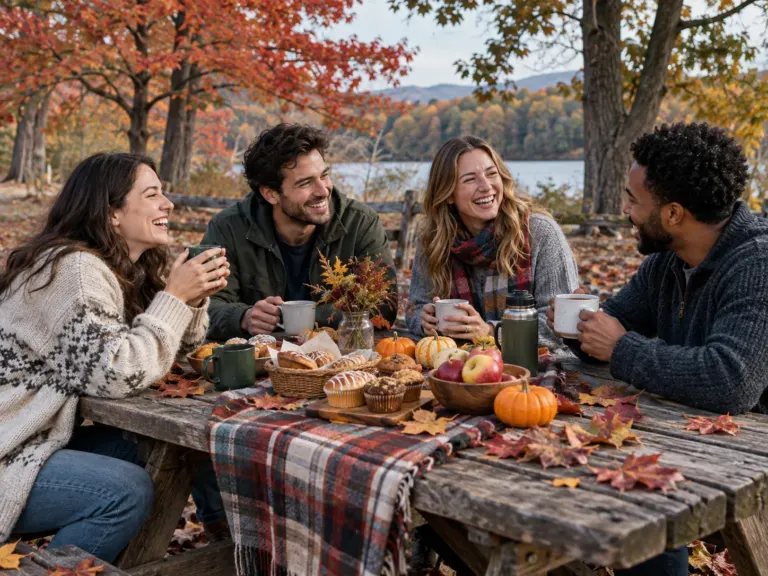
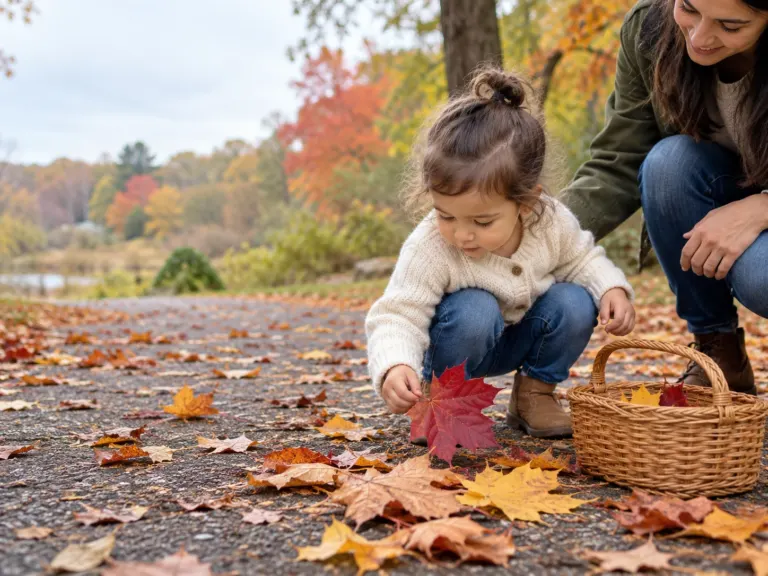
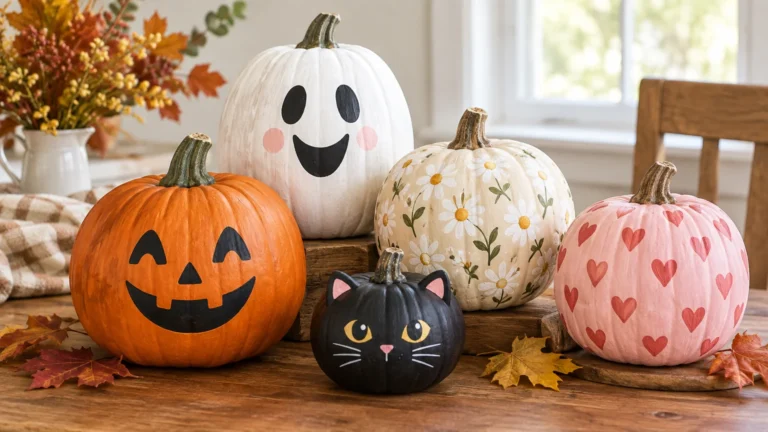
Fall activities for seniors don’t need to involve long walks, crowded festivals, or complicated projects. A short scenic drive, a batch of apple cookies, or an afternoon painting small pumpkins can bring the season into an ordinary day. The challenge is finding activities that suit different energy levels, mobility needs, and interests without creating extra work. These 20 fall activities for seniors include practical ideas for home, outdoor outings, family visits, and senior living communities, with adaptations that make participation easier.
Outdoor Fall Activities for Seniors
1. Take a Gentle Nature Walk
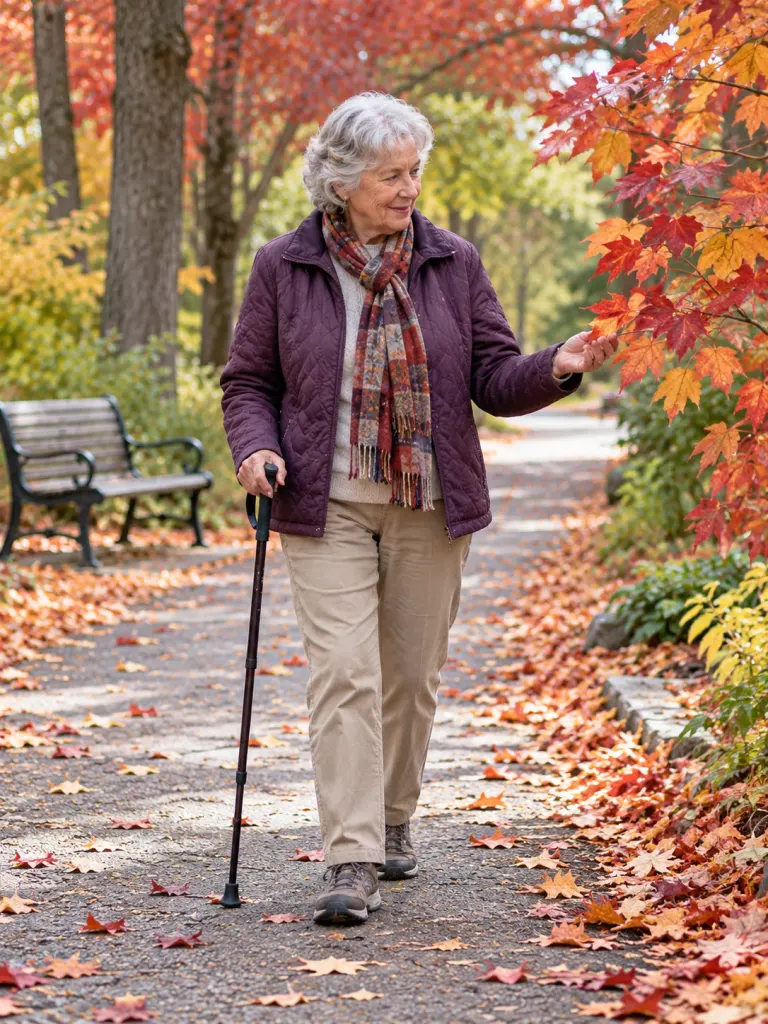
Choose a local park, botanical garden, or quiet neighborhood with paved paths and places to sit. A short loop lets seniors enjoy autumn leaves, birdsong, and cooler air without committing to a lengthy walk.
Before leaving, check the weather and walking surface. Wet leaves can conceal uneven pavement, so avoid slippery paths and choose a route with nearby parking.
2. Enjoy a Scenic Autumn Drive
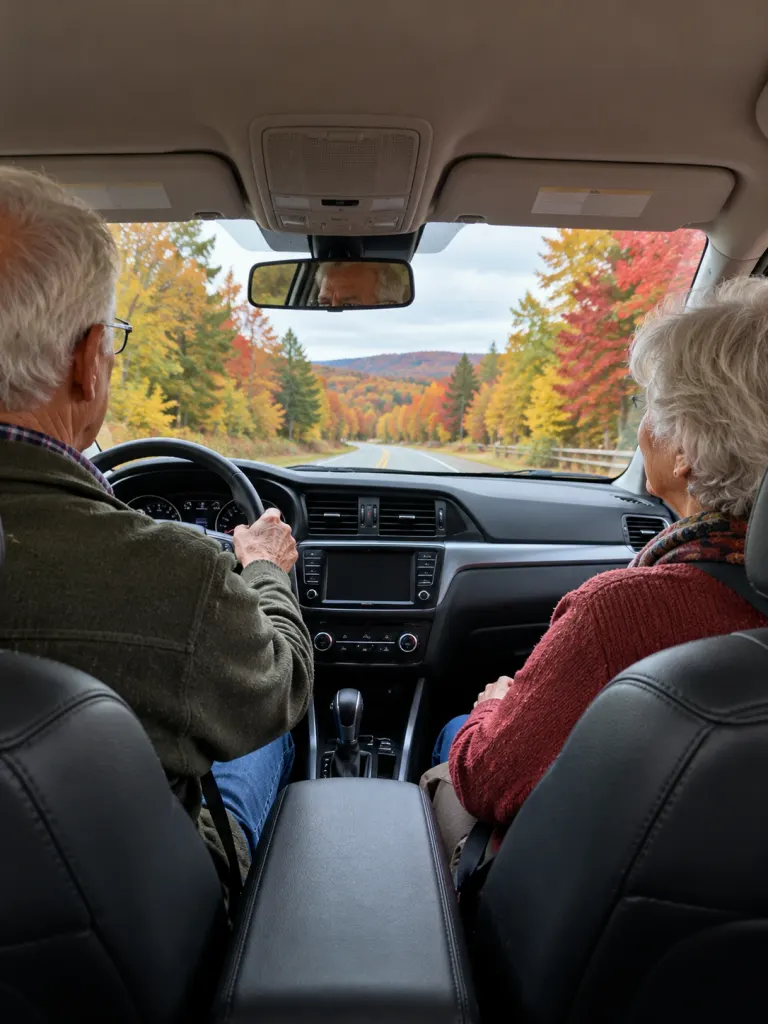
A scenic drive offers an easy way to explore fall colors without walking through a large park or farm. Look for tree-lined roads, countryside viewpoints, or neighborhoods known for seasonal decorations.
Plan the route around convenient parking and restroom stops. Bring a light jacket and a familiar snack, and allow time to stop somewhere with an accessible viewpoint rather than trying to cover too much ground.
3. Visit a Pumpkin Patch or Farm Stand
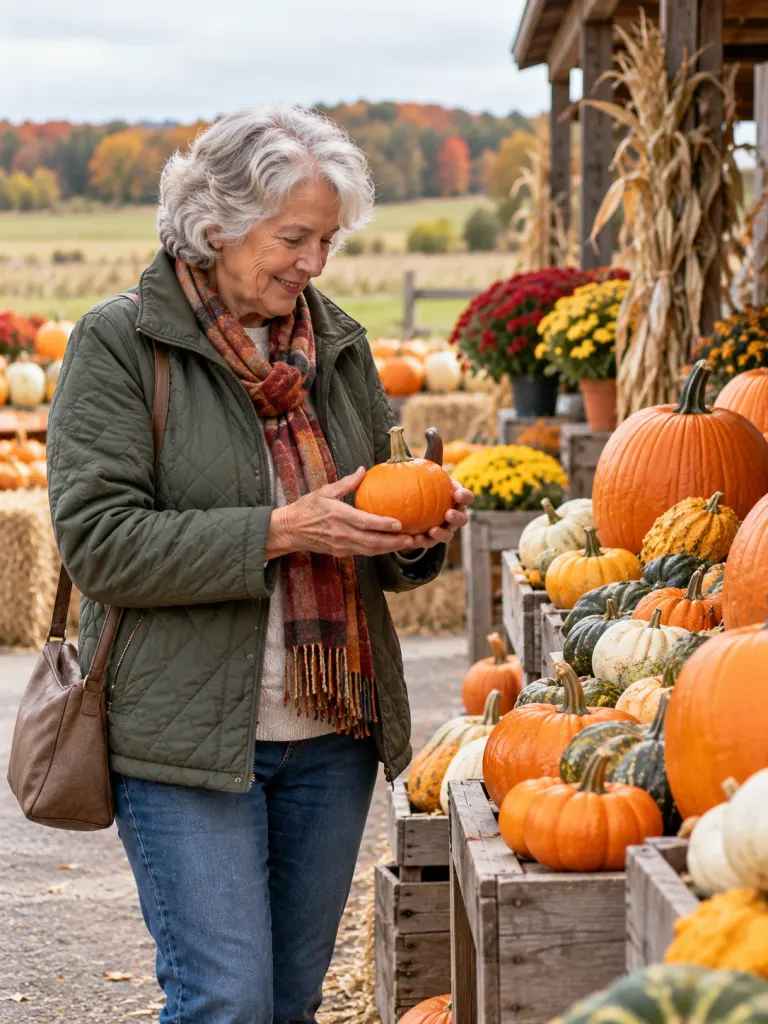
A pumpkin patch provides seasonal decorations, fresh produce, and an opportunity to choose a small pumpkin or decorative gourd. For seniors who find uneven ground difficult, a roadside farm stand may be more accessible than a large agricultural attraction.
Check the venue’s accessibility information before visiting, particularly its parking, paths, seating, and restrooms. One small pumpkin can provide enough material for a separate afternoon of decorating at home.
4. Browse a Farmers Market
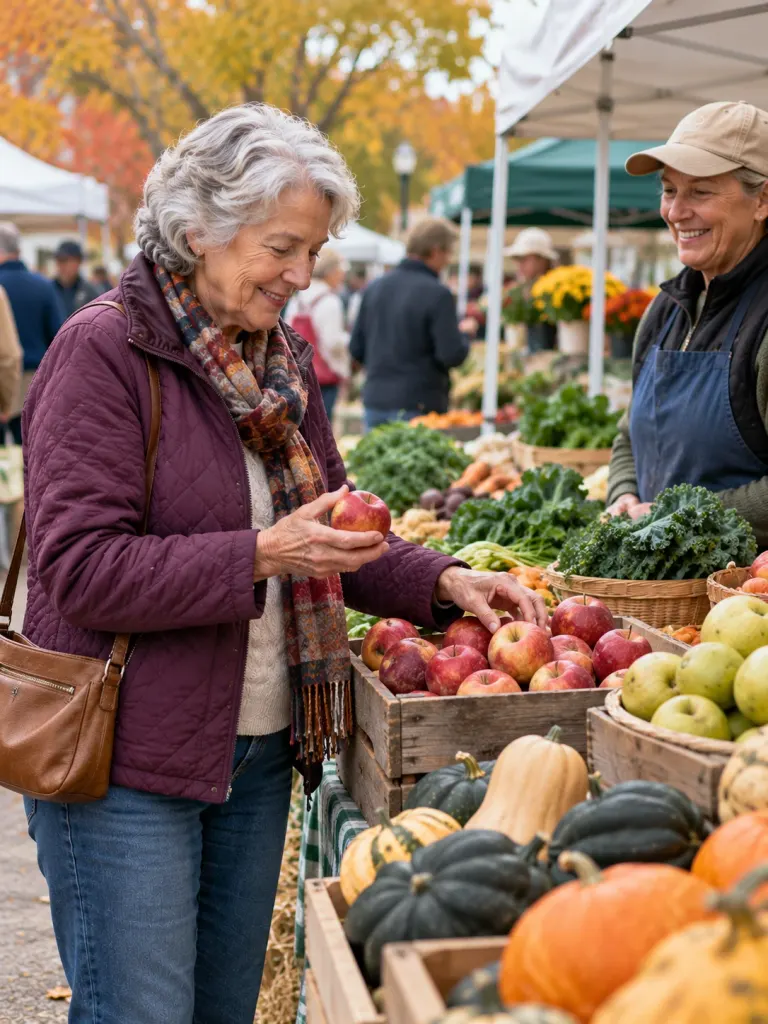
Farmers markets offer opportunities to browse apples, squash, flowers, baked goods, and handmade crafts. Seniors can combine a short social outing with a practical shopping trip.
Visit during a quieter period if navigating crowds is difficult. Bring a lightweight shopping bag and choose a few stalls in advance to avoid carrying heavy purchases or walking longer than intended.
5. Go Birdwatching From a Window or Patio
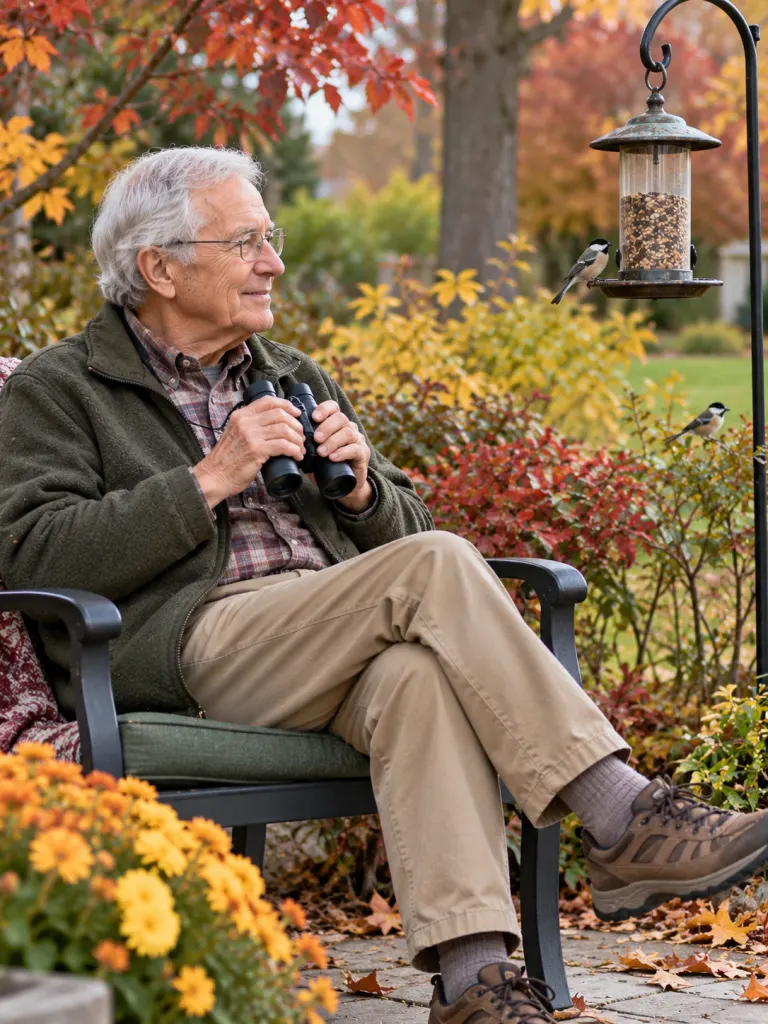
Birdwatching requires little preparation and can be enjoyed while seated. Set up a comfortable chair near a window or patio where birds regularly visit.
Keep a notebook nearby to record sightings, or use a beginner-friendly bird identification guide. A feeder may attract local species, but choose one that can be cleaned and refilled safely without climbing or reaching from an unstable position.
6. Plant a Small Container Garden
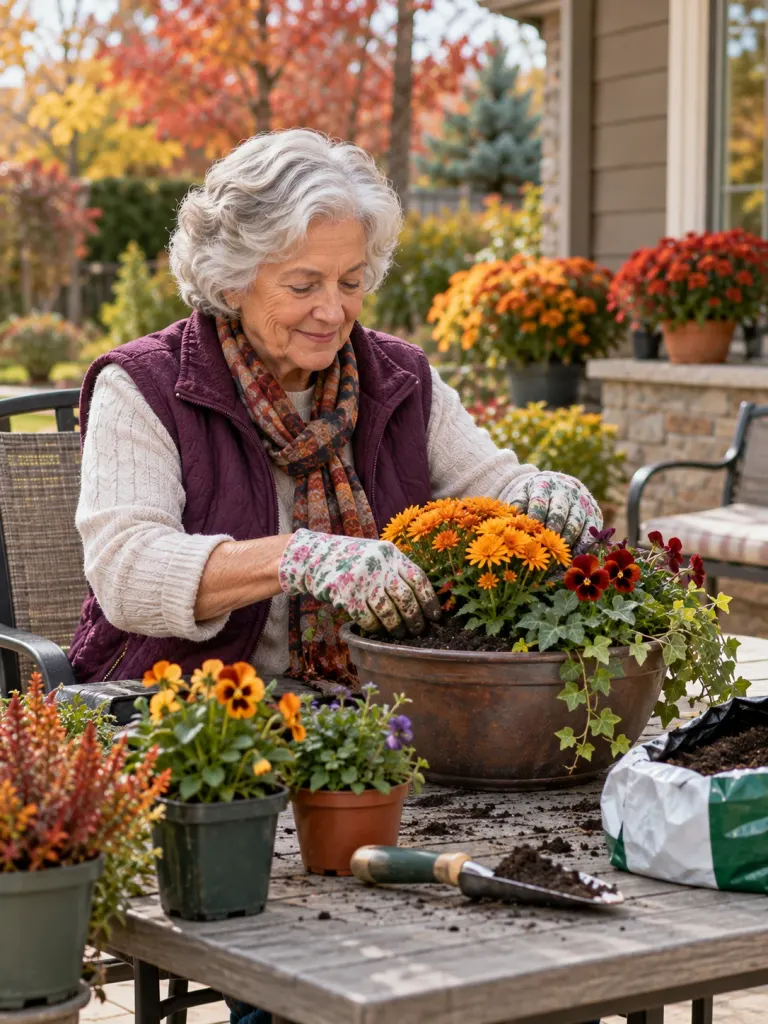
A few pots can bring seasonal gardening within reach of seniors who no longer maintain a large garden. Depending on the local climate, suitable fall plants may include leafy greens, herbs, or cool-season flowers.
Place lightweight containers on a stable table to reduce bending and lifting. Choose plants suited to local temperatures and available sunlight; autumn planting schedules differ by region.
Watering, trimming dry leaves, and arranging pots are useful alternatives to digging or carrying heavy bags of soil.
Easy Fall Crafts for Seniors
7. Paint Small Pumpkins
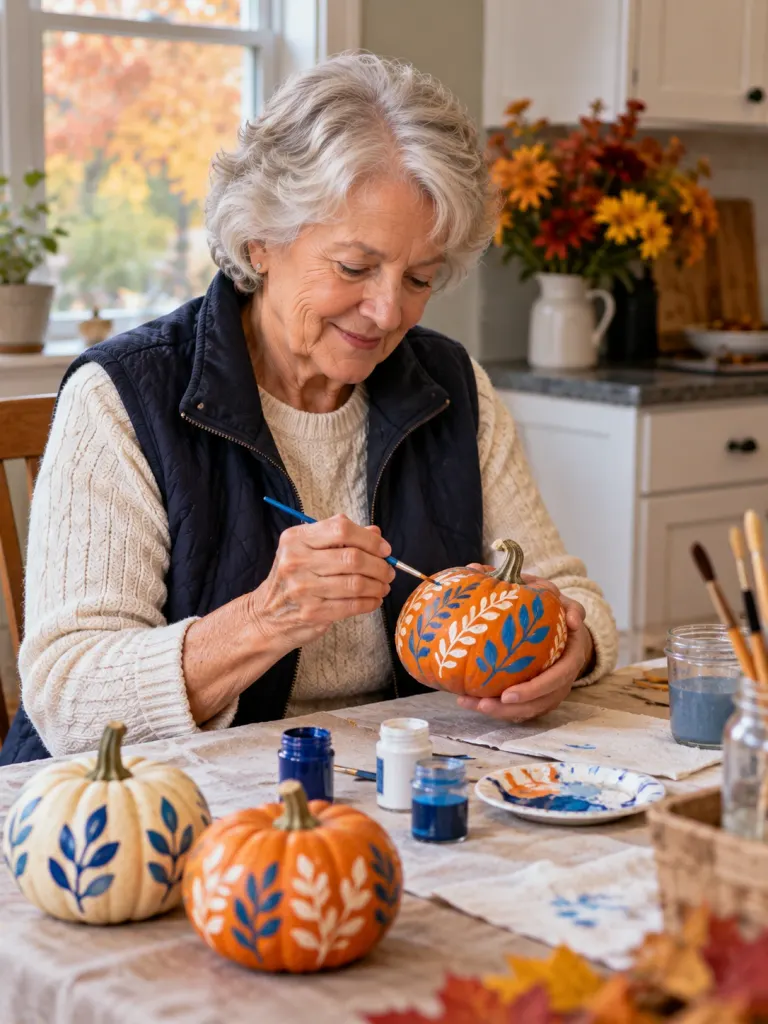
Pumpkin painting provides the fun of seasonal decorating without the sharp knives used in carving. Gather small pumpkins, broad brushes, washable paints, and stickers.
Simple patterns work well: paint dots around the pumpkin, add colorful stripes, or decorate it with leaf shapes. A shallow tray keeps the pumpkin from rolling while someone paints.
For seniors with arthritis or reduced grip strength, choose lightweight pumpkins and brushes with thick handles.
8. Make Autumn Leaf Rubbings
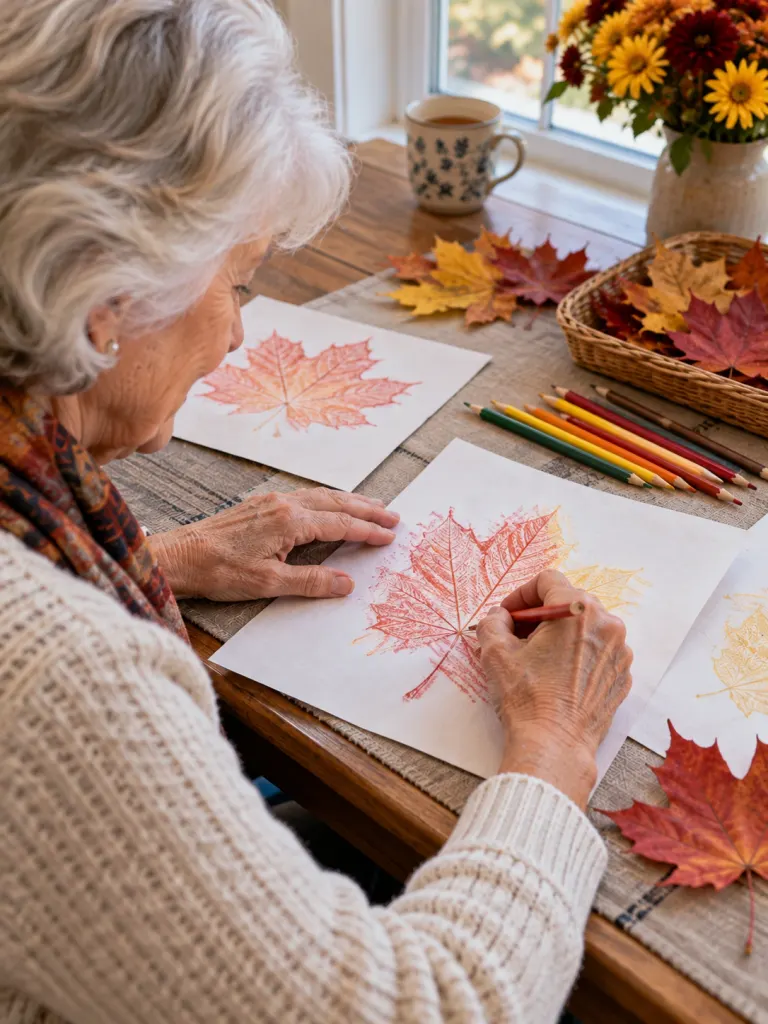
Leaf rubbing turns fallen leaves into textured artwork using paper and crayons. Place a leaf beneath a sheet of paper and rub the side of a crayon over it until the leaf’s outline and veins appear.
Use larger leaves and thicker crayons if small materials are difficult to handle. Arrange several rubbings on cardstock to create a greeting card, bookmark, or piece of seasonal artwork.
This inexpensive craft also works well in nursing homes because participants can complete individual sheets or contribute to one shared display.
9. Create a Fall Wreath
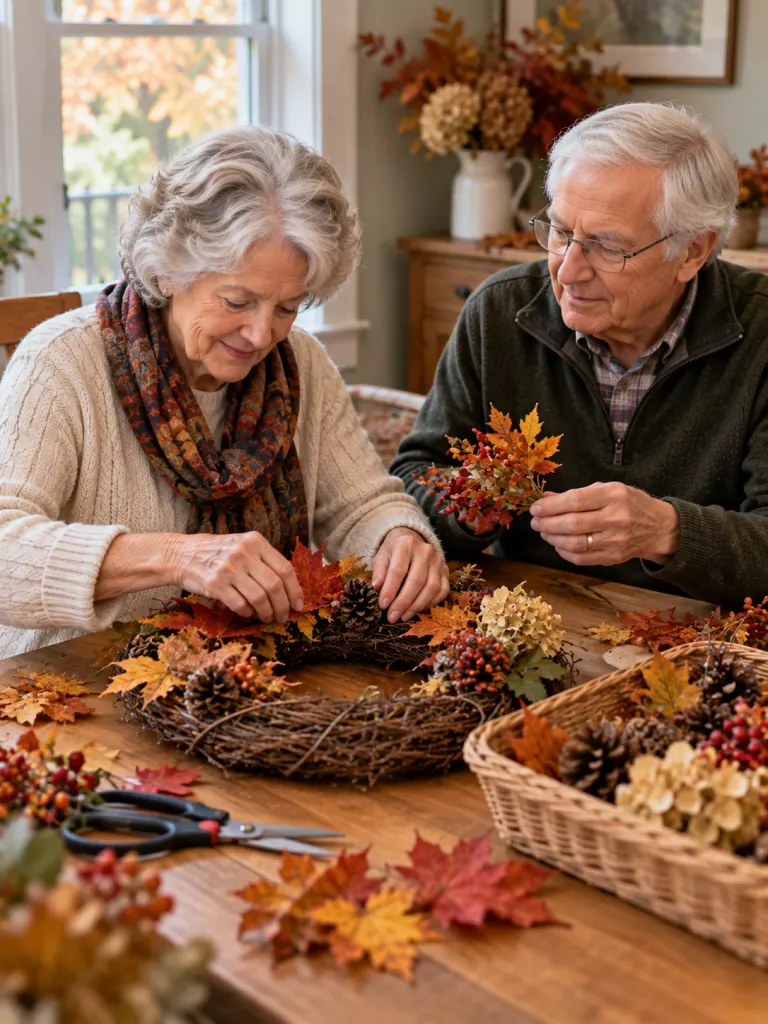
Start with a lightweight, premade wreath base and decorate it with artificial leaves, fabric flowers, and ribbon. Seniors can choose the color scheme and arrange the decorations before attaching them with suitable craft glue.
Preparing the base in advance reduces the need to handle wire or assemble complicated components. For a group session, provide each participant with a small section to decorate or make individual tabletop wreaths.
10. Make Pressed-Leaf Art
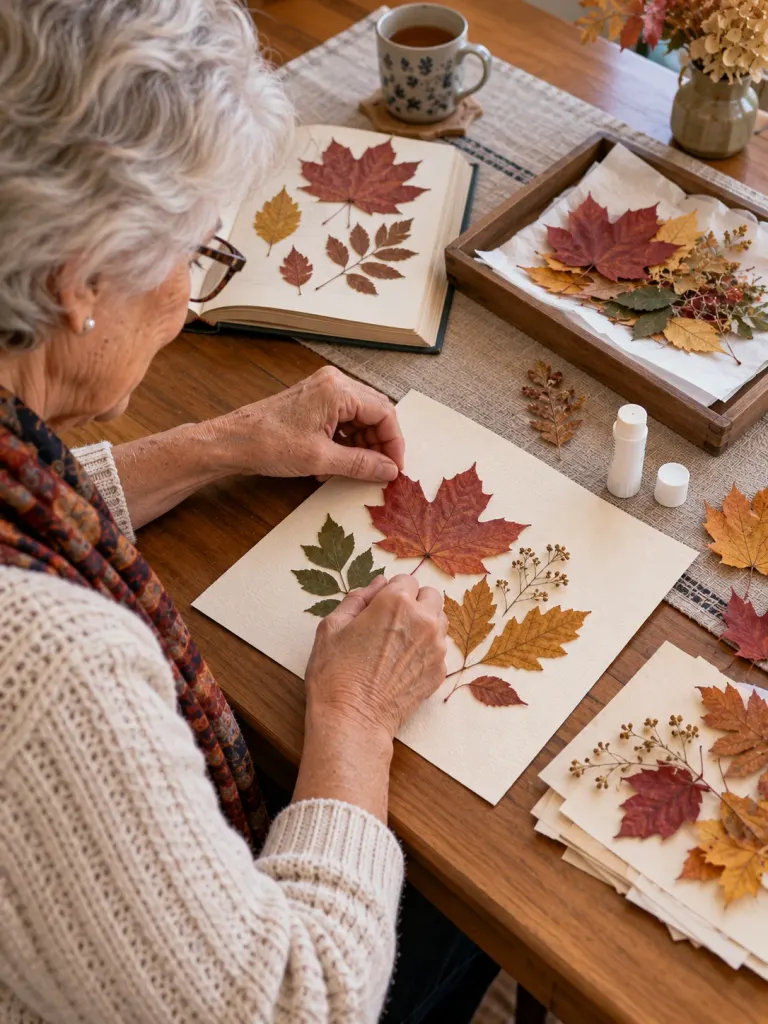
Pressed leaves can become framed decorations, bookmarks, or handmade cards. Place clean leaves between sheets of absorbent paper inside a heavy book and leave them until dry.
Once the leaves are ready, arrange them on cardstock and attach them with craft glue. Different leaf shapes can form a simple border, a tree, or an abstract pattern.
Avoid damp or moldy leaves, and use collected leaves only when they can be gathered without walking over slippery or uneven ground.
11. Decorate Pinecones for an Autumn Centerpiece
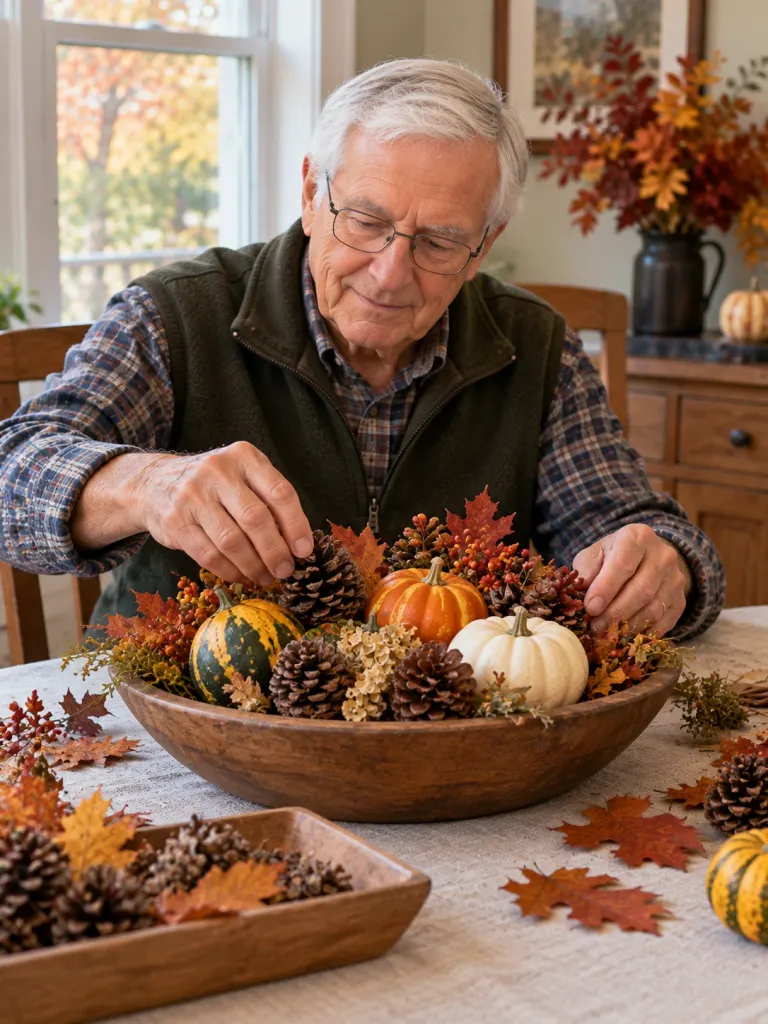
Pinecones can be painted and arranged in a bowl with artificial leaves, ribbon, or decorative gourds. Choose autumn colors or use a simple natural finish for a table decoration.
Use nontoxic craft materials and a stable work surface. If someone has difficulty handling small objects, provide larger decorations and let them direct the arrangement rather than manipulate every piece.
Fall Baking and Food Activities for Seniors
12. Bake and Decorate Autumn Cookies
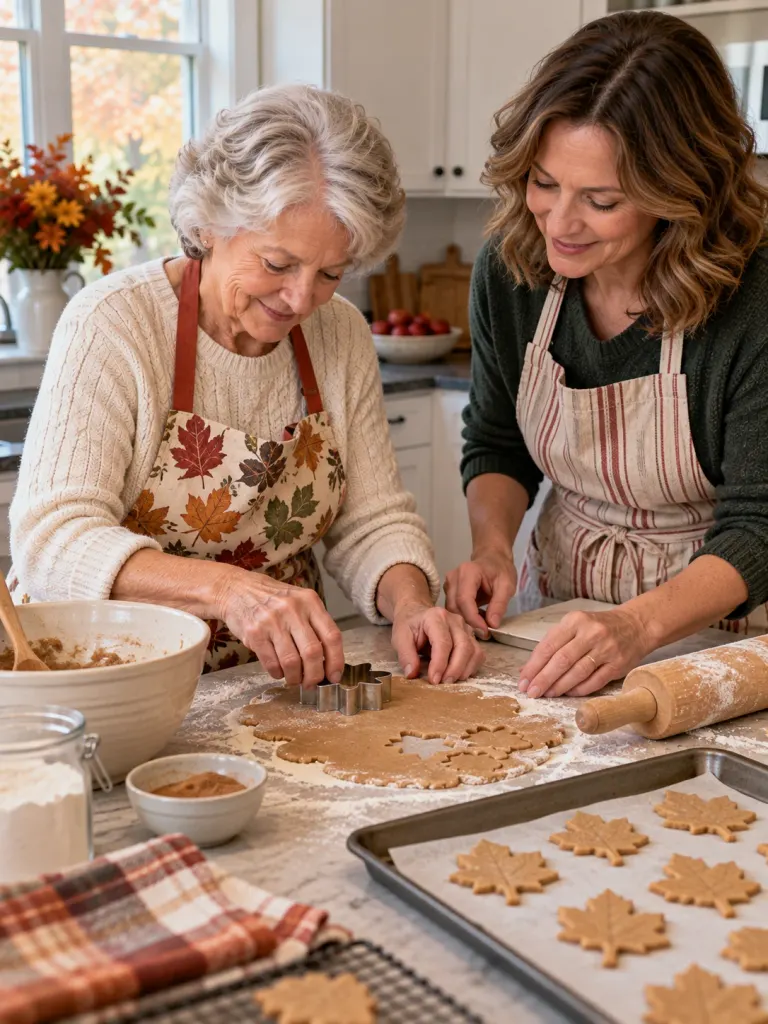
Prepare sugar cookies, oatmeal cookies, or another familiar recipe, then decorate them with leaf and pumpkin designs. Cookie cutters, icing, and sprinkles let participants personalize each treat.
Seniors can measure ingredients, stir mixtures, shape dough, or decorate cooled cookies. A helper should manage hot baking trays and supervise oven use when necessary.
Check food allergies, dietary restrictions, and swallowing needs before selecting ingredients or serving the finished cookies.
13. Prepare Spiced Apple Cider
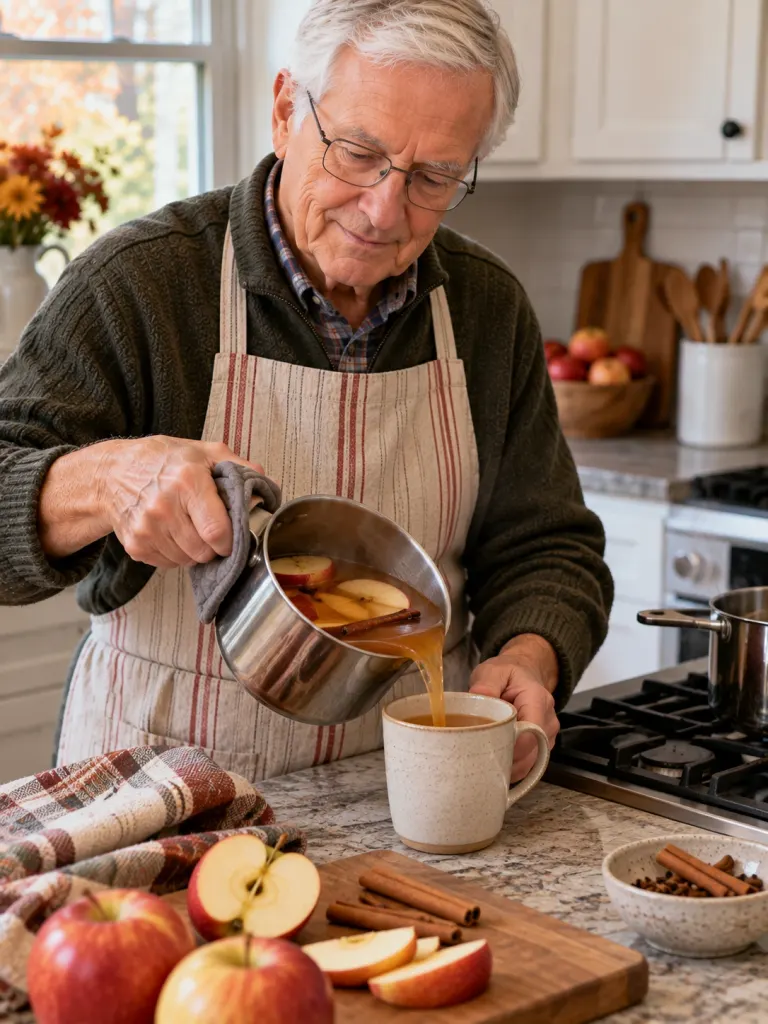
Warm apple cider with cinnamon sticks, orange slices, and a few cloves for a seasonal drink. Use a stovetop or slow cooker according to its instructions, with assistance when needed.
The preparation offers opportunities to smell the spices, choose ingredients, and share a drink afterward. Serve the cider warm rather than piping hot, and offer a suitable alternative for anyone who needs to limit sugar or caffeine.
14. Roast Pumpkin Seeds
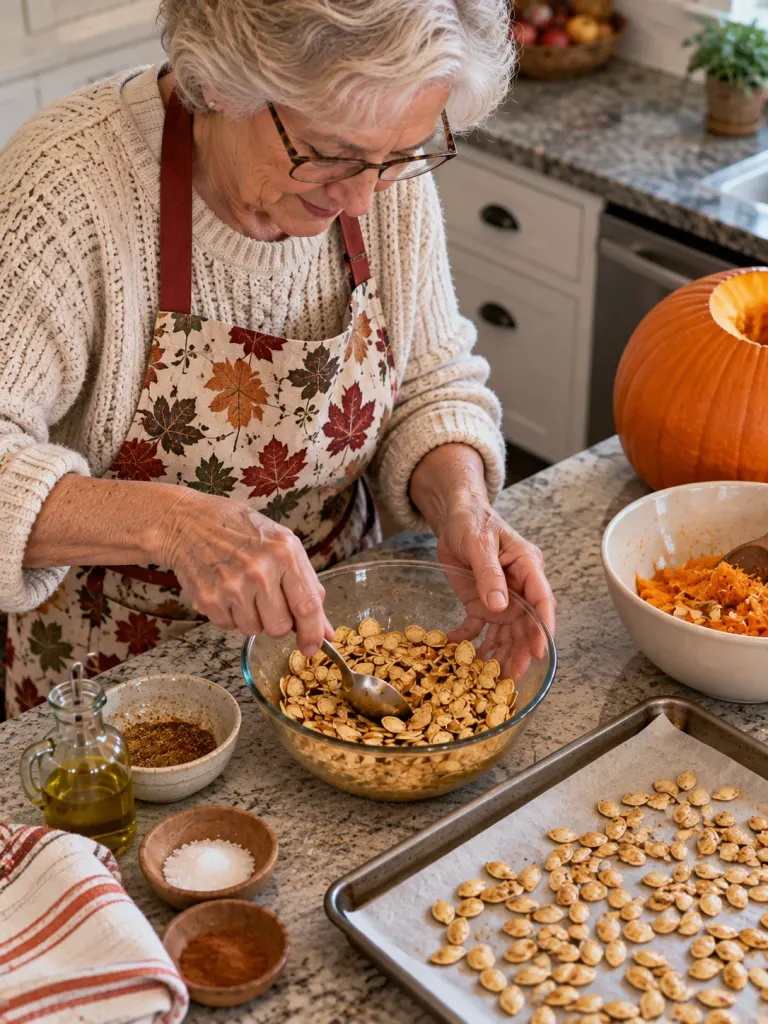
After using a pumpkin for decorating or cooking, separate its seeds, rinse them, and dry them thoroughly. Season the seeds lightly and roast them until crisp, following a suitable recipe.
Try cinnamon for a sweet flavor or a small amount of salt and herbs for a savory snack. Someone should manage the oven and check the seeds during roasting.
Safety consideration: Whole, crunchy seeds may be unsuitable for people with swallowing difficulties. Choose an alternative snack texture when necessary and follow any individual swallowing guidance.
15. Host an Apple or Pumpkin Pie Tasting
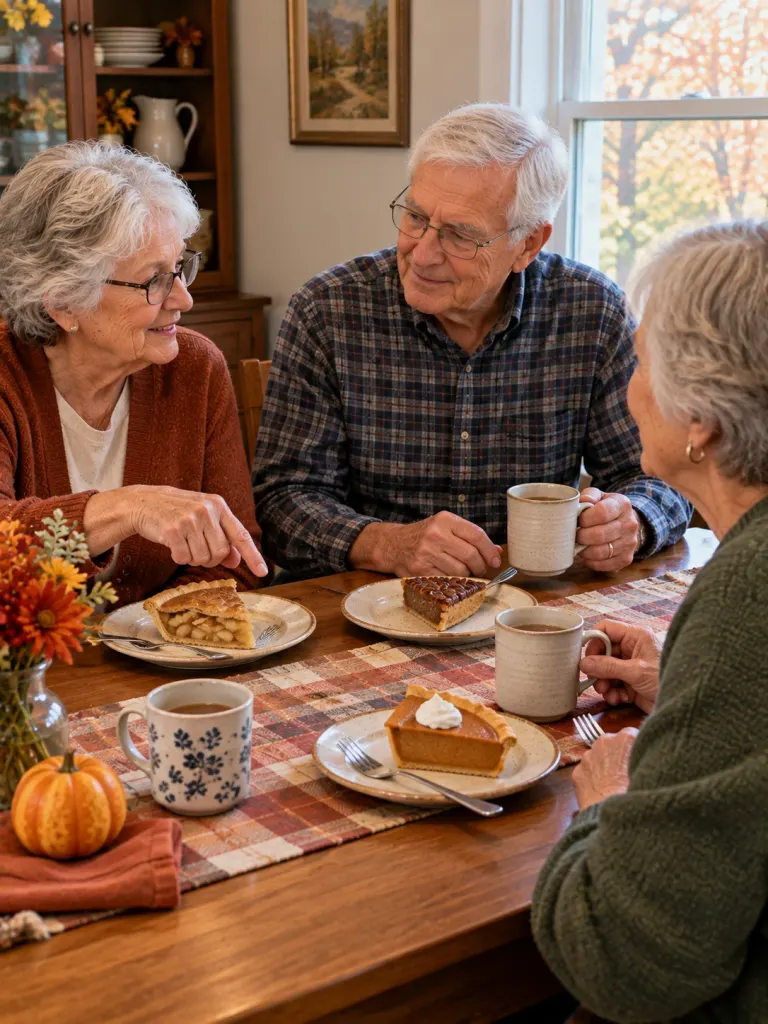
A pie tasting creates a social activity without requiring everyone to bake. Offer small portions of apple pie, pumpkin pie, or another familiar dessert, and invite participants to choose a favorite.
Use the tasting as a chance to share family recipes or memories of holiday meals. For a lighter alternative, serve baked apples or another soft fruit dish.
Account for individual dietary requirements when selecting desserts, especially if participants need to manage sugar intake or avoid specific ingredients.
16. Arrange a Seasonal Tea or Coffee Tasting
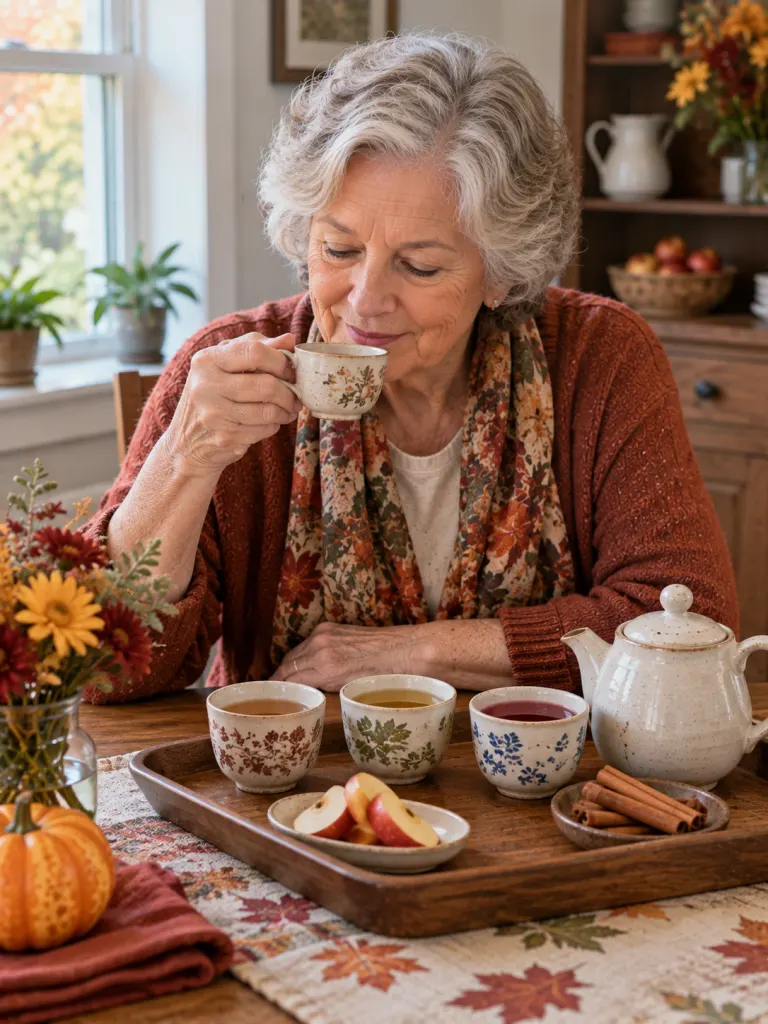
Prepare several small servings of drinks such as cinnamon tea, decaffeinated chai, regular coffee, or warm milk. Participants can compare aromas, choose a favorite, and discuss flavors.
Keep hot drinks at a safe serving temperature and use cups that are easy to grip. Include caffeine-free options and check individual dietary or fluid restrictions before serving.
This activity suits small groups because each person can participate simply by choosing a drink or describing its flavor.
Indoor and Social Fall Activities for Seniors
17. Try an Autumn Puzzle or Word Search
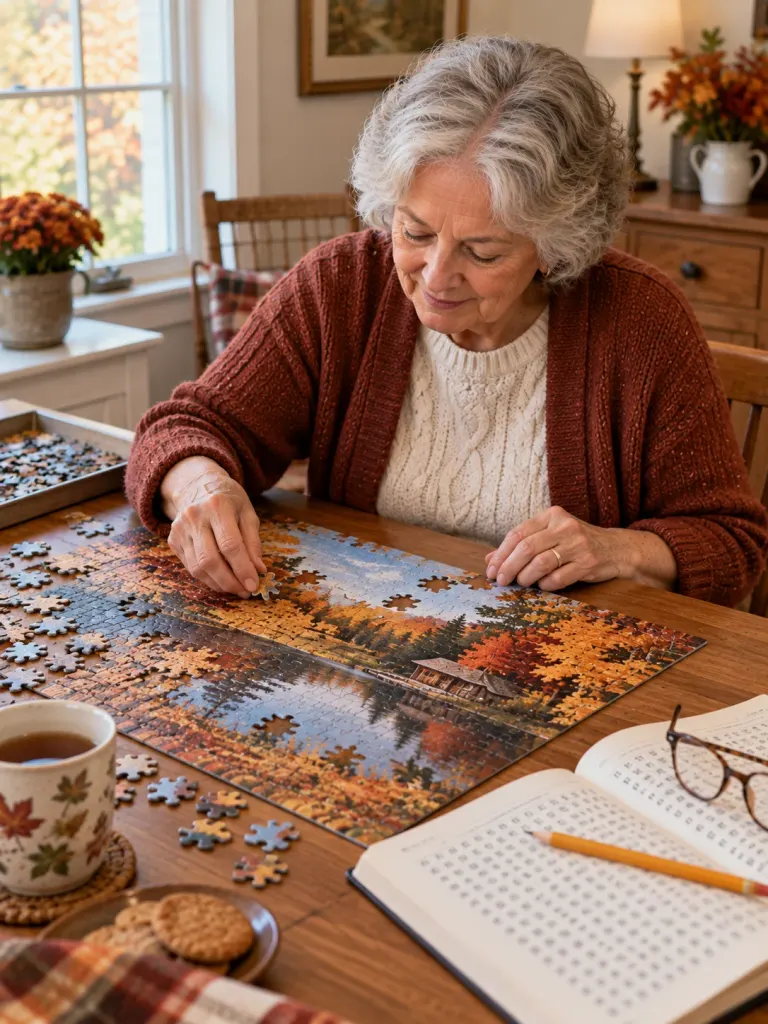
Choose a jigsaw puzzle featuring autumn scenery, a large-print word search, or a simple seasonal crossword. Large pieces and high-contrast lettering can make the activity easier for people with reduced dexterity or vision.
For a group, place one puzzle on a shared table and invite people to work together. If a puzzle becomes frustrating, switch to an easier activity rather than insisting on finishing it.
18. Create a Gratitude Tree
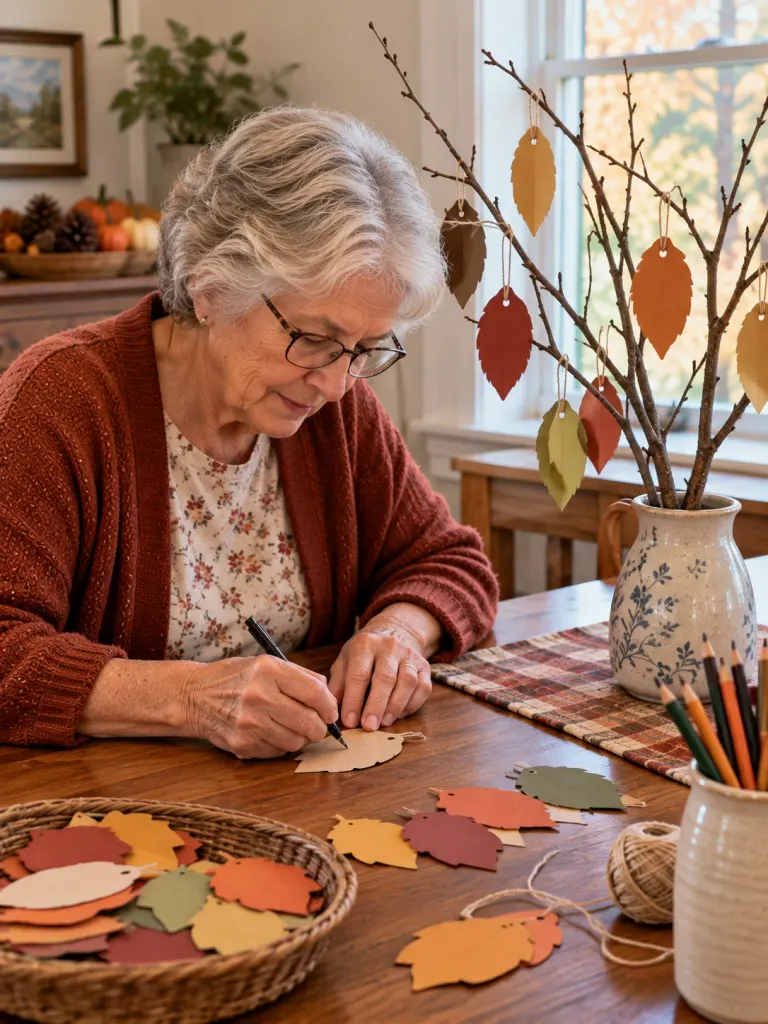
Place a bare branch in a sturdy vase and cut paper into leaf shapes. Invite participants to write or dictate one thing they appreciate on each leaf, then attach the leaves to the branch.
Ideas might include a favorite meal, a helpful neighbor, a family visit, or a pleasant memory. People who find writing difficult can choose from prepared words or pictures, or ask someone to write their response.
The finished tree can become a shared display in a family home, community room, or senior living facility.
19. Organize a Classic Movie or Story Hour
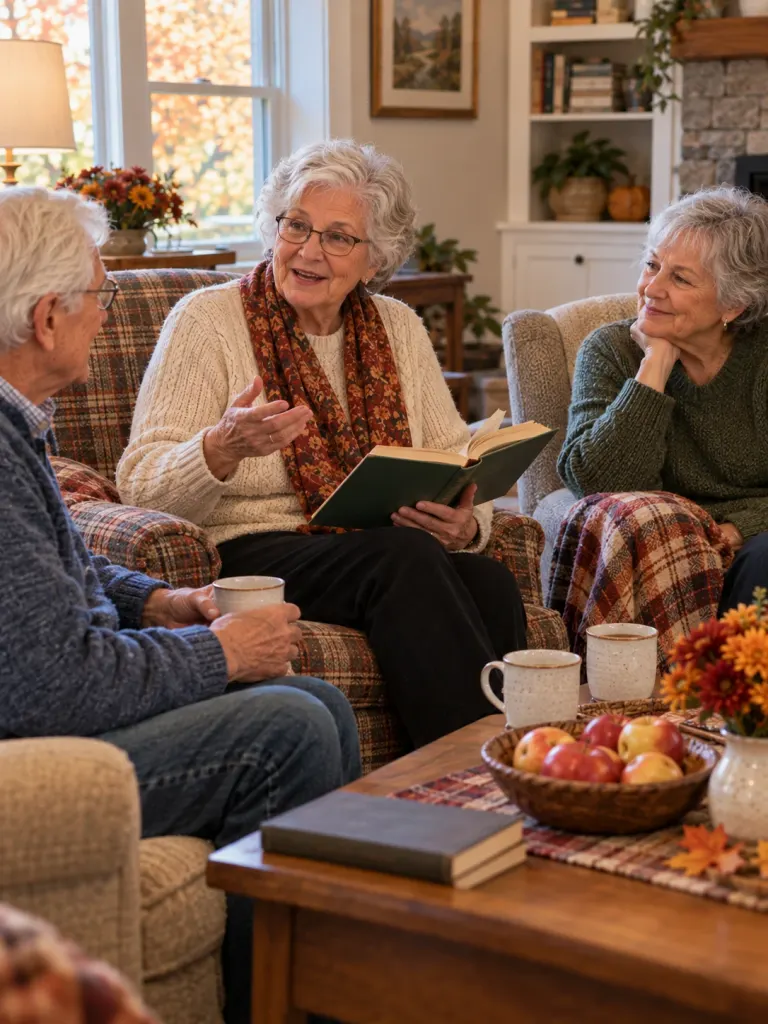
Choose a familiar film, a gentle mystery, a favorite story, or a collection of well-loved songs. Arrange comfortable seating and suitable lighting, and keep the volume clear enough for participants to follow.
Afterward, invite people to share a favorite scene or a memory connected to the music. Those who prefer to listen can participate without speaking.
For seniors with dementia, familiar stories and music may be more engaging than unfamiliar material. Keep the session flexible and offer breaks if someone becomes tired or unsettled.
20. Play Simple Fall-Themed Group Games
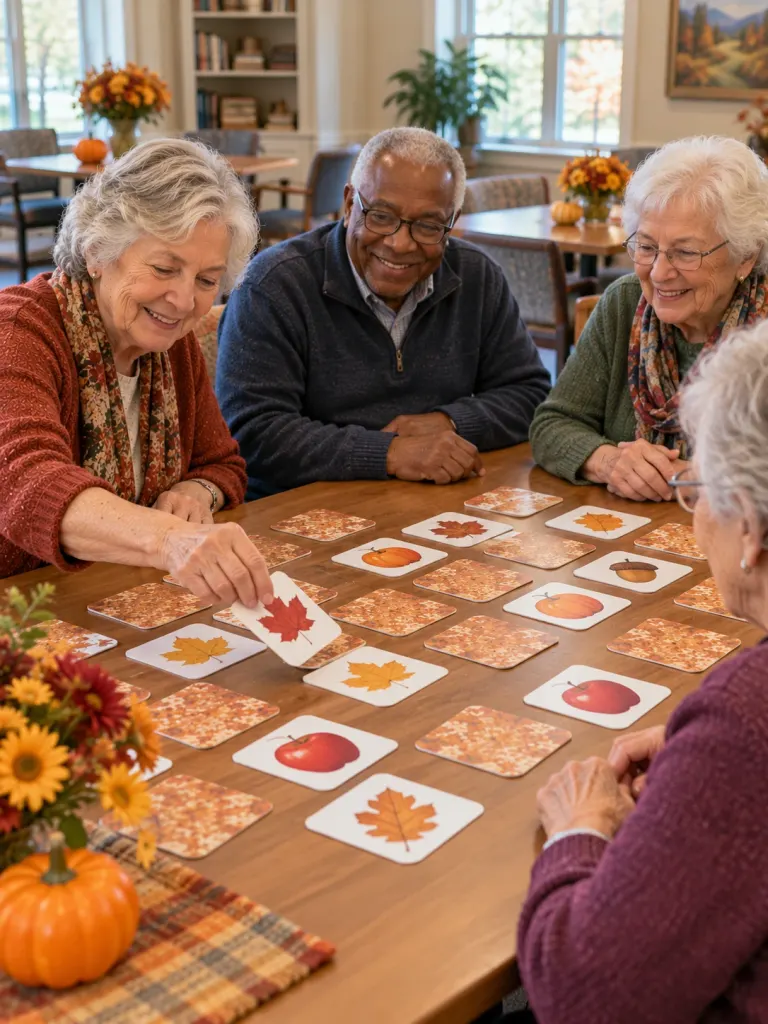
Choose games that allow people to participate while seated and that do not depend on speed or physical strength. Five easy options include:
- Mini-pumpkin stacking: Stack lightweight artificial pumpkins or foam shapes on a table.
- Autumn beanbag toss: Toss soft fabric bags toward a large target from a seated position.
- Fall trivia: Ask questions about seasonal foods, harvest traditions, or familiar autumn songs.
- Color-matching challenge: Match colored cards or artificial leaves by shade.
- Autumn bingo: Use large-print cards featuring pumpkins, apples, leaves, and other seasonal objects.
Keep the playing area clear and use lightweight materials. Short rounds make it easier to accommodate different attention spans and energy levels.
How to Adapt Fall Activities to Different Needs
The best activity depends on the person’s interests, mobility, sensory needs, and ability to follow instructions. A few adjustments can make the same activity more accessible without removing the enjoyable parts.
Fall Activities for Seniors With Limited Mobility
Prioritize activities that require little walking or can be completed from a chair. Birdwatching, painting, puzzles, seated gardening, and baking preparation are useful options.
For outdoor outings, confirm accessible parking, entrances, paths, and restrooms before leaving. Avoid activities that require climbing, prolonged standing, or carrying heavy objects when these tasks are difficult for the individual.
Fall Activities for Seniors With Dementia
Familiar, straightforward activities may be easier to enjoy than complicated projects with several steps. Consider arranging artificial leaves by color, painting a pumpkin, folding autumn-colored fabric, listening to familiar music, or decorating cookies with assistance.
Helpful adaptations include:
- Give one instruction at a time.
- Put out only the materials needed for the current step.
- Offer two simple choices rather than a large selection.
- Allow the person to watch instead of participate.
- Change the activity if the person becomes distressed or tired.
The National Institute on Aging’s guidance on activities for people with Alzheimer’s disease provides additional suggestions for adapting familiar activities.
Free and Low-Cost Fall Activities
Many activities use ordinary household materials or require no supplies at all. Try leaf rubbings with paper and crayons, birdwatching, storytelling, neighborhood walks, or a gratitude tree made from recycled paper.
Libraries, community centers, and senior centers may also offer free craft sessions, puzzles, and seasonal social events. Check local listings for current schedules and any registration requirements.
Fall Activities for Nursing Homes and Assisted Living
Group activities should accommodate residents who have different abilities and interests. Autumn bingo, shared wreath-making, seasonal tastings, familiar movie screenings, and simple table games are practical choices.
Offer residents different roles, such as arranging decorations, choosing music, answering trivia questions, or observing the activity. Plan around meal times and established routines, and ensure the room has enough space for mobility aids.
Safety Tips for Fall Activities
A few precautions can reduce avoidable hazards during autumn outings and indoor activities.
- Prevent slips: Wet leaves can make paths slippery. Choose maintained walking surfaces, wear suitable footwear, and use handrails or mobility aids when appropriate.
- Prepare for weather: Check local conditions before going out and bring an extra layer when temperatures may change.
- Reduce cooking hazards: Keep work surfaces stable, avoid heavy lifting, and have a helper manage hot trays or equipment when needed.
- Check food suitability: Consider allergies, swallowing difficulties, dietary restrictions, and individual healthcare guidance before preparing snacks.
- Match movement to ability: Walking and gardening can provide physical activity, but the appropriate amount depends on the person’s health and mobility.
The CDC’s guidance on physical activity for older adults explains how aerobic, muscle-strengthening, and balance activities fit into healthy aging. Seniors with medical conditions or mobility limitations can seek guidance from a healthcare professional about suitable activities.
Frequently Asked Questions About Fall Activities for Seniors
What are some easy fall activities for seniors at home?
Pumpkin painting, autumn puzzles, leaf rubbing, birdwatching, cider preparation, and classic movie afternoons are simple options. Most require basic supplies and can be adapted for seated participation.
What are some free fall activities for seniors?
Nature walks, birdwatching, storytelling, neighborhood drives, leaf rubbings, and gratitude trees made with recycled paper can cost little or nothing. Local libraries and senior centers may also offer free seasonal events.
What are good fall activities for seniors in nursing homes?
Autumn bingo, large-piece puzzles, shared wreath-making, familiar movies, seasonal tastings, and simple table games work well in many group settings. Provide different ways to participate so residents with varying abilities can take part.
What are suitable fall activities for seniors with dementia?
Familiar music, simple crafts, leaf arranging, pumpkin painting, and supervised baking tasks may suit seniors with dementia. Keep instructions straightforward, use familiar materials, and allow the person to stop whenever they wish.
How can families plan fall activities without tiring seniors?
Plan one main activity at a time, allow breaks, and arrange transportation in advance. A short outing followed by a relaxed afternoon at home may be more comfortable than a schedule packed with several destinations.
Why are fall activities beneficial for older adults?
Seasonal activities offer opportunities for social interaction, creative expression, gentle movement, and familiar routines. Their value depends on the person’s preferences and abilities, so choose activities that are enjoyable and manageable rather than obligatory.
Make a Simple Fall Activity Plan
Fall activities for seniors do not need elaborate preparation to make an ordinary day more engaging. A small craft, a seasonal recipe, or a familiar game can create opportunities for conversation and participation at home or in a community setting.
Choose one activity from this list, gather the supplies you already have, and set aside a comfortable time to try it this week. Starting small makes it easier to discover which activities deserve a place in your autumn routine.