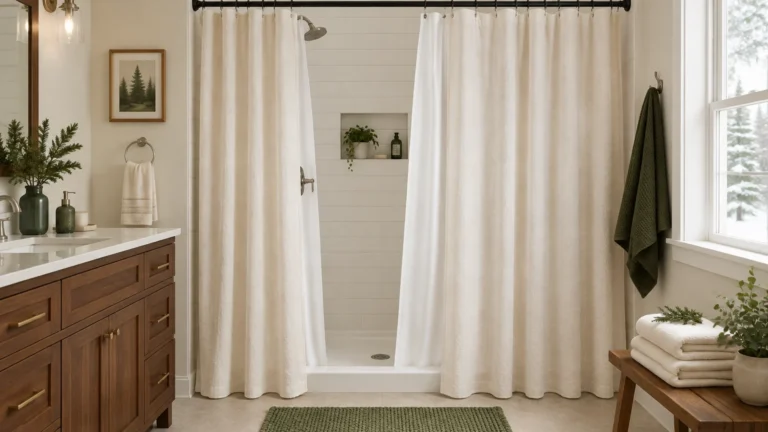
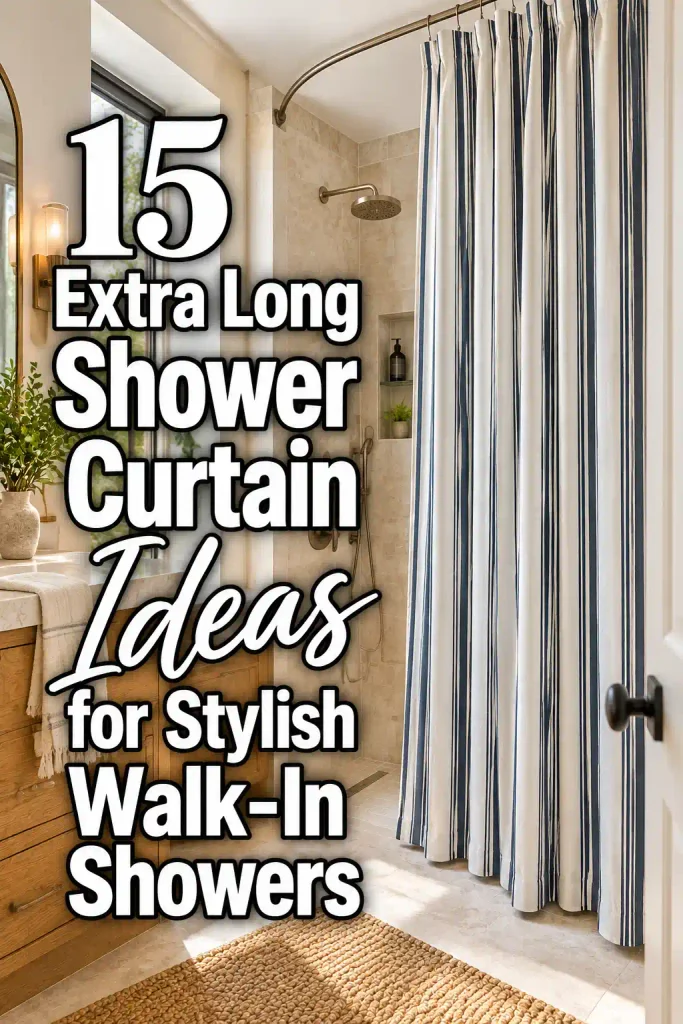
An extra-long shower curtain can make a walk-in shower look more intentional, especially when a standard curtain leaves too much empty space above it or looks awkward against a tall wall. The added length also gives you more options for creating a tailored, floor-to-ceiling look without changing the tile, fixtures, or layout.
The best design depends on your bathroom. A white waffle-weave curtain feels clean and spa-inspired, while vertical stripes draw the eye upward. A botanical print adds character, and a carefully chosen solid color can bring an otherwise simple bathroom to life.
Designers often recommend treating shower curtains more like window treatments, paying attention to hanging height, fullness, fabric, and hardware rather than choosing a pattern alone. Homes & Gardens explores how these details can create a more tailored bathroom. The following 15 ideas show how to adapt that approach to different walk-in showers and decorating styles.
1. Hang a Simple Curtain From Ceiling Height
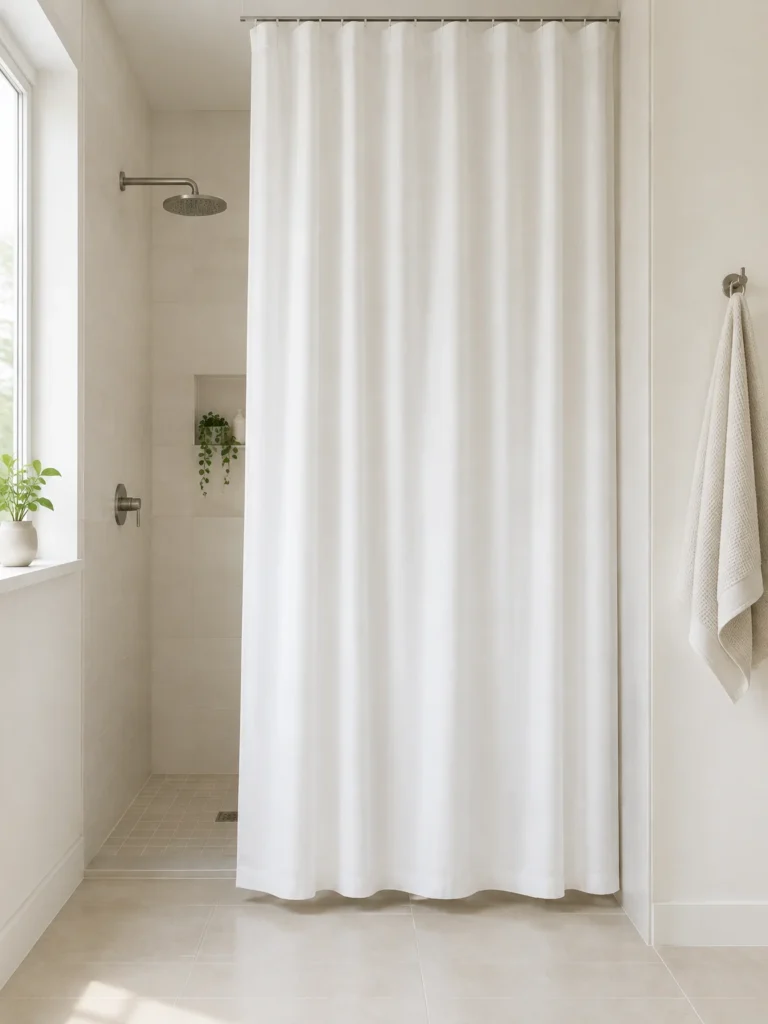
A long, plain white or soft ivory curtain creates a clean vertical line from the ceiling toward the shower floor. Rather than breaking up the wall with a curtain rod positioned too low, a ceiling-mounted track makes the installation feel closer to a custom architectural feature.
This look works particularly well in compact bathrooms, where uninterrupted vertical lines can help the room feel taller. Choose a curtain with enough width to create soft folds rather than stretching it tightly across the opening.
Styling tip: Use white or brushed-metal hardware that blends with the surrounding finishes. Keep the bottom edge slightly above the floor instead of allowing the fabric to collect water and dirt.
2. Choose a White Waffle-Weave Curtain for a Spa-Inspired Look
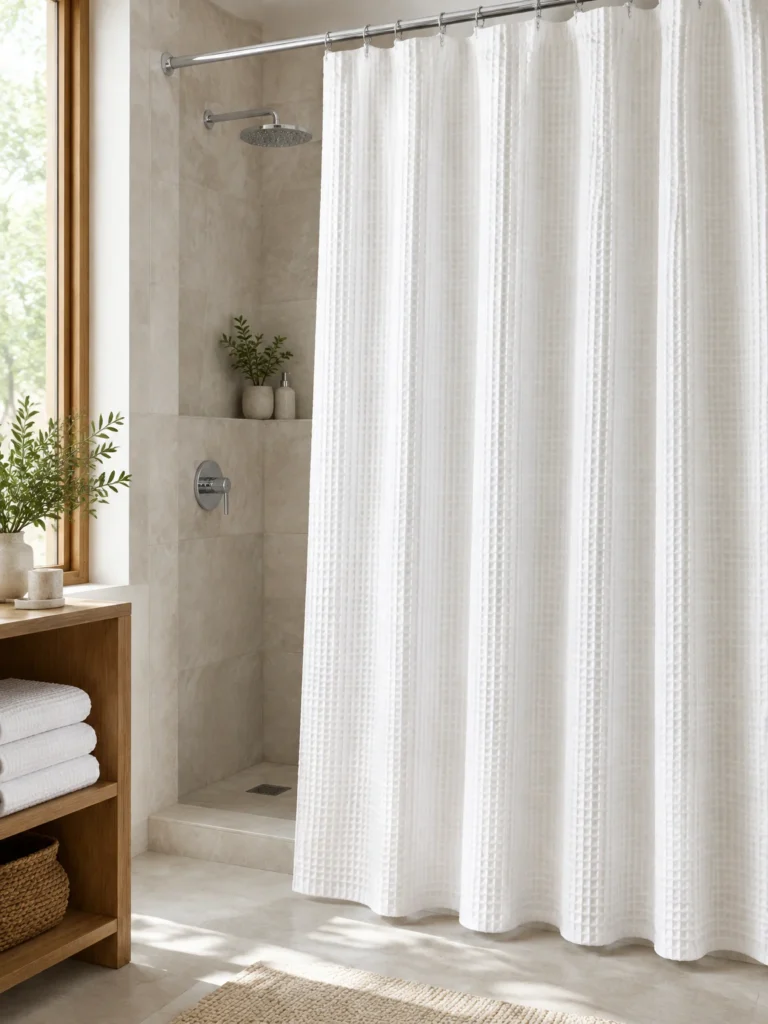
A white waffle-weave curtain gives the bathroom texture without introducing a busy pattern. Its raised grid adds interest to a space filled with smooth surfaces, such as porcelain tile, glass, polished chrome, and a white vanity.
An extra-long version is especially useful when you want a more substantial curtain that feels closer to the proportions of a hotel bathroom. The look stays relatively simple, but the weave prevents the curtain from appearing flat.
Pair it with stone-look tile, warm wood accents, and a restrained selection of bath accessories. Check the fabric composition and care label before buying, since waffle-weave curtains are available in different blends.
3. Use Vertical Stripes to Emphasize Height
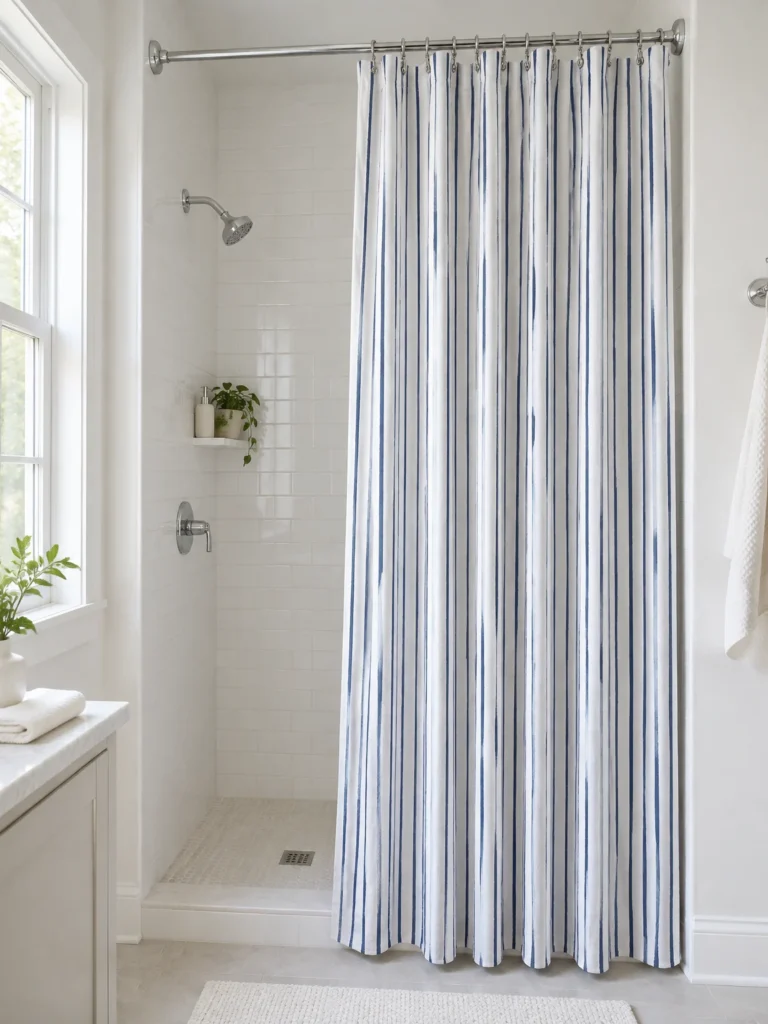
Vertical stripes make a natural choice for bathrooms with low ceilings or a shower wall that feels disproportionately wide. The repeated lines encourage the eye to move upward, complementing the effect of hanging a long curtain higher on the wall.
Narrow navy-and-white stripes suit a classic bathroom, while olive-and-ivory or charcoal-and-white versions feel more contemporary. The stripe width matters: a subtle pattern is easier to coordinate with decorative floor tile than a bold, high-contrast design.
Keep other patterns relatively quiet so the curtain remains the main visual feature. If your bathroom already has strongly veined marble or patterned tile, choose thinner stripes with more space between them.
4. Try a Linen-Look Curtain in a Warm Neutral
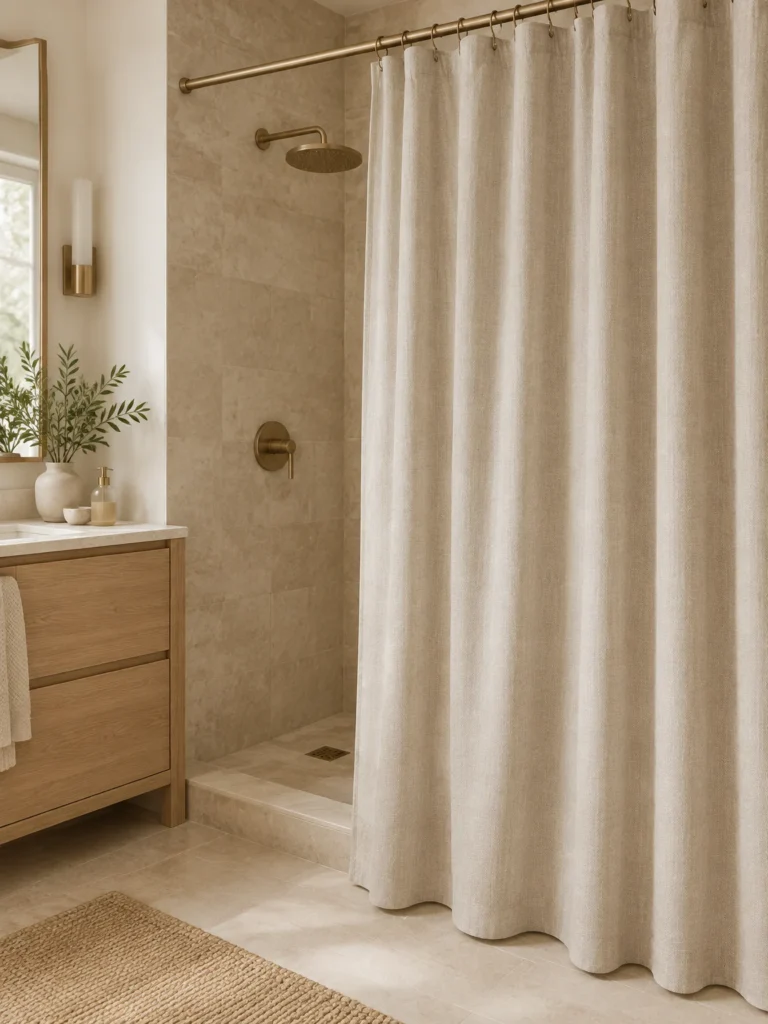
A textured curtain in a natural-looking shade brings warmth to a bathroom without relying on decorative prints. Think oatmeal, warm white, muted taupe, or light mushroom against limestone-look tile and natural oak.
For everyday shower use, a linen-look performance fabric or washable cotton blend can be a practical alternative to pure linen. Bathroom humidity can affect some natural fabrics, and interior designers note that pure linen may stretch or sag over time in damp conditions. Homes & Gardens
Look for a fabric with a subtle weave and enough body to hang neatly. This idea works especially well in organic-modern bathrooms where a little softness balances all the hard finishes.
5. Add Tone-on-Tone Texture for a Quiet, Modern Bathroom
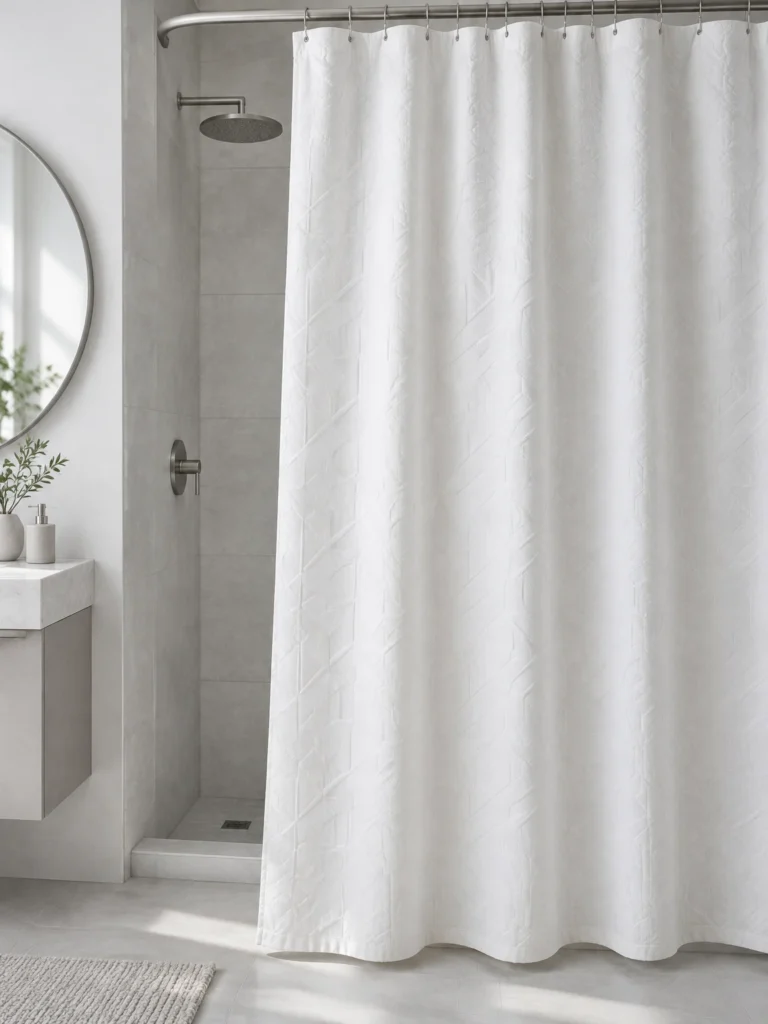
Sometimes the most effective curtain is one you notice only after looking twice. A white curtain with an embossed geometric pattern, a subtle herringbone weave, or a raised linear design adds depth without introducing another color.
This is a good choice when the shower already has distinctive features, such as textured wall tile, a recessed niche, or brushed-brass fixtures. The curtain can complement these details without competing with them.
For a cohesive finish, choose a pattern that echoes the bathroom’s existing geometry. Straight-line tile pairs naturally with a linear weave, while rounded mirrors and curved fixtures can work well with a softer, less structured pattern.
6. Bring in a Large Botanical Print
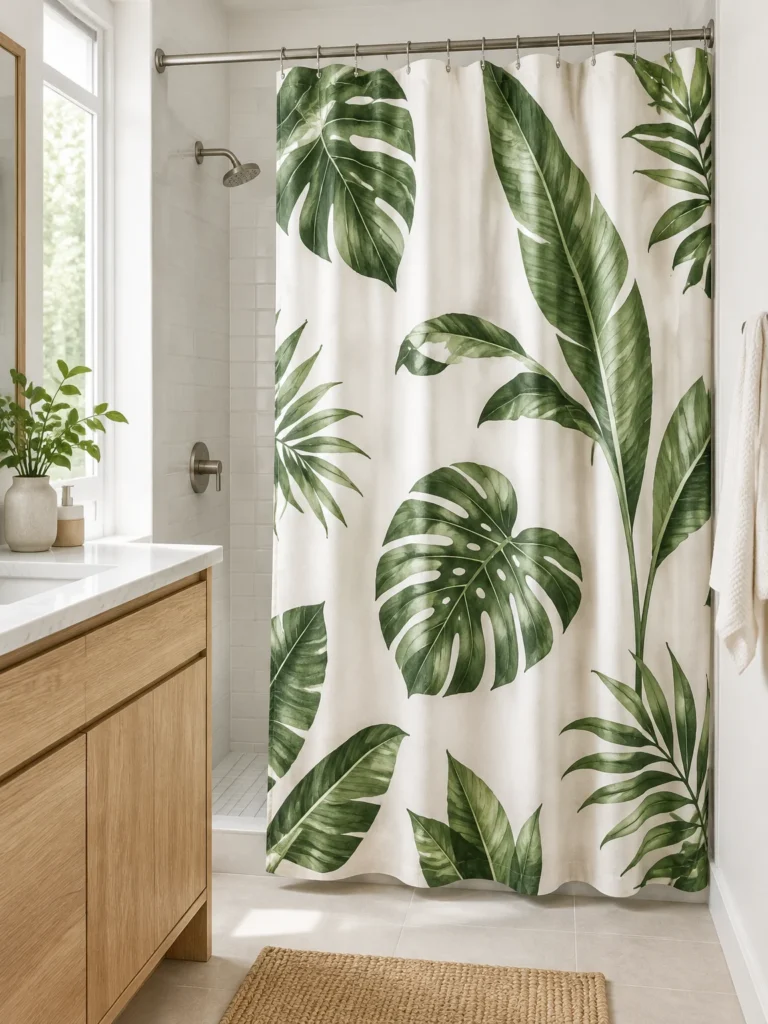
A large botanical print can soften the appearance of a walk-in shower and introduce color without requiring a major renovation. Oversized leaves, branching stems, or loose foliage bring a natural element into bathrooms that otherwise feel dominated by tile and glass.
For a fresh, bright look, try green leaves on an ivory background. Darker foliage against a warm white ground can create more contrast while keeping the overall palette calm.
Pay attention to the scale of the print. Large motifs work well on tall curtains because the design has room to unfold, while densely packed leaves can feel busy in a small shower. Keep towels and bath mats within two or three complementary colors.
7. Use a Vintage-Inspired Block Print
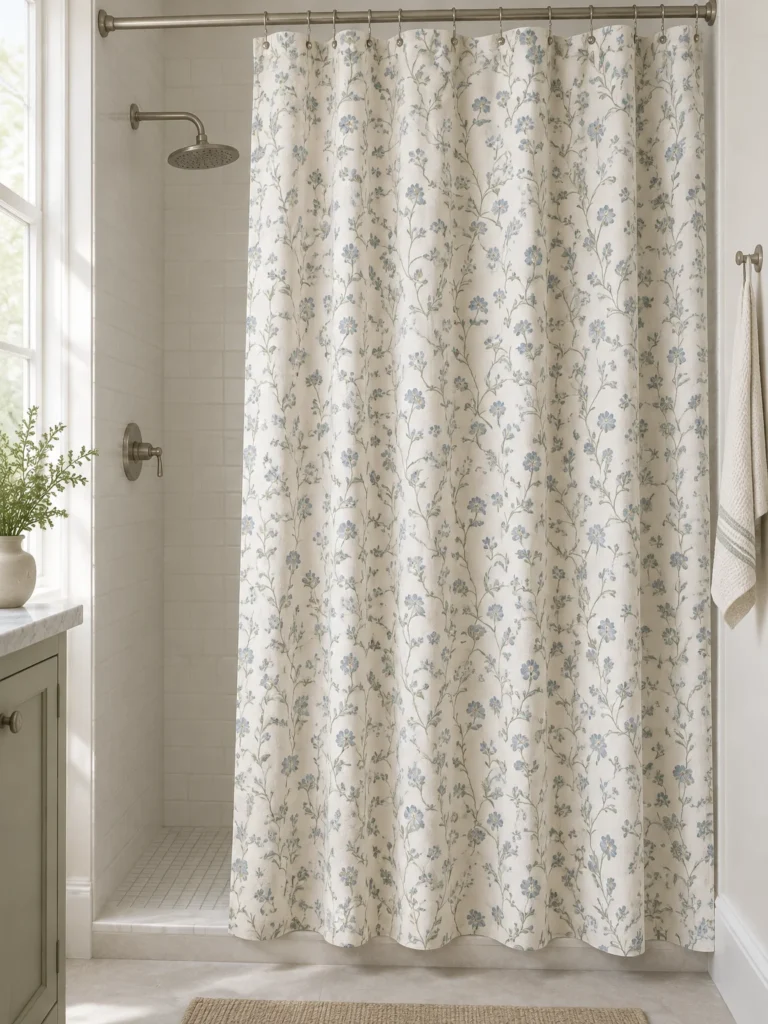
A block-print-inspired curtain adds the character of an old-fashioned textile to a modern bathroom. Small floral branches, delicate vines, or repeated botanical motifs work particularly well when the rest of the room has simple fixtures and understated tile.
Look for a pattern in muted blue, soft sage, rust, or warm brown. These colors can connect the shower curtain to wooden accessories or the finish of a vanity without requiring everything to match precisely.
This style suits traditional homes, cottage-inspired interiors, and bathrooms with vintage details. To keep it from looking overly decorative, choose one dominant print and leave the surrounding surfaces relatively simple.
8. Make a Statement With a Deep, Solid Color
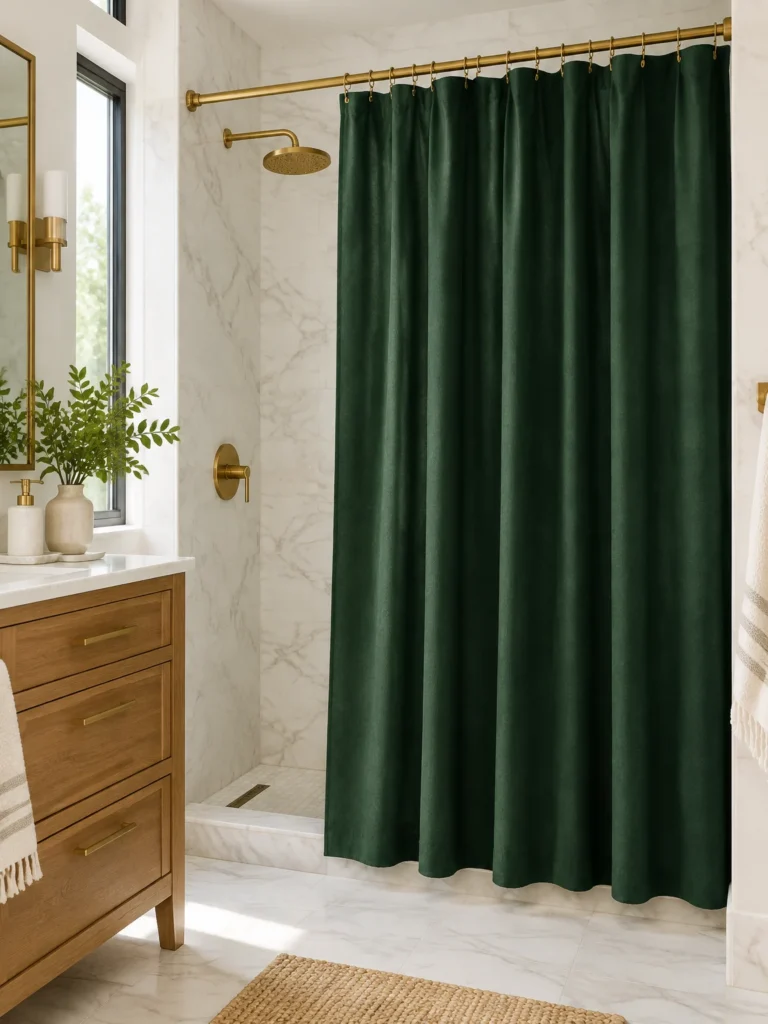
A long curtain in forest green, deep teal, navy, or burgundy can give a neutral bathroom a stronger sense of design. Instead of relying on a complicated pattern, the curtain itself becomes the room’s main accent.
Deep green works particularly well with warm wood and brass finishes, while navy complements white tile and chrome. Burgundy can bring warmth to bathrooms with cream walls and darker wood cabinetry.
Before choosing a saturated color, look at the bathroom’s natural and artificial lighting. A dark curtain may create a striking contrast in a bright room, but it can visually dominate a narrow space with little natural light.
Styling tip: Repeat the curtain color in just one or two small details, such as a hand towel or bath accessory, rather than matching every item.
9. Choose a Color-Blocked Design
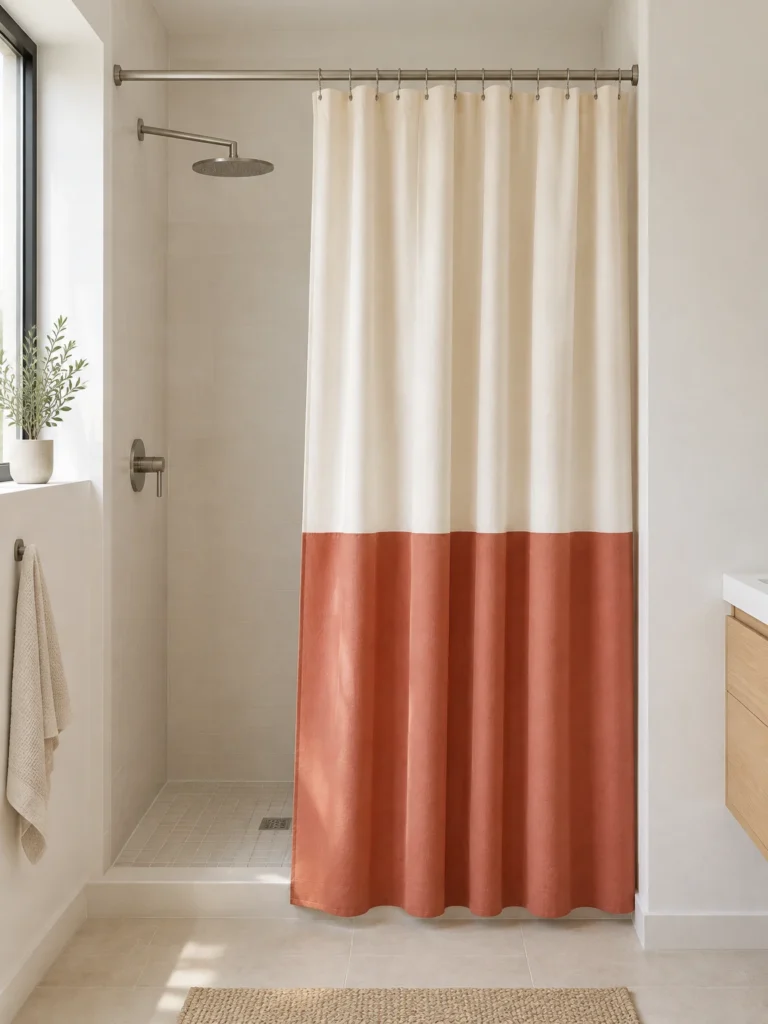
Color blocking gives you a contemporary look without the visual complexity of a detailed print. A curtain with a warm white upper section and a muted terracotta lower section, for example, can connect pale walls to darker flooring.
Other combinations worth considering include navy and ivory, olive and sand, or charcoal and white. The key is to choose colors already present in the bathroom or use the curtain to introduce one deliberate accent.
This idea works particularly well when the shower wall is plain. If the tile already includes several contrasting colors, a two-tone curtain can become one visual element too many. Look for a design with clean divisions rather than multiple small panels.
10. Add Contrast With Piping or a Decorative Border
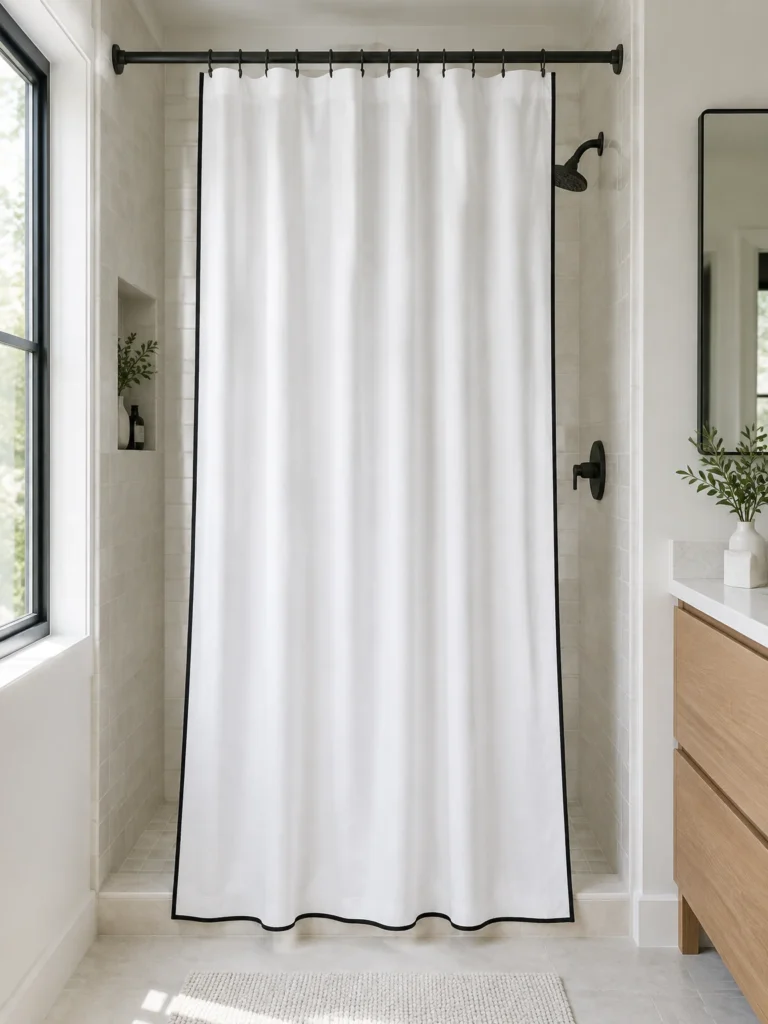
A simple curtain with contrasting trim gives a bathroom a finished, tailored appearance. Black piping on white fabric creates a crisp modern look, while navy edging feels more traditional. A warm brown or muted gold-toned border can complement wood and brass finishes.
Unlike an all-over print, the border defines the curtain’s shape without competing with the surrounding tile. It can also connect the curtain visually to dark window frames, vanity hardware, or a framed mirror.
For a long curtain, a border along the sides can emphasize its vertical lines. Check that the trim and stitching are suitable for a humid bathroom, and follow the manufacturer’s instructions when laundering the curtain.
11. Go for a Tailored, Softly Pleated Curtain
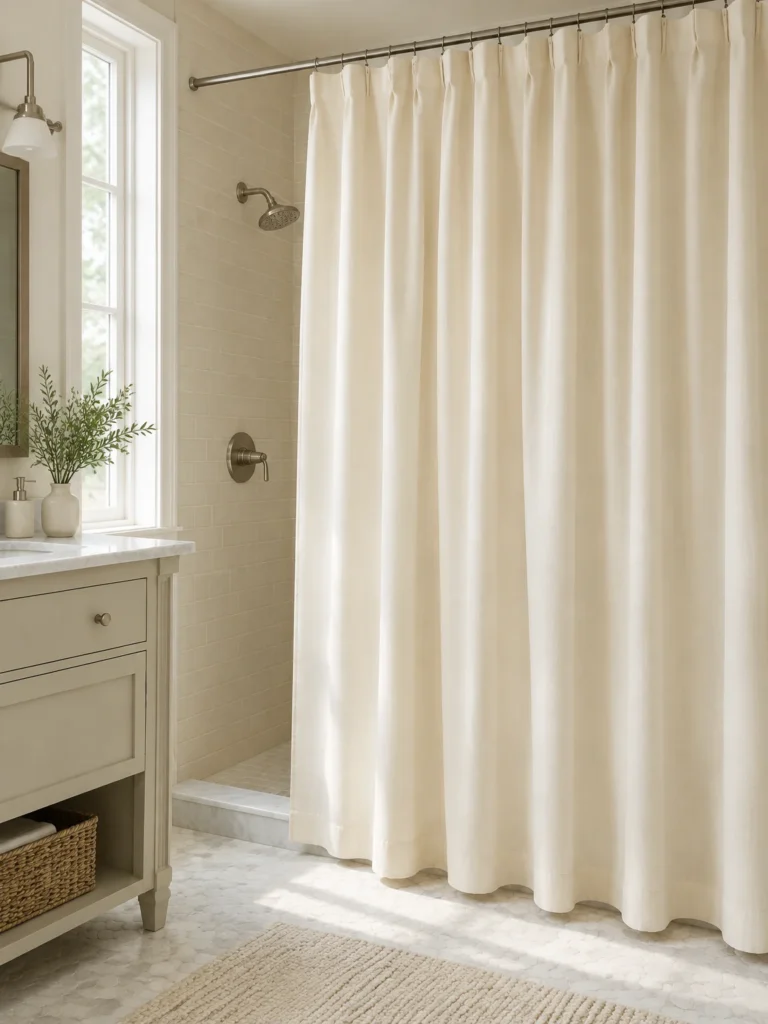
A curtain with soft, evenly spaced pleats creates a more tailored appearance than a flat panel pulled tightly across the rod. The folds provide depth and make a plain fabric look more considered.
This style pairs nicely with classic tile, a freestanding vanity, and polished or brushed-metal hardware. It also works in contemporary bathrooms when the fabric is plain and the pleating is restrained.
The practical detail is width. A curtain that is too narrow will hang nearly flat, while sufficient fabric creates fuller folds. Measure the opening and check the finished curtain width before buying. Also consider how much space the folded curtain will occupy when pulled open.
12. Try a Black-and-White Graphic Pattern
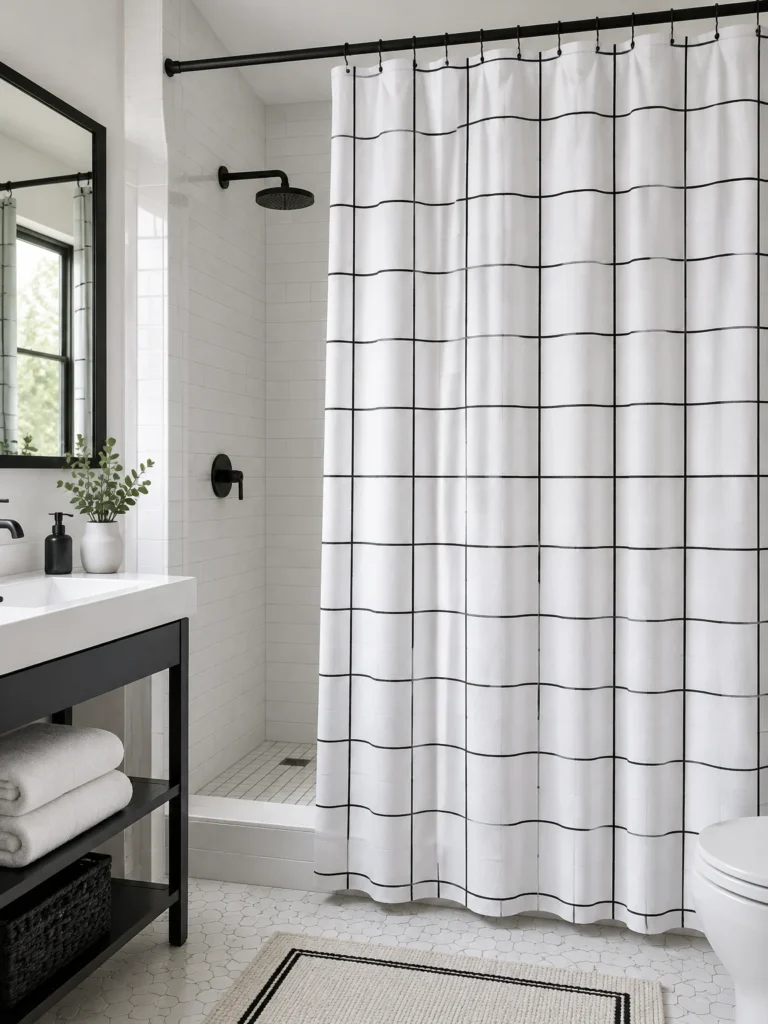
Geometric patterns give a bathroom a more graphic, architectural feel. A black-and-white grid, simple checker pattern, or repeated linear motif can tie together black fixtures, framed mirrors, and monochrome tile.
Choose a relatively large, well-spaced pattern if you want the curtain to stand out without overwhelming the room. Smaller, tightly repeated shapes create a busier effect and may compete with grout lines or patterned flooring.
For a balanced result, keep most of the surrounding surfaces white or light gray and limit additional black accents to a few deliberate details. A long curtain already creates a large visual area, so the pattern does not need to be complicated.
13. Use an Extra-Wide Curtain for Fuller Folds
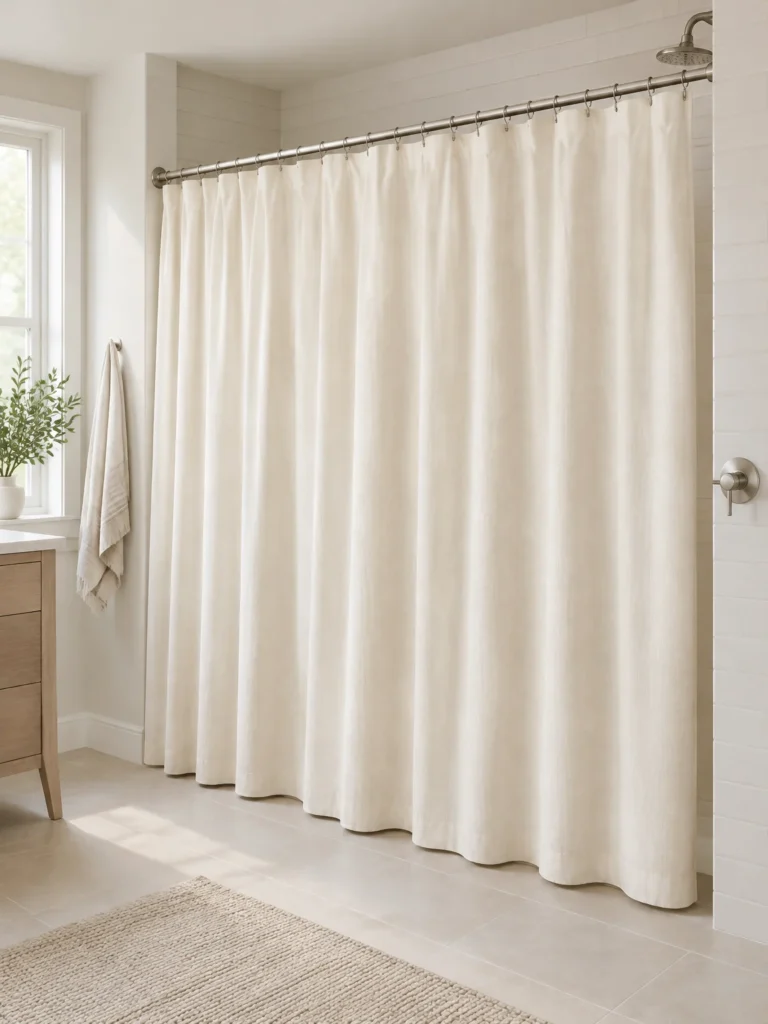
Length is only one part of the fit. On a wide walk-in shower, a curtain can reach the correct height but still look skimpy if it barely spans the opening.
An extra-wide curtain gives you more material for soft folds and helps provide coverage across the shower entrance. This can be especially useful for wide openings where a standard-width panel does not close comfortably.
Measure the entire opening and consider how much overlap you need at the edges. If one panel cannot cover the space well, look for a wider size or a suitable two-panel arrangement. Check how the panels meet in the middle and whether the curtain can remain closed securely during use.
14. Layer a Decorative Curtain With a Separate Waterproof Liner
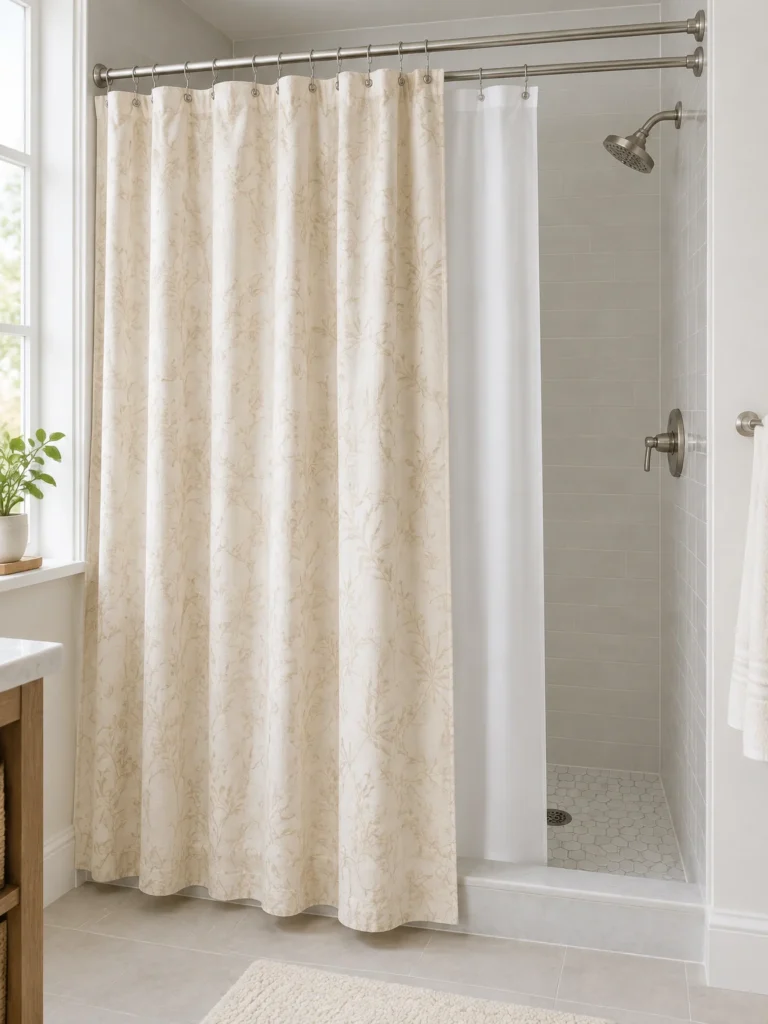
A decorative fabric curtain can bring softness and color to the bathroom, while a separate waterproof liner handles the direct contact with shower water. This arrangement offers more design flexibility than relying on a single functional-looking curtain.
A double curtain rod makes it easier to position the layers independently. The outer curtain can coordinate with the vanity or wall color, while the liner stays on the shower side to help contain splashes.
Make sure both layers are long enough for the installation. The liner should not hang so high that water can escape beneath it, and the decorative panel should not trail on a wet floor. Follow the care instructions for both pieces and spread them out after showering so they can dry.
15. Fit a Curved Track to the Shower’s Shape
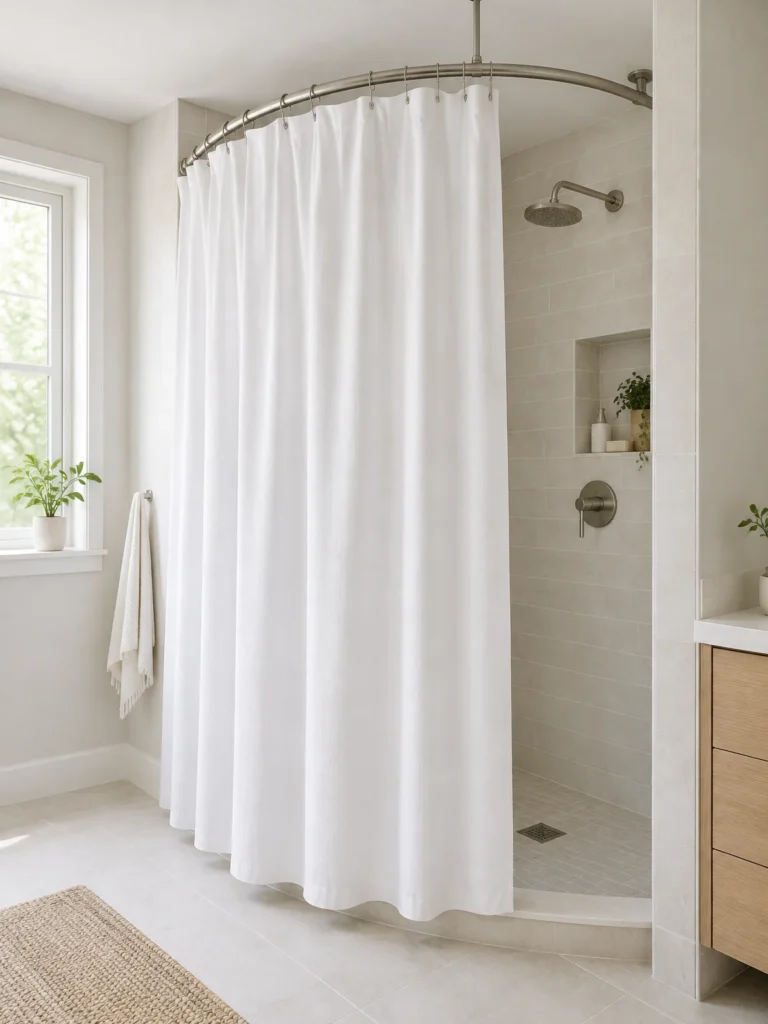
Not every walk-in shower has a straight opening. A curved or angled entrance may need a track designed specifically for its shape, particularly when a straight rod leaves an awkward gap or causes the curtain to pull unevenly.
A compatible curved track allows the curtain to follow the opening more closely. Combined with an extra-long curtain in a plain fabric, it can create a continuous, tidy line without drawing attention to the hardware.
This option requires a little more planning than simply buying a longer panel. Confirm the track’s measurements, mounting requirements, and compatibility with the shower layout. For unusual or very tall openings, consider a made-to-measure curtain rather than assuming a standard size will fit.
How to Choose the Right Length for a Walk-In Shower
A curtain can look beautiful in a photograph and still be impractical if it is too short, too wide, or poorly positioned. Before choosing a design, measure your own shower rather than relying on the label extra long.
Retailers sell different lengths, including 84-inch and 96-inch options, alongside standard 72-inch curtains. Availability varies, and the right length depends on where the curtain will hang. Target’s current shower curtain listings provide examples of these different sizes. A walk-in shower sizing guide also explains why both the opening width and the rod-to-bottom distance matter.
Use these steps before ordering:
- Measure the height. Measure from the curtain’s hanging point to the spot where you want the bottom edge to finish. Account for the drop created by hooks or rings.
- Check the width. Measure the shower opening and select enough fabric to cover it with comfortable overlap and folds.
- Decide on the hanging style. A standard rod, ceiling-mounted track, and curved track create different results. The mounting method affects the length you need.
- Check the floor clearance. Aim for a hem that stays close enough to help contain splashes but does not pool on the floor. For a curbless shower or a layout with unusual water flow, pay particular attention to the enclosure and liner arrangement.
- Confirm the fabric and care requirements. Check whether the curtain requires a separate waterproof liner and whether it can be washed according to your routine.
The important distinction is that extra length does not automatically mean better coverage. Width, placement, and the way water moves through the shower matter just as much.
Which Shower Curtain Style Works Best?
Your choice should complement both your bathroom design and your daily routine.
- For a small bathroom: A simple, light-colored curtain hung higher on the wall can emphasize vertical lines without introducing too much visual detail.
- For a spa-inspired bathroom: White waffle weave, a soft neutral texture, or a subtle linen-look fabric keeps the atmosphere calm.
- For a contemporary bathroom: Try deep green, a graphic geometric pattern, or a color-blocked design.
- For a traditional bathroom: A vintage botanical print, tailored pleats, or contrasting trim introduces character without requiring new fixtures.
- For an unusually tall or wide shower: Prioritize measurements and coverage first. A wider or custom-sized curtain may matter more than the exact pattern.
Whatever style you choose, remember that a decorative outer curtain and a functional waterproof liner have different jobs. If you use both, make sure their lengths, widths, and positions work together.
Final Thoughts
Extra-long shower curtains can do more than cover a walk-in shower. They can emphasize ceiling height, introduce texture, soften hard surfaces, or add a strong color to an otherwise understated bathroom.
Start with the dimensions of your shower, then choose the design that suits the existing tile, fixtures, and available light. A simple white curtain may be all a busy bathroom needs, while a botanical print or tailored border can bring personality to a plainer space.
The best result is a curtain that fits properly, looks intentional, and works comfortably in everyday use—not just one that happens to be longer than standard.