Some of the best fall afternoons start with a child collecting twelve leaves and calling it a treasure hunt. The challenge isn’t finding something to do; it’s finding an activity that doesn’t take more work than the afternoon itself. These fall activities for kids combine outdoor adventures, easy crafts, playful games, and indoor ideas for rainy days, using everyday supplies and simple setups that families can enjoy together.
Outdoor Fall Activities for Kids
1. Visit a Pumpkin Patch
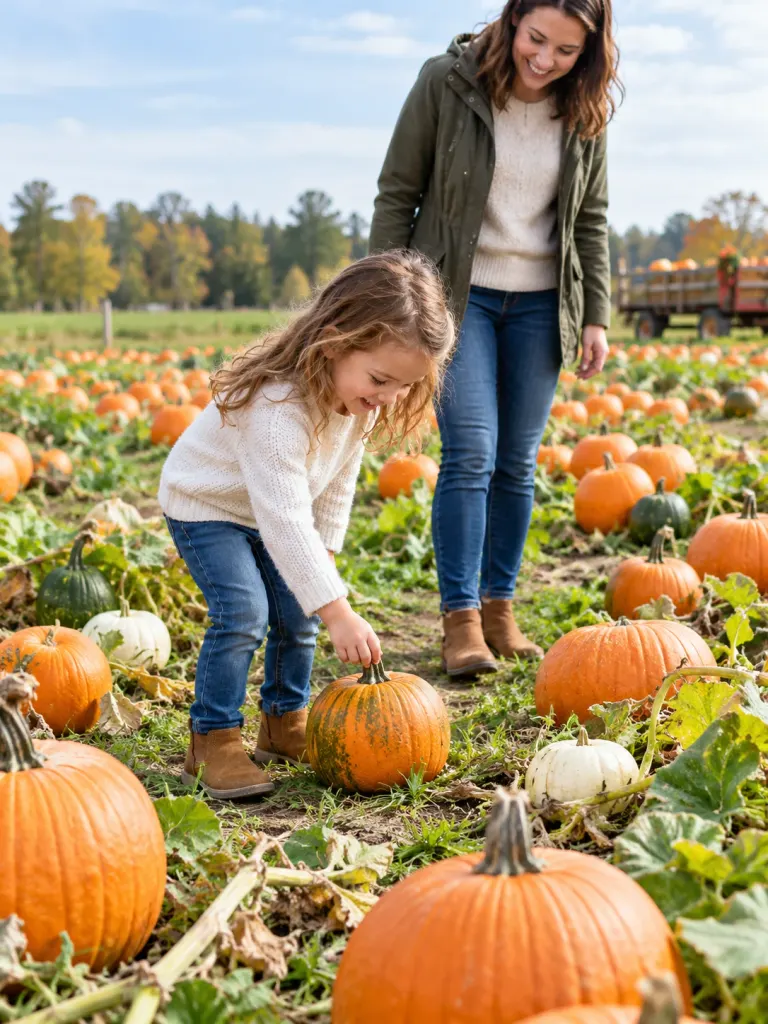
A pumpkin patch can turn an ordinary outing into a memorable fall adventure. Let each child choose a pumpkin, explore different shapes and colors, and look for the smallest, largest, or most unusual one.
What you’ll need: A local pumpkin patch, comfortable shoes, and a bag for smaller pumpkins.
Make it more fun: Give each child a pumpkin-hunting challenge, such as finding a pumpkin that looks like a funny face or one with an unusual shape.
Budget-friendly alternative: Visit a grocery store or local market and let each child choose a small pumpkin to decorate at home.
2. Go Apple Picking or Try an Apple-Tasting Activity
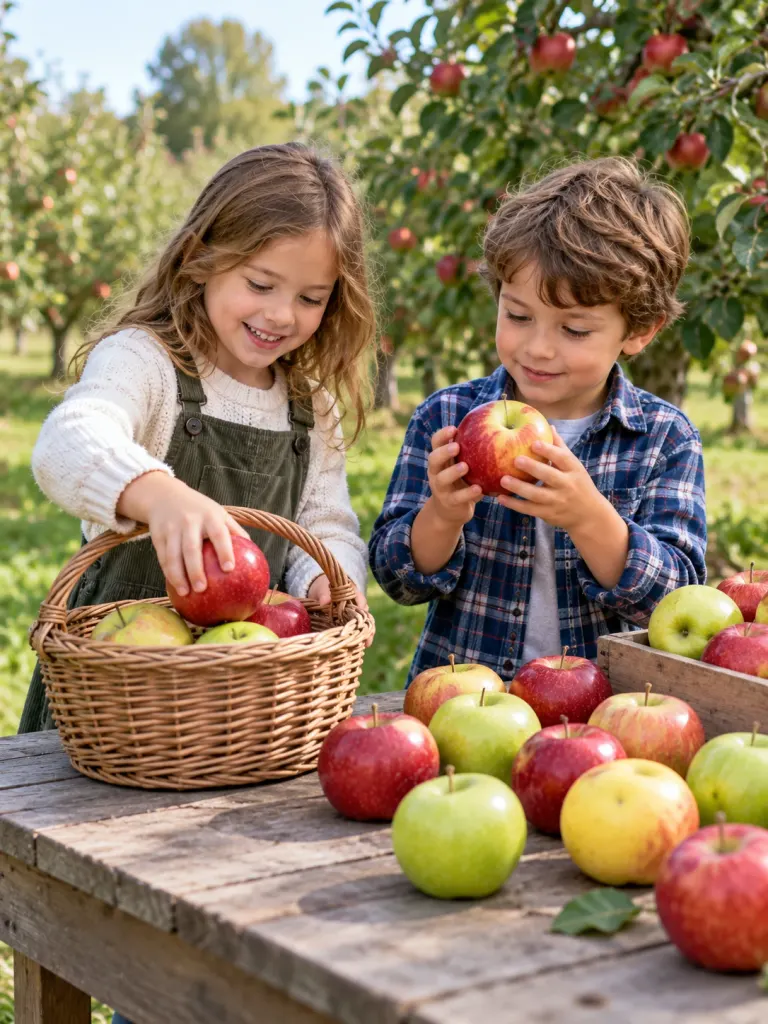
If an orchard is nearby, let children pick apples and fill a small basket. They can count their apples, compare sizes, and notice how different varieties look.
If an orchard trip isn’t practical, recreate the experience at home with apples from the market.
Try this: Slice several apple varieties into age-appropriate pieces and invite children to compare their sweetness, texture, and smell. Make a simple chart to record everyone’s favorite.
This activity combines seasonal fun with opportunities to practice counting, describing, and comparing.
3. Explore a Corn Maze or Take a Hayride
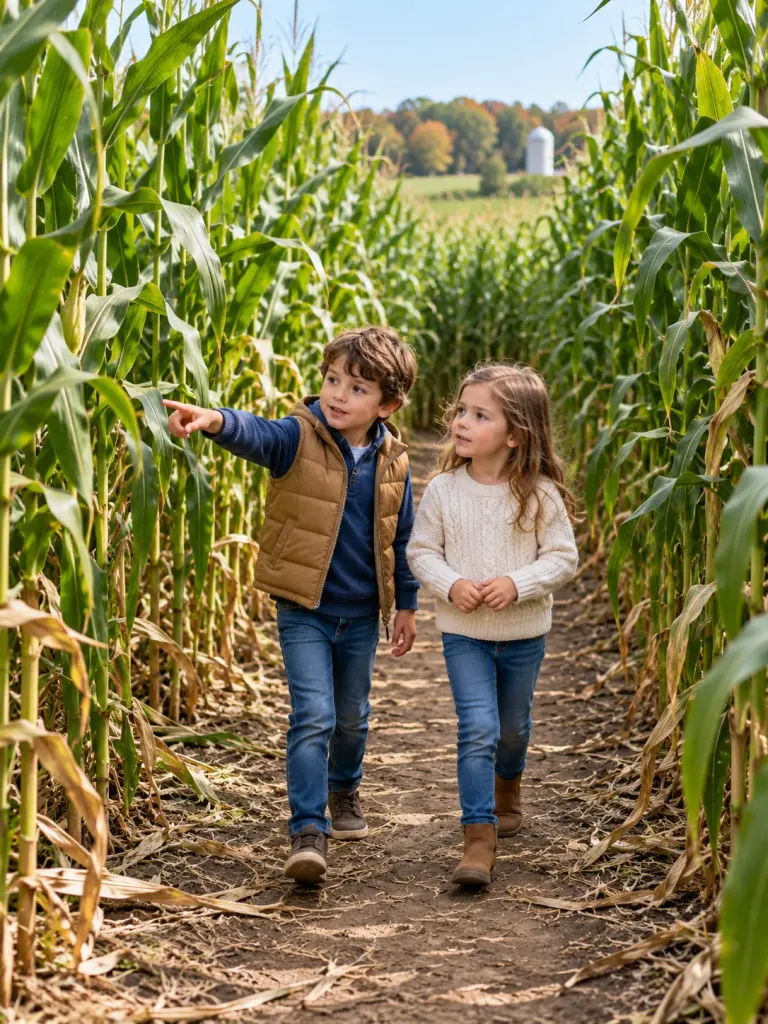
Corn mazes give children a chance to solve problems while exploring an unfamiliar space. Encourage them to look for landmarks, choose turns, and explain which direction they think leads to the exit.
Check local farm websites for opening dates, admission prices, and age-appropriate activities before visiting.
At-home alternative: Arrange cushions, chairs, or large cardboard boxes into a simple maze in the garden or living room. Ask children to find their way through without knocking anything over.
4. Rake Leaves and Jump Into the Pile
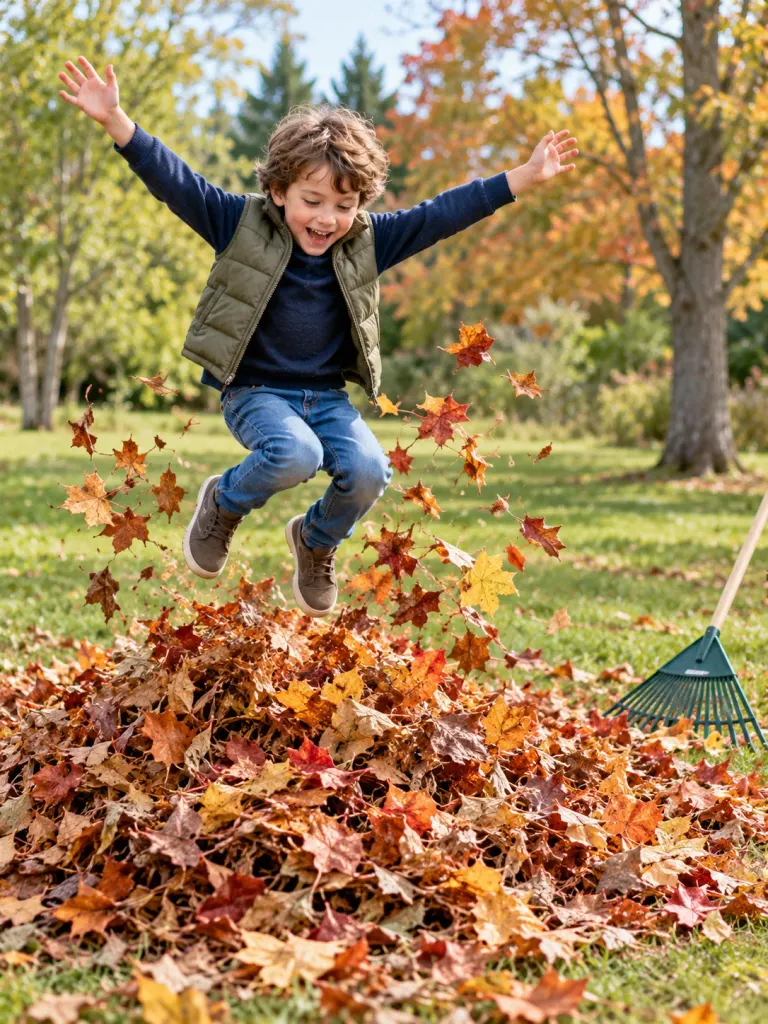
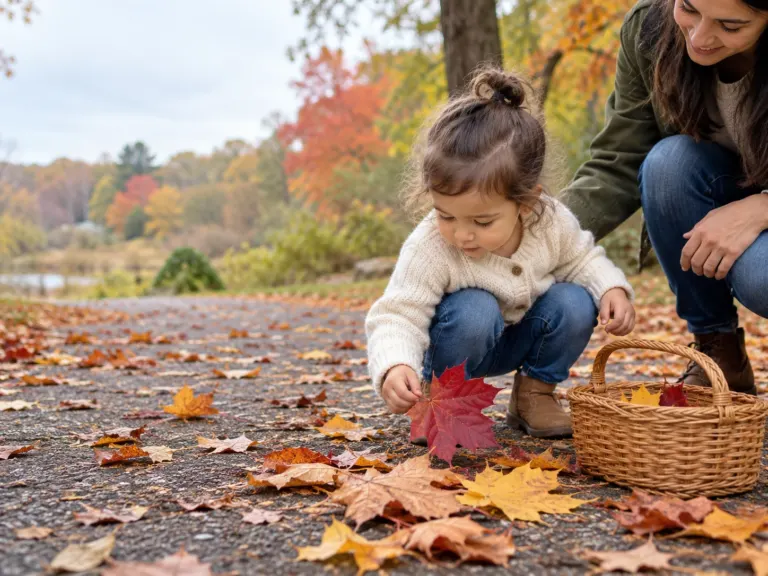
Turn yard work into a game by letting children help gather fallen leaves. Once you’ve made a pile, they can jump into it, toss leaves into the air, and rake them together again.
The cleanup becomes part of the entertainment, too.
Safety tip: Check the area for sticks, stones, animal waste, and other hidden hazards. Use a clear patch of grass, and avoid jumping into wet or slippery leaves.
For children who don’t have access to a leafy yard, use clean artificial leaves or crumpled paper for a similar tossing game indoors.
5. Organize a Fall Nature Scavenger Hunt
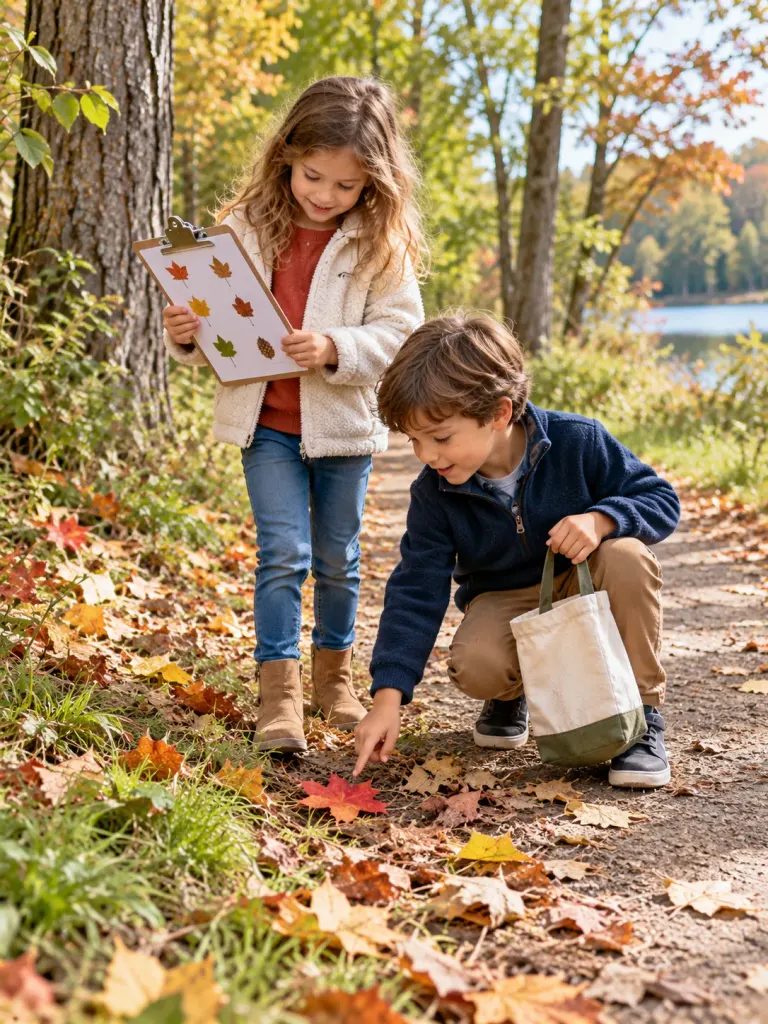
A scavenger hunt gives an ordinary walk a purpose, especially when younger children start losing interest after a few minutes.
Create a checklist of things to spot:
- A red, yellow, and brown leaf
- A smooth stone
- A feather on the ground
- A tree with textured bark
- A bird or squirrel
- Something shaped like a circle
- An object that makes an interesting sound
For preschoolers: Use pictures instead of words and keep the list short.
For older children: Add a time limit or ask them to describe each discovery.
Let children observe rather than collect everything they find. Supervise closely around small natural objects that could pose choking hazards.
6. Take an Autumn Color Walk
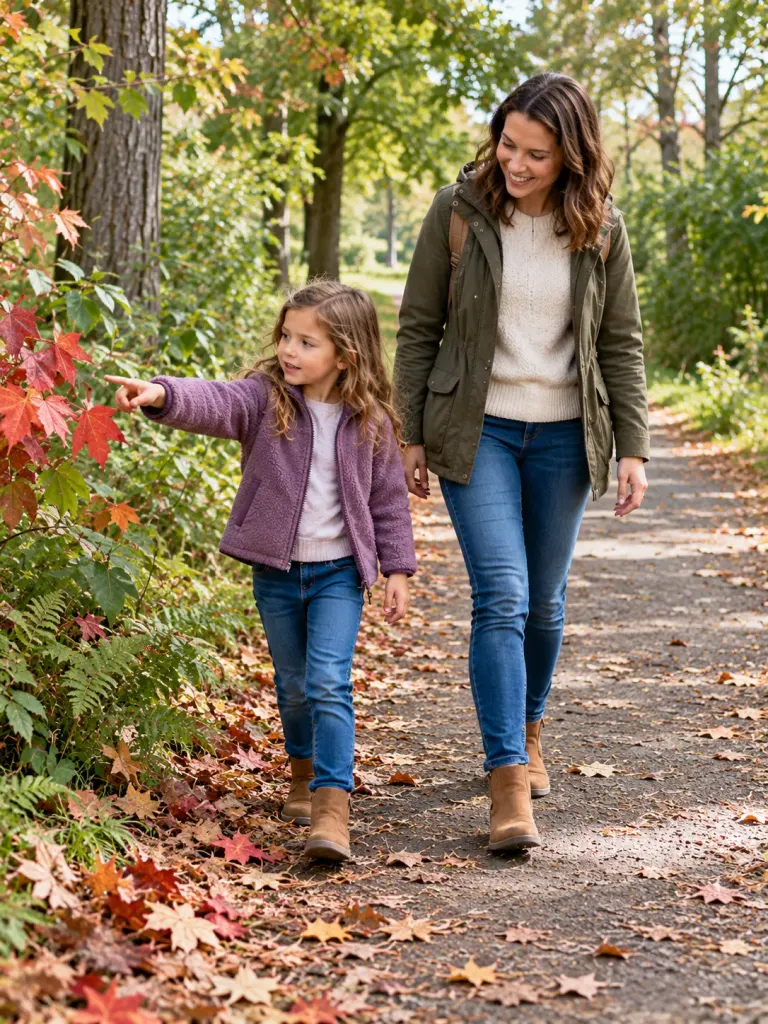
You don’t need a long hike to make a walk interesting. Choose a nearby park, garden, or neighborhood route and challenge children to notice colors, shapes, shadows, and sounds.
Try a simple color challenge: find five shades of green, three yellow objects, or two things that resemble animals.
Older children can sketch their discoveries in a notebook, while younger children can point out colors for an adult to name.
If your local environment doesn’t have colorful autumn leaves, focus on interesting plants, stones, clouds, or changing patterns of sunlight. The observation game works in any season.
7. Become Nature Detectives
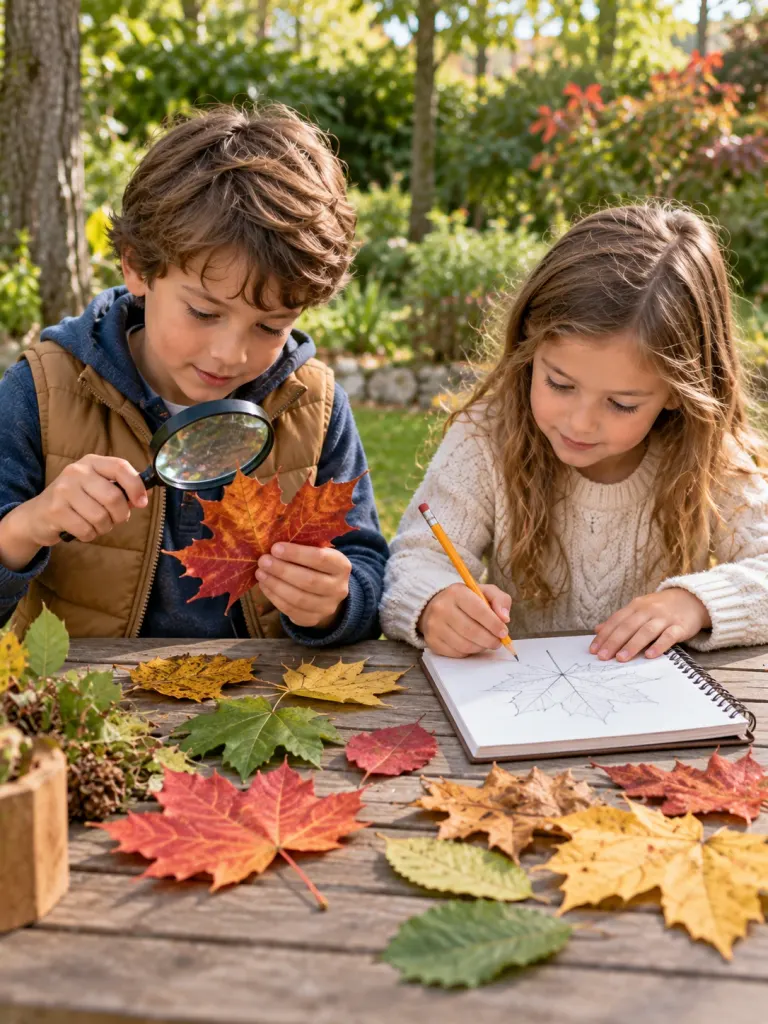
Give children a chance to investigate the natural world like little scientists. Collect a few safe, fallen leaves and compare their shapes, edges, textures, and sizes.
Ask questions such as:
- Which leaf has the smoothest edge?
- Which leaf feels rougher?
- Why do you think these two leaves look different?
- Can you group the leaves by shape or color?
For younger children: Compare just two large leaves and describe them as smooth, rough, wide, or narrow.
For older children: Sketch the leaves and organize them into groups based on their features.
This simple activity introduces observation and classification without worksheets or formal lessons.
Easy Fall Crafts for Kids
8. Decorate Pumpkins Without Carving Them
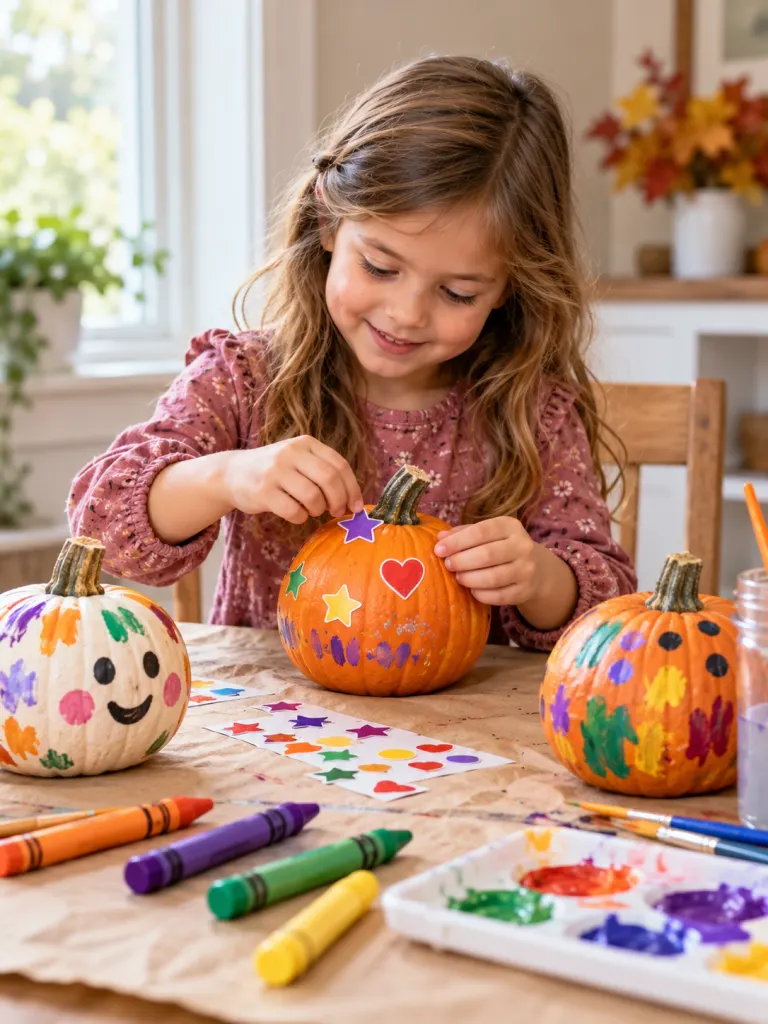
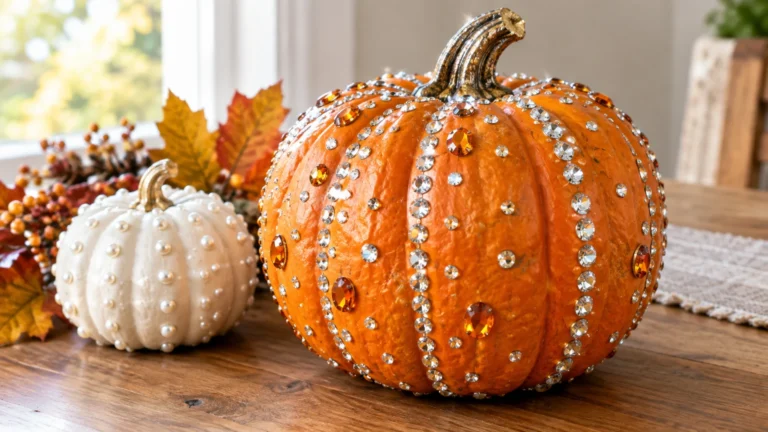
Pumpkin decorating is an easy way to bring autumn indoors without sharp carving tools. Set out small pumpkins, washable paint, stickers, and thick markers, then let children create faces, patterns, animals, or imaginary characters.
Cover the table with newspaper or a reusable tablecloth to make cleanup easier.
Ideas by age:
- Ages 2–4: Offer large stickers and chunky, washable crayons.
- Ages 5–7: Encourage faces, stripes, dots, and simple animal designs.
- Ages 8 and up: Try themed pumpkins, geometric patterns, or a family design contest.
Choose age-appropriate craft materials, supervise younger children, and let an adult handle any cutting.
9. Make Leaf-Rubbing Art
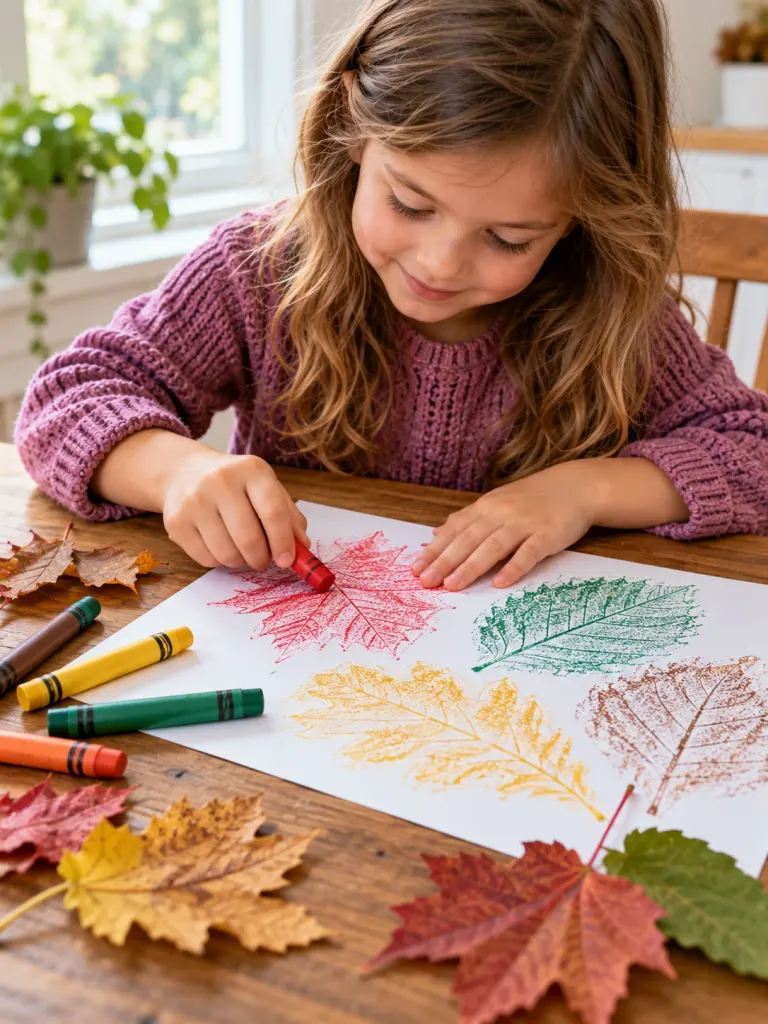
Leaf rubbing is one of the simplest fall crafts because it requires only leaves, paper, and crayons.
Place a leaf with visible veins beneath a thin sheet of paper. Hold the paper still while your child rubs a crayon sideways across the surface until the leaf’s shape appears.
Try different leaves and crayon colors to create a collection of autumn patterns.
Turn the artwork into something useful: Use finished rubbings to decorate greeting cards, bookmarks, or a seasonal display.
Dry leaves that lie flat are usually easier to work with than fresh, curled leaves.
10. Create a Nature Collage
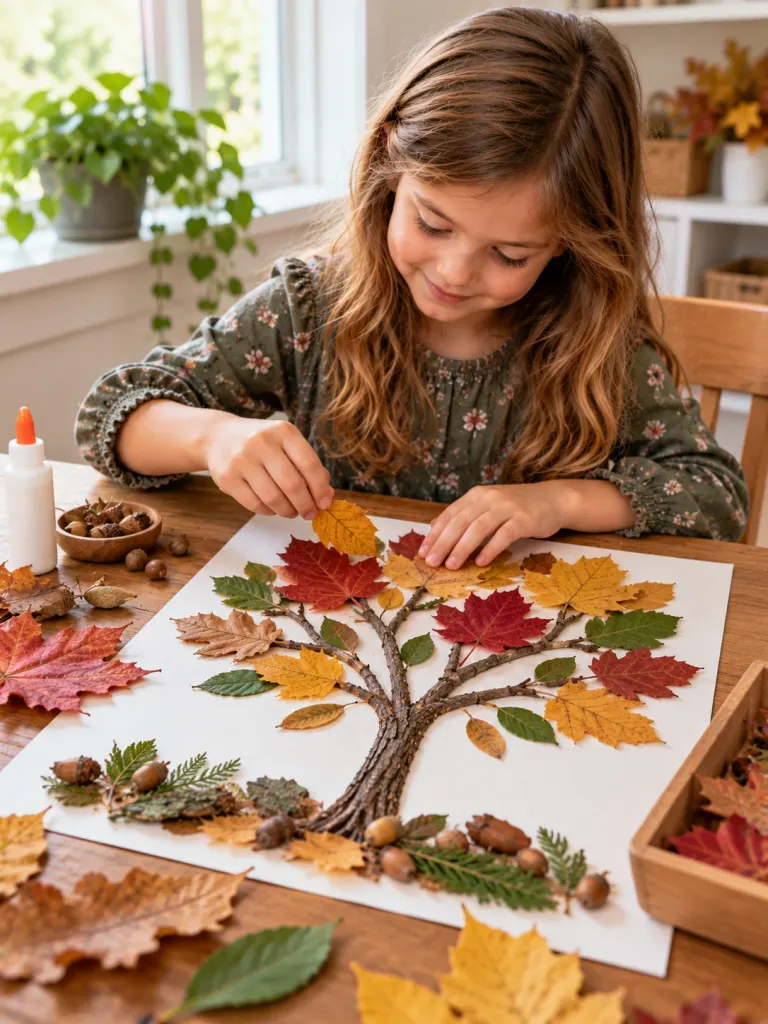
Let children turn their outdoor discoveries into a piece of art. Gather safe, dry leaves and suitable natural materials, then arrange them on thick paper before gluing anything down.
Children can create a tree, an animal, a landscape, or an abstract picture using different colors and textures.
Make it easier: Draw a simple tree trunk or animal outline on the paper before children begin arranging their materials.
For children who still put objects in their mouths, replace small natural items with larger paper shapes and supervise the activity closely.
11. Make a Pinecone Bird Feeder
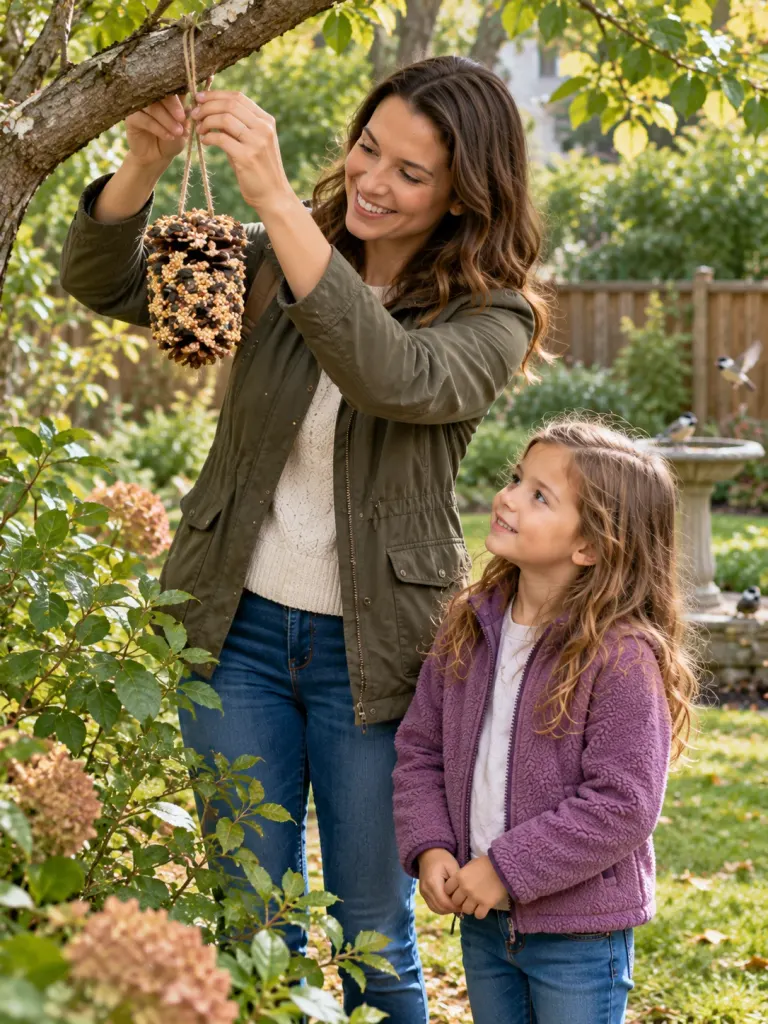
This craft combines a creative project with an opportunity to observe local wildlife.
Choose a clean pinecone, attach a strong piece of string, coat it with a suitable bird-safe feeder mixture, and roll it in birdseed. An adult should handle the string and help select ingredients appropriate for local birds.
Hang the finished feeder in a suitable location and watch from a window to see which birds visit.
Extend the activity: Keep a simple bird-watching record for several days. Children can draw the birds they see and note when they visit.
Consider allergies before choosing ingredients, and keep loose seeds and small materials away from young children.
12. Set Up a Fall Sensory Bin
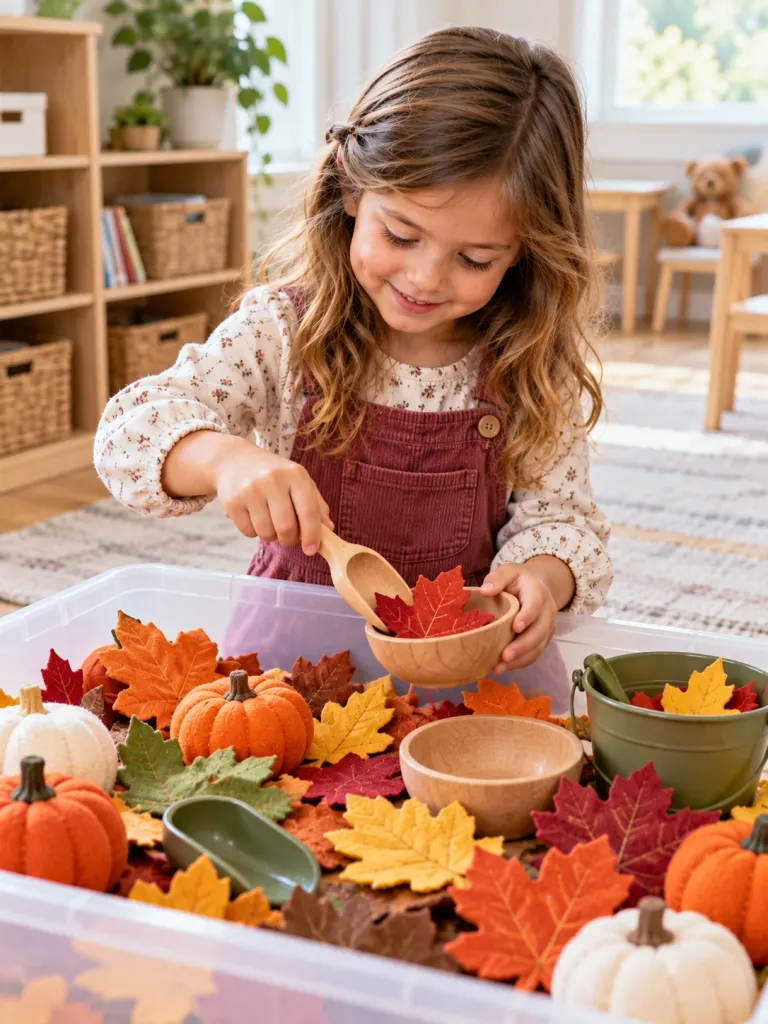
A sensory bin lets children explore textures, sort objects, and invent games without following a set craft project.
Fill a shallow container with age-appropriate materials such as fabric leaves, large toy pumpkins, chunky scoops, and small cups. Invite children to sort objects by color, transfer them between containers, or pretend they’re running a miniature harvest market.
For toddlers: Avoid small loose pieces and supervise continuously, particularly if the child puts objects in their mouth.
For older children: Add counting challenges, sorting tasks, or a pretend shop with reusable play money.
You can change the materials each time to create a fresh activity without buying an entirely new set of toys.
13. Make Cinnamon-Scented Play Dough
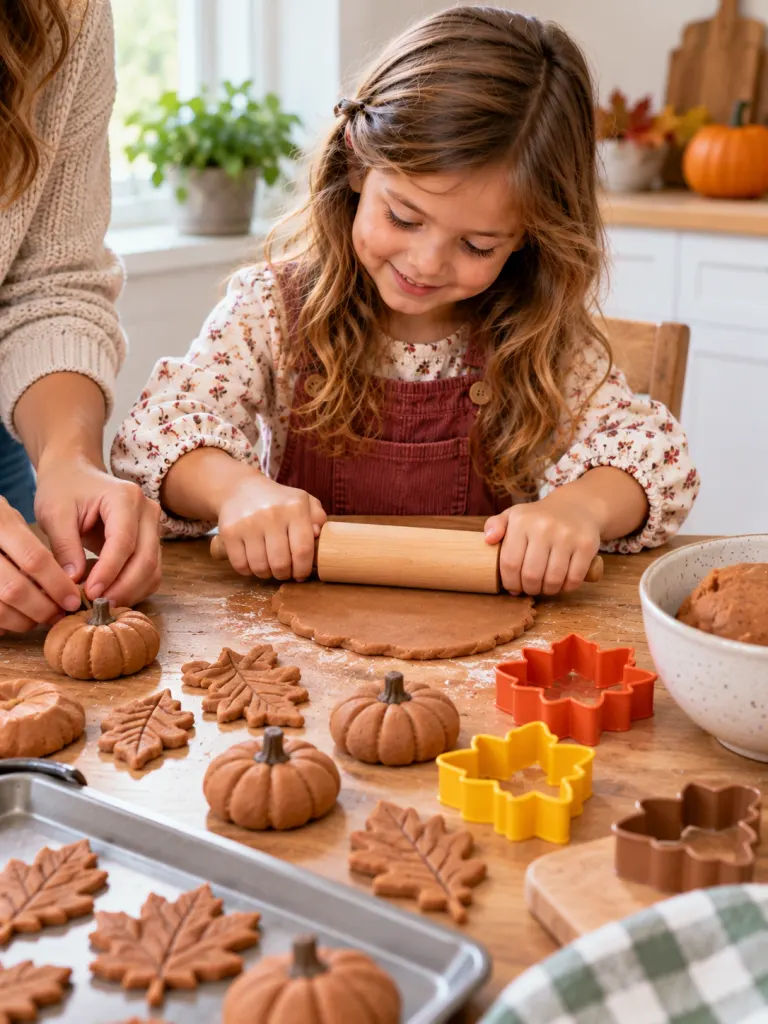
Homemade play dough is a simple rainy-day project that keeps children’s hands busy long after the mixing is finished.
Ingredients:
- 2 cups of flour
- 1/2 cup of salt
- 1 tablespoon of vegetable oil
- Approximately 3/4 cup of water, added gradually
- A small amount of cinnamon, if suitable for your child
An adult can mix the ingredients until a workable dough forms, adding water slowly as needed.
Give children rolling pins and large cookie cutters to create leaves, pumpkins, and pretend autumn treats.
Important: Play dough is not food. Skip the cinnamon if your child has relevant sensitivities, and supervise children who might taste the dough.
Fun Fall Games to Play at Home
14. Play Pumpkin Bowling
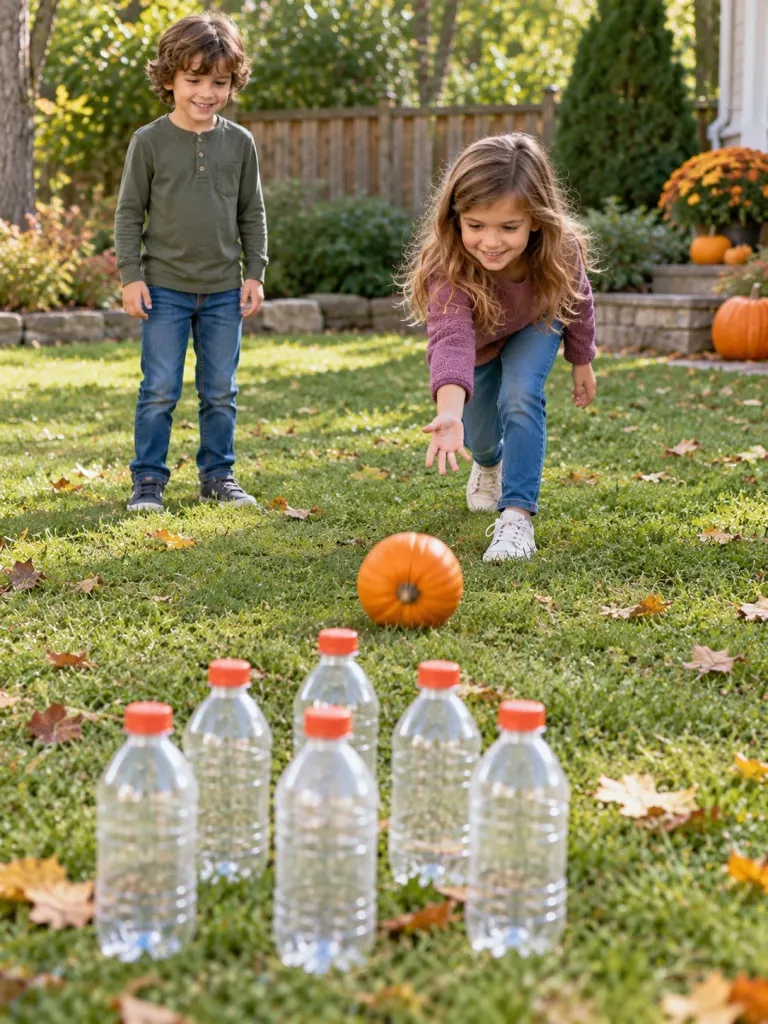
You don’t need a bowling alley to organize a fall-themed game. Arrange six empty plastic bottles in a triangle and let children roll a small pumpkin or an age-appropriate ball toward them.
Mark a starting line with masking tape and count how many pins each person knocks down.
Make it more challenging: Move the pins farther away or give older children two rolls per turn.
For younger children, use a lightweight soft ball instead of a heavy pumpkin. Keep the playing area clear of breakable objects.
15. Play a Fall Festival Leaf-Toss Game
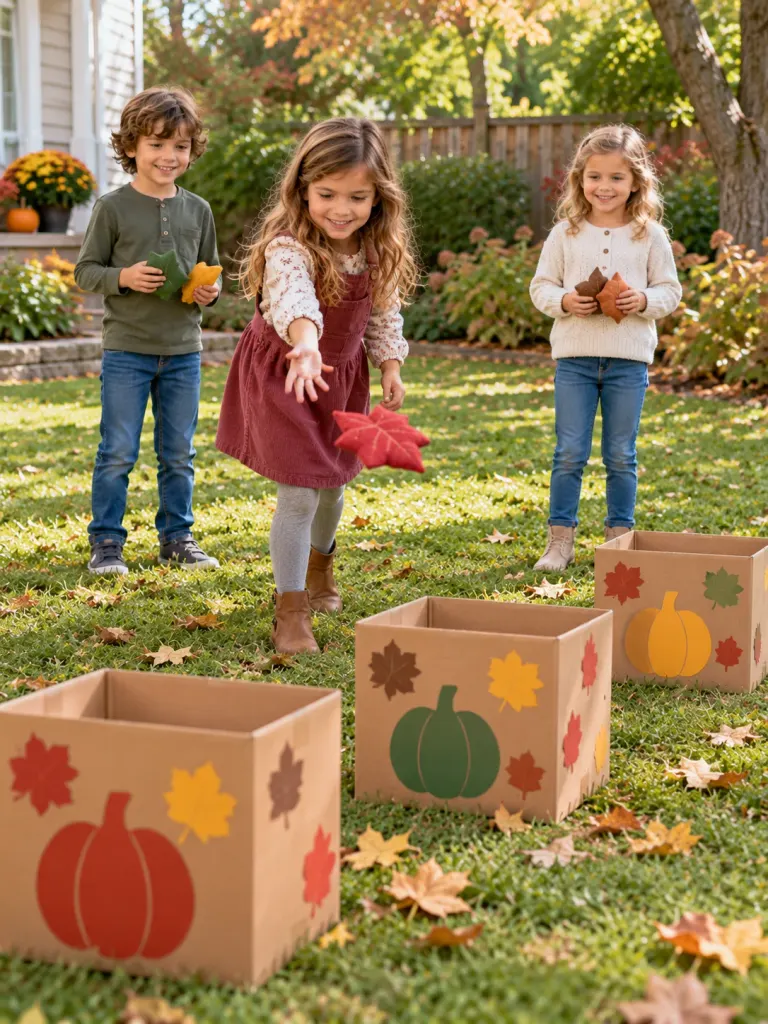
This game works well at home, in a classroom, or at a fall party.
Decorate three cardboard boxes or baskets in autumn colors and assign each one a different point value. Give children fabric leaf-shaped beanbags or soft paper balls to toss into the targets.
Start with the baskets close to the throwing line, then move them farther away as children’s skills improve.
No craft supplies? Use rolled-up clean socks and ordinary laundry baskets.
The game is inexpensive, easy to adapt for different ages, and suitable for groups of children who want to take turns.
16. Build an Indoor Autumn Obstacle Course
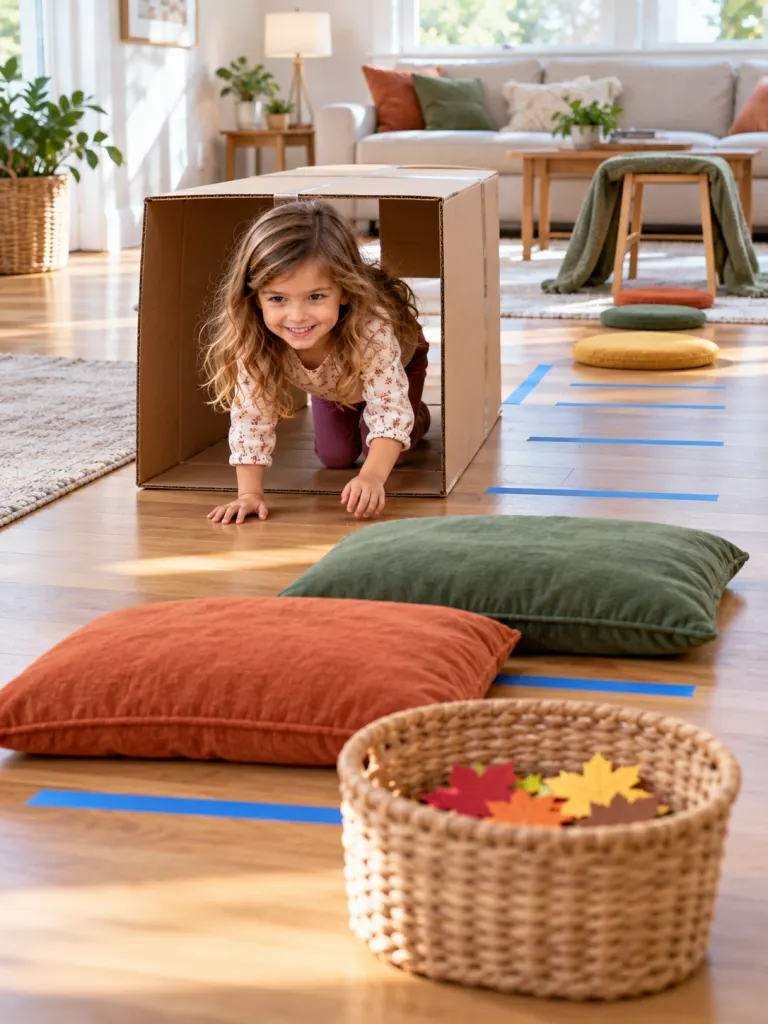
Rainy weather doesn’t have to mean a day without movement. Use cushions, large cardboard boxes, and floor markers to create a simple obstacle course in a clear room.
Try this five-step route:
- Step over a soft cushion.
- Walk around a chair.
- Crawl through a large cardboard-box tunnel.
- Follow a line of floor tape.
- Toss a soft object into a basket at the finish.
Keep the route away from sharp edges, unstable furniture, and slippery surfaces.
Add a fall theme: Place paper leaves at different stations for children to collect, or ask them to move like woodland animals as they complete the course.
17. Bake an Easy Apple Treat Together
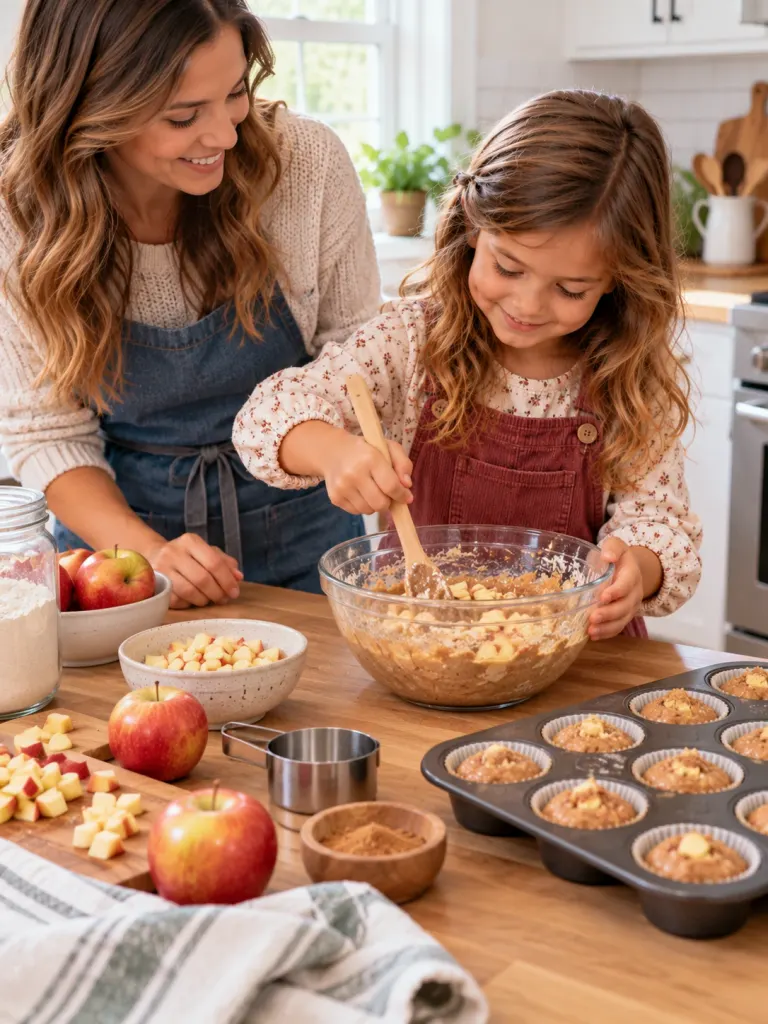
Cooking together turns an ordinary afternoon into an activity with a tasty result. Choose a simple apple muffin recipe or another age-appropriate apple treat, letting children help wash fruit, measure ingredients, stir, and arrange paper cases.
Adults should handle knives, hot trays, and the oven.
Make it educational: Ask children to count spoonfuls, identify ingredients, or describe how the smell changes while the food bakes.
For young children, prepare apples in a shape and texture suitable for their developmental stage. The CDC’s guidance on choking hazards explains why the way certain foods are cut and served matters.
18. Make a Family Gratitude Tree
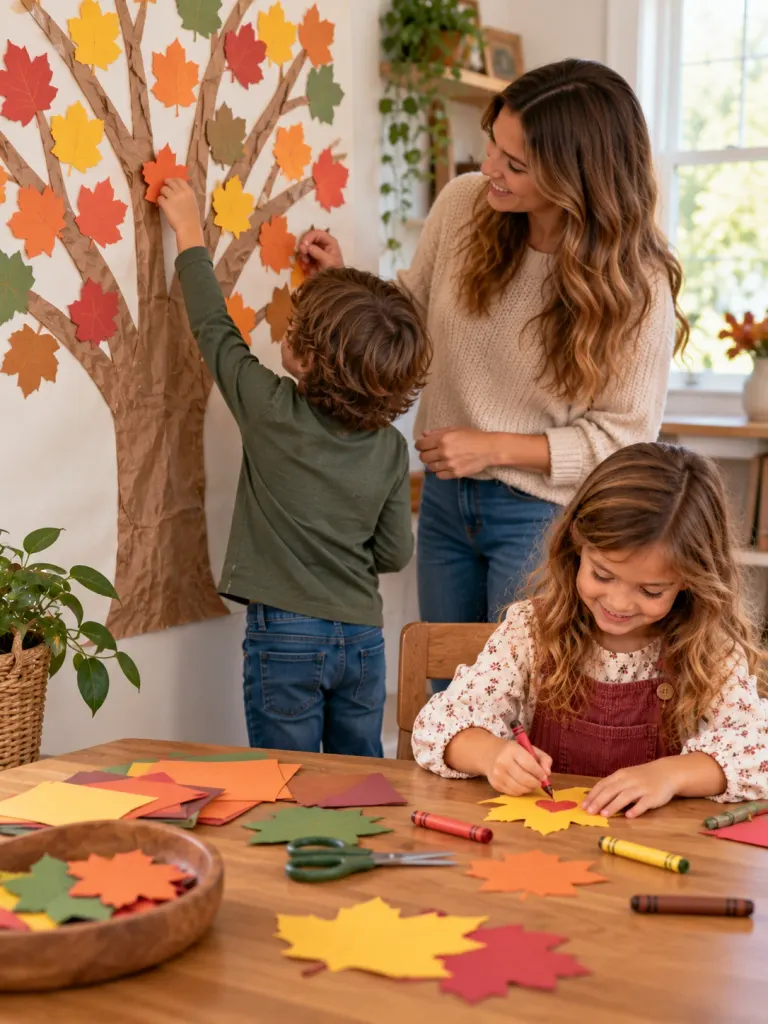
A gratitude tree gives the whole family a project that grows throughout the season.
Cut a tree trunk and branches from brown paper and attach them to a wall or large poster board. Cut out leaf shapes in autumn colors and invite each family member to write or draw something they appreciate.
Younger children can dictate their thoughts while an adult writes them down.
Add new leaves whenever someone wants to recognize a kind gesture, a funny moment, a favorite meal, or another small thing that made their day better.
By the end of the season, the tree becomes a colorful collection of family memories.
19. Have a Cozy Autumn Story Night
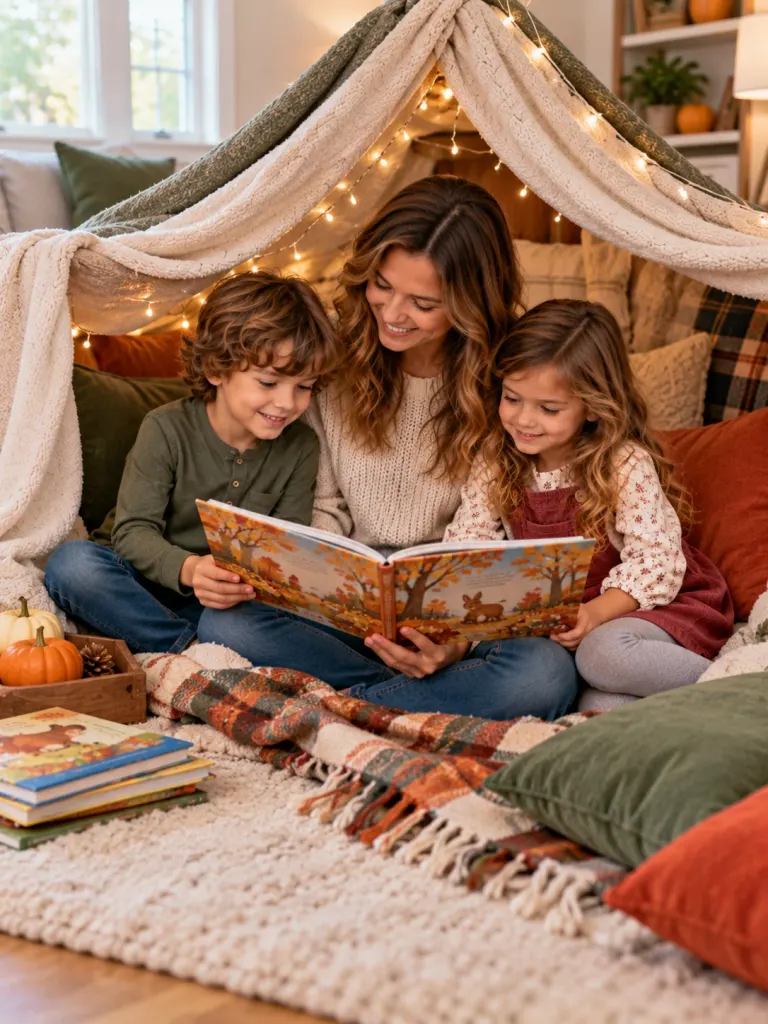
End your list of fall activities with something that requires very little preparation. Build a blanket fort, gather favorite picture books, add pillows, and let children choose the evening’s story.
For older children, turn it into a themed movie night with an age-appropriate family film and a favorite snack.
You can also invent a story together. One person introduces a character, the next adds a problem, and another decides how the story ends.
There is no craft to finish, no outing to plan, and no special equipment to buy. The goal is simply to make space for time together.
How to Choose the Right Fall Activity for Your Child
Not every activity suits every age, energy level, or afternoon. Choose an idea that matches your child’s abilities, your available time, and the supplies you already have.
| Age or situation | Activities to try first |
|---|---|
| Ages 2–3 | Large-sticker pumpkin decorating, short color walks, leaf rubbing with supervision |
| Ages 4–5 | Picture scavenger hunts, pumpkin bowling, play dough, simple baking tasks |
| Ages 6–8 | Nature detective challenges, apple-tasting charts, leaf collages, obstacle courses |
| Ages 9 and up | More detailed pumpkin designs, nature journals, complex scavenger hunts, team games |
| Rainy days or hot weather | Pumpkin decorating, play dough, indoor obstacle courses, baking, story nights |
| Low-cost afternoons | Nature walks, leaf art, homemade bowling, paper-leaf games, gratitude trees |
These age ranges are suggestions rather than strict rules. Adapt each activity to your child’s interests, developmental stage, and supervision needs.
Tips for Making Fall Activities Easier
- Choose one main activity. You don’t need to complete a whole list in one day.
- Gather supplies first. A few minutes of preparation can prevent interruptions once the fun starts.
- Keep a backup idea ready. An indoor craft or game can save the afternoon when weather changes.
- Let children take the lead. Pumpkin painting may turn into storytelling, while a nature walk may become a search for unusual stones.
- Keep safety practical. Supervise outdoor exploration, select age-appropriate materials, and let adults handle sharp tools, hot surfaces, and other hazards.
- Reuse what you have. Cardboard boxes, paper, crayons, cushions, and containers can support plenty of creative play without extra spending.
Frequently Asked Questions About Fall Activities for Kids
What are some fun fall-themed activities for kids?
Popular options include visiting a pumpkin patch, decorating pumpkins, making leaf-rubbing art, exploring a nature trail, organizing a scavenger hunt, baking apple treats, and playing pumpkin bowling. Choose activities based on your child’s age, interests, and available supplies.
What are some fun fall activities to do indoors?
Try homemade play dough, pumpkin decorating, sensory play, indoor obstacle courses, simple baking projects, or a cozy story night. These activities work well when the weather isn’t suitable for outdoor play.
What are some fun activities for a fall party?
Pumpkin bowling, leaf-toss games, a nature scavenger hunt, pumpkin decorating, and simple relay races can keep children engaged at a fall party. Choose games with clear rules, easy-to-find supplies, and options for different ages.
How can I entertain toddlers during fall?
Keep activities short, simple, and closely supervised. Large stickers, washable crayons, leaf observation, simple movement games, and age-appropriate sensory play are useful starting points. Avoid small objects and materials that could pose choking hazards.
What are some inexpensive fall activities for kids?
Nature walks, leaf-rubbing art, homemade obstacle courses, cardboard-box games, and gratitude trees can all use supplies you already have. You can also decorate inexpensive pumpkins rather than paying for a full seasonal outing.
Make This Fall About Small Moments
The best fall activities for kids aren’t necessarily the ones with the longest supply lists or the most elaborate plans. They’re the ones that turn an ordinary afternoon into something children want to repeat, whether that means jumping in leaves, inventing a new game, or building a blanket fort in the living room.
Choose one idea that fits your family’s day, gather what you already have, and leave room for a little improvisation. Sometimes, the activity you planned for twenty minutes becomes the memory your child talks about all season.